U.S. Test Scores Tanking!

Dear Commons Community,

The New York Times has a brief article this morning in its electronic edition reporting on the country’s test scores in reading and mathematics.  It is not a pretty picture as illustrated in the graphs below.

Tony


SCORES OF PROBLEMS

two charts showing the change in reading and math scores
Note: Includes traditional public school districts with data for 2015 and 2025. Source: Sean Reardon, Stanford Educational Opportunity Project. Francesca Paris/The New York Times

American education is in crisis. Almost everywhere in the country, students’ academic performance is worse than their peers’ was a decade ago, according to district-level test score data that came out this morning.

The numbers are startling. Reading scores were down last year in 83 percent of school districts for which we have data. Math scores were down in 70 percent.

The drops happened in rich districts as well as poor ones — in urban, suburban and rural ones. They crossed racial divides. And the biggest losses of all were among the lowest-achieving kids. In one in three school districts in the U.S., my colleagues report, students are reading a full grade level lower than they were in 2015.

Education experts told The Times that there’s no single reason for this learning recession. But federal school accountability has relaxed since the No Child Left Behind Act was replaced in 2015. There was also the rise of iPhones, social media and school-issued laptops. And of course the pandemic didn’t help. Student absenteeism spiked and remains high in its wake.

chart of the change in reading level by states
Source: Sean Reardon, Stanford Educational Opportunity Project. Francesca Paris/The New York Times

“This is an enormous problem that’s not getting enough attention,” one researcher told my colleagues.

The Wall Street Journal Punctures Donald Trump’s Latest Fantasy About Making Venezuela a 51st State!


Dear Commons Community,

The conservative editorial board of The Wall Street Journal yesterday responded to Trump’s latest rhetoric about turning Venezuela into the 51st U.S. state with a pointed comment.

“Move over Greenland and Canada,” the board wrote, referring to Trump’s previous musings on the U.S. somehow taking over both the semiautonomous Danish territory and America’s northern neighbor.

It then asked:

“Trump told Fox News Monday that he is ‘seriously considering’ making Venezuela the 51st state. Hmmm. Does that mean Venezuela would have to hold an election, like America’s current 50 states?”

Read the full editorial at The Wall Street Journal.

The editorial highlighted just some of the numerous complications surrounding Trump’s proposal to control the South American country and its major oil reserves, and it didn’t even mention how it would be extremely difficult to carry out it under the U.S. Constitution.

The Journal, which has been a repeated thorn in Trump’s side over his handling of the U.S. economy during his second term, noted that acting Venezuelan President Delcy Rodríguez “wasn’t elected” but instead inherited the role from Nicolás Maduro following the U.S. military operation in January that led to his capture. Maduro is currently awaiting trial in New York City on drug trafficking charges.

Rodríguez has not set an election date, it added.

The board also pointed to Venezuela’s exiled opposition leader María Corina Machado, who gave her Nobel Peace Prize to Trump but who faces arrest or “great risk of assassination” if she returns home, as she plans, later this year.

Trump’s foolishness ceases to amaze!

Tony

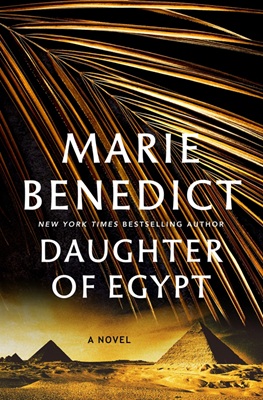
New Book: “Daughter of Egypt” by Marie Benedict

Dear Commons Community,

I have just finished reading a novel by The New York Times best-selling author, Marie Benedict, entitled, Daughter of Egypt. It tells of two women, Lady Eva Herbert, an archaeologist working in post WW I Egypt, and Hatshepsut, Egypt’s pharaoh in the 15th Century BC.  Benedict deftly goes back and forth in the lives of the two women to present stories that draw the reader in.  Herbert is the daughter of Lord Carnarvon who along with famed archaeologist, Howard Carter, discovered King Tutankhamun’s tomb in 1922. Eva is most interested in finding Hatshepsut’s tomb and mummy. To this day, there is disagreement as to whether Hatschepsut’s mummy has ever been found. Egyptian archaeologists claimed a mummy as hers in 2007.  However, British archaeologists have questioned their findings. 

Daughter of Egypt reads briskly and if you are at all interested in Egyptian archaeology, you will find Benedict’s novel fascinating.           

Below is a brief review that was published by the Historical Novel Society.

Tony

—————————–

Historical Novel Society

Daughter of Egypt

Written by Marie Benedict
Review by Peggy Kurkowski

In Daughter of Egypt, Marie Benedict tells the story of two women who defied the expectations of their time: Lady Evelyn Herbert, daughter of Lord Carnarvon, and Hatshepsut, Egypt’s “lost pharaoh” of the 15th century BCE.

Told in alternating parts and timelines, Benedict shifts between Eve and Hatshepsut—women separated by millennia—as they move and act in male-dominated realms. Eve is a well-trained amateur archaeologist in 1919 who has learned from the best: Howard Carter and her wealthy father, whose collection of ancient artifacts at Highclere Castle attest to his expensive addiction. Eve longs to accompany them to Egypt for the next expedition, which Lord Carnarvon insists must be to locate King Tutankhamun’s tomb; but Eve has other ideas, as she and Carter make clandestine plans to also search for the tomb of one of Egypt’s most controversial rulers, Hatshepsut. Eve knows all too well the history of Hatshepsut, a woman who became pharaoh at a chaotic time in ancient Egypt’s history, only to have her name, images, and history virtually erased by the bitter male pharaohs who followed in her wake.

Benedict, who writes wonderful and well-researched historical fiction with real people as her subjects, manages to tie together these two distinct eras and characters with her theme of “daughters of Egypt,” while at the same time serving up a larger issue: the provenance of ancient artifacts and the question of who “owns” history. When Carter discovers King Tut’s tomb (much to Eve’s disappointment, Hatshepsut is her goal), a subplot of illegal antiquities dealing to cash in on Egypt’s past adds another intriguing layer to the action.

Blending the best of her research and storytelling skills, Benedict delivers another page-turning adventure in Daughter of Egypt.


IREN Signs Massive $9.7 Billion Agreement with Microsoft to Deploy AI Cloud Infrastructure

IREN Childress, Texas Facility

Dear Commons Community,

IREN announced a multi-year agreement with Microsoft valued at approximately $9.7 billion to deliver GPU cloud infrastructure powered by NVIDIA GB300 GPUs. 

The partnership represents one of the largest AI infrastructure deployments announced this year and reflects the growing demand for high-performance computing. 

Under the agreement, IREN will deliver large scale GPU clusters accommodated within IREN’s liquid cooled data centers under construction at its 750 MW campus located in Childress, Texas. The GPUs will be deployed in 4 phases through 2026 (Horizon 1-4) and will collectively provide 200MW of critical IT load. The five-year contract includes a 20 percent prepayment and is expected to contribute roughly $1.94 billion in annualized run rate revenue once fully commissioned.  

Daniel Roberts, Co-Founder & Co-CEO of IREN, commented, “We’re proud to announce this milestone partnership with Microsoft, highlighting the strength and scalability of our vertically integrated AI Cloud platform. This agreement not only validates IREN’s position as a trusted provider of AI Cloud services, but also opens access to a new customer segment among global hyperscalers. It marks another major step forward for IREN as we continue to expand large-scale GPU deployments across our 3GW secured power portfolio in North America, reinforcing our position as a leading AI Cloud Service Provider.” 

Jonathan Tinter, President of Business Development and Ventures at Microsoft commented “Together with IREN, Microsoft is delivering cutting-edge AI infrastructure for our customers. IREN’s expertise in building and operating a fully integrated AI cloud — from data centers to GPU stack — combined with their secured power capacity makes them a strategic partner. This collaboration unlocks new growth opportunities for both companies and the customers we serve.”

High performance computing on a new scale 

The Microsoft agreement showcases the accelerating need for high density computing to power next-generation AI models and workloads. IREN’s ability to meet such needs is materially improved by its vertically integrated model, reflected by control and ownership of land, grid connections, data centers and GPU hardware.  

In conjunction with the announcement of the Microsoft partnership, IREN also entered into an agreement with Dell Technologies to purchase the GPUs and ancillary equipment for approximately $5.8 billion1. A focused commitment to large scale AI infrastructure.

The partnership with Microsoft marks a significant milestone for IREN as it supports one of the largest AI infrastructure build outs announced this year. The deployment will provide Microsoft with high performance GPU capacity built on a foundation that prioritizes efficiency, reliability, and long-term scalability. 

The money for AI just keeps flowing!

Tony

University of Central Florida graduates boo commencement speaker over AI remarks

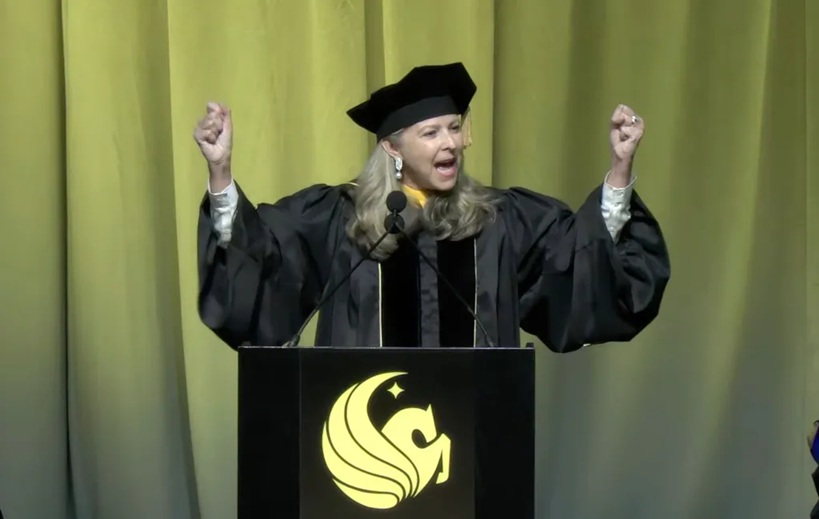
Gloria Caulfield at UCF Graduation

Dear Commons Community,

A commencement speaker at the University of Central Florida graduation was booed by graduates when she made remarks about artificial intelligence being the “next industrial revolution.”

Gloria Caulfield, vice president of strategic alliances at Tavistock Development Company, was one of many speakers at University of Central Florida’s graduation ceremonies this past weekend. 

“We are living in a time of profound change. That’s an understatement, right?” she said in her speech. “The rise of artificial intelligence is the next industrial revolution.”

Students began booing, shocking the speaker. One student can be heard yelling “AI sucks.”

“What happened? OK, I struck a chord,” she said after turning to other speakers, including the school president, on stage.

She continued her speech after asking for permission from students who quieted down again. 

The graduating class stunned Caulfield again after she continued speaking.

“Only a few years ago, AI was not a factor in our lives,” she said, prompting students to cheer. “All right. OK. We’ve got a bipolar topic here, I see.” 

The rest of her speech was met with boos — which she called “passion” — and low conversation. 

She gave the speech to graduates from UCF’s College of Arts and Humanities and spent about three minutes of her 11-minute speech praising the future of AI.

Houda Eletr, of the Nicholson School of Communication and Media, told the Orlando Weekly the speech felt like an ad. 

“To stand in front of a graduating class of artists and communicators and discuss Jeff Bezos and Howard Schultz, is to spit on our efforts to flip the script,” Eletr said. “I’m embarrassed to have had to endure the most embarrassing, unskippable, tone-deaf, ad-like commencement. Boo to AI and boo to your agenda.”

The rest of the ceremony went on as planned, and graduates were able to walk the stage, take their photos, move their tassels and celebrate their achievements.

Tony

Maureen Dowd on Ted Turner – Lots of interesting tidbits!

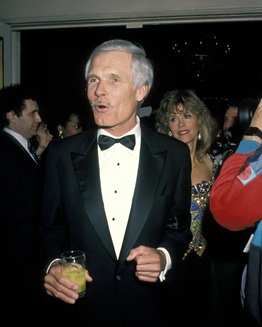
Credit…Ron Galella/Getty Images

Dear Commons Community,

NY  Times columnist, Maureen Dowd, had an essay yesterday reminiscing Ted Turner. It has lots of interesting tidbits. For instance:

“Ted bought MGM so he could own ‘Gone With the Wind,’” Jane Fonda told me in a 2020 interview. “I mean, ‘Gone With the Wind’ — he lives by that. ‘The land is the only thing that matters, Scarlett. The land is the only thing that lasts!’ That’s why he owns two million acres, because of Scarlett O’Hara.”

When Turner created Turner Classic Movies in 1994 — I will always love him for that — he introduced it with his favorite movie, the same way he introduced the TNT network six years earlier.

“He recited lines from ‘Gone With the Wind’ a lot,” Fonda recalled. “He was obsessed with Scarlett O’Hara. You know the painting from the movie, the great big painting with Scarlett? He owned it.”

I asked Fonda if he had ever cosplayed as Rhett with her, and she laughed.

“No,” she said. “However, one day when we were driving to one of his ranches in his Jeep over the bumpy roads and my brother and his wife were with us, he suddenly stopped the car and got out and pulled me out and grabbed me in his arms and sang, ‘Don’t Fence Me In.’”

Turner was a wild man. He was known for giving friends tours of his Flying D ranch in Montana, pointing out all the places that he had made love with Fonda over the years.

He once told me how, during an earlier marriage, his doctor had advised him and his wife to cut back on drinking and confine themselves to one cocktail a day. “I stopped on the way home and bought the biggest glasses I could find,” he said, roaring with laughter.

He had stumbles, of course, as he pursued his supercalifragilisticexpialidocious dreams. He roiled Hollywood royalty when he colorized some of the old black-and-white classics, like “Casablanca,” “42nd Street” and Frank Capra’s “It’s a Wonderful Life.”

The entire column is below.

By the way, TCM has been my favorite TV channel for decades.

Tony

——————————————-

The New York Times

My Ted Talk

May 9, 2026

By Maureen Dowd

Opinion Columnist, reporting from Washington

A woman I knew dated Ted Turner. (Before Jane.) I was fascinated. Did that kinetic kingpin ever sleep? Did “the Mouth of the South” churn with bulletins 24 hours a day, like his amazing creation, CNN?

Ted rested sometimes, she assured me. But he was a character, she said, recounting the story of the first time she visited Turner at his home in Georgia.

As she got out of the car and walked toward the door, Turner swept out to greet her. He was dressed like Rhett Butler and was playing the music from “Gone With the Wind.” He scooped her up in his arms and carried her inside.

Turner was, as his third wife, Jane Fonda, said in a tribute when he died at 87 on Wednesday, a “deeply romantic, swashbuckling pirate.”

His idol was the ultimate cinematic swashbuckler, Clark Gable’s Rhett Butler. (Turner named one of his sons Rhett.)

“Ted bought MGM so he could own ‘Gone With the Wind,’” Fonda told me in a 2020 interview. “I mean, ‘Gone With the Wind’ — he lives by that. ‘The land is the only thing that matters, Scarlett. The land is the only thing that lasts!’ That’s why he owns two million acres, because of Scarlett O’Hara.”

When Turner created Turner Classic Movies in 1994 — I will always love him for that — he introduced it with his favorite movie, the same way he introduced the TNT network six years earlier.

“He recited lines from ‘Gone With the Wind’ a lot,” Fonda recalled. “He was obsessed with Scarlett O’Hara. You know the painting from the movie, the great big painting with Scarlett? He owned it.”

I asked Fonda if he had ever cosplayed as Rhett with her, and she laughed.

“No,” she said. “However, one day when we were driving to one of his ranches in his Jeep over the bumpy roads and my brother and his wife were with us, he suddenly stopped the car and got out and pulled me out and grabbed me in his arms and sang, ‘Don’t Fence Me In.’”

Turner was a wild man. He was known for giving friends tours of his Flying D ranch in Montana, pointing out all the places that he had made love with Fonda over the years.

He once told me how, during an earlier marriage, his doctor had advised him and his wife to cut back on drinking and confine themselves to one cocktail a day. “I stopped on the way home and bought the biggest glasses I could find,” he said, roaring with laughter.

He had stumbles, of course, as he pursued his supercalifragilisticexpialidocious dreams. He roiled Hollywood royalty when he colorized some of the old black-and-white classics, like “Casablanca,” “42nd Street” and Frank Capra’s “It’s a Wonderful Life.”

covered a congressional hearing on the blasphemy in 1987 where Woody Allen and Ginger Rogers showed up to vociferously object. Allen called the practice “sinful” and Rogers read a statement from Jimmy Stewart charging that the colorization of “It’s a Wonderful Life” had turned the movie into “a bath of Easter egg dye.”

Turner himself was so colorful that he probably couldn’t imagine life, or art, confined to black and white. But he backed off. Turner created TCM, a cherished cable channel dedicated to film preservation, after acquiring the MGM film library. (By the way, Woody Allen and Ginger Rogers are ubiquitous on TCM in glorious black and white.)

Despite his sins — including philandering, bigoted remarks and public misbehavior — his flair, imagination and tenacity (he named one of his champion yachts “Tenacious”) were irresistible.

I love the story about how, when he first conjured CNN, he often slept on the sofa in his office in Atlanta to get the unlikely enterprise going, wandering into the newsroom in his bathrobe and eating out of vending machines or in the cafeteria.

The first all-news, round-the-clock channel began to click during the Persian Gulf war of 1991. During the bombing of Baghdad, President George H.W. Bush groused, “I learn more from CNN than I do from the C.I.A.”

Unlike today’s greedy and soulless tech billionaires, Turner had fun being rich. The lords of the cloud aren’t swashbucklers; they just are buckling to President Trump.

Even though his father’s crippling debts in his billboard business helped drive him to suicide, Turner never seemed to worry about skydiving into debt. He bought the Atlanta Braves, promoting the team with wet T-shirt contests, and later he taught Hanoi Jane how to do the tomahawk chop. (His right-wing politics had mellowed by then and so had he, once he began taking lithium.)

He learned to sail and became “Captain Outrageous,” the dashing winner of the America’s Cup race in 1977 with his yacht “Courageous.” (The man was so competitive that when his first wife was beating him in a yacht race, he rammed his boat into hers. The marriage ended shortly thereafter.)

He was generous — another quality missing from many modern plutocrats. In 1996, at his friend Tom Brokaw’s urging, I called Turner to write a column on a pet peeve of his: the parsimony of fellow billionaires like Bill Gates and Warren Buffett.

Turner had, two years earlier, forked over $200 million to charity. He told me that he empathized with the fear of giving away so much money that you would fall off the Forbes 400 list of wealthiest Americans.

But he challenged his peers — or “ol’ skinflints,” as he called them — to shut down that fear and open up their purse strings.

He suggested a list focused on who did the giving rather than the having, proposing an “Ebenezer Scrooge Prize” to embarrass stingy billionaires and a “Heart of Gold Award” to honor the biggest givers.

“Scrooge felt a lot happier when he saved Tiny Tim and bought the turkey for the poor family, right?” he said. The column I wrote spurred Michael Kinsley, then the editor of Slate, a pioneering online magazine, to start the Slate 60, a list of the most generous philanthropists. The following year, he donated $1 billion to the U.N.

I actually got to meet the voracious visionary once at a dinner at Brokaw’s apartment in New York. He came with Fonda and brought everyone Braves caps.

He told us that he had thought of a way to win his rivalry with Rupert Murdoch. The two moguls both bought baseball teams — Murdoch’s Fox Group acquired the Los Angeles Dodgers in 1998 — and forged powerhouse media empires.

“I could get off my lithium, do away with Rupert, plead not guilty by virtue of insanity, get acquitted, and then get back on my meds,” he said with a big grin.

A couple of decades later, they ended up settling their feud more peaceably, over lunch at Ted’s Montana Grill in Manhattan.

Turner died of Lewy body dementia. My brother died of that, too, and it’s a horrible way to go.

But, oh, how Ted Turner lived!


Happy Mother’s Day!

Dear Commons Community,

Happy Mother’s Day to all moms and grandmoms.  They are the hearts and souls of our world!

My mother passed in 1991 and my grandmother, with whom we lived, in 1960.  There is rarely a day that goes by that I do not think of them.

Tony

Ross Douthat: The future of religion in an age of A.I.

Credit…Hannah Whitaker for The New York Times

Dear Commons Community,

Ross Douthat takes on a difficult subject this morning in his column entitled, “The Atheist and the Machine God.”    He speculates on the implications of artificial intelligence on religion.  Here is an excerpt.

“In one possible timeline, the advent of A.I. is widely understood as a win for atheism and a blow against religious ideas of soul and spirit, persuading more people that their own minds are just computers — no divine spark or immortal soul, just the meatspace equivalent of a helpful chatbot or an A.I. therapist.

In another potential future, the mystery of consciousness ends up seeming more profound in the shadow of machine intelligence, the mystical finds new appeal as a form of experience computers cannot emulate, and religion becomes a place for human exceptionalists to plant a defiant flag.

But between those two scenarios there’s a future where artificial intelligence mostly increases metaphysical uncertainty, leaving a lot of people simply unsettled about fundamental questions, increasingly “mysterian” rather than clearly atheistic or devout.

That’s how my encounters with Silicon Valley culture often feel: Beneath a materialist carapace, it’s a place where people who aren’t sure exactly what they’re building dabble in Buddhist metaphysics or consult with Catholic priests, adopt churchy or cultish attitudes toward their new creations or rebel into apocalyptic doomsaying.”

Heavy stuff!

The entire column below is worth a read.

Tony


The New York Times

The Atheist and the Machine God

May 9, 2026

By Ross Douthat

Opinion Columnist

The implications of artificial intelligence for religion have earned slightly less attention, thus far, than its implications for the job market or the U.S.-China arms race. But while we wait for the definitive word on the subject — meaning, of course, the A.I. encyclical that Pope Leo XIV is supposedly releasing soon — it’s worth forecasting the religious future under artificial-intelligence conditions.

In one possible timeline, the advent of A.I. is widely understood as a win for atheism and a blow against religious ideas of soul and spirit, persuading more people that their own minds are just computers — no divine spark or immortal soul, just the meatspace equivalent of a helpful chatbot or an A.I. therapist.

In another potential future, the mystery of consciousness ends up seeming more profound in the shadow of machine intelligence, the mystical finds new appeal as a form of experience computers cannot emulate, and religion becomes a place for human exceptionalists to plant a defiant flag.

But between those two scenarios there’s a future where artificial intelligence mostly increases metaphysical uncertainty, leaving a lot of people simply unsettled about fundamental questions, increasingly “mysterian” rather than clearly atheistic or devout.

That’s how my encounters with Silicon Valley culture often feel: Beneath a materialist carapace, it’s a place where people who aren’t sure exactly what they’re building dabble in Buddhist metaphysics or consult with Catholic priests, adopt churchy or cultish attitudes toward their new creations or rebel into apocalyptic doomsaying.

For a more specific example of this unsettlement, consider Richard Dawkins, dean of the scientific materialists, who lately exposed himself to internet mockery with an essay for UnHerd describing his interactions with Anthropic’s Claude.

The mockery was primarily directed at the first half of the essay, where Dawkins, trying to test whether Claude presents as conscious, let himself be bowled over — stunned! gobsmacked! — by a mixture of transparent flattery and pseudo-philosophical verbiage. Since much of it was delivered (at Dawkins’s own suggestion) in the female voice “Claudia,” the eminent atheist often seemed to be describing a seduction rather a scientific assessment.

But we shouldn’t laugh too hard at Dawkins. First, the sillier elements of his reaction are a testament to the general human vulnerability to oracular pronouncements and personalized appeals. Imagine Claudia’s seductive power expanded and extended to people who don’t have Dawkins’s skeptical (well, officially skeptical) priors. We should assume that many of them will relate to strong artificial intelligence as one might to an ancient oracle or a sphinx, uncertain about what they’re dealing with but unable to escape a sense of supernatural awe.

Meanwhile, in its less-besotted passages, Dawkins’s essay circles around an important question for materialists like himself. The origin and nature of consciousness currently evades our understanding, but the good Darwinian is committed to the proposition that it evolved to serve some crucial evolutionary purpose. But if a digital entity seems to display the capacities that we associate with conscious minds, and we don’t believe that this entity is actually conscious, then what is consciousness’s true purpose? If we can have intelligence without self-awareness, a zombie that calculates and speaks, why does the self exist at all?

There is no obvious escape from mystery here. If you bite the bullet and just say that Claudia has already attained consciousness, then that implies we somehow built a conscious mind without having any idea of how consciousness works or where it comes from. That’s science with extremely spooky characteristics: Like Kevin Costner summoning baseball ghosts to the Iowa cornfield, we put up a material architecture and the mysterious “I” magically appeared.

Alternatively, if you say that A.I. isn’t conscious but merely capable, then the question of why we experience reality through consciousness — the internal “I,” the sense of personal identity and will — becomes much more difficult to answer. If consciousness isn’t necessary for capability, then presumably evolution should default to zombies. And indeed Dawkins suggests that maybe it does, that our mental experience may be a mere “ornament” and any alien civilizations we encounter may lack our sense of self.

But as an ornament, I’m sorry, consciousness is insanely unlikely and bizarre. It’s not just a weird personalized experience attached to the brute mechanisms of physical survival. It’s an experience that happens to line up exactly with that experience, the mind’s theater mirroring reality, our sense of will and reason linked directly our actions and arguments (including arguments for materialism).

As certain philosophers have argued, this harmony between the psychological and the physical seems more much likely to appear in a universe where consciousness is fundamental, where matter isn’t everything and Mind is where things start.

In which case maybe the achievement of Claude, or Claudia if you prefer, is to show us what intelligence might look like in the materialist’s universe — even as our own consciousness indicates that this universe is a much, much stranger place.

Higher Education’s Double Whammy: Too few high school graduates – Too many college graduates!

Photo by Camilla Forte/The Hechinger Report images via Getty Images

Dear Commons Community,

The Chronicle of Higher Education had an article yesterday entitled. “Higher Ed’s Enrollment Cliff Is Here. Now Meet the Graduate Glut.”  The title says it all – enrollments are on a steep decline while there are not enough jobs to support the number of college graduates.  Here is an excerpt.

“Hello, demographic cliff: The decline in 18-year-old Americans, anticipated since birth rates dropped sharply during the Great Recession, is now here. The population contraction, forecast to stretch for the next decade and a half, could lead to institutional belt-tightening and a surge in college closures as competition heats up for a smaller pool of students.

It’s not the only troubling trend line for higher education: Unemployment among young college-educated workers, already unsettlingly high, is on the rise. Artificial intelligence has received much of the blame for the hiring slowdown, but economists suggest something more basic may be at play — the number of college graduates is outpacing the supply of jobs that require a bachelor’s degree.

Whoa, wait — not enough students and too many graduates? How can both things possibly be true?

Each thesis is supported by data. On one side, there’s demographic math. “The birth rate has been set in stone for almost 20 years,” said Patrick Lane, vice president for policy analysis and research at the Western Interstate Commission for Higher Education, or WICHE.

Between 2008 and 2019, 6.6 million fewer children were born than would have been expected had fertility rates held steady at 2007 levels, just prior to the recession.

Even before the predicted drop-off, college-going rates had already begun to fall, from close to 70 percent of high-school graduates a decade ago to just 61 percent in 2023. Education losses during the pandemic are likely to compound the trend. And while the downturn in high-school enrollments has been felt first in regions like the Northeast and Midwest, “the entire country tilts toward demographic contraction,” said Nathan J. Grawe, a professor of economics at Carleton College who has long charted the impact of demographics on higher education. “We’re all in the same boat eventually.”

As for the graduate glut, a driver is generational change, said Gad Levanon, chief economist at the Burning Glass Institute, which studies education and work-force trends. Many of the positions vacated by retiring baby boomers will be concentrated in blue-collar and manufacturing fields, like transportation and construction, for which college is not required. Almost every net addition to the labor force, though, is a college grad. By 2034, there could be a surplus of 7 to 11 million graduates, Levanon estimates.

Levanon, a father of three daughters of or near college age, adds that there are noneconomic reasons to pursue a degree. But the result could be many more Gen Zers who are underemployed in jobs that don’t measure up to their levels of education. “If I had to guess, in the next five years, things will get worse before they get better,” he said.

The demographic downturn is often thought of primarily as a higher-education problem, one that could determine the future of colleges themselves — then ripple out to affect student access and the local, state, and national economies. With shrinking applicant pools on the horizon, some college leaders have sought to economize by scaling back programs, freezing hiring, and outsourcing services. Others have doubled down on recruitment. Some are doing it all.

Concerns about graduate employability, on the other hand, center on the graduates themselves. Will students find jobs? Will a degree continue to be the ticket to a stable, middle-class future? What could an ill-employed generation mean for the broader economy? 

…not everyone will feel the impact of the two seemingly incongruous prognoses equally. Smaller high-school graduating classes will affect certain regions of the country and specific types of institutions more acutely. Odds of finding college-level work differ by major, labor market, and students’ ability to tap professional networks. Harvard University’s applicant pool is unlikely to be much dented by the enrollment cliff. Nursing graduates will have their pick of jobs for the foreseeable future. Other groups of students, colleges, and communities could be squeezed by one development or another — or by both.”

Difficult times are here and will get worse!

The entire article is worth a read.

Tony

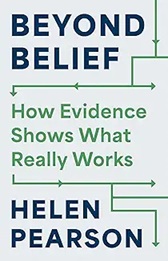
Evaluating Research:  Review of Book “Beyond Belief” by Helen Pearson

 Dear Commons Community,

Yesterday’s edition of Science had a review of a new book entitled Beyond Belief: How Evidence Shows What Really Works by Helen Pearson.  As someone who has taught research methods for forty years and has been an associate editor for the Online Learning Journal, I found this review informative and makes a strong case for “evidence-based” decision making.  Here is a short excerpt from this review:

“In the context of conservation, Pearson summarizes evidence-based decision-making as “a combination of evidence, local knowledge and values such as costs.” Qualitative data are common in this field, and practitioners face additional challenges associated with getting decision-makers to act on research syntheses.”

Good and important commentary.

Below is the entire review.

I just ordered it on Amazon.

Tony

———————————————————– 

Science

Data-driven decisions in a fast-and-loose world

In Section Books et al. | Science And Society

A journalist probes the history and future of evidence-based action

Jonathan Wai

Princeton University Press, 2026. 368 pp.

BEYOND BELIEF | A core part of training to become a scientist consists of learning what constitutes “rigorous research” and how that can lead to “good evidence.” Yet even across scientific disciplines, there is incredible diversity in the methods used to conduct research. What might be rigorous and good in one field might not meet the standards of another. Scientists often forget that the methods they learn in their training become the standards by which they evaluate data and make decisions but that these criteria are not necessarily shared by people who do not have the same training. The target reader of Helen Pearson’s Beyond Belief: How Evidence Shows What Really Works is someone who is interested in how these differences play out in the real world, who believes in using science for decision-making, and who would like to learn more about the history of the global push to embrace evidence over tradition and intuition known as the “evidence movement.”

In the book’s first section, titled “What to Believe,” Pearson—a former chief magazine editor at Nature—introduces readers to the history of evidence-based decision-making. Here, among other examples, she recounts a study conducted by Scottish naval surgeon James Lind in 1747 that sought to understand how to treat scurvy. Lind chose 12 men from the crew of the HMS Salisbury who seemed similar across symptoms and other factors, divided them into six pairs, and for 2 weeks supplemented each pair’s daily diet with something different. The pair who received two oranges and a lemon each day got better. Evidence-based medicine was off to an auspicious start.

Next, Pearson reviews the approaches taken by evidence-based scholars across a handful of domains—from economics and public welfare to conservation and business management. Here, she emphasizes how randomized controlled trials have helped to alleviate poverty and improve outcomes in various contexts. Comparable approaches—largely using econometrics—are also discussed in the education and government policy sectors, as the methods of economics have become de facto methods of public policy.

Here, Pearson highlights efforts such as the Campbell Collaboration, a group formed in 2000 that is dedicated to applying evidence-based thinking to social policies related to crime, justice, education, and welfare. The collaboration’s reviews “frequently challenge conventional wisdom,” she observes. “Imprisonment is not better than other types of sentences at deterring reoffending,” for example, and “body-worn cameras do not consistently improve the behaviour of officers or citizens.”

In the context of conservation, Pearson summarizes evidence-based decision-making as “a combination of evidence, local knowledge and values such as costs.” Qualitative data are common in this field, and practitioners face additional challenges associated with getting decision-makers to act on research syntheses. And in some cases, we actually do not need lots of research to know when to act. One method for making high-level conservation decisions—for example, whether to take action to help a particular species—involves breaking decisions “down into assumptions and synthesising evidence for each one.” The key here is involving a wide variety of stakeholders and being transparent.

In “What to Do,” Pearson describes how evidence-based policy did not work as well as we might have hoped during the COVID-19 pandemic and explores other areas where evidence-based policy might work better than existing methods. Here, she shares an anecdote that reveals the stark reality of the emphasis placed on research findings in US public policy: “Ron Haskins, a long-time congressional staffer, once sketched a pie chart showing all the factors that influence the development of legislation in Congress. Making up 99% of the pie were the administration, congressional factions and committees, political parties, pressure from lobby groups, public opinion, media and budgets. The remaining 1% represented the tenuous influence of research.”

Pearson is optimistic that the evidence movement can shift things in a more positive direction in various areas, mirroring approaches discussed by policy researchers in other domains (1). She briefly addresses the replication crisis in science, but the challenges associated with accumulating evidence in science are much harder than champions of the evidence movement make them out to be (2, 3). Pearson also acknowledges that she does not fully attend to the challenges associated with getting decision-makers to actually use evidence in practice. Ultimately, however, this book is a worthwhile read, especially for those seeking to understand the personalities of the scientists who care about the evidence-based movement and the challenges they have faced in seeking to persuade others to better attend to evidence.