Maureen Dowd: A Cry for the Humanities in “What A.I. Kant Do”

Art by Jeff Chase.

Dear Commons Community,

Maureen Dowd yesterday made a plea for the humanities yesterday in her column, “What A.I. Kant Do”.  Here is her introduction:

“Humans may be on the way out. But at least the humanities are back.

Or so some of the tech gods tell us.

After decades of dismissing liberal arts and humanities studies as useless and insisting that the mastery of science, engineering, math and tech is essential to future success, the tech world is coming around to the idea that learning about human nature could be a valuable asset in the coming A.I. revolution.

As it turns out, tech jobs may be drying up after years of students rushing to computer science. Who needs to code? A.I. does that for you.

What A.I. can’t do — yet — is the stuff that makes us human: empathy, emotion, psychology, critical thinking. “What a piece of work is a man,” Hamlet said, describing an intricate and infinite creature.”

Her piece has quotes from a number of tech movers and shakers supported her position.

Her conclusion:

“Maybe the lords of the cloud are feeling guilty as it becomes apparent that A.I. is going to subsume us. So they’re wishfully thinking that truth and beauty can help us steer A.I. toward its better angels.

“They know that American society is going to turn against them in big ways because they are the greatest and most illegitimate pirates who ever lived,” said Leon Wieseltier, editor of the journal Liberties. “Tech is the single most powerful force that was ever arrayed against the humanities.

“There is a huge difference between knowledge and information, and these asinine people have taught our population that all of knowledge can be reduced to the status of information,” Wieseltier said. “Press a button, you got your answer. So the whole humanistic mentality of mystery, obscurity, patience, beauty — it’s the opposite of what this technology has inculcated.”

Amen!

Dowd’s entire column is below.

Tony

———————————————————-

The New York Times

What A.I. Kant Do

May 16, 2026

By Maureen Dowd

Opinion Columnist, reporting from Washington

Humans may be on the way out. But at least the humanities are back.

Or so some of the tech gods tell us.

After decades of dismissing liberal arts and humanities studies as useless and insisting that the mastery of science, engineering, math and tech is essential to future success, the tech world is coming around to the idea that learning about human nature could be a valuable asset in the coming A.I. revolution.

As it turns out, tech jobs may be drying up after years of students rushing to computer science. Who needs to code? A.I. does that for you.

What A.I. can’t do — yet — is the stuff that makes us human: empathy, emotion, psychology, critical thinking. “What a piece of work is a man,” Hamlet said, describing an intricate and infinite creature.

“I think A.I. is a false mirror,” said Drew Lichtenberg, the dramaturg at the Shakespeare Theatre Company here and a lecturer at Johns Hopkins University. “It reflects back answers to black-or-white questions, but it does little to help explain the human experience the way art or philosophy can.”

He said he was shocked that students last semester were hungry for difficult plays and philosophical readings with no clear answers. “They were particularly into Kant and his ‘Analytic of the Sublime,’ Nietzsche and existential nausea, Camus and the myth of Sisyphus,” he said, adding that the cool reason of A.I. comprehends, but the seething imagination of art apprehends.

Daniela Amodei, a founder of Anthropic, told ABC News that “the things that make us human will become much more important instead of much less important.” She said that at Anthropic, the company is looking to hire people who are “compassionate and curious” about other people.

Amodei, who majored in literature at the University of California, Santa Cruz, said that “studying the humanities is going to be more important than ever. A lot of these models are actually very good at STEM. But I think this idea that there are things that make us uniquely human — understanding ourselves, understanding history, understanding what makes us tick — I think that will always be really, really important.”

Other billionaires and execs — Jamie Dimon at JPMorgan Chase, Ginni Rometty at IBM, Satya Nadella at Microsoft, Mike Novogratz at Fortress Investment Group and Jack Clark at Anthropic — have warned of the need for emotional intelligence and storytelling in a world dominated by A.I.

Reed Hastings, a founder of Netflix, said on Reid Hoffman’s podcast recently that we have moved beyond the days when STEM swallowed the Stanford University campus. If he had a 3-year-old today, he said, he would be “doubling down” on teaching the child emotional skills.

“For students and parents, the best defense today is to be broadly educated so they can adapt to the changes coming,” Hastings told me. “A.I. is better at rational thinking than it is at emotional depth. The last job that A.I. will get is stand-up comedian.”

Mark Cuban, an A.I. optimist who predicted a decade ago that English majors would have the edge in the future, told me: “A.I. is going to do a lot of amazing things with drugs and devices and stuff that’s going to be insanely important and cool. But, you know, humans are humans. Curiosity is the greatest skill you can have in an A.I. universe.”

Some people are beginning to realize you have to avoid sautéing your brain in A.I. slop if you want to keep it fit.

“The people who are reading hard books and are still writing have built these brain circuits, and they’re comfortable with cognitive strain,” said Cal Newport, a Georgetown University computer science professor. “These are the people with real value if everyone else has fried their brains.”

Rob Reich, a Stanford professor who teaches the social ethics of science and technology, said that computer science students are awash in anxiety about their future. “The first time that there’s been a decline in computer science enrollment at Stanford in 20 years is in the past 18 months,” he said.

Maybe humans are getting worried about becoming less human. As a friend of Reich’s says, we have gone from visiting people on birthdays to letters to phone calls to texts to emojis.

Reich suggested that humans, unable to keep up with A.I., may have decided to go read some poetry or literature or philosophy and remind themselves of “enduring sources of meaning in the world.”

When Anthropic’s head of A.I. safety, Mrinank Sharma, left the company in February, saying that “the world is in peril” from A.I. and other things, he posted on X about looking for meaning in poetry: “I want to explore the questions that feel truly essential to me, the questions that David Whyte would say ‘have no right to go away,’ the questions that Rilke implores us to ‘live.’”

Reich said that some people think that once A.I. does the majority of economically valuable work and we live in a world of abundance, “what will be left for humans to do is fundamentally a more humanistic set of questions about artisanal projects that people might want to direct themselves toward.”

Some of my academic friends doubt this is a real trend, as they see liberal arts and humanities departments shrinking and closing, graduate enrollments slashed and reading scores falling.

The New Yorker declared “The End of the English Major” three years ago. The Washington Post reported this past week on a Texas study in which liberal arts landed at the bottom of undergraduate programs that paid off after college. “Just try to imagine a world — or a working democracy — when those skills are limited to a few,” keened one Shakespeare professor.

Maybe the lords of the cloud are feeling guilty as it becomes apparent that A.I. is going to subsume us. So they’re wishfully thinking that truth and beauty can help us steer A.I. toward its better angels.

“They know that American society is going to turn against them in big ways because they are the greatest and most illegitimate pirates who ever lived,” said Leon Wieseltier, editor of the journal Liberties. “Tech is the single most powerful force that was ever arrayed against the humanities.

“There is a huge difference between knowledge and information, and these asinine people have taught our population that all of knowledge can be reduced to the status of information,” Wieseltier said. “Press a button, you got your answer. So the whole humanistic mentality of mystery, obscurity, patience, beauty — it’s the opposite of what this technology has inculcated.”

‘What in the ChatGPT Is This?’: How EL Teachers Are Navigating AI Use

Dear Commons Community,

Larry Ferlazzo, a former teacher, had a piece in Education Week yesterday on how AI can be helpful for ELL students.  Here is an excerpt.

For the life of me, I really can’t see AI providing any real learning benefit to English-proficient “mainstream” students, and I’m not seeing any research that suggests otherwise. It can, however, help all teachers in selective ways, including in material preparation, writing letters of recommendation, and in data analysis.

There’s a slight caveat to what I said about student use, however. Though I haven’t seen any research on it for non-EL students, I think AI can be helpful to students and teachers alike when it’s used in low-or-no-stakes adaptive-learning practice platforms like Quill or in playing games like Wayground, Blooket, or Kahoot. I think those are excellent formative-assessment tools.

AI with English learners, however, is an entirely different story. In addition to their being beneficial for those low-stakes activities I just mentioned, AI tools can be extremely useful in providing opportunities for ELs to practice speaking—especially at home where there are often no other English speakers. Where there are no peer tutors present (even though I really don’t understand why any school wouldn’t use them), these same AI speaking tools can be helpful in class. AI tools like Google Translate can be essential for newcomers as communication tools, and something like Gemini Storybook can be helpful in creating high-interest reading materials. And when a newcomer is parachuted into an English-proficient class, AI-powered simultaneous translation tools can be a lifeline.

I have conducted research with my own graduate students, all of whom are teachers, and have seen positive comments on the use of AI with ESL students.  Below is a sample of what several of my students have said.

Tony 


ESL Students

Student KAA: I feel that ChatGPT has the power to be an extremely useful tool for ESL students or students who are writing below grade level. It is very helpful to be provided a model example and that is not always given to you when given an assignment in school. 

Student ZCC: I am a Bilingual School Counselor and many of my students are ESL learners and this tool can be useful for them…, it can be a good starting point for the learning experience and students can build and push themselves to dive further into the information while also being critical of the information that is gathered by this tool. I believe educators can find a way to make this tool work for both them and the student’s learning experience.

Student MEE: The majority of the students I teach are newly arrived ESL in the United States, as such, writing often causes them anxiety. By using this technology to brainstorm assignments, it would show them how to write a basic essay and not stare at a blank page, perplexed by what they have to do.


Long Island Railroad Workers Strike Shutting Down the Busiest U.S. Passenger Rail Service!

Credit…Ryan Murphy for The New York Times

Dear Commons Community,

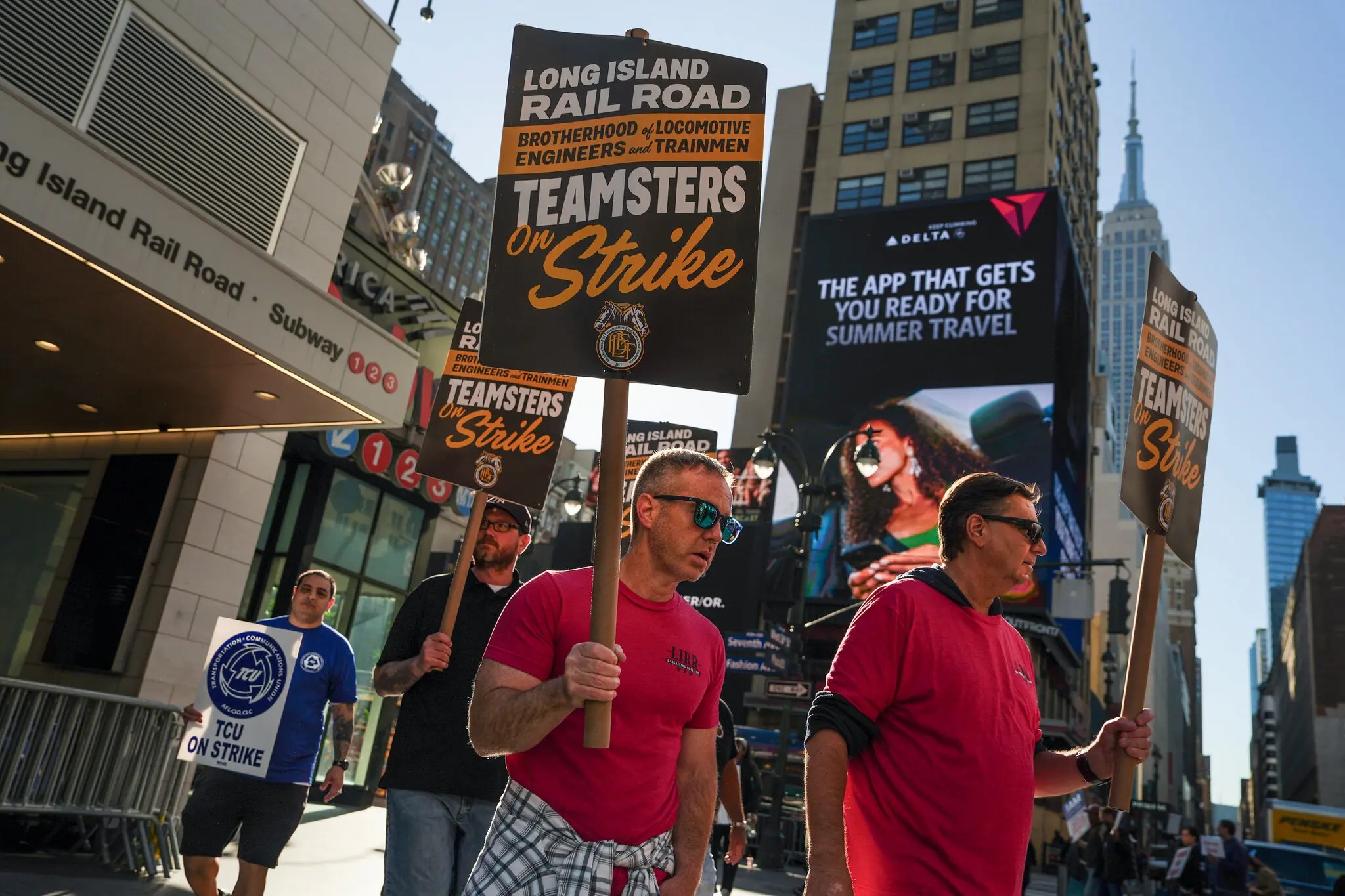
Thousands of workers for the Long Island Railroad walked off the job yesterday morning, staging the first strike in more than 30 years for America’s busiest passenger railway and grinding service to a halt.

After three years of failed contract negotiations, two federal interventions and a volley of last-minute bargaining, unions representing about half of the work force decided to take to the picket line to protest what they called insufficient wage increases.

Five unions representing more than 3,500 workers — including engineers, signalmen and machinists — called the strike after contract discussions with the Metropolitan Transportation Authority, the state agency that runs the railroad, fell apart.  As reported by The New York Times.

Kevin Sexton, a vice president of the Brotherhood of Locomotive Engineers and Trainmen, one of the unions, said the two sides could not agree on raises in 2026, or on issues like health care contributions.

“We are truly sorry that we’re in this situation,” Mr. Sexton said at a midnight news conference outside of M.T.A. headquarters. “But this is why you have to take collective bargaining seriously.”

More than 270,000 daily riders rely on the service to travel between New York City and Long Island, a sprawl of suburbs and bedroom communities where many of the region’s workers live.

The strike comes as Gov. Kathy Hochul, a Democrat, seeks re-election later this year. The governor, who lost Long Island in the previous election, is being challenged by the Nassau County executive, Bruce Blakeman, a Republican with close ties to the region.

Ms. Hochul said in a statement that while her administration has made investments in the Long Island Railroad, the unions’ demands could force her to increase taxes or raise fares by as much as 8 percent.

“The L.I.R.R. is more stable now than it has been for generations,” she said. “The decision by some unions to strike over demands that would threaten that progress is reckless.”

Janno Lieber, the chief executive of the M.T.A., said the authority was willing to increase its offer for higher wages but the unions were unwilling to compromise. He said the M.T.A. could not make a deal that “implodes” its budget.

To mitigate the shutdown, the M.T.A. said it would provide free shuttle buses between six locations on Long Island and two subway stations in Queens.

But the service will be unable to accommodate all the riders who rely on the railroad, and it won’t begin until Monday, leaving many scrambling for weekend travel alternatives.

Rashad Morshed Delvalle, 35, an M.T.A. bus driver, was sympathetic. He compared the striking workers to bus drivers who were treated poorly during the coronavirus pandemic while doctors and nurses were showered with praise.

“They don’t feel appreciated enough,” he said.

At the entrance of the Morris Park maintenance facility in Queens, about 20 picketing workers held up signs with messages, including, “Wages, Not Waste” and “No Contract, No Work.”

Several strikers had been there since midnight and said the picketing locations would be staffed by members around the clock.

Phillip Diaz, an electrician from Fresh Meadows who has worked for the Long Island Railroad for eight years, said he worried about being able to afford his daughter’s tuition at the University of Connecticut.

“We feel bad for the public,” Mr. Diaz, 42, said. “Most of these people are neighbors, friends, and family. We don’t need this any more than they do.”

The Long Island Railroad carried 82 million customers last year. Most were weekday commuters on their way to jobs in New York City, but an increasing number of passengers were using the service on weekends.

This is the first strike on the railroad since 1994, when a two-day suspension shut down the service.

The state comptroller’s office said on Friday that the strike could cost the region $61 million a day in lost economic activity.

For all involved, let’s hope that this strike is settled soon!

Tony


Archaeologists Find Egyptian Mummy Buried with Homer’s ‘Iliad’

The necropolis of Oxyrhynchus in Egypt, where a nonroyal mummy was found with some lines on papyrus from Book 2 of Homer’s “Iliad.” Credit…Maite Mascort i Roca and Esther Pons Mellado.

Dear Commons Community,

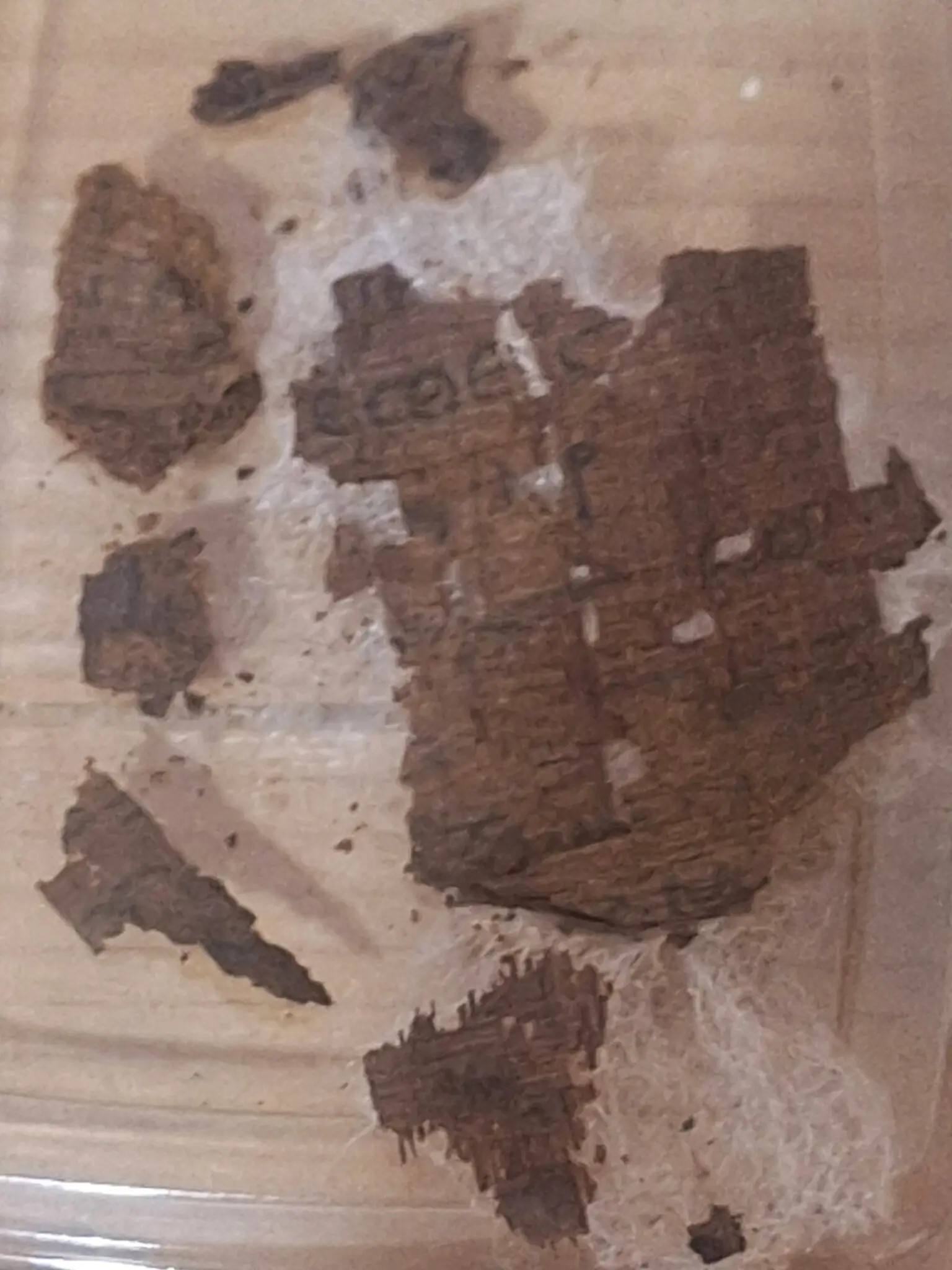
Archaeologists working in Egypt have discovered a remarkable combination of Homeric epic and Egyptian ritual: a 2,000-year-old mummy with a papyrus fragment of the “Iliad” sealed in a clay packet outside its wrappings.

It is the first time a literary work has been found playing a functional, spiritual role in the mummification process. And it suggests that for a Roman-era Egyptian, the “Iliad” — specifically some lines from Book 2’s “Catalogue of Ships” — was perhaps as crucial for navigating the afterlife as a magical spell.  As reported by The New York Times.

“The find is incredibly significant, primarily for the discovery of such a papyrus with Greek literary text in its original context,” said Foy Scalf, an Egyptologist at the University of Chicago. “We have evidence that such Greek literary texts could be used as magical amulets and that Homer was frequently cited in such amulets, as well as in the large handbooks now known as ‘The Greco-Egyptian Formularies.’ The new find directly supports that indirect knowledge.”

The mummy, a nonroyal male, was unearthed by the Mission of the University of Barcelona at a burial site known as Oxyrhynchus, as part of a project directed by Ignasi-Xavier Adiego of the university’s Institute of Ancient Near East. Leah Mascia, a specialist in the written and material culture of Greco-Roman and Late Antique Egypt at the Free University of Berlin, coordinated the collaborative breakthrough that finally brought the damaged text to light.

Recognizing that the heavily degraded papyrus required careful analysis, Dr. Mascia worked with a conservator, Margalida Munar, to stabilize the artifact, and Dr. Adiego, an authority on the Carian language, to study the text. Together, their combined expertise in preservation and linguistics allowed them to identify and read the document.

After six years of painstakingly reconstructing tomb fragments, Dr. Mascia uncovered a rare moment of cultural alchemy: Roman Egypt, where foreign and local customs merged. Her analysis, which identified embalmer seals and folding patterns of the papyrus packet, suggests that classical Greek epics were not merely read but physically repurposed.

Traditionally, mummified bodies were buried with sepulchral texts like the “Book of the Dead” and “The Book of Breathing,” formulaic manuals intended to protect and guide the deceased through the underworld. Yet, by the early Roman period, a major shift emerged: the introduction of sealed papyrus packets placed upon the dead.

These new packets contained a surprising mix of texts, including Greco-Egyptian magic, documentary records and even literary works like the “Iliad,” indicating a personalized, alternative funerary practice.

Fragments of the “Iliad” papyrus.Credit…IPOA (University Institute of the Ancient Near East)

Out of the dumps

The Oxyrhynchus necropolis, located near the modern village of El-Bahnasa about 120 miles south of Cairo, is not just a burial site but an archaeological mother lode. Located on the banks of the Bahr Yussef canal, the area is speckled with ancient garbage dumps that managed to preserve everything from wedding invitations and tax records to horoscopes and early Christian gospels.

The ruins of Oxyrhynchus were initially documented by Vivant Denon, a scholar during Napoleon’s 1798 Egyptian campaign. But they held a secret that remained buried for an additional century, until 1896, when British archaeologists dug up more than 400,000 fragments of papyri from the ancient trash heaps. The discoveries ultimately included lost masterworks by poets and playwrights like Sappho and Euripides, transforming millenniums-old refuse into a cornerstone of classical literature.

In the 1990s, the Mission of the University of Barcelona and the University of Cairo began a joint project largely funded by the Spanish Ministry of Culture and the Egyptian Ministry of Tourism and Antiquities. This ongoing mission, directed by Maite Mascort i Roca and Esther Pons Mellado and staffed by archaeologists, epigraphists and papyrologists, focuses on various sectors of the necropolis, including No. 22, where experts are reconstructing the elaborate social and religious life of residents during the transition from the Ptolemaic to the Roman era.

Researchers exploring the multichambered burial site have exhumed a remarkable trove of treasures, among them mummies adorned with golden tongues — gold foil placed over the mouth — and at least one with copper, ritualistic additions that may have ensured that the dead could confidently speak their case to Osiris, the god of death and resurrection, before judgment.

A separate, distinct area of the necropolis — Sector 42 — has yielded large jars containing cremated remains. One vessel held the bones of an adult, an infant and a feline, along with fabric fragments. While these individuals most likely date to a slightly different period from the “Iliad” mummy, the immense complexity of these rites implies a wealthy, status-conscious class, providing fresh insight into the spiritual anxieties of the Roman-era community.

A cultural passport

Recovered in December from Tomb 65, the fragmentary papyrus packet contains a passage from the 2,800-year-old “Iliad” that functions as a detailed inventory of the Achaean army’s naval strength and regional origins, describing the forces arrayed against Troy to retrieve Helen. The text mentions specific commanders, such as Guneus, who arrived with “two and twenty ships from Cyphus,” and Tlepolemus, a “son of Hercules” who brought nine ships from Rhodes.

Dr. Mascia’s findings reveal a deliberate, intimate act: a document prepared in a mummification workshop and placed directly upon the body of the deceased. “These sealed papyrus packets may have been regarded as part of an alternative funerary procedure,” she said, adding that further studies were essential to prove this hypothesis.

This spiritual first-aid follows a long tradition. Dr. Scalf noted that “The Greco-Egyptian Formularies” even suggests the “Iliad” doubled as a literal medical kit. For a bed-bound patient shivering with malaria, the prescription was simple: Brace your head against a papyrus scroll of Book 4 to break the fever.

For residents navigating the complex, vibrant crossroads of Roman Egypt, Greek literary papyri may have functioned as a crucial cultural passport, said Anna Dolganov, a historian at the Austrian Archaeological Institute. In Egypt, being Hellenic connoted an exclusive social status and financial privilege — and had to be meticulously documented through genealogies going back across several centuries.

Buried with the dead, the “Iliad” perhaps served as a cheat code for a more comfortable afterlife. Dr. Dolganov wonders if carrying the epic poem was a deliberate strategy to secure entry into the Greek underworld, effectively sidestepping the torturous trials of Egyptian mythology. For these individuals, a Hellenic identity wasn’t just for this world — it was an eternal upgrade, offering a smoother path and higher status in the great beyond.

Most interesting!

Tony

Smithsonian Adds Back Impeachment Language to Label on Trump Portrait

Dear Commons Community,

The Smithsonian Institution is once again mentioning the impeachments of President Trump on wall text accompanying his image at the National Portrait Gallery.  As reported by The New York Times.

It had faced scrutiny months ago when text that described the president’s two impeachment trials was removed at a time when Mr. Trump has been critical of the Smithsonian’s depiction of American history and sought to exert greater control over the institution.

The Smithsonian had assured historians that the removal was part of a larger revamp of how an exhibition at the gallery that focuses on American presidents presents information to the public. The updated exhibition was unveiled on Friday.

In the new wall text accompanying a portrait of Mr. Trump, the impeachments are mentioned in a list of important events from the president’s first term that appears alongside an excerpt from his 2021 presidential farewell speech.

Other events on the list are Mr. Trump’s work on the Abraham Accords; his role in efforts to develop Covid vaccines, known as Operation Warp Speed; the Jan. 6, 2021, attack on the U.S. Capitol; and the George Floyd protests in 2020.

The White House had complained about the original wall text, which mentioned the impeachments in a short summary of Mr. Trump’s first term. “Impeached twice, on charges of abuse of power and incitement of insurrection after supporters attacked the U.S. Capitol on January 6, 2021, he was acquitted by the Senate in both trials,” it read.

The new format, which is also used to describe other presidents, is more of a historical fact sheet and does not say why Mr. Trump was impeached. The impeachment of Bill Clinton is included in wall text next to his portrait.

The revamp was led by the National Portrait Gallery’s historian, Mindy Farmer, who said the project started in 2022 and included a core team of four scholars and educators.

“We followed all the normal review processes for the labels,” Ms. Farmer said, explaining that Smithsonian leaders approved the changes. She said the president’s complaints about the previous display played no role in the process.

The White House had no strong objection to the new language beyond a concern about its scope.

“While we appreciate the Smithsonian Institution restoring a fair and accurate description to President Trump’s 45th presidency portrait,” said Davis Ingle, a White House spokesman, “there are still many missing accomplishments from President Trump’s first historic first term.”

Mr. Ingle also said that the White House was partnering with the National Portrait Gallery on an upcoming exhibition featuring paintings of President Trump from artists like Vanessa Horabuena, a speed painter who has drawn religious images at the president’s parties.

The New York Times previously reported that administration officials had suggested such a display with multiple images of the president. A museum spokeswoman did not immediately respond when asked if such an exhibition was being planned.

In one of Mr. Trump’s executive orders, he criticized the Smithsonian, which receives nearly two-thirds of its budget from the government, as promoting “narratives that portray American and Western values as inherently harmful and oppressive.”

Thin-skinned Trump!

Tony


The Chronicle of Higher Education Reviews the Financial Difficulties at Twenty Colleges – It Ain’t Pretty!

Logo for Campus Cutbacks

Dear Commons Community,

The Chronicle of Higher Education this morning has a review of financial difficulties facing colleges and universities.  It is a bleak recap of  twenty institutions. Below is the full list.

Tony

——————————————

Here’s the Latest

Portland State University’s president, Ann Cudd, announced Thursday the potential layoffs of 52 faculty and staff members. In March, the university had identified 19 departments for potential reductions; this week, that list was cut to nine, with two programs, Conflict Resolution and University Studies, slated for elimination. The university is working to close what it says would be a $35-million budget gap by 2028 resulting from shrinking enrollment and growing operational costs.

Those slated for layoffs include 39 nontenure-track and 11 tenured faculty members as well as two academic staff members, according to the university. “It’s an incredibly disappointing day,” said Bill Knight, an associate professor of English and president of the local chapter of the American Association of University Professors, the union representing faculty members.

The university will receive comments on the plan for 30 days and aims to present a final proposal in June.

The University of Oregon announced Thursday that a “significantly lower” number of first-year out-of-state students have enrolled for next academic year, resulting in $65 million in necessary cuts. The university will also freeze hiring and pay, and limit non-essential travel.

President Karl Scholz had warned last month that cuts may be on the way, noting that the competition for out-of-state students was “fiercer than it has ever been.” At the time he also cited international-enrollment challenges and “rising costs due to geopolitical tensions.”

Scholz said Thursday that Oregon would aim to differentiate itself going forward by focusing on distinct research specialties and investing in the student experience.

The Massachusetts Institute of Technology is facing a “striking loss” in research funding and a steep drop in graduate enrollment, its president, Sally Kornbluth, said in a Wednesday video message.

Federally funded research at MIT is down more than 20 percent from this time last year, as are new federal grants awarded. Though outside funders have filled in some of the gap, Kornbluth said, MIT’s total sponsored-research activity — including federal and nonfederal sources — is 10 percent smaller than it was a year ago.

MIT has also seen a decline of nearly 20 percent in new graduate-student enrollment, outside of its Sloan School of Management and Master of Engineering programs, where the admissions process is still ongoing. As a result, Kornbluth said, MIT could have about 500 fewer graduate students than usual this fall.

Though many of last year’s federal grant cuts have since been restored, a slower flow of funding and a federal endowment-tax hike have combined to spell continued financial strife for one of the nation’s most prominent research institutions.

“I started hearing people ask if maybe these new developments in D.C. meant that we could step back from some of the budget cuts at MIT, or at least feel confident that we’re past the storm,” Kornbluth said. “I really wish we could, but unfortunately, the answer is no, for a set of reasons.”

The University of Vermont is anticipating a $12-million budget deficit and an enrollment drop of 7 percent, according to WCAX. Deposits for new students for the fall term declined by 15 percent. The budget shortfall represents about 1.3 percent of the university’s $938-million projected expenditures for this fiscal year.

The University of Denver is considering closing two departments in response to an anticipated budget shortfall of between $20 million and $30 million next fiscal year, according to the Denver Clarion. A dean confirmed to the campus newspaper that the department of religious studies is undergoing review “for potential closure as an academic appointment home,” but it’s unclear which others might be evaluated. The Chronicle reported last fall that religious-studies departments have become frequent targets of program cuts.

The University of Chicago made headlines in recent years when it announced budget cuts to stem financial losses from a mounting debt burden. University leaders said last week that its efforts to reduce what had been a $288-million deficit were bearing fruit; the deficit would be about $140 million by the end of the fiscal year in June, according to the Hyde Park Herald. Plans are for the deficit to shrink below $100 million by the end of the 2027 fiscal year through a combination of further cuts and revenue gains, the newspaper reported.

Much of the deficit reduction came from curbs in spending growth, incentives for early retirement, layoffs, and pauses in doctoral admissions, which some faculty members have argued isn’t a sustainable strategy. UChicago plans to increase revenue by expanding programs for master’s degrees and executive education, and seeking philanthropic donations, which topped $1 billion in the 2025 fiscal year.

Princeton University found a way to avoid an estimated $180-million excise tax on its endowment, according to The Daily Princetonian. An investment official for the university reportedly said at a private event earlier this year that the institution’s $44-million expansion of its financial-aid program, which eliminated tuition for most students whose families make less than $250,000, had put the number of tuition-paying students under the 3,000 threshold that would have made Princeton subject to the tax. The endowment-tax rate was increased last year as part of the One Big Beautiful Bill.

Mergers and acquisitions continue to ripple across the country, touching every region, and type and size of institution. According to Cardinal News, the University of Pikeville, a private institution of 2,500 students in Eastern Kentucky, is exploring acquiring the Appalachian School of Law, a private law school in Virginia, to better serve the people of Appalachia.

The University of Texas at Arlington announced Friday it is eliminating or consolidating eight academic programs as it navigates declining federal funding. On the chopping block are a bachelor’s degree in art history and master’s degrees in sustainable building technology and taxation. Over 200 employees at UT-Arlington have applied for buyouts, according to the Fort Worth Report.

Bowie State University will cut 79 jobs — including through layoffs — as it grapples with an $18-million deficit. In a message to the community, Aminta H. Breaux, president of the historically Black college in Maryland, said the deficit was caused by several factors, including reduced state and federal funding, enrollment declines, and rising operational costs.

Kenyon College Gets Downgraded

Many private, nonprofit colleges in Ohio are struggling with enrollment declines, unmanageable debt, and rising expenses. The latest sign of trouble is at Kenyon College, where Moody’s Investors Service has changed the college’s credit outlook from “stable” to negative.

Kenyon is one of Ohio’s best-known liberal-arts colleges, but its fall 2025 enrollment was 9 percent lower than the previous year, according to the news release from Moody’s, and it has also increased its tuition-discount rate. As a result, Kenyon is expecting to draw up to $30 million from reserves to fill its operating budget through fiscal year 2028, the ratings agency said. On the plus side, the college has more than $700 million in cash and investments and its campus is in good shape, according to Moody’s analysis.

Webster University is eliminating its award-winning chess team because of visa restrictions and financial losses from sharp enrollment declines. The St. Louis-based institution said it could not find donors to endow the chess program, which costs $1 million a year. And the university can’t afford to use operating funds to support the team because it is losing millions of dollars from a precipitous drop in foreign students, a spokesman said. Webster has taken a particularly big hit because of a previous strategic decision to double down on overseas recruitment to plug budget holes. Before the recent decline, international students made up nearly half of the main-campus student body.

(Adapted from LatitudesThe Chronicle‘s newsletter about international education.)

The South Carolina State University Foundation is suing the very institution it was established to support. The lawsuit, filed Monday in the Court of Common Pleas in Orangeburg County, alleges that South Carolina State University‘s president, Alexander Conyers, conducted a “retaliatory campaign” to turn the independent foundation “into a compliant source of cash for his own priorities,” namely, $75,000 in supplemental compensation, WISTV reported. While the foundation initially declined to provide the money, it eventually did so, after Conyers and the board allegedly retaliated by evicting the foundation from its on-campus offices, organizing a competing fund-raising gala, and warning that it would sever its memorandum of understanding.

The American Association of University Professors at Muhlenberg College is warning that the institution’s $10-million budget gap will lead to layoffs, according to WFMZ. The AAUP said it couldn’t prevent the layoffs from happening, but hoped the college, in Pennsylvania, would give those who will be laid off a 90-day notice and 90 days of salary and benefits. The college’s operating revenues were about $88 million in 2025, according to its most recent audited financial statement.

The University of Montevallo, a public liberal-arts college of approximately 3,000 students in Alabama, is merging its theater and music departments and cutting four sports teams to save between $1.5 and $3 million, according to ABC3340. The men’s and women’s swimming and tennis teams, which, according to federal data, collectively have 68 varsity athletes, will be able to continue receiving scholarships until they graduate.

The Modern College of Design, a for-profit institution in Kettering, Ohio, is closing because it “can no longer support operations due to enrollment challenges,” it announced Monday. The college enrolled just 211 associate and bachelor’s degree-seeking students, according to the most recently available federal data.

While we’ve been writing a lot here about budget cuts and revenue pressures, it’s worth remembering that some money is still flowing — albeit for specific purposes. The University of Southern California, for example, announced earlier today that it had received $200 million to expand its efforts in artificial intelligence. The university’s School of Advanced Computing will be renamed the Mark and Mary Stevens School of Computing and Artificial Intelligence, and the money raised will support the hiring of scholars to carry out interdisciplinary research. The competition among colleges for talent in the AI field has been fierce, The Chronicle previously reported.

Kent State University will lay off as many as 45 employees to help close an $18-million budget hole during the next fiscal year, the Akron Beacon Journal reports. The university’s president, Todd Diacon, said the university would also consider eliminating unfilled roles and reducing travel, according to the newspaper.

Georgetown University will restore three-percent raises for faculty and staff after it managed to shrink a projected budget deficit through reduced expenses. The Hoya reports that the interim president, Robert M. Groves, said in a town hall this week that, like other campuses, the university had suffered from losses in graduate enrollment and research funding, but the budget reality didn’t turn out to be as dire as it could have been. Some austerity measures will likely continue into the future, Groves said: “We’re going to try to protect the community as much as we can, but in 237 years, there has never been an attack on higher education like the one we’re going through right now and we can’t pretend it isn’t happening,”

We previously told you about the $45-million budget deficit at the University of North Texas. Administrators have now approved voluntary buyouts for 40 professors, which they anticipate could save the campus $4.7 million, The Dallas Morning News reports.

Nearly 50 academic programs could be eliminated across Pennsylvania State University‘s flagship and regional campuses. Just 1.3 percent of undergraduate students are enrolled in majors that could be shuttered, according to the university. “Higher education is changing, and we must rise to the occasion,” Fotis Sotiropoulos, the provost, said in a statement. The Pittsburgh Post-Gazette notes that Penn State has faced scrutiny over a decision to close seven of its regional campuses after the 2026-27 academic year.

A cut of more than 10 percent in state support to the state system of higher education has led to a hiring freeze at the University of Maryland at College Park, according to The Diamondback, the campus newspaper. As many as 150 positions could be cut via the elimination of vacant positions, retirements, or layoffs.

Saint Augustine’s University, a historically Black college in North Carolina that’s struggled for years with finances and enrollment, has filed for Chapter 11 bankruptcy and will drop a legal fight to retain its accreditation. The university’s interim president also resigned this week after just a few months, Indy Week reported.

The future of Saint Augustine’s has been teetering for years. In 2024, the university had its membership revoked for a third time by the Southern Association of Colleges and Schools Commission on Colleges, its accreditor. Last year, SACS officially withdrew the university’s accreditation after a binding arbitration process. The university then sued to reverse the decision and temporarily retained accreditation under a preliminary injunction, but university leaders now say they will focus on teaching out current students, offering nondegree programs, and forging a path to accreditation down the line.

Per the new bankruptcy filing, Saint Augustine’s holds debt between $50 million and $100 million.

Martin University, a nearly 50-year-old, private, primarily Black institution in Indianapolis, announced its closure in December. Now, students, staff, and the alumni association are suing, Mirror Indy reported. The class-action lawsuit alleges that the college, which closed due to financial problems and low enrollment, failed to provide “quality and sustained educational opportunities and supporting educational credentials as it promised.” The plaintiffs ask for a preliminary injunction regarding the proceeds of a possible sale of the college, pending further investigation.

East Carolina University is pulling the plug on 44 academic programs, about a dozen of which were bachelor’s and master’s degrees, and the remainder minors and certificates. Though the move was part of an effort to slash $25 million in expenses from the university’s $1.2-billion budget, it “was not a response to a crisis,” the institution’s top leaders wrote last week. Rather, it reflected “a strategic commitment to controlling our own destiny during a period of national transformation in higher education.” Bachelor’s programs that were cut included several in secondary education; applied atmospheric science; and sociology.

Longitudinal Texas Statewide Study of Postsecondary Value-added Earnings

S1

Exhibit S1. Cumulative Net VAE for Students Seeking Bachelor’s Degrees, Associate’s Degrees, and Certificates 

Note: Cumulative net VAE values in this exhibit are averages, stated in 2023 dollars, for cohorts of entering students that include a mix of eventual completers and non-completers. This exhibit pertains to 28,614 bachelor’s degree-seeking students who entered 29 public institutions in Texas in 2008-09, 559,068 associate’s degree-seeking students who entered 57 public institutions in Texas from 2008-09 through 2013-14, and 67,486 certificate-seeking students who entered 57 public institutions from 2008-09 through 2018-19.

Dear Commons Community,

The Postsecondary Commission (PSC) has just completed an extensive study of the value-added earnings (VAE) outcomes of almost one million students who enrolled in public colleges and universities in Texas from 2008-09 through 2018-19.  The Texas Higher Education Coordinating Board and the Texas Education Research Center provided access to Texas’ longitudinal data system.

In this study, the  PSC examine the value-added earnings outcomes of 935,767 students who enrolled in 86 public institutions in Texas from 2008-09 through 2018-19 and who sought bachelor’s degrees, associate’s degrees, or certificates.

Main Findings

We find that students who entered public institutions of higher education in Texas from 2008-09 through 2018-19 on average experienced positive cumulative net value-added earnings (VAE), as follows:
 

  • Bachelor’s degree-seeking students who entered public institutions in Texas in 2008-09 experienced cumulative net VAE of $86,806 in year 15 after entry. Bachelor’s degree-seeking students who entered public institutions in Texas from 2009-10 through 2013-14 and have completed 10-14 years of the full 15-year follow-up period exhibited similar results.
     
  • Associate’s degree-seeking students who entered public institutions in Texas from 2008-09 through 2013-14 experienced cumulative net VAE of $25,338 in year 10 after entry.
     
  • Certificate-seeking students who entered public institutions in Texas from 2008-09 through 2018-19 experienced cumulative net VAE of $3,818 in year 5 after entry.
     

These students’ cumulative net VAE reached a low point after entry when their combined losses from paying tuition and fees and from foregone earnings peaked. This financial low-point occurred in year 5 after entry for bachelor’s degree-seeking students (-$33,925), in year 4 after entry for associate’s degree-seeking students (-$10,282), and in year 2 after entry for certificate-seeking students (-$3,461).

These students reached a financial break-even point several years after entry when their cumulative net VAE turned positive for the first time. This financial break-even point occurred in year 10 after entry for bachelor’s degree-seeking students, in year 7 after entry for associate’s degree-seeking students, and in year 4 after entry for certificate-seeking students.

The PSC website is well-organized and provides further details of its study.

I am not familiar with the PSC which is seeking approval to become a federally recognized accreditor of higher education institutions. 

Tony

The Empire State Building Named the No. 1 Attraction in the U.S.

Empire State Building Observatory | Manhattan, NY 10118

Empire State Building at sunset.

Dear Commons Community,

Tripadvisor’s 2026 Travelers’ Choice Awards: Best of the Best Things to Do have arrived. The annual rankings highlight the world’s top tours, activities, and attractions based on user reviews, offering a snapshot of what travelers are prioritizing right now—from immersive outdoor adventures to iconic city landmarks. In the attractions category, New York City’s Empire State Building takes the No. 1 spot for 2026. As reported by Tripadvisor.

Completed in 1931, the Art Deco skyscraper has long functioned as both a working office tower and one of the country’s most visited attractions. It held the title of the world’s tallest building for nearly 40 years and remains one of the most recognizable structures in the U.S., in part due to its prominence in film, television, and popular culture.

Today, the building’s primary draw for visitors is its pair of observation decks on the 86th and 102nd floors, which offer sweeping, open-air and enclosed views over Manhattan and the surrounding boroughs. On clear days, visibility can extend up to 80 miles, with sightlines reaching into neighboring states.
The building underwent a multiyear renovation completed in 2019 that added a dedicated visitor entrance, expanded exhibits about its construction and cultural legacy, and reconfigured observation areas to improve visitor flow.

Methodology
Tripadvisor’s Travelers’ Choice “Best of the Best” awards are based on user reviews and ratings submitted between Feb. 1, 2025, and Jan. 31, 2026. Rankings are determined by both the volume and quality of reviews, rather than editorial input or judging panels, with fewer than one percent of listings earning a spot. Because the data reflects aggregated traveler feedback, results often favor popular destinations and well-reviewed, widely booked experiences. For many top-ranked activities—such as guided tours or wildlife excursions—factors like availability, permits, and seasonality can impact access, making advance booking essential.

Beyond the Empire State Building, other top attractions on Tripadvisor’s list include a mix of historic sites, parks, and cultural institutions. This is the full list of the top 10 attractions for 2026, according to Tripadvisor.

1. Empire State Building, New York City, New York
2. Sun Studio, Memphis, Tennessee
3. John Pennekamp Coral Reef State Park, Key Largo, Florida
4. Central Park, New York City, New York
5. National Museum of World War II Aviation, Colorado Springs, Colorado
6. Brooklyn Bridge, New York City, New York
7. The Metropolitan Museum of Art, New York City, New York
8. Chihuly Garden and Glass, Seattle, Washington
9. Alcatraz Island, San Francisco, California
10. Garden of the Gods, Colorado Springs, Colorado

I was probably no more than four or five years old when my father took my brothers and me to see the Empire State Building.  I also was assigned to the CUNY Graduate Center for eleven years which is located right across the street from the Empire State Building.  In walking to the Graduate Center from Grand Central Station in the mornings, I never got tired of looking at its majesty.

Tony 

CNN: Is Trump Being Mocked In China?

Chinese social media mocks Trump, touts China’s rise

Dear Commons Community,

CNN anchor Erin Burnett was stunned to see the level of uninhibited mockery China has been hurling at Trump during his visit. It started with Trump coming off Airforce 1 and not being greeted by Xi but by lower-ranking officials.  Burnett went on to explain that: 

“Trump is about to meet with Chinese leader Xi Jinping tonight, a high-stakes meeting which is being mocked on social media across China…Beijing’s strict censors are letting the ridicule go viral, which is a statement in and of itself.”

“America has lost its swagger. They’re nothing but a paper tiger,” one of those viral posts read. “The U.S. economy is in bad shape. Trump has been blustering Iran for so long.”

“They will look up to us from now on,” read another post that Burnett shared. “Trump came to China! We won the tariff war!” read another.

“Trump, you’re welcome to visit China and learn from us,” the mockery continued.

“The U.S. is no longer a country that we look up to. We can now compete with them with confidence and strength,” a Chinese social media user wrote.

“In China, political content like this never goes viral, especially when you have a head of state coming,” Burnett explained. “This is because government censors want this to go viral, and by the tone of the messages, the Chinese government feels they’ve got the upper hand.”

See here for more on this topic!

Tony

Yawning Helps ‘Clean’ Your Brain

Brain overlay on a blue and white soapy background.

Dear Commons Community,

It can be hard to stop a yawn once the urge strikes, but now, new research suggests that going with it might be good for you. A recent study suggests that yawning might actually help “clean” your brain by facilitating fluid movement along brain waste-clearance pathways.

While yawning in the middle of your boss’s big work presentation might not ever be socially acceptable, you can at least console yourself with the knowledge that the yawn you just unleashed may help your brain.

Before you start yawning all day, every day in the name of health, know this: The study didn’t definitively prove that yawning is good for you—but it had some interesting findings that suggest a good yawn here and there might help more than hurt. Here’s the deal. As reported by Women’s Health.

What did the study find?

In the small study, published in the journal Respiratory Physiology & Neurobiology, researchers recruited 22 participants and had them undergo MRI scans of their heads and necks. During those scans, participants were told to yawn, take deep breaths, try to stifle a yawn, and breathe normally.

Researchers discovered that yawning sent cerebrospinal fluid (CSF, a clear liquid that surrounds the brain and spinal cord) away from the brain. When people took a deep breath, the cerebrospinal fluid went the other way.

They also found that yawning and taking deep breaths increased blood flow away from the brain, creating room for more fresh blood to enter.

“These observations show that yawning is not simply an intensified breath but a distinct cardiorespiratory maneuver that reorganizes neurofluid flow,” the researchers wrote.

What’s the value in this?

It’s important to note that while the researchers found noteworthy CSF and blood flow movement in the brain after a yawn, they didn’t figure out why this is important. Still, the experts have some theories.

CSF cushions the brain and spinal cord, but it also helps to shuttle nutrients around and clear out metabolic byproducts your brain doesn’t need, explains Randy D’Amico, MD, neurosurgeon at Northwell’s Lenox Hill Hospital.

“In recent years, there has been increasing scientific interest in the so-called ‘glymphatic system,’ which is essentially the brain’s waste clearance pathway,” D’Amico says. “Impaired clearance has been discussed in relation to aging and neurodegenerative diseases—although this field is still evolving and these data are far from conclusive.”

All this to say, in theory, yawning may help support this waste-clearance pathway.

The study found that CSF and blood flowed out of the skull together in a coordinated way, which also strengthens that theory, points out Davide Cappon, PhD, a neuropsychologist at Tufts Medical Center.

“That said, this remains a hypothesis,” Cappon says. “The study does not show that yawning directly ‘cleans’ the brain, but it does highlight that yawning may have more complex physiological functions than we previously appreciated.”

What happens in your brain during a yawn?

Cappon points out that “yawning is actually a surprisingly complex neurological and physiological event” that involves a lot of networks and systems working together at once.”

“Over the years, yawns have been thought to have lots of potential benefits or roles,” says W. Christopher Winter, MD, neurologist and sleep medicine physician with Charlottesville Neurology and Sleep Medicine and host of the Sleep Unplugged podcast. (He lists off temperature regulation and helps the brain wake up as a few.)

Winter says the findings suggest that yawning is a potential backup system for the brain. “If you sleep well, the glymphatic system is doing its job,” he says. “If you are not sleeping enough—or well—then the yawn suddenly starts to feel like your brain saying, ‘if you are not going to sleep properly and engage this glymphatic system, then we are going to turn on the back-up pump or hydraulic system.’”

What does this actually mean?

“The main takeaway is really about how dynamic the brain and body are,” Cappon says. “Even everyday behaviors like breathing, sleep, and yawning may influence brain physiology in ways we are still learning to understand.”

D’Amico adds that the findings stress that there’s a lot happening in the brain. “It relies on dynamic fluid circulation, sleep, vascular health, and physiologic rhythms to maintain normal function,” he says.

The next time you yawn, know that it might be more than just your body telling you that you’re tired. Yawning is an example of just how complex and smart our bodies can be.

I love a good yawn!

Tony