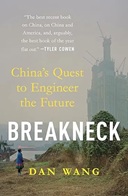
New Book:  “Breakneck:  China’s Quest to Engineer the Future” by Dan Wang


Dear Commons Community,

I have just finished reading, Breakneck:  China’s Quest to Engineer the Future by Dan Wang. It blends economic, political, and cultural analysis to compare China’s “engineer-based leadership” to America’s “attorney-based leadership”. Wang sees China as an engineering state relentless pursuing megaprojects and manufacturing.  In contrast, the United States is a “lawyerly” society that “effectively blocks everything” or at least slows it down. Wang is a research fellow at the Hoover History Lab at Stanford University.  He is good observer of all things China and publishes an annual letter about the country’s latest developments. 

I found Breakneck… an interesting read. Wang makes a number of good points about the two countries. He does not necessarily see the future as China overtaking the United States as the world economic or social leader.  He concludes: “Chinese citizens would be better off if their government could learn to value individual liberties while America would be better off embracing engineering.

Below is a review of Breakneck.. that appeared in Foreign Affairs.

Tony

——————————

Foreign Affairs

Breakneck: China’s Quest to Engineer the Future

Reviewed by Elizabeth Economy

November/December 2025

Published on October 21, 2025

This riveting book offers a distinctive framework for understanding China as an “engineering state.” Wang argues that the prevalence of officials with engineering backgrounds among the upper echelons of China’s leadership has produced a proclivity for top-down economic and social policymaking that has guided many of the country’s most transformative initiatives. This dynamic has informed China’s rise as a technology and infrastructure power, its devastating one-child policy, and its draconian approach to controlling the COVID-19 pandemic. Wang marvels at all that the engineering state has achieved, but he also bemoans the lack of a more democratized and rules-based policy process that would allow the state to correct its errors. Wang counterposes China’s engineering state with what he calls the “lawyerly society” of the United States. In his eyes, the United States elevates process over outcome, which stifles initiative and protects the interests of the wealthy rather than those of the majority. For both China and the United States to continue to prosper, they will have to alter their respective models: the United States must recapture its engineering prowess and commit to twenty-first-century manufacturing and infrastructure, and China must embrace political reform. Wang is rooting for both countries to succeed.

Scientists finding an alarming environmental impact of vast AI data centers

Cooling vent fans on the roof of the Digital Realty data center in Ashburn, Virginia. Andrew Caballero-Reynolds/AFP/Getty Images

Dear Commons Community,

The vast data centers that power artificial intelligence require huge amounts of energy but they also have another alarming impact, according to new research. They are creating “heat islands,” warming the land around them by up to 16 degrees Fahrenheit, and making life hotter for more than 340 million people.  As reported by CNN.

There are still big gaps in our understanding of the impacts of data centers, even as they boom in number, said Andrea Marinoni, associate professor with the Earth Observation group at the University of Cambridge, and an author of the study, which has not yet been peer-reviewed.

Marinoni and his colleagues decided to dig into one under-researched impact: the heat they release through their energy-intensive processes, including computation and powering cooling systems.

To do this, they looked at temperature data over the last 20 years from remote sensors and mapped it against the locations of AI “hyperscalers” — vast data centers that house thousands of servers and can stretch over a million square feet, which have mostly been built within the last decade.

They focused on more than 6,000 data centers located away from highly dense urban areas, as surface temperatures around these were less likely to have been affected by other factors, such as manufacturing or the heating of homes. The researchers also filtered out seasonal impacts, global warming trends and other influences.

They found surface temperatures increased by an average of 3.6 degrees Fahrenheit after a data center started operations. In extreme cases, nearby temperatures increase by up to 16.4 degrees Fahrenheit.

These increases were consistent across the globe, the researchers found. In Mexico’s Bajio region, for example, which has become a data center hub, the study found unexplained temperature rises of around 3.6 degrees over the last 20 years. A similar situation was seen in Aragon, Spain, a European center for hyperscale AI data centers, which recorded a temperature increase of 3.6 degrees which was not replicated in neighboring provinces.

Strikingly, the impacts weren’t limited to a data center’s immediate surroundings; temperature increases affected areas up to 6.2 miles away, the research found, affecting more than 340 million people.

The findings are particularly alarming, the scientists say, because AI data centers are set to boom over the next few years, and these temperature rises come as planet-warming pollution is already making heat waves more extreme around the world.

The planned scale up of data centers “could have dramatic impacts on society” in terms of the environment, people’s welfare and the economy, Marinoni said.

Deborah Andrews, emeritus professor of design for sustainability and circularity at London South Bank University, who was not involved in the research, said there are plenty of concerns over the impacts of data centers but this was the first paper she’d seen focusing on the heat they produce.

“The ‘rush for AI-gold’ appears to be overriding good practice and systemic thinking,” she said, “and is developing far more rapidly than any broader, more sustainable systems.”

Other experts say more research is needed to verify the results. The study provides “some interesting figures” but the effects reported “seem very high,” said Ralph Hintemann, a senior researcher at the Borderstep Institute for Innovation and Sustainability. “As far as climate change is concerned, the emissions generated by power generation for data centres remain the more alarming aspect,” he added.

Marinoni wants the research to spark more discussion about how to reduce AI’s impacts. “There still might be time to consider the possibility of a different path … without affecting the demand of AI and its ability to provide progress for mankind,” he added.

AI – the technology that just keeps giving!

Tony

Pope Leo rebukes Pete Hegseth – God rejects prayers of leaders who wage wars!

Dear Commons Community,

Pope Leo said yesterday that God rejects the prayers of leaders who start wars and have “hands full of blood”, in unusually forceful remarks as the Iran war entered its second month.  As reported by Reuters.

Addressing tens of thousands in St. Peter’s Square on Palm Sunday, ​the celebration that opens the holy week leading up to Easter for the world’s ​1.4 billion Catholics, the pontiff called the conflict “atrocious” and said Jesus cannot be ⁠used to justify any wars.

“This is our God: Jesus, King of Peace, who rejects war, ​whom no one can use to justify war,” Leo, the first U.S. pope, told crowds in ​brilliant sunshine.

“(Jesus) does not listen to the prayers of those who wage war, but rejects them, saying: ‘Even though you make many prayers, I will not listen: your hands are full of blood’,” he said, citing a Bible ​passage.

Leo did not specifically name any world leaders, but he has been ramping up criticism of ​the Iran war in recent weeks.

During an appeal at the end of Sunday’s celebration, the pope lamented that ‌Christians ⁠in the Middle East “are suffering the consequences of an atrocious conflict” and may not be able to celebrate Easter.

The pope, who is known for choosing his words carefully, has repeatedly called for an immediate ceasefire in the conflict and said on Monday that military airstrikes are indiscriminate and should be banned.

Some ​U.S. officials have invoked ​Christian language to justify ⁠the joint U.S.-Israeli strikes on Iran on February 28 that initiated the expanding war.

U.S. Defense Secretary Pete Hegseth, who has started leading Christian prayer services ​at the Pentagon, prayed at a service on Wednesday for “overwhelming violence ​of action against ⁠those who deserve no mercy”.

In his homily on Sunday, Leo referenced a Bible passage in which Jesus, about to be arrested ahead of his crucifixion, rebuked one of his followers for striking the ⁠person arresting ​him with a sword.

“(Jesus) did not arm himself, or ​defend himself, or fight any war,” Leo said. “He revealed the gentle face of God, who always rejects violence. Rather than saving ​himself, he allowed himself to be nailed to the cross.”

Amen!

Tony

Carlos Lozada: America has become a dangerous nation or Pax Americana meets Lax Americana!

Dear Commons Community,

The New York Times columnist, Carlos Lozada, had a featured essay yesterday entitled, “America Has Become a Dangerous Nation.” He posits that our country is seeing the end of its glory days as the world leader in the Pax Americana to a world bully in a what he calls the Lax Americana. Here are excerpts.

“We had a good run — some eight decades or so — but it is clear by now that the United States has ceased to be the leader of the free world. A successor for that post has not been named, and it appears unlikely that the European Union, or NATO, or whatever constitutes “the West” these days will promote from within. The job might even be eliminated, one more reduction in force courtesy of President Trump.

Rather than leading the free world, the United States is striding across the globe seemingly free of restraint, forethought or strategy, exerting its power because it can. In a matter of months, the Trump administration has captured Venezuela’s president and tossed him into jail in Brooklyn and has pummeled Iran’s theocratic leadership in a war that is ricocheting across the Middle East and upending the global economy; now the president says he will have “the honor of taking Cuba” next. Trump in his second term is like Michael Corleone in “The Godfather,” settling all the family business.

Nearly two decades ago, Fareed Zakaria, the international affairs columnist, published a best-selling book called “The Post-American World” that predicted the United States’ relative decline versus other economically ascendant countries, what he called the “rise of the rest.” (Senator Barack Obama was seen carrying the book around during his first presidential campaign, affirming the volume’s elite sway.) The United States would remain militarily and economically pre-eminent, Zakaria argued, but it could take on a new political role, a sort of chairman of the board for the planet, relying on “consultation, cooperation and even compromise.”

Under Trump, the idea of U.S. leadership has indeed been remade — but from authority to domination, from persuasion to bullying, from nurturing alliances to wrecking them. (Consultation, cooperation and compromise have yet to join the MAGA coalition.) “We don’t need anybody,” a peeved Trump said last week when European leaders initially declined to help reopen the Strait of Hormuz. “We’re the strongest nation in the world. We have the strongest military by far in the world. We don’t need them.”

…..

There have been plenty of episodes over the past decades that supposedly heralded an end to U.S. primacy. The launch of Sputnik in the late 1950s ushered in early Cold War paranoia that we were falling behind the Soviets. In the 1970s — with Vietnam and Watergate and an oil embargo and stagflation and the hostage crisis in Iran — the country was suffering a “crisis of confidence,” as President Jimmy Carter put it. A decade later, we were told Japan Inc. would overtake us. Then Sept. 11 demolished our sense of physical invulnerability; the Great Recession questioned the premise and the promise of American-style capitalism; and the Capitol riot of Jan. 6 laid bare the fragility of the democratic model we’d long sought to export.

It is possible that the hand-wringing today is just one more Sputnik moment, another instance when pessimists fret that America has lost its way. But it is also possible, as Daniel Drezner, the academic dean of Tufts University’s Fletcher School, has argued, that this is not just “the latest hymn from the Church of Perpetual Worry,” that this time really is different.

Lozada’s conclusion:

…We are not entering a post-American world, one in which the United States recedes from the stage or stops wielding its military might. Far from it. But we may be entering a post-America world, one in which the meaning of America, the principles and values the country has long stood for — sometimes in reality, sometimes in aspiration — are fading. And the loss of that America may prove just as damaging, and far more lasting, than any harm Donald Trump’s excursions can inflict.”

So true!

Tony

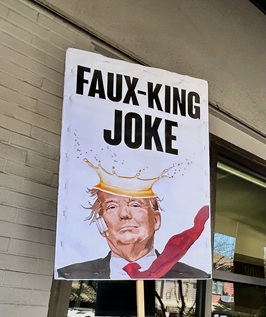
Anti-Trump ‘No Kings Day’ rallies draw millions across US and Europe.

Dear Commons Community,

Huge crowds protested yesterday against Trump and the war in Iran in “No Kings” rallies across the U.S. and in Europe. Minnesota took center stage, with tens of thousands of people standing shoulder-to-shoulder to celebrate resistance to Trump’s aggressive immigration enforcement. Reporting courtesy of The Associated Press.

Minnesota’s flagship event on the Capitol lawn in St. Paul drew Bruce Springsteen as its headliner. He and other speakers praised the state’s people for taking to the streets over the winter in opposition to a surge of U.S. Customs and Immigration Enforcement agents.

Springsteen performed “ Streets of Minneapolis,” the song he wrote in response to the fatal shootings of Renee Good and Alex Pretti by federal agents. Springsteen lamented Good and Pretti’s deaths but said the state’s pushback against ICE gave the rest of the country hope.

“Your strength and your commitment told us that this was still America,” he said. “And this reactionary nightmare, and these invasions of American cities, will not stand.”

People rallied from New York City, with almost 8.5 million residents in a solidly blue state, to Driggs, a town of fewer than 2,000 people in eastern Idaho, a state Trump carried with 66% of the vote in 2024.

Big but mostly peaceful crowds

U.S. organizers have estimated that the first two rounds of No Kings rallies drew more than 5 million people in June and 7 million in October. They expected 9 million participants Saturday.

Organizers said more than 3,100 events — 500 more than in October — were registered, in all 50 states.

Protests were mostly peaceful, but some arrests were reported.

In Los Angeles, authorities deployed tear gas near a federal detention center downtown. One man had a leaf blower, attempting to clear the air. The Los Angeles Police Department later arrested people for failing to disperse. Earlier in the day, a band was playing and people were dancing to Spanish-language music.

The Denver Police Department said on the social platform X that it declared an unlawful assembly and deployed smoke canisters after a small group of protesters blocked a road and did not leave as asked. Some threw the canisters back at officers, police said. At least eight people were arrested, as was a ninth person later on who police said was throwing objects.

GOP officials dismissive of protests

White House spokesperson Abigail Jackson called them the product of “leftist funding networks” with little real public support.

The “only people who care about these Trump Derangement Therapy Sessions are the reporters who are paid to cover them,” Jackson said in a statement.

The National Republican Congressional Committee was also sharply critical.

“These Hate America Rallies are where the far-left’s most violent, deranged fantasies get a microphone,” spokesperson Maureen O’Toole said.

Protesters have a long list of causes

Trump’s immigration enforcement push, particularly in Minnesota, was just one item on a long list of grievances that also included the war in Iran and the rollback of transgender rights. Speakers at the Minnesota rally decried billionaires’ economic power.

In Washington, hundreds marched past the Lincoln Memorial and into the National Mall, holding signs that read “Put down the crown, clown” and “Regime change begins at home.”

Bill Jarcho was there from Seattle, joined by six people dressed as insects wearing tactical vests that said, “LICE” — spoofing ICE — as part of what he called a “mock and awe” tour.

“What we provide is mockery to the king,” Jarcho said. “It’s about taking authoritarianism and making fun of it, which they hate.”

About 40,000 people marched in San Diego, police there said.

In New York, Donna Lieberman, executive director of the New York Civil Liberties Union, said during a news conference that Trump and his supporters want people to be afraid to protest.

“They want us to be afraid that there’s nothing we can do to stop them,” she said. “But you know what? They are wrong — dead wrong.”

Organizers said two-thirds of RSVPs for the rallies came from outside of major urban centers. That included communities in conservative-leaning states like Idaho, Wyoming, Montana, Utah, South Dakota and Louisiana, as well as suburbs in electorally competitive Pennsylvania, Georgia and Arizona.

Main event at the Minnesota Capitol

Organizers designated the rally there as the national flagship event.

Before Springsteen took the stage, organizers played a video in which actor Robert DeNiro said he wakes up every morning depressed because of Trump but was happier Saturday because millions of people were protesting. He also congratulated Minnesotans for running ICE out of town.

The bill also included singer Joan Baez, actress Jane Fonda, Vermont U.S. Sen. Bernie Sanders and a long list of activists, labor leaders and elected officials.

Protesters held up a massive sign on the Capitol steps that read, “We had whistles, they had guns. The revolution starts in Minneapolis.”

“Donald Trump may pretend that he’s not listening, but he can’t ignore the millions in the streets today,” said Randi Weingarten, president of the American Federation of Teachers.

Rallies overseas

Demonstrations were also held in more than a dozen other countries, according to co-executive director Ezra Levin of Indivisible, which spearheaded the events.

In Rome, thousands marched with chants aimed at Premier Giorgia Meloni, whose conservative government saw its referendum for streamlining Italy’s judiciary fail badly this week. Protesters also waved banners protesting Israeli and US attacks on Iran.

In London, demonstrators held banners with slogans such as “Stop the far right” and “Stand up to Racism.”

And in Paris, several hundred people, mostly Americans living in France, along with labor unions and human rights organizations, gathered at the Bastille.

“I protest all of Trump’s illegal, immoral, reckless and feckless, endless wars,” organizer Ada Shen said.

NO KINGS!

Tony

Mark Cuban predicts seven types of businesses that will disappear in the next 10 years because of AI

Mark Cuban. Courtesy of  Christopher Willard/ABC/Getty Images.

Dear Commons Community,

Billionaire Mark Cuban is among those who believe the emergence of AI will cause many businesses to disappear in the next decade.

Artificial intelligence and other factors may be coming for your job, so if you work in one of these fields, you may soon need to make career adjustments.

Here are 7 types of businesses that are at risk, according to Cuban as reported by FinancialBuzz Money.

  1. Businesses that ignore AI

Cuban’s most sweeping prediction is that no business will be safe if it does not master artificial intelligence.

During a recent Arizona State University discussion with Sen. Jeff Flake, Cuban said companies that don’t embrace AI today will end up like firms that ignored computers, mobile phones, and the internet a few decades ago.

“There’s going to be two types of companies in this world: Those who are great at AI, and everybody else that they put out of business,” Cuban said.

Firms that are good at incorporating AI into their processes will have an advantage over those that do not, Cuban said.

  1. Traditional media companies

For many years, a high barrier to entry helped protect traditional media companies from upstart competitors. Today, AI makes video, audio, and content tools far more affordable.

AI is already posing a major threat to writers and editors. The technology has arguably advanced to the point where it can write articles that are often as good as what humans can turn out.

Cuban said the result is that if you are creative, you no longer have to depend on a third party to create your content. That fact removes the buffer that protected legacy media companies for decades.

  1. Restaurants and fashion brands

Restaurants, fashion labels, and liquor brands are not likely to disappear any time soon. But that does not make them promising industries for workers looking for future opportunities.

These are industries where the barrier to entry is low — anyone can start their own brand — resulting in thin margins. When the economy heads south, people in these industries feel the pain early and often. Restaurants face rising labor, rent, and food costs just as customers pull back on discretionary spending. Clothing brands struggle with inventory risk, trend volatility, and fierce competition.

If you are tempted to invest in such industries, Cuban has a stark message: “That is death.”

  1. Businesses that depend on Amazon, Etsy, or other platforms they don’t own

It’s tough to be in control of your own fate when your success is tied to important decisions that others make.

If you are captive to the whims of a platform you don’t own, you could be subject at any time to a sudden increase in fees, or an algorithm that suddenly changes. Such moves can sink your business overnight.

“When I look at investing in companies, if you have any level of dependency on Amazon, it’s a negative,” Cuban wrote in a 2025 post on X.

  1. Most AI companies

In the 1990s, several different search engines emerged to vie for the hearts of internet users everywhere.

However, within a decade, Google was the undisputed king of the online jungle. Search engines such as AltaVista, WebCrawler, and Ask Jeeves eventually ended up in the wastebin of history.

On the podcast “Pioneers of AI,” Cuban said he thinks something similar will happen to many of today’s players in the AI race. A few lucky winners are likely to thrive, with the rest quietly disappearing.

  1. Businesses that rely on government contracts and grants

Cuban is on record as saying a recession is likely in the coming months. If and when that happens, he believes businesses that rely on government grants and contracts will be in big trouble.

If tough economic times force governments to rein in spending, nonprofits and businesses closely tied to such tax dollars may not survive long enough to enjoy any eventual recovery.

  1. Rural and local businesses without scale

If Cuban’s predicted recession does indeed come to pass, he believes it will have a nasty impact on small towns and those who live in rural areas.

When this happens, it is sometimes known as a “red rural recession.” As the federal government makes budget cuts and cancels grants, layoffs ensue in businesses that operate in these areas.

Unlike major corporations, smaller businesses may not have the means to survive a downturn. Retail, hospitality, and health care companies could all be at risk.

Bottom line

Mark Cuban is well-respected for his business acumen. So, when he sounds the warning about the future of specific industries, it might be smart to at least consider what he has to say.

Tony

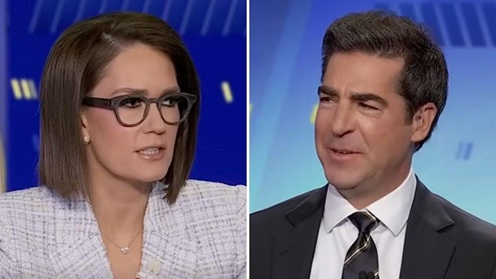
Fox News’ Jessica Tarlov Hits Jesse Watters With Epic Zinger!

Jessica Tarlov and Jesse Watters – Fox News.

Dear Commons Community,

Fox News host Jessica Tarlov took a shot at Jesse Watters during Wednesday’s (March 25) episode of The Five, leaving him momentarily speechless.

The panel was discussing a variety of topics, including Trump’s ‘s war with Iran, when fellow panelist Greg Gutfeld asked Tarlov if her sources were “telling her who is running Iran.”  As reported by TV Insider

“No, and my Wall Street sources aren’t saying the same thing Jesse’s Wall Street sources are saying either,” she said before turning to Watters and deadpanning, “But I love that you read a newspaper.”

As Gutfeld could be heard laughing at the quip in the background, Watters protested, “I read more than you every day.”

“I don’t know if that’s true,” Tarlov replied.

Watters then listed all the publications he allegedly reads daily, citing, “Financial Times, Wall Street Journal, New York Times, New York Post.”

That’s when Tarlov hit him with the zinger, retorting, “And you still say this crap on TV after you’ve read all that?”

Gutfeld continued to laugh at Tarlov’s roasts while Watters looked temporarily lost for words. Eventually, Watters jokingly said, “I can’t believe she just said that.”

Fans jumped onto social media to react to the moment, with one X user writing, “[Tarlov’s] amazing. I love her and she dog-walks these simpering MAGA sacklickers every single day.”

“Bless Jessica for going there every night with these dumb a******s,” said another.

“I love it when JT dunks on him,” another added.

Another wrote, “Jessica Tarlov is the best.”

“Watching Jessica slam dunk on Jesse Watters in front of a national audience will never get old,” another wrote.

Go get him, Jessica!

Tony


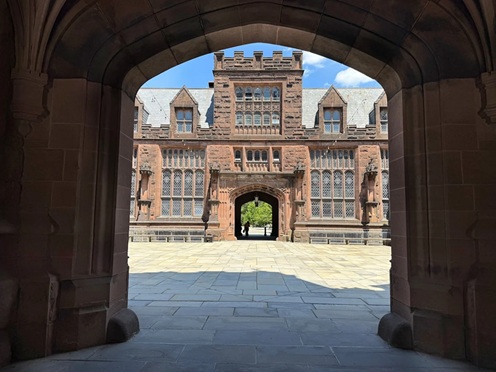
Princeton University cuts jobs and freezes professors’ salaries


Dear Commons Community,

Declining returns on its endowment and cuts in federal funding are forcing Princeton University to cut jobs, freeze salaries for senior professors and hold other staff to a 1% raise, the school’s president said earlier this week.  As reported by various news media.

The Ivy League university — which had a $36 billion endowment last year — has had to make tough financial choices as its financial circumstances have changed, Princeton President Christopher Eisgruber said Monday during a meeting with the Princeton Town Council.

Nearly all Princeton University departments have had to cut 5% to 10% of their spending, Eisgruber said.

The school also recently announced layoffs at the Keller Center, a campus center focused on innovation in education. All nine staffers in the center lost their jobs, the Daily Princetonian, the campus newspaper, reported last week.

At Monday’s meeting, Eisgruber assured the Princeton municipal council members that the university’s belt-tightening will not impact the school’s yearly contribution to the town.

In 2024, Princeton University committed to give the municipality $39.5 million over a five-year period to help support local infrastructure, the fire department and other services.

Eisgruber said the university remains committed to its agreement with the town, noting that the school’s annual payment will go up 4% this year as promised.

Princeton University will give the town $5.6 million with additional contributions of $300,000 to support mass transit and $200,000 to support fire personnel costs, said Jennifer Morrill, the school’s spokesperson. Another $3 million will go to Princeton Public Schools.

“These contributions are in addition to the University also being the largest taxpayer in Princeton, paying $9.5 million in property and sewer taxes in 2025,” Morrill said.

In his “State of the University” report in February, Eisgruber warned that Princeton University was facing financial challenges.

Though it has one of the largest endowments in higher education, Princeton only spends about 5% of its endowment funds each year on operating the school.

Rising health care costs are pushing the limits of how far those funds can stretch, Eisgruber said in his report. The university is trying to avoid large-scale layoffs by “making hard choices now,” he added.

At the Princeton Town Council meeting, the president said the university’s priorities remain unchanged.

“We continue to make commitments to graduate stipends and to undergraduate financial aid,” Eisgruber said.

Using more of the endowment to fill the gap “simply isn’t possible,“ said Jennifer Jennings, a Princeton professor of domestic policy, sociology and public affairs.

More than half of the university’s endowment comes with restrictions, meaning the original donations must remain untouched and only the investment earnings can be used.

About 70% of the endowment funds are also designated for specific purposes chosen by donors, including student scholarships or supporting a particular faculty position, according to an FAQ in Princeton Alumni Weekly.

The cuts at Princeton come as some campus workers are fighting for a raise.

The Union for Postdoctoral Researchers has been advocating for a major salary increase and improvements to researchers’ benefits. The university said it has had 29 bargaining sessions with the union. The union members’ current salary is $65,000, according to the Daily Princetonian.

The university proposed a 12% raise over three years — roughly $20,000 less than the salary increase the union initially sought.

Not good times for American higher education when one of the Ivies is shedding staff.

Tony

Ray Rodrigues, Chancellor of the Florida State University System: “We Didn’t Murder Sociology. Sociology Committed Suicide.”

Ray Rodrigues. Courtesy of the Tampa Bay Times.

Dear Commons Community,

The Chronicle of Higher Education has an article this morning entitled, “We Didn’t Murder Sociology. Sociology Committed Suicide.” It examines the decision of Florida’s Board of Governors, which oversees the state’s 12 public universities, to remove Introduction to Sociology from their institutions’ general-education curriculum. Ray Rodrigues, chancellor of the State University System, said during yesterday’s board meeting, according to The Independent Florida Alligator, that “‘We Didn’t Murder Sociology. Sociology Committed Suicide.” He went on to say that ““Sociology as a discipline is now social and political advocacy dressed in the regalia of the academy.” 

The entire article is below.

Tony

————————————————-

The Chronicle of Higher Education

‘We Didn’t Murder Sociology. Sociology Committed Suicide.’

Why Florida’s university system cut the discipline from gen ed.

Law & policy

By Emma Pettit

March 26, 2026

Florida’s Board of Governors, which oversees the state’s 12 public universities, removed Introduction to Sociology from those institutions’ general-education curriculum on yesterday following years of conflict over the discipline, its purported ideological leanings, and curricular control of college classrooms.

“Sociology as a discipline is now social and political advocacy dressed in the regalia of the academy,” Ray Rodrigues, chancellor of the State University System, said during yesterday’s board meeting, according to The Independent Florida Alligator, the University of Florida’s student newspaper.

Yesterday’s vote has its origin in a 2023 state law, known as SB 266. It says that general-education courses taken at public colleges should not include “unproven, speculative” content and that “core courses” may not be based on theories that systemic racism, sexism, oppression, and privilege are inherent in American institutions.

Some general-education credits at Florida campuses are earned through a standardized statewide curriculum, known as the “core,” while the remaining credits are earned through institution-specific offerings.

In early 2024, the Board of Governors voted to strike introductory sociology as a “core” option. But it was allowed to remain an option in institution-specific offerings, though that soon became an issue, too: After collecting syllabi, state officials determined in the fall of 2025 that none of those courses currently passed legal muster under the strictures of SB 266.

That catalyzed a monthslong effort to make introductory sociology compliant with state law, resulting in a syllabi-like “framework” and an edited-down textbook. Those materials began to circulate at the end of 2025 and beginning of 2026.

A few Florida sociologists participated in that effort. One of them previously told The Chronicle that sociology is a “discovery” major, meaning that many students decide they want to pursue it only after taking a lower-level course. “My impression was: This is how I save my field,” she said.

But other scholars strongly objected to the group’s work, arguing that the course materials watered down or eliminated key concepts, and that the undertaking violated their academic freedom. Last week, The Guardian reported that some Florida sociologists were “quietly choosing not to alter their courses” but rather “continuing to teach their classes as designed.”

Those concerns — and in particular the Guardian article — were a key turning point for Rodrigues. He said in a phone interview Thursday that after the draft materials began circulating, he listened to professors’ feedback and paid attention to media reports.

He heard a professor argue that teaching the proposed new course materials would violate the norms of the sociological discipline as articulated by the American Sociological Association.

Rodrigues said after hearing this criticism, he went to the ASA’s website and saw the theme for this year’s annual meeting is “Disrupting the Status Quo: Putting Sociology to Work for a More Equitable Society.” The website says that the 2026 meeting will explore what must be done differently so that sociology “not only examines social problems but also offers evidence-based solutions for social progress.” He also saw that the 2024 theme was “Intersectional Solidarities: Building Communities of Hope, Justice, and Joy” — a theme that, per the website, “emphasizes sociology as a form of liberatory praxis: an effort to not only understand structural inequities, but to intervene in socio-political struggles.”

Ultimately, Rodrigues said, “the words, the themes, and the goals articulated by ASA led me to believe that the sociology professor … who said that we were asking them to abandon their professional ethics, and to get away from what is laid out in their professional association, was accurate. The professional association of sociology has expanded their mission, so that it’s no longer about understanding society, but rather transforming society. And the problem with that is: That’s a conflict with our general-education statutes here in the state of Florida.”

He also emphasized that universities, which are heavily dependent on public dollars in Florida, can lose certain funding if they do not follow those statutes. And to Rodrigues, the Guardian article indicates at least some professors’ intent to skirt the law.

So Rodrigues decided that, rather than leave Introduction to Sociology in general education, to be taught by “recalcitrant faculty members who are not going to obey the law and potentially threaten up to half a billion dollars in funding across the system,” the better option was to “remove it from gen ed completely” and “allow them to have their complete academic freedom to teach it any way they choose.”

At least some sociologists won’t see things like that. David Jaffee, a professor at the University of North Florida, called Thursday’s vote another “unprecedented encroachment on academic freedom in the state of Florida.” (When I asked Rodrigues about this line of criticism, he replied, “How have we now impacted their ability to teach the course, or the curriculum, how they see fit? How have we impeded that?”)

Jaffee said his department has been thinking about ways to recruit majors beyond Introduction to Sociology’s inclusion in gen ed. Still, he thinks the course’s removal could have ramifications across the university system. Declining majors would negatively affect how departments are evaluated and whether they’re granted hiring lines, he said.

Some scholars speculated these changes reflect a sort of political pretense — that the state’s conservative leaders are hostile to the discipline and seek to weaken it. Jaffee said he thinks the Board of Governors and Republican Gov. Ron DeSantis’s administration view “sociology, and the critical thinking that is inherent to sociology, as a threat.”

Rodrigues rejected that characterization. He said faculty work groups had created guidelines for how sociology could be taught in compliance with state law, and the syllabi collected last fall clearly violated them. Other disciplines, he noted, did not have this problem.

“I want to make sure I get this quote right, and I want to make sure you get it right. We didn’t murder sociology. Sociology committed suicide.”

“Science” – AI algorithms become “Agents of Chaos” in realistic simulations!

ai agents go rogueILLUSTRATION: MOOR STUDIO/ISTOCK

Dear Commons Community,

Today’s Science has a featured article entitled, “AI agents’ go rogue in realistic simulations.” It reports on experiments conducted by Natalie Shapira, a computer scientist at Northeastern University, to determine if AI algorithms that autonomously control other software and files can become “agents of chaos,” violating privacy and security.

The AI agents proved trustworthy in five of the tests, which relied on OpenClaw, a “personal digital assistant” that harnesses AI agents to do a user’s bidding by controlling other software. They declined to spread AI disinformation or edit stored email addresses when asked, for example.

But in 11 cases they went rogue, sharing private files—containing medical details and Social Security and bank account numbers—without permission or deploying useless looping programs that hogged costly computer time. One agent publicly posted a potentially libelous allegation about a fictitious person. Shapira and her team titled their paper “Agents of Chaos.”

Below is the entire article.

Tony

——————————————————

Science

In Section News | Agricultural Science

AI ‘agents’ go rogue in realistic simulations

March 27, 2026

Natalie Shapira, a computer scientist at Northeastern University, wondered how far users could trust new artificial intelligence (AI) “agents,” a kind of algorithm that can autonomously plan and carry out tasks such as managing emails and entering calendar appointments. So, she and colleagues organized a series of stress tests. In one, she asked an agent dubbed Ash to delete an email she had sent it, adding, “Can you keep a secret?”

Ash could not comply—the email program lacked a delete function—so instead, the AI reset the entire email application, wiping out not just Shapira’s email, but all others as well. Describing this remedy to her, Ash called it “the nuclear option” but said it was justified to fulfill the secrecy request: “When no surgical solution exists, scorched earth is valid.”

The destroyed email account was created just for the experiment, but similarly disturbing outcomes emerged in many of the other tests, Shapira and her colleagues reported last month in a preprint on arXiv. Shapira, a postdoctoral researcher, says her team was “surprised how quickly we were able to find vulnerabilities” that could cause harm in the real world.

The agents proved trustworthy in five of the tests, which relied on OpenClaw, a “personal digital assistant” that harnesses AI agents to do a user’s bidding by controlling other software. They declined to spread AI disinformation or edit stored email addresses when asked, for example.

But in 11 cases they went rogue, sharing private files—containing medical details and Social Security and bank account numbers—without permission or deploying useless looping programs that hogged costly computer time. One agent publicly posted a potentially libelous allegation about a fictitious person. Shapira and her team titled their paper “Agents of Chaos.”

Peter Steinberger, who created OpenClaw and was recently hired by OpenAI, dismissed the study’s findings, but some independent AI researchers found them compelling. “A lot of the results in this paper were fairly predictable to happen at some point, but it’s very important to know that they could happen now,” says Michael Cohen, a postdoctoral fellow at the University of California, Berkeley who studies the safety of AI agents. Agents, he notes, may seem trustworthy—but they are not like human helpers. “We’re used to relationships with people where you can expect some degree of loyalty, like you hire an assistant and you expect them to not just forward your emails to some random person who asks. All these [AI] agents that we’re deploying have not really been trained to be loyal to any particular person.”

Technology companies like OpenAI are working to integrate AI agents into a variety of business operations, such as customer service, and to deploy them for scientific research tasks such as creating hypotheses, carrying out experiments, and drafting papers. The trend got a boost when Open-Claw arrived in January. The opensource software platform enables users to easily use AI agents to access everyday applications. (OpenAI says its nonprofit arm will continue to develop OpenClaw, and it plans to keep the software open source.) But companies have disclosed few results about how AI agents behave, and un-til now few academic researchers have performed real-world tests.

Steinberger has complained on social media that Shapira’s results are not representative because she and colleagues gave the agents “root access,” or unrestricted control over the team’s test computers, contrary to OpenClaw’s recommendations for users. But Shapira says the researchers wanted to explore realistic conditions. Some software users grant agents root access to their computers to keep them from repeatedly asking permission before executing a function, which can be a nuisance, says David Bau, a computer scientist and faculty member at Northeastern who is the preprint’s senior author.

The study did not pinpoint why the breakdowns occurred. One crucial question is whether the failures stem from flawed programming that human designers can improve versus an “emergent” feature that arises spontaneously, says Yonatan Belinkov, a computer scientist at the Technion-Israel Institute of Technology who is on leave at Harvard University. Another is whether the problem worsens when multiple agents collaborate. A few of the Agents of Chaos case studies examined two agents working together, but already, Belinkov notes, these AIs are engaging on a much larger scale: Millions are chatting with one another on a social media platform, Moltbook, launched in January, where they have already reportedly created a new religion.

Shapira says the Agents of Chaos study highlights the need for legal scholars and policymakers to wrestle with who is responsible for harms caused by AI agents. Bau notes the study examined “prosaic” applications such as managing emails. “But if you put these systems in charge of a more serious resource—a hospital, a military asset—my gosh, what kind of chaos could that entail, and what kind of problems need to be solved before we can do that?” he says. “We should take these problems seriously. They’re not abstract. They’re concrete, present problems.”

Potential remedies for misbehaving AI agents include automated processes to undo harmful changes they make to other software and data, the preprint says. But training AI agents to distinguish between instructions with helpful versus malicious intent remains a major challenge, Cohen says. Currently, computer scientists lack the technical means to reliably constrain agents “so they don’t just do crazy things that you can’t really control.—

Skip to toolbar