America at War in the Middle East as the U.S. and Israel launch strikes on Iran!


Smoke was seen rising in Tehran today after the U.S. and Israel said it launched an attack on Iran. The first apparent strike happened near the offices of Supreme Leader Ayatollah Ali Khamenei.  Photo:  Courtesy of AP.

Dear Commons Community,

The U.S. and Israel launched a major attack on targets across Iran on today.  As reported by The Associated Press

U.S. President Donald Trump urged Iranians to take cover during the strikes, but then said “When we are finished, take over your government. It will be yours to take.” It was an extraordinary appeal that suggested the allies could be seeking to an end of the country’s theocracy after decades of tensions.

Israeli Prime Minister Benjamin Netanyahu echoed that sweeping goal. “Our joint operation will create the conditions for the brave Iranian people to take their fate into their own hands,” Netanyahu said.

In a video posted on social media, Trump claimed Iran has continued to develop its nuclear program and plans to develop missiles to reach the U.S.

What we know so far:

  • Why the US and Israel attacked: Tensions have soared in recent weeks as American warships moved into the region, and U.S. President Donald Trump said he wanted a deal to constrain Iran’s nuclear program. Prime Minister Benjamin Netanyahu of Israel — which considers Iran its archenemy — said the joint attack was to “remove an existential threat posed” by Iran.
  • Trump’s statement: He indicated the U.S. was striking for reasons far beyond the nuclear program, listing grievances stretching back to the beginning of the Islamic Republic following a revolution in 1979 that turned Iran from one of America’s closest allies in the Middle East into a fierce foe. Read what he said in full.
  • Airspaces are closing: Iraq and the United Arab Emirates closed their airspace, and sirens sounded in Jordan. Bahrain said that a missile attack targeted the U.S. Navy’s 5th Fleet headquarters. Explosions could be also be heard in Qatar.

Tony


David Bloomfield: NYC students clock about 130 fewer hours in class than national peers.

Dear Commons Community,

My colleague, David Bloomfield, an education professor at Brooklyn College and the CUNY Grad Center, emphasized the importance of thinking about “the problems of continuity and opacity” in the school calendar, where interruptions are frequent. Out of 45 school weeks, he said, less than half — about 20 — have complete five-day weeks.  As published in Chalkbeat.

“What seems like 180 days isn’t really,” he said, adding, “A child’s individual calendar may differ from grade to grade, program to program because of testing and other non-instructional obligations.”

Bloomfield staunchly advocated for snow days, but he also believes the city should consider rethinking the calendar to add days at the start of the school year, before Labor Day. 

Students return to school the Thursday after Labor Day. Given this year’s late holiday, schools aren’t expected to start until Sept. 10 for 2026-27. 

“Since summer camps have already closed, most families would not be unnecessarily inconvenienced by the change,” Bloomfield recently wrote in an op-ed. “The main impediment would be union agreement, a difficult but not impossible challenge for the new administration to overcome.”

Add absenteeism to the calendar issue and the situation becomes worse.

You can’t learn if you are not in class being taught!

Tony

‘Staggering’ Incompetence: Critics Rip Trump Admin After U.S. Shoots Down Its Own Drone


Dear Commons Community,

Critics are calling out Trump and his administration after what appears to have been a massive screw-up in the airspace around El Paso, Texas, for the second time in less than a month.

The U.S. military on Thursday used a laser weapon to shoot down a drone near the U.S.-Mexico border. It turned out the drone was operated by U.S. Customs and Border Protection (CBP), The Associated Press reported.

Earlier this month, the FAA shut down the El Paso airport and surrounding airspace after CBP used a laser to shoot down party balloons that it had mistakenly believed to be Mexican drug cartel drones. CBS News reported that the closure was also related to military tests of the laser weapon, as well as a dispute with the FAA over how to handle them.

In the latest case, the FAA closed off airspace, but not the airport. The move did not impact commercial flights, AP reported.

Cartel drones have been spotted with increased frequency near the border. Earlier this month, Reuters reported that they tend to be “crudely adapted” off-the-shelf models and are used for both surveillance and to drop drug packages.

However, critics slammed the Trump administration for deploying experimental weapons without correctly identifying the target.

What a mess!

Tony


In a first, ChatGPT helps break new ground in theoretical physics!

The aftermath of a high energy nuclear collision at Brookhaven National Laboratory that briefly liberated quarks and gluons. IMAGE: BROOKHAVEN NATIONAL LABORATORY

Dear Commons Community,

Science is reporting that an unlikely new contributor has entered the ranks of theoretical physics: Chat-GPT. For decades, physicists believed a particular obscure interaction involving particles called gluons could never happen. Now, ChatGPT has revealed that the process can in fact occur, albeit somewhere deep inside the murky guts of protons and neutrons. Researchers announced the finding earlier this month at the annual meeting of AAAS, which publishes Science.

“The ideas are not revolutionary,” says Zvi Bern, a particle theorist at the Mani L. Bhaumik Institute for Theoretical Physics at the University of California, Los Angeles. “But what is revolutionary is that a machine can do this.”

Gluons are the massless quantum particles that convey the strong nuclear force, which binds particles called quarks into protons and neutrons, as well as protons and neutrons into atomic nuclei and gluons to each other. Because the strong force is so strong, the theory describing it is nearly intractable mathematically. Theorists capture each specific interaction of gluons—two gluons ricocheting off each other to spawn a third, for example—in a mathematical expression known as a scattering amplitude that, roughly speaking, gives the probability of the interaction occurring. But, even for the simplest interactions, those scattering amplitudes can be dauntingly difficult to evaluate.

ChatGPT helped crack one of these puzzles. Gluons spin a bit like tops, and one can spin either in the direction it is traveling, like a football thrown by a right-handed quarterback, or it can spin the opposite direction, like a football thrown by a left-handed quarterback. In the latter case, the gluon is said to have negative helicity. For decades, physicists thought that in the simplest collisions of any number of gluons, at least two of all the particles had to have negative helicity. If only one had negative helicity, the scattering amplitude had to be zero.

About a year ago, however, three theorists spotted a potential loophole: A lone gluon of negative helicity could interact with others of positive helicity if all the particles were moving in roughly the same direction. Now, they had to prove it.

Andrew Strominger, a theoretical physicist at Harvard University and co-author of the study, says he and his colleagues initially thought they could confirm their hunch in a few weeks. But the calculations ended up being cumbersome and time consuming. After months of working by hand, Alfredo Guevara, a high energy physicist at the Institute for Advanced Study, finally discovered a pattern in the team’s scattering amplitude formulas. The equation that described four gluons looked like the one for five gluons, and so on.

The team hoped to generalize the formula and show that the interaction could happen for any number of gluons, but the resulting expression was dozens of terms long and essentially unworkable. The group suspected an elegant and clean formula was hiding in this quagmire: One had been discovered in the 1980s for a similar gluon interaction. But even after a year of work, the researchers couldn’t simplify what they had.

Around the same time, Alex Lupsasca, a theoretical physicist at Vanderbilt University, joined the newly launched science team at OpenAI, the company that created ChatGPT, and was tasked with improving ChatGPT’s science abilities. He connected with Strominger, his graduate adviser, and discovered that this gluon problem would be the perfect test subject. “I thought, it’s probably not going to work, but we’ll find out why not” and adjust the artificial intelligence (AI) model accordingly, Lupsasca says.

After some first attempts to probe the model, the theorists asked OpenAI’s latest and most advanced public model, ChatGPT-5.2 Pro, to simplify the expression for four gluons, which it did in about 20 minutes. Then they asked to do the same for five gluons, then six. GPT-5.2 Pro managed to reduce a sum of 32 terms to a product of only a few, all on one line of text. Finally, the group asked the AI to generalize the formula for any number of particles. This time, it replied within a minute or two, declaring that its solution was “obvious.”

Worried the answer might be a hallucination, the researchers checked the formula and couldn’t find anything wrong. “All of a sudden, I felt like my machine turned from a machine into a live being,” Strominger says. Next, the group took the generalized formula from GPT-5.2 Pro and fed it into an internal OpenAI model that’s under development, which the researchers privately call “SuperChat,” prompting it for a proof. After 12 hours of processing, the model spat out a robust proof that passed human checks.

Within hours of its posting to the preprint server arXiv on 12 February, the team’s paper was trending on social media. And when Lupsasca presented the team’s results during a 13 February session at the meeting, physicists in attendance were shocked. “What the OpenAI agent was able to do is impressive,” says Aida El-Khadra, a particle theorist at the University of Illinois Urbana-Champaign.

The paper’s authors are optimistic about AI’s future place in the sciences. “This is a change of paradigm in the way we do physics,” Guevara says. He thinks AI will be able to do for physics what it has recently done for programming: Become so good that human users can rely on it for day-to-day tasks without extensive scrutiny. Lupsasca, who claims he was an AI skeptic only a year ago, says, “I think there is some kind of threshold that is being passed.”

The wider physics community has received the news with cautious optimism. Bern and El-Khadra expect AI assistants will help with routine tasks, find errors in research, accelerate the paper writing process, and bridge information across fields. Both cite concerns about the use of AI in academic physics, such as researchers’ unacknowledged use of AI in their work or the possibility that large language models will automate many of the research tasks traditionally used to train graduate students. But neither is worried that ChatGPT is coming to take their jobs. “None of this feels to me like scientists will be replaced,” El-Khadra says.

Lupsasca hopes researchers can use AI to solve the biggest problem in theoretical physics: reconciling quantum mechanics and gravity. He plans to extend the team’s approach to gravitons, hypothetical quantum particles that convey the force of gravity, and to find a way to mathematically describe a special version of quantum gravity that remains well-behaved even at high energies, perhaps “by the end of the year.”

AI’s future in the sciences and research is indeed guaranteed.

Tony

Block, the parent company of Square and the Cash App, plans to lay off nearly half its staff and embrace AI

Block, the company behind Square, and the Cash App is led by CEO Jack Dorsey,

Dear Commons Community,

Block, the parent company of Square and the Cash App, is conducting a major reorganization in the age of artificial intelligence, and investors are rewarding the move.

The payment-technology company plans to cut almost half of its workforce, it announced yesterday. The restructuring will bring Block’s employee count below 6,000 versus more than 10,000 today.

Shares of Block soared 23.5% in after-hours action yesterday

The layoffs at Block come just days after Citrini Research rattled markets with the publication of a blog post detailing a fictional scenario in which AI productivity tools were so powerful that they forced widespread shifts in the U.S. labor market. These particularly impacted knowledge workers.

‘Intelligence tools have changed what it means to build and run a company,” CEO Jack Dorsey said in a shareholder letter. “We’re already seeing it internally. A significantly smaller team, using the tools we’re building, can do more and do it better.”

By “intelligence tools,” the company is referring to AI and automation. CFO Amrita Ahuja said that Block has seen sizable productivity gains recently, not just among programmers but also within the broader company.

Within a year, Dorsey expects other companies to follow suit with “similar structural changes.”

“I’d rather get there honestly and on our own terms than be forced into it reactively,” he added.

Mizuho analyst Dan Dolev also wondered whether the move would set a precedent for other technology companies.

Block’s “deliberate and bold” decision to dramatically reduce its workforce comes “from a position of strength,” according to Ahuja, as the company just exceeded expectations with various financial metrics and lifted its outlook.

In its fourth-quarter earnings report yesterday, Block reported earnings per share of 65 cents, down from 71 cents a year before but ahead of the FactSet consensus by a penny. Gross profit, which is seen by Wall Street as a reasonably clean barometer for Block’s top-line performance, was up 24% from a year before to $2.87 billion. Analysts were looking for $2.74 billion.

Block now expects 18% growth in gross profit for the full year, above the 17% target it set at an investor day late last year.

That new outlook reflects a “recognition of our ability to continue to drive against our roadmap” with a “smaller, more nimble, flatter organizational structure,” Ahuja said.

What is interesting here is the positive response of the stock market and investors to Block’s embrace of AI. It will encourage other companies to do likewise.

Tony


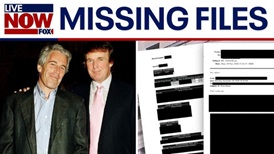
Epstein Files Are Missing Records about a Woman Accusing Trump of Sexual Assault

Dear Commons Community,

The trove of documents released by the Justice Department from its investigations into the convicted sex offender Jeffrey Epstein failed to include some key materials related to a woman who made an accusation against Trump, according to a review by The New York Times.

The materials are F.B.I. memos summarizing interviews the bureau did in connection to claims made in 2019 by a woman who came forward after Mr. Epstein’s arrest to say she had been sexually assaulted by both Mr. Trump and the financier decades earlier, when she was a minor.

The existence of the memos was revealed in an index listing the investigative materials related to her account, which was publicly released. According to that index, the F.B.I. conducted four interviews in connection with her claims and wrote summaries about each one. But only one of the summaries, which describes her accusations against Mr. Epstein, was released by the Justice Department. The other three are missing.

The public files also do not include the underlying interview notes, which the index also indicates are part of the file. The Justice Department released similar interview notes in connection to F.B.I. interviews with other potential witnesses and victims.

It is unclear why the materials are missing. The Justice Department said in a statement to The Times on Monday that “the only materials that have been withheld were either privileged or duplicates.” In a new statement on Tuesday, the department also noted that documents could have been withheld because of “an ongoing federal investigation.” Officials did not directly address why the memos related to the woman’s claim were not released.

The woman’s description of being assaulted by Mr. Trump in the 1980s is among a number of uncorroborated accusations against well-known men, including the president, that are contained in the millions of documents released by the Justice Department.

When the files were made public late last month, officials described the trove as including all material sent by the public to the F.B.I. “Some of the documents contain untrue and sensationalist claims against President Trump that were submitted to the F.B.I. right before the 2020 election,” the department said in a statement at the time, calling such claims “unfounded and false.”

Mr. Trump has repeatedly denied wrongdoing. In a statement on Tuesday, a White House spokeswoman, Abigail Jackson, said Mr. Trump had “been totally exonerated on anything relating to Epstein.”

A lawyer who previously represented the woman in a lawsuit against Mr. Epstein’s estate declined to comment.

The missing records deepen questions about how the Justice Department has handled the release of the Epstein files, which was mandated by a law signed by Mr. Trump last year after bipartisan congressional pressure.

Under the law, the Justice Department can redact material that could be used to identify Mr. Epstein’s victims, depicted violence or child sexual abuse, or would hurt a continuing federal investigation. But the law expressly prohibited federal officials from withholding or redacting materials “on the basis of embarrassment, reputational harm or political sensitivity” to public figures.

Some lawmakers and survivors of Mr. Epstein’s abuse have strongly condemned the department for how it handled redactions, noting that details identifying some victims were left exposed and nude photographs of young women were included in the public release, while material related to claims of abuse by other men had been heavily redacted.

The woman who made the accusation about Mr. Trump came forward in July 2019, days after federal investigators arrested Mr. Epstein on sex-trafficking charges, according to records in the public files of tips the F.B.I. received during that period. She claimed that she had been repeatedly assaulted by Mr. Epstein when she was a minor in the 1980s, according to a summary of an F.B.I. interview with her on July 24, 2019.

The F.B.I. did three subsequent interviews to assess her account in August and October 2019 and made a summary of each interview, according to the index of records compiled in the case. But the memos describing those three interviews were not publicly released.

The public files do contain a 2025 description of her account, as well as other accusations against prominent men contained in the documents. In that 2025 memo, federal officials wrote that the woman had said that Mr. Epstein introduced her to Mr. Trump, and that she claimed Mr. Trump had assaulted her in a violent and lurid encounter. The documents say the alleged incident would have occurred in the mid-1980s when she was 13 to 15 years old, but they do not include any assessment by the F.B.I. about the credibility of her accusation.

The Times’s examination of a set of serial numbers on the individual pages in the public files suggests that more than 50 pages of investigative materials related to her claims are not in the publicly available files. The missing materials were reported earlier by the journalist Roger Sollenberger on Substack and by NPR.

Representative Robert Garcia of California, the top Democrat on the House Oversight Committee, said that when he reviewed unredacted versions of the Epstein files at the Justice Department on Monday, interview summaries related to the woman’s claim were also missing from that trove.

“Documents that are listed, which should be included, which are referenced in other documents, are not in the files,” Mr. Garcia said. He added that the Justice Department had also not provided them to the Oversight Committee, which issued a subpoena last year for all of the Justice Department’s investigative material regarding Mr. Epstein.

Mr. Garcia said the Justice Department had not provided a proper explanation for why the materials were missing. Democrats plan to open a separate investigation into why the documents are not available.

In the sole summary of the F.B.I. interview that was released, the woman told investigators that she did not know Mr. Epstein’s full identity until 2019, when a friend sent her a photograph of Mr. Epstein. She said she then recognized the person who she said had raped her.

The woman told the agents she still had the photo on her phone, and they noted that it was a widely distributed photo of Mr. Epstein and Mr. Trump, according to the document. She gave the agents permission to take a photograph of the image but asked them to crop out Mr. Trump. When asked why, her lawyer interjected that the woman “was concerned about implicating additional individuals, and specifically any that were well known, due to fear of retaliation,” according to the F.B.I. memo.

It is unclear exactly what F.B.I. agents learned about her claims related to Mr. Trump in their three subsequent interviews.

The woman spent most of the interview on July 24, 2019, describing in detail what she said were repeated violent assaults by Mr. Epstein that she had endured, as reported earlier by The Post and Courier. She said that as a teenager in South Carolina, she was asked to babysit at a house on Hilton Head Island. But after she arrived, there were no children to babysit, and only a man she came to know as Jeff who she said plied her with alcohol, marijuana and cocaine. She described him raping her on multiple occasions.

The woman joined a lawsuit later in 2019 against Mr. Epstein’s estate. She subsequently dropped her claim. Court records do not indicate if she received any financial settlement. A court record from 2021 said she was separately deemed ineligible for compensation from a fund set up for Epstein victims, but it did not specify why.

I am sure that the Trump Justice Department will come up with a “valid” reason for the missing files.  HA!

Tony

Larry Summers Resigns from Harvard after Revelations in the Epstein Files!

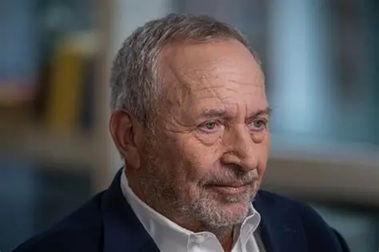
Lawrence  Summers.  

Dear Commons Community,

Lawrence  Summers will resign from his academic and faculty appointments at Harvard University, an institution he once led as president, at the end of the academic year, a spokesperson for Summers told The Chronicle of Higher Education and as reported in The Harvard Crimson.

The announcement ends a fall from grace for Summers, who has been the subject of a furor since documents released by the Department of Justice showed a close relationship between the economist and Jeffrey Epstein long after Epstein’s 2008 conviction of prostitution involving a minor. Summers has been on leave since November while Harvard reviews his ties to Epstein, and he will remain so until the end of the academic year, a Harvard spokesperson told The Chronicle.

He also stepped down yesterday from his role as co-director of the Mossavar-Rahmani Center for Business and Government at the Harvard Kennedy School, Harvard spokesperson Jason Newton confirmed. Newton said in a statement that Jeremy Weinstein, dean of the Harvard Kennedy School, accepted Summers’s resignation “in connection with the ongoing review by the University of documents related to Jeffrey Epstein that were recently released by the government.”

“I have made the difficult decision to retire from my Harvard professorship at the end of this academic year,” Summers said in a statement via a spokesperson. “I will always be grateful to the thousands of students and colleagues I have been privileged to teach and work with since coming to Harvard as a graduate student 50 years ago.”

Summers, whose career has spanned top roles in academe and government, including serving as treasury secretary under President Bill Clinton and director of President Barack Obama’s National Economic Council, previously resigned from the board of OpenAI, as well as several other organizations he helped lead. His tenured faculty position was his final high-profile role.

Summers said he plans to engage in “research, analysis, and commentary on a range of global economic issues” after his departure from Harvard.

Tony

Max Burns Opinion: Trump’s delusional State of the Union address!

Dear Commons Community,

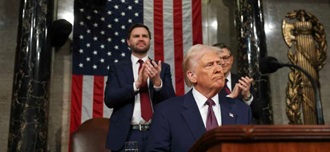
Last night’s s Trump State of the Union address was awful.  Full of how great he is, his lies, and the Democrats, immigrants and Joe Biden are the boogie men. I gave up after 45 minutes (it went on for two hours.)  Below is an opinion piece courtesy of Max Burns of The Hill.

I agree with it!

Tony


The Hill

“Trump’s Delusional State of the Union address”

Max Hill

February 25, 2026

———————————-

Dogged by a record-low approval rating among independents, weighed down by an economy where only the rich are recovering and still fuming after the Supreme Court’s tariff ruling left his signature economic policies in tatters, Trump for once appeared unable to bend events to his own brand of unreality. His speech offered nothing of consequence to the majority of Americans who now say they are worse off today than they were a year ago.

And so, Trump did the only thing he knows how to do. He talked — and talked, and talked.

Clocking in at just over 2 hours, the annual address set the record for the longest self-soothing therapy session in American history. It hardly mattered to Trump that his speech offered no solutions for the growing problems facing millions of Americans; his speech was, as always, an overstuffed tribute to himself.

Trump claimed plenty of victories, even if he had to make them up. He repeated his frequent claim that inflation is “plummeting,” even though most consumer prices are still rising. He took credit for the “biggest decline in crime in recorded history,” even though most of that decline came between 2023 and 2024, during President Joe Biden’s term. He claimed mortgage rates were at their “lowest point in over four years,” despite the fact that 30-year rates were 2 percentage points lower at this time in Biden’s presidency.

With his presidency on the ropes, it seemed no lie was too big or too desperate for Trump.

“Our nation is back, bigger, better, richer and stronger than ever before,” Trump boasted. Few Americans today would recognize the country he’s talking about. Fewer still would say they’ve felt its supposed prosperity. Broad swaths of voters who backed Trump in 2024 now question whether he even understands the economic harm his policies have caused — or if he cares at all.

Polls show that a growing number of voters are no longer buying Trump’s unreality, which might explain why he seemed so desperate to make the sale on Tuesday night. Sixty-eight percent of respondents now say Trump is “focused on the wrong problems” according to a new CNN poll. Meanwhile, a Council on Foreign Relations survey found that Americans across party lines blame Trump’s tariffs for the nation’s affordability crisis.

Trump and his Republican enablers lack even the concepts of a plan to solve the problems facing the American people, so they’ve decided to pretend the problems don’t exist. The GOP should ask the Biden administration how well that scheme works.

With no meaningful domestic policy victories to crow about, Trump instead ramped up his rhetoric against legal immigrants, the transgender community, and Democrats in general. In one particularly disgraceful moment, Trump made the baseless claim that legal immigration made America weaker and lobbed a plainly bigoted jab at Minnesota’s Somali community.

“Somali pirates ransacked Minnesota through bribery, corruption and lawlessness. We are gonna take care of this problem. We are not playing games,” Trump said. “Importing these cultures through unrestricted immigration and open borders brings those problems right here to the USA.”

Most of Trump’s venom against immigrants was simply reheated rhetoric from the 2024 campaign, including a promise to mandate a nationwide voter identification law and new laws banning undocumented migrants from voting and operating commercial vehicles — even though current laws already ban them from doing both. But warmed-over hatred is hatred just the same, and Trump seemed to relish the opportunity to portray America’s immigrant community as a problem to be solved.

Trump dedicated nearly the entire final hour of his speech to divisive social issues and attacks on immigrants, which should offer Democrats a clear view of how Republicans plan to mount their midterm campaign later this year. Yet multiple polls show voters are panicking about the economy and the skyrocketing cost of health care.

The latest data suggests more than 22 million people saw their insurance premiums spike after Republicans allowed the Affordable Care Act’s subsidies to expire at the end of last year. Those voters are less interested in transgender athletes and more concerned about affording their daily medication, as Virginia’s gubernatorial election last year made stunningly clear to GOP strategists. In that kind of national climate, Trump’s attempts to stoke social division simply fall flat.

Trump had a chance to recast his bumbling second term with a series of bold new proposals and Trumpian flash. Instead, he offered a divisive and delusional rallying cry for an America that exists only in his head. That may make Trump feel better in the short term, but he’ll be in for a rude awakening when struggling Americans turn their discontent into votes later this year.

U.S. women’s hockey team declines Trump’s invitation to the State of the Union Address

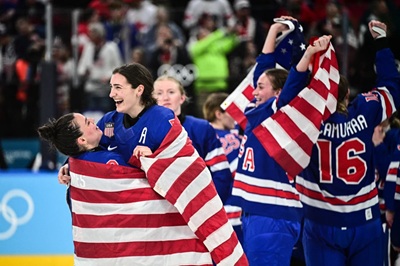
U.S. Women’s Hockey Team Celebrating their win over Canada. Julien De Rosa / AFP – Getty Images

Dear Commons Community,

Trump invited the men’s and women’s hockey teams after both won gold medals in overtime games against Canada.

The U.S. women’s hockey team said it is declining  Trump’s invitation to attend his State of the Union address, a day after the president jokingly told the U.S. men’s hockey team that he would be impeached if he didn’t also invite the women’s team.

“We are sincerely grateful for the invitation extended to our gold medal–winning U.S. Women’s Hockey Team and deeply appreciate the recognition of their extraordinary achievement,” a USA Hockey spokesperson said. “Due to the timing and previously scheduled academic and professional commitments following the Games, the athletes are unable to participate.”

“They were honored to be included and are grateful for the acknowledgment,” the spokesperson added.

The White House did not immediately respond to a request for comment.

The U.S. team beat Canada for the gold medal in Thursday’s Olympic women’s hockey final. Their male counterparts won gold on Sunday, also against Canada.

Trump invited the men’s team to the State of the Union in a call Sunday night after their overtime victory. It is unclear if the men’s team will attend the speech.

The U.S. Women’s hockey team show their class!

Tony

Skip to toolbar