The Times Square New Year’s Eve Ball Will Drop Twice Tonight!

Dear Commons Community,

New Year’s Eve in New York’s Times Square will have a different look.  For the first time, there will be a second ball drop celebration after the traditional Times Square New Year’s Eve ball drop.

Normally, people from all over gather in Times Square on New Year’s Eve to watch the Constellation Ball drop from the iconic One Times Square building. This celebratory moment signifies the start of a new year.

However, this year, there’ll be two ball drops instead of one.

In honor of the nation’s upcoming 250th anniversary of the signing of the  Declaration of Independence, the Times Square Alliance — a group that organizes the annual ball drop — decided there would be a special commemoration

The Alliance has also been working with America250, a nonpartisan body that Congress established in 2016 for the upcoming anniversary, to put the whole event together.

According to America250, the second ball drop will start at around 12:04 a.m. EST. Unlike the first ball drop, this one will feature a red, white, and blue design.

During the celebratory moment, New Yorkers will be covered with “2,000 pounds of red, white, and blue confetti.” There will also be a pyro finale set to Ray Charles’ rendition of “America the Beautiful,” according to the press release.

“Our goal is to inspire all 350 million Americans to join in this moment to celebrate our country,” Rosie Rios, Chair of America250 said in a press release.

Tom Harris, President of the Times Square Alliance added, “Every year in Times Square on New Year’s Eve we unite the crowds cheering in the streets with the millions of people around the country and the world to celebrate one of the most iconic moments together as one. It’s perfect that this moment will be in partnership with America250 and the very first moment of a year’s worth of moments to celebrate our country’s 250 great years.”

The decorated Times Square Ball will also drop again on July 3, 2026, the eve of the nation’s birthday. This will mark the first time in history that the Ball drops outside of New Year’s Eve.

YEA and Happy New Year Plus!

Tony

Michelle Goldberg:  An Anti-AI Movement Is Coming. Which Party Will Lead It?

Dear Commons Community,

New York Times columnist, Michelle Goldberg, had an essay yesterday entitled, “An Anti-AI Movement Is Coming. Which Party Will Lead It?” Her basic message is that:

“One major question, going into 2026, is which party will speak for the Americans who abhor the incursions of AI into their lives and want to see its reach restricted. Another is whether widespread public hostility to this technology even matters given all the money behind it. We’ll soon start to find out not just how much AI is going to remake our democracy, but also to what degree we still have one.”

I sadly believe that the money behind AI will win out.  I also have little faith in either the Republicans or Democrats to step forward to deal with it.

Below is an excerpt from her essay.

Tony

————————————–

“AI obviously has beneficial uses, especially medical ones; it may, for example, be better than humans at identifying localized cancers from medical imagery. But the list of things it is ruining is long.

A very partial accounting might start with education, both in the classroom, where AI is increasingly used as a dubious teaching aid, and out of it, where it’s a plagiarism machine. It would include the economic sustainability and basic humanity of the arts, as demonstrated by the AI country musician who topped a Billboard chart this year. High on the list would be AI’s impact on employment, which is already bad — including for those who must navigate a demoralizing AI-clogged morass to find jobs — and likely to get worse.

Then there’s our remaining sense of collective reality, increasingly warped by slop videos. AI data centers are terrible for the environment and are driving up the cost of electricity. Chatbots appear to be inducing psychosis in some of their users and even, in extreme cases, encouraging suicide. Privacy is eroding as AI enables both state and corporate surveillance at an astonishing scale. I could go on.

And what do we get in return for this systematic degradation of much of the stuff that makes life worth living? Well, Sam Altman, CEO of OpenAI, has promised marvels. “The rate of new wonders being achieved will be immense,” he wrote in June. “It’s hard to even imagine today what we will have discovered by 2035; maybe we will go from solving high-energy physics one year to beginning space colonization the next year.” Yet among the most high-profile innovations that OpenAI’s ChatGPT has announced in 2025 are custom porn and an in-app shopping feature.

It is true that new technologies often inspire dread that looks silly or at least overwrought in retrospect. But in at least one important way, AI is more like the nuclear bomb than the printing press or the assembly line: Its progenitors saw its destructive potential from the start but felt desperate to beat competitors to the punch.

In “Empire of AI,” Karen Hao’s book about Altman’s company, she quotes an email he wrote to Elon Musk in 2015. “Been thinking a lot about whether it’s possible to stop humanity from developing A.I.,” wrote Altman. “I think the answer is almost definitely not.” Given that, he proposed a “Manhattan Project for A.I.,” so that the dangerous technology would belong to a nonprofit supportive of aggressive government regulation.

This year, Altman restructured OpenAI into a for-profit company. Like other tech barons, he has allied himself with Donald Trump, who recently signed an executive order attempting to override state AI regulations. (Full disclosure: The New York Times is suing OpenAI for allegedly using its articles without authorization to train its chatbots.)

Despite Trump’s embrace of the AI industry, attitudes toward the technology don’t break down along neat partisan lines. Rather, AI divides both parties. Florida’s governor, Ron DeSantis, is a fierce skeptic; this month he proposed an AI Bill of Rights that would, among other things, require consumers to be notified when they’re interacting with AI, provide parental controls on AI chatbots and put guardrails around the use of AI in mental health counseling. Speaking on CNN on Sunday, Sen. Bernie Sanders, I-Vt., suggested a moratorium on new data center construction. “Frankly, I think you’ve got to slow this process down,” he said.

Yet a number of leading Democrats are bullish on AI, hoping to attract technology investments to their states and, perhaps, burnish their images as optimistic and forward-looking. “This technology is going to be a game changer,” Gov. Josh Shapiro of Pennsylvania said at an AI summit in October. “We are just at the beginning of this revolution, and Pennsylvania is poised to take advantage of it.” He’s started a pilot program to get more state employees using generative AI at work, and, by streamlining permitting processes, he has made the building of AI data centers easier.

There are obvious rewards for politicians who jump on the AI train. These companies are spectacularly rich and preside over one of the few sectors of the economy that are growing. Amazon has announced that it will spend at least $20 billion on data centers in Pennsylvania, which Shapiro touts as the largest private sector investment in his state’s history. At a time of national stagnation, AI seems to promise dynamism and civic rejuvenation.

Yet a survey published in early December shows that most Pennsylvanians, like most Americans more broadly, are uneasy about AI. The poll, conducted by Emerson College, found broad approval of Shapiro but doubt about one of his signature issues. Most respondents said they expected AI to reduce the number of available jobs, and pluralities thought it would harm the economy and the environment. Notably, given that health care is one of the sectors where AI shows the most promise, 59% of health care workers in the survey were pessimistic about the technology. Seventy-one percent of respondents said they thought AI posed a threat to humanity.

One major question, going into 2026, is which party will speak for the Americans who abhor the incursions of AI into their lives and want to see its reach restricted. Another is whether widespread public hostility to this technology even matters given all the money behind it. We’ll soon start to find out not just how much AI is going to remake our democracy, but also to what degree we still have one.”

Jazz band, The Cookers, cancels New Year’s Eve performance at Trump-Kennedy Center with 2 days’ notice!

The Cookers.  Courtesy of USA Today.

Dear Commons Community,

Following on the heels of Jazz musician Chuck Redd canceling a Christmas Eve performance in protest to the renaming of the Kennedy Center, the acclaimed jazz band, The Cookers,  has also canceled its New Year’s Eve performance at the Center.  As reported by USA Today.

Though the Cookers did not provide a reason, the band said the decision on yesterday, Dec. 29 “has come together very quickly.”

“Jazz was born from struggle and from a relentless insistence on freedom: freedom of thought, of expression, and of the full human voice,” the band wrote on its website. “Some of us have been making this music for many decades, and that history still shapes us. We are not turning away from our audience, and do want to make sure that when we do return to the bandstand, the room is able to celebrate the full presence of the music and everyone in it.”

The band continued to say that their hope “is that this moment will leave space for reflection, not resentment.”

“To everyone who is disappointed or upset, we understand and share your sadness,” they said. “We remain committed to playing music that reaches across divisions rather than deepening them.”

The last-minute cancellation follows the Kennedy Center’s board of trustees’ controversial Dec. 18 decision to rename the music, arts, and cultural institution the Donald J. Trump and the John F. Kennedy Memorial Center for the Performing Arts.

Earlier this month, Jazz musician Chuck Redd canceled a Christmas Eve performance in protest of the renaming.

Redd’s decision prompted Trump-Kennedy Center President Richard Grenell to seek $1 million in damages for the “political stunt” that “has cost us considerably,” according to a Dec. 26 letter to Redd obtained by USA TODAY.

In addition to Redd’s and the Cookers’ cancellation, the New York Times is reporting that New York dance company Doug Varone and Dancers is canceling two performances in April.

Varone, who leads the company, said in an email to the Times that it will mean losing $40,000: “It is financially devastating but morally exhilarating.”

For those of us who were alive and remember the type of leader John F. Kennedy was, Trump’s move to add his name to the Kennedy Center is an abhorrent disgrace.

Tony

Marjorie Taylor Greene Toasts Trump in New York Times Article!

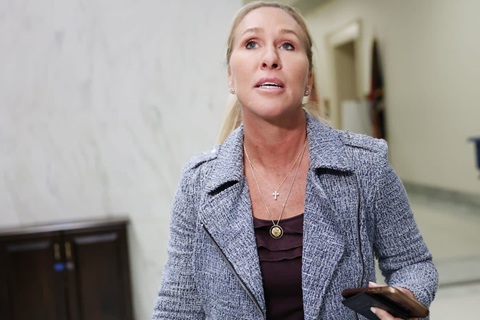
 Marjorie Taylor Greene. (Anna Moneymaker/Getty Images)

Dear Commons Community,

Marjorie Taylor Greene let loose on Trump in a New York Times  feature article toasting him for his ‘faithless’ Charlie Kirk eulogy, the Epstein files, and ‘sexualized’ Mar-a-Lago.

Greene announced that she would leave Congress on January 5, one week from Monday, amid her growing feud with the president and her dissatisfaction with the work of the Republican-held House of Representatives. Her exit will leave Speaker Mike Johnson with an even slimmer majority in the chamber, further weakening the increasingly unsteady Johnson who is facing grumblings and threats of rebellion from both moderates and hardliners in his caucus.

But if anyone thought Greene’s last few days in Congress would be uneventful, they were wrong. Even with Congress not yet back in session for the new year and Greene hundreds of miles away from the hallway interviews of the Hill, the congresswoman has trained her focus on Trump and what she says is his continued failure to hold true to an “America First” policy platform she says his MAGA Republican base supports.  As reported by The Independent and other media.

In a New York Times featured article published yesterday, Greene outlined the beginnings of her break with Trump. She highlighted the president’s remarks at the funeral of Charlie Kirk, where Trump seemed to mock Kirk for rejecting hatred in politics, telling a crowd: “I hate my opponent and I don’t want what’s best for them.”

Greene said Trump’s remark revealed him to be faithless: ““That was absolutely the worst statement… It just shows where his heart is. And that’s the difference, with her having a sincere Christian faith, and proves that he does not have any faith.”

The remark is one of the congresswoman’s most personal criticisms of the president to date and comes as she continues to accuse both Trump and Johnson of being out of touch with Americans, particularly on issues surrounding economic hardship and cost-of-living. While Greene’s criticisms have largely been focused on policy, she has also pointed out the wave of threats her office received after her dispute with the president began and blamed Trump’s own personal bullying for causing it. In recent interviews, Greene has suggested that she recognizes her own role in the acceleration of American politics into a toxic wasteland, and feels regret over MAGA’s contributions to that dynamic.

She reiterated that belief to the Times in early December, according to the newspaper: “Our side has been trained by Donald Trump to never apologize and to never admit when you’re wrong. You just keep pummeling your enemies, no matter what. And as a Christian, I don’t believe in doing that. I agree with Erika Kirk, who did the hardest thing possible and said it out loud.”

Her hesitance to descend into mudslinging hasn’t stopped the departing congresswoman from critiquing Trump’s priorities in the final days of her service. Over the past several months, Greene’s long history of skepticism towards foreign intervention or assistance of any kind led her to become one of the Republican Party’s leading critics of support for Benjamin Netanyahu’s government in Israel, including Israel’s brutal siege of Gaza over the past two years. The congresswoman has repeatedly argued that Trump is focused on foreign policy objectives over a domestic agenda aimed at cost-cutting in the federal government and dealing with the economic woes of the voters who elected him over Kamala Harris in 2024.

She also was one of a few Republicans to prominently defy Trump on the release of the Jeffrey Epstein files.

In a pair of tweets Sunday and yesterday, Greene once again made those arguments, writing in one: “DOGE was one of the most popular plans of the ‘24 campaign because Americans are beyond furious about the insane amount of waste, fraud, and abuse. Just outright stealing. Which is why I created the DOGE Subcommittee… [p]erhaps now the Speaker and the admin will take DOGE more seriously.”

Greene lamented Trump’s back-to-back meetings with Netanyahu and, on Monday, Ukrainian President Volodymyr Zelensky at Mar-a-Lago in another tweet, exclaiming: “Can we just do America?”

Her criticisms of Trump’s own social and political circles to the Times revealed a broader disgust with Trumpism and the public face MAGA chooses to present to the world, at Mar-a-Lago and in the media.

“I never liked the MAGA Mar-a-Lago sexualization,” she told the Times. “I have two daughters, and I’ve always been uncomfortable with how those women puff up their lips and enlarge their breasts.”

Trump and Greene’s dispute seemed by some political observers to be a long time coming, however. The Georgia congresswoman has been a frequent source of embarrassing headlines for the Republican Party due to her past espousment of conspiracy theories including one often-mocked example where she suggested that devices in space controlled by the wealthy Rothschild family could be behind wildfires in the U.S., sparking the “Jewish Space Lasers” meme.

Firing back at the congresswoman, Trump has attacked Greene as “crazy” and claimed that he was considering support for a primary challenger in her congressional district before she chose to resign.

Greene and Trump deserve each other but we welcome her comments!

Tony


The 10 races that will decide the balance of power in the Senate in 2026

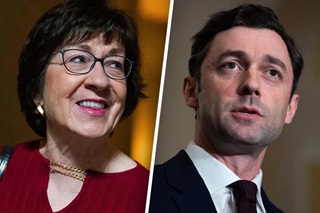
Susan Collins, R-Maine, and Jon Ossoff, D-Ga., are two of the most vulnerable senators up for re-election in 2026.Getty Images

Dear Commons Community,

The fight for the Senate is expanding to a few more states next year, as both parties tout talented candidates and point to political dynamics tilting in their favor.

Democrats still face an uphill battle to net the four seats they need to take control of the Senate, which would involve winning at least two states that President Donald Trump carried by double digits in 2024. But they see a glimmer of hope following victories in the 2025 elections and as Trump’s approval rating, particularly on his handling of the economy, has dropped.

And Democrats believe they can capitalize on issues such as high costs and health care, while Republicans continue to struggle to turn out Trump’s supporters when he is not on the ballot.

Republicans, though, remain confident that they will hold onto the Senate —and potentially even grow their majority, given the GOP’s recent success in states with the most competitive Senate races next year. And they’re optimistic the party will be able to run on Trump’s accomplishments, suggesting voters will begin to reap the benefits of Trump’s sweeping tax cut and spending legislation ahead of voting in November 2026.

Both parties will have to contend with potentially divisive and costly primaries, which could further shake up the Senate landscape.

So far, the battle for the Senate majority is playing out across 10 key races. Below is an analysis courtesy of NBC News.

Tony

———————————————————

The core four

It has been clear since the start of the election cycle that the fight for the Senate would center on four crucial states: Maine, North Carolina, Michigan and Georgia.

Maine

Sen. Susan Collins is the only Republican senator representing a state then-Vice President Kamala Harris won in 2024, when the Democrat carried Maine by nearly 7 points. Collins is also the only GOP senator in New England and, Republicans say, the party’s only candidate who could win the Maine Senate race next year. Collins won re-election in 2020 by 9 points even as Trump lost the state by a similar margin.

Collins has not yet officially launched her campaign, but she said at a recent Punchbowl News event, “I still plan to run for re-election.”

She won’t know her opponent until June, with Democratic Gov. Janet Mills facing off against military veteran Graham Platner in the Democratic primary.

Mills has pitched herself as the candidate best positioned to beat Collins, touting her clashes with Trump and her record as the only Democrat to win a statewide race in Maine in 20 years. The Democratic Senatorial Campaign Committee has set up a joint fundraising committee with Mills, signaling that party leaders view Mills as the strongest candidate.

Platner, meanwhile, has made his case as the anti-establishment candidate and staunch progressive with the backing of Sen. Bernie Sanders, I-Vt. He said his campaign has been “strengthened” by recent controversies, including revelations that he had a tattoo that resembled a Nazi symbol, which he has since covered up, and past Reddit posts that included a slew of controversial and offensive comments. Platner apologized for many of the posts, saying he was “disillusioned” after his military service.

North Carolina

Both parties believe they have strong recruits to replace retiring GOP Sen. Thom Tillis and this race is expected to be one of the most expensive Senate contests next year.

Former Democratic Gov. Roy Cooper is running, while Republicans have tapped former Republican National Committee Chairman Michael Whatley. Both candidates are already in general election mode, though Whatley — who has Trump’s endorsement — did draw a last-minute primary challenge from Michele Morrow, a far-right candidate who lost a bid to be the state’s top education official last year.

Trump has been successful in North Carolina, the only battleground the president has won three times, and he carried it by 3 points last year. But Democrats believe Cooper’s popularity and winning record, as well as key issues like health care, could paint a North Carolina Senate seat blue for the first time since 2008.

Georgia

Jon Ossoff, the only Senate Democrat running for re-election in a state Trump won, is Republicans’ top target next year. The first-term senator has been raising millions and focusing on issues including health care, the economy and corruption. But Republicans believe they can cast Ossoff as a far-left progressive, pointing to some of his positions on immigration, impeachment and the government shutdown.

GOP Gov. Brian Kemp’s decision to pass on a Senate run sparked a three-way GOP primary between Reps. Buddy Carter and Mike Collins and former University of Tennessee football coach Derek Dooley, who has Kemp’s endorsement. Trump, who won Georgia by 2 points in 2024, has not yet weighed in on the primary.

Michigan

Democratic Sen. Gary Peters’ retirement opened up the Senate race in this battleground state. Republicans, led by Trump, have coalesced around former Rep. Mike Rogers, who lost a close Senate race last year even as Trump won Michigan by 1 point.

The Democratic primary is a three-way race between moderate Rep. Haley Stevens, state Sen. Mallory McMorrow, a self-described “pragmatist,” and progressive physician Abdul El-Sayed. The primary has already exposed divisions on the future of the state’s manufacturing sector and support for Israel, and the nominee won’t be decided until August.

Expanding the map

The Senate battle could extend beyond the core four states in part thanks to candidates the parties think can bend results away from the norm in a few states.

Ohio

Democrats scored a big recruiting win when former Sen. Sherrod Brown decided to challenge GOP Sen. Jon Husted, the former lieutenant governor who was appointed to the Senate after JD Vance resigned to serve as vice president.

Brown is widely viewed as one of the only Democrats who could make the special election to serve the final two years of Vance’s term competitive. The former senator lost re-election by nearly 4 points last year as Trump won Ohio by 11 points.

Operatives in both parties say the race is now expected to draw significant resources after ad spending in last year’s Senate race reached more than $480 million, according to AdImpact.

New Hampshire

With Sen. Jeanne Shaheen retiring, both parties are eyeing New Hampshire as an open, competitive Senate race next year after Harris won the Granite State by 3 points.

Senate Republican leaders have backed former Sen. John Sununu, who lost to Shaheen in 2008. But Sununu is running in the primary against Scott Brown, the former Massachusetts senator and Trump ambassador, and that nominating fight won’t be resolved until early September.

Rep. Chris Pappas is considered the clear front-runner in the Democratic primary, and Democrats believe his deep ties to the state and proven ability to win competitive races put them in a strong position to hold the seat.

Keep an eye on these races

Other potentially competitive Senate races in redder or bluer states hinge on the outcomes of contentious primaries — and whether potentially strong candidates actually decide to run.

Texas

Both parties are navigating hotly contested Senate primaries early next year — though the Republican primary is expected to go past March 3, with none of the candidates likely to win a majority of the vote given the three-way race between Sen. John Cornyn, state Attorney General Ken Paxton and Rep. Wesley Hunt.

If no one wins a majority of the primary vote, the top two vote-getters would advance to a May runoff.

All three candidates have stressed their loyalty to Trump in the primary, which has already seen millions of dollars in ads. That spending has mostly come from Cornyn allies who believe he is best positioned to prevail in a state Trump won by 14 points last year. Trump, so far, is staying on the sidelines.

The Democratic primary between Rep. Jasmine Crockett and state Rep. James Talarico has become a battle over the best path forward for the party. Crockett has taken direct aim at Trump and said she can energize a “multiracial, multigenerational coalition,” including many people who haven’t previously voted, while Talarico has said he can appeal to voters in both parties who are “hungry for sincerity and honesty and compassion.”

Iowa

There is also a contested Democratic primary in Iowa, where GOP Sen. Joni Ernst is retiring. State Rep. Josh Turek, a Paralympian, as well as state Sen. Zach Wahls and military veteran Nathan Sage are all competing for their party’s nomination. Despite recent Republicans’ gains in the state, which Trump won by 13 points in 2024, Democrats believe the race could be competitive as Iowans grapple with health care access and Trump’s tariff policies.

Republicans, including Trump, quickly coalesced around Rep. Ashley Hinson as their candidate to replace Ernst. Hinson, who flipped a Democratic district in 2020, is viewed as a rising star in the party.

Alaska

Democrats are waiting to see if former Rep. Mary Peltola, who represented the entire state of Alaska in Congress, will jump into the race against GOP Sen. Dan Sullivan. Peltola has also been eyeing a run for governor, after losing re-election last year by 3 points as Trump won Alaska by 13 points.

Sullivan has signaled that he recognizes he could have a competitive race, particularly as health care emerges as a top midterm issue. The two-term senator recently supported a Democratic proposal to extend Affordable Care Act subsidies for an additional three years.

Minnesota

Republicans are waiting on a top-tier candidate in Minnesota, which Trump lost by 4 points last year.

Michele Tafoya, a longtime NFL sideline reporter-turned-conservative commentator, is considering a run for Senate, according to three sources familiar with her thinking. One source said Tafoya met with the National Republican Senatorial Committee earlier in December and could make a final decision in January. Former professional basketball player Royce White and retired Navy SEAL Adam Schwarze are also running.

On the Democratic side, Rep. Angie Craig and Lt. Gov. Peggy Flanagan are battling to replace retiring Sen. Tina Smith, with Flanagan casting herself as the progressive candidate and Craig stressing her bipartisan appeal.


CNN Analysis: Donald Trump’s top 25 lies for 2025!

Dear Commons Community,

CNN  had a special feature yesterday listing Donald Trump’s top 25 lies for 2025.

Below is CNN’s list in its entirety.

Read it and weep!

Tony

——————————————————–

It was hard to pick only 25. But it was easier than it used to be.

Just like his first presidency, President Donald Trump’s first calendar year back in the White House was an unceasing parade of lies. In 2025, though, the variety of Trump’s false claims shrunk even as he maintained his trademark staggering frequency.

Trump’s lying has always been characterized by dogged repetition. It became especially repetitive in 2025. While he continued to regularly sprinkle in new lies, he relied on a core set of go-to fabrications he deployed virtually no matter the setting and no matter how many times they had been debunked.

Did you hear the one about how Trump secured $17 trillion or $18 trillion in investment? You probably did if you watched even a few Trump speeches or interviews. Same with the one about how consumer prices have fallen this year, the one about how Trump ended seven or eight wars, and the one about how foreign leaders around the world emptied their prisons and mental institutions to send unwanted citizens across the US border as migrants.

Here is our highly subjective list of Trump’s top 25 lies of 2025. We chose some because the president repeated them particularly often, some because they were about notably consequential topics, and some because they were especially egregious in their distance from reality.

Inflation, tariffs and the economy

Lie: Trump secured $17 trillion or $18 trillion in investment in 2025

The president who loves big numbers, even if they’re fake, had a fictional figure he cited in speech after speech: a claim that he had secured “$17 trillion” in investment in the US in less than a year back in the White House. It didn’t help Trump’s case that the White House’s own website said at the time that it was actually $8.8 trillion – and even that figure was wildly inflated – but he proceeded to increase his claim to “$18 trillion” even though the website still had it under $10 trillion.

Lie: ‘Every price is down’

Trump lied even about subjects that everyday people could themselves see he was lying about. He claimed in the fall that there was “no inflation,” though there was inflation; that “every price is down,” though prices were up on thousands of products; that grocery prices were “way down,” though they were up; and that beef was the only grocery item that had gotten more expensive, though there were dozens of others. Polls showed most Americans weren’t buying his assertions.

Lie: Trump was reducing prescription drug prices by ‘2,000%, 3,000%’

Trump deployed not only implausible figures but impossible figures. He declared on numerous occasions that his “most favored nation” policy was going to bring down the price of prescription drugs by “500%” or more, sometimes “1,400 to 1,500%” or even “2,000%, 3,000%.” These claims are debunked by math itself – a decline of more than 100% would mean that Americans would get paid to acquire their medications – but the president kept making them even though he could have simply touted real (less-than-100%) price reductions on some drugs.

Lie: Foreign countries pay the US government’s tariffs

As consumer prices continued to rise, in part because of Trump’s sweeping tariffs on imported products, Trump clung to his familiar lie that these tariffs are paid by foreign countries, not by people or companies in the US. (The tariff payments to the government are made by US importers, not foreign exporters, and importers often pass on some or all of the added costs to the final consumer.) The president essentially fact-checked himself in November, when he told an interviewer that he would lower Americans’ coffee prices by lowering his tariffs on imported coffee.

Public safety

Lie: Portland was ‘burning down’

The president repeatedly said an American city was “burning down” or “burning to the ground” even though it was absolutely not burning down or burning to the ground. Sporadic clashes between protesters and law enforcement outside one Immigration and Customs Enforcement building in Portland did not mean a 145-square-mile city was ablaze – as Portland residentsofficials and media outlets kept noting as he kept lying.

Lie: Washington, DC had no murders for six months

The president continued his long-established pattern of choosing dramatic untruths over facts that would have been useful to him if he had just stated them accurately. Instead of correctly noting that crime in Washington, DC, declined after his federal takeover of law enforcement there in August, he falsely claimed three times in a November speech that the capital hadn’t had a single murder “in six months.” Washington actually had more than 50 homicides over the six months prior to the speech, police statistics and Washington Post tracking show.

Lie: ‘I invaded Los Angeles and we opened up the water’

Trump lied about a supposed problem and then lied about his supposed solution to it. During his pre-inauguration transition period in January, the president baselessly linked wildfires in Los Angeles to a completely unrelated effort to use some of California’s water to protect a fish species hundreds of miles to the north. Then, as president in March, he conjured up a heroic tale: “I broke into Los Angeles. Can you believe it? I had a break-in. I invaded Los Angeles and we opened up the water and the water is now flowing down.” What Trump actually did was pull a stunt unrelated to Los Angeles, pointlessly sending about two billion gallons of water from one part of California’s Central Valley to another part of that valley.

Lie: The Democratic governor of Maryland called Trump ‘the greatest president of my lifetime’

It was a trivial lie, but it was notable for its brazenness. After Democratic Maryland Gov. Wes Moore pushed back against Trump’s assertions about public safety in Baltimore, Trump claimed that when he previously met Moore in private at the Army-Navy football game, Moore told him, “Sir, you’re the greatest president of my lifetime” and “sir, you’re doing a fantastic job.” The president either forgot or didn’t care that a camera was present for the interaction, recording behind-the-scenes footage for a documentary show. The video, aired by Fox News, proved that Moore did not utter any of the praise Trump claimed he did – but, the day after the video came out, Trump claimed that the camera “caught” Moore rather than Trump’s own fabrication.

Foreign affairs

Lie: Ukraine ‘started’ Russia’s war on Ukraine

Trump showed a penchant for fake history, rewriting the facts around everything from the Great Depression to his own past. Perhaps his most egregious examples were about Russia’s war on Ukraine. “You should’ve never started it. You could’ve made a deal,” Trump told Ukraine in February, reversing the reality of a war started by Russia. He later inaccurately minimized Ukrainians’ heroism in repelling Russia’s 2022 assault.

Lie: Trump was speaking ‘in jest’ when he promised to immediately end the Ukraine war

As anyone who watched his 2024 campaign rallies could tell you, Trump ran on a serious promise to end the war in Ukraine either “within 24 hours” of his return to the White House or as president-elect “before I even arrive at the Oval Office.” When a journalist asked Trump in May about the unfulfilled pledge as the war continued to rage more than three months into this term, he chose to rewrite history about this too – saying, among other things, that “obviously, people know that when I said that, it was said in jest.” The record shows it simply was not.

Lie: The US government had planned to spend $50 million on ‘condoms for Hamas’

To justify his push to slash US foreign aid spending, Trump deployed a completely fictional example of supposed waste: a claim that, until he intervened, the government had been planning to send $50 million “to Gaza to buy condoms for Hamas.” Undeterred by fact checks that pointed out there was no apparent basis for the claim, he soon inflated the invented figure to “$100 million.”

Lie: Every drug boat in the Caribbean ‘kills 25,000 Americans’

Another entirely imaginary number in defense of another controversial policy. As Trump’s military strikes on alleged drug boats in the Caribbean faced domestic and international criticism, he tried to convince people that “every one of those boats kills 25,000 Americans.” That figure makes no sense, experts noted; even if the boats were actually carrying deadly fentanyl as Trump claimed (on a route not known for fentanyl trafficking) and if they were carrying drugs intended for the US (many experts are skeptical), the total number of US overdose deaths from all drugs in 2024 was about 82,000, according to provisional federal data.

Lie: Trump ‘didn’t say’ he had no problem releasing full footage of a September boat strike

Trump has been willing for years to brazenly deny having said something that he had said on camera. He did it again in December. On December 3, the president told an ABC News reporter that he would “certainly” release, “no problem,” all additional Pentagon footage of a follow-up strike the military conducted in early September to kill survivors of its initial strike on a suspected drug-smuggling boat in the Caribbean. On December 8, he falsely told another ABC News reporter that “I didn’t say that” – then referred to ABC as “fake news” and personally disparaged the reporter who had accurately summarized his quote from five days earlier.

Lie: Numerous foreign leaders emptied prisons and mental institutions to send their most undesirable people into the US

No matter the alleged subject of a speech or interview, Trump often managed to find a way to recite his most frequent migration tale. Numerous foreign countries, he claimed again and again, emptied their prisons and mental institutions and sent the unwanted people formerly living in them to the US as migrants. (He sometimes added vivid flourishes; in a speech in June, he said, “Their countries would bus them or drive them right to our border and say, ‘Go in there. If you ever come back, we’re going to kill you.’”) It did not seem to bother Trump that his own campaign and White House teams were never able to produce proof that even one foreign leader had done this, let alone foreign leaders “all over the world” as he claimed.

Lie: Trump ended seven or eight wars

Trump used deception in his campaign for a Nobel Peace Prize, asserting at the United Nations in September: “I ended seven wars, and in all cases, they were raging, with countless thousands of people being killed.” He proceeded to list these supposed raging wars…and, as he did on other occasions, included “Egypt and Ethiopia,” who were never at war during his presidency. (They have an ongoing diplomatic dispute about an Ethiopian dam project.) That wasn’t the only problem with Trump’s list, either; among other issues, he included a mystery situation between Serbia and Kosovo that also was never a Trump-era war and a war in the Democratic Republic of Congo that hadn’t ended. Trump started claiming he “ended eight wars” after he helped to broker an October ceasefire between Israel and Hamas, even after some killing in Gaza continued and even after another conflict on his list, between Thailand and Cambodia, resumed in December.

Lie: ‘The people of Canada like’ the idea of becoming the 51st US state

Trump’s long list of early-2025 false claims about Canada, which he was proposing to annex, included a variety of inaccurate comments about trade and defense. One assertion stood out as especially wrong: the claim that “the people of Canada like” his idea of Canada becoming the 51st US state. Polls found the idea was wildly unpopular with the people of Canada, opposed by somewhere around 9 in 10 adults.

Justice and elections

Lie: Capitol rioters ‘didn’t assault’

Trump has tried for more than four years to rewrite the facts of the insurrection of January 6, 2021, in which a mob of Trump supporters stormed the US Capitol. This year, after granting clemency to the perpetrators, Trump claimed that “the people that went down there, they had no guns,” though multiple rioters had gunsthat rioter Ashli Babbitt “was innocently standing there, they even say trying to sort of hold back the crowd,” when she was killed by a Capitol Police officer, though video evidence shows she was shot as she was trying to climb through a broken window to the Speaker’s Lobby outside the House of Representatives; and, perhaps most egregiously, that rioters “didn’t assault,” though video after video and trial after trial made clear that many of them did.

Lie: Critical media coverage of Trump is ‘illegal’

Trump so regularly claimed that news outlets’ critical coverage of him is “illegal” that these accusations were not treated as news by most outlets. It is worth noting that Trump’s claim is a lie.

Lie: Trump didn’t pressure the Justice Department to go after his opponents

CBS journalist Norah O’Donnell reminded Trump in late October that three of his political opponents had recently been indicted – former Trump national security adviser John Bolton, former FBI director James Comey and New York Attorney General Letitia James – and she asked Trump if he had instructed the Justice Department to “go after them.” His response? “No, and not in any way, shape or form. No.” But that definitive claim was definitively debunked by a scroll through his own Truth Social feed. Less than two months prior, Trump had made a social media post publicly pressuring the head of the Justice Department, Attorney General Pam Bondi, to take legal action “NOW” against Comey and James. (Plus another Trump foe, Democratic Rep. Adam Schiff.)

Lie: Obama, Biden and Comey made up the Epstein files

Trump deployed an audacious lie in support of his effort to prevent the release of documents related to the deceased sex offender Jeffrey Epstein. He said in July: “You know, these files were made up by Comey, they were made up by Obama, they were made up by the Biden (administration).” The Epstein files are real documents that were not “made up” by anyone. And, as PolitiFact noted, federal investigations into Epstein occurred during the George W. Bush administration and the first Trump administration, while Comey was in the private sector; Epstein died more than a year before Biden was elected president, though accomplice Ghislaine Maxwell is serving a 20-year prison sentence. (Comey’s daughter Maureen Comey was a prosecutor in the cases against Epstein and Maxwell, but that doesn’t help Trump’s claim.)

Lie: The 2020 election was ‘rigged and stolen’

One of Trump’s biggest lies of 2025 was also one of his biggest lies of 2020…and 2021, 2022, 2023, and 2024. Months after his triumphant return to the White House, he continued to relentlessly push nonsense about his defeat in 2020 – wrongly saying the election was “rigged and stolen,” though it was free and fair, and that this has now “been caught,” though all that has been caught is the baselessness of such claims.

Lie: The US is ‘the only country in the world’ with mail-in voting

While seeking to eradicate mail-in voting, Trump repeatedly lied that the US is “the only country in the world” that uses it. Dozens of other countries use mail-in voting, including Canada, the United KingdomGermanyAustralia, and Switzerland. Trump deployed similar false claims in his quest to end birthright citizenship, wrongly saying the US is the only country that has that policy actually used by dozens of others.

Health care, legislation and Democrats

Lie: Babies get 80-plus vaccines at once

Few political lies are as potentially harmful as lies about vaccines, and Trump delivered a flurry of those, too. Making up numbers again, he falsely claimed in September that “you have a little child, a little fragile child, and you get a vat of 80 different vaccines, I guess, 80 different blends, and they pump it in.” He falsely claimed in October, “You give 82 vaccines in a shot to a little baby that hasn’t even formed yet.” Babies don’t get 80 or 82 different vaccines in total, let alone all at once, and different vaccines aren’t mixed together in a “vat.”

Lie: Trump’s big domestic policy bill didn’t change Medicaid

Lots of Americans were concerned about how Trump’s “big, beautiful” domestic policy bill would affect Medicaid. Trump’s solution? False claim it wouldn’t affect Medicaid. “Your Medicaid is left alone. It’s left the same,” he said in June – though the bill made major changes to Medicaid rules, reduced federal funding for the program by hundreds of billions of dollars, and was expected by the nonpartisan Congressional Budget Office to result in millions more people being uninsured in 2034.

Lie: The domestic policy bill was ‘the single most popular bill ever signed’

As with prices, Trump portrayed up as down on his poll numbers. After multiple polls showed that the big domestic policy bill was highly unpopular – more unpopular than any major bill passed in more than 30 years, according to one scholar’s analysis – Trump proclaimed it “the most popular bill ever signed in the history of our country,” repeating that “this is the single most popular bill ever signed.” He didn’t, and couldn’t, provide any evidence for the boast.


Michelle Goldberg: Trump Is Getting Weaker, and the Resistance Is Getting Stronger!


Dear Commons Community,

The New York Times’ columnist, Michelle Goldberg had a piece yesterday entitled, “Trump Is Getting Weaker, and the Resistance Is Getting Stronger.”  

As the title indicates, her position is that due to his continuing failures and the rise of resistance to his presidency, he is in a politically weakened position. Here is an excerpt.

“That’s because of millions of people throughout the country who have refused to surrender to this administration’s bullying. When Trump began his second term, conventional wisdom held that the resistance was moribund. If that was ever true, it’s certainly not anymore. This year has seen some of the largest street protests in American history. Amanda Litman, a founder of Run for Something, a group that trains young progressives to seek local office, told me that since the 2024 election, it has seen more sign-ups than in all of Trump’s first four years. Just this month, the Republican-dominated legislature in Indiana, urged on by voters, rebelled against MAGA efforts to intimidate them and refused to redraw their congressional maps to eliminate Democratic-leaning districts.

In June, Trump’s military parade, meant as a display of dominance, was a flop, and simultaneous No Kings protests all over the country were huge and energetic. A few months later, Charlie Kirk was assassinated, a tragedy that the administration sought to exploit to silence its opponents. When the late-night comedian Jimmy Kimmel made a distasteful comment on ABC that seemed to blame the right for Kirk’s killing, Disney, the network’s parent company, gave in to pressure to take Kimmel off the air. It was a perilous moment for free speech; suddenly America was becoming the kind of country in which regime critics are forced off television. But then came a wave of cancellations of Disney+ and the Disney-owned Hulu service, as well as a celebrity boycott, and Disney gave Kimmel his show back.

Trump ends the year weak and unpopular, his coalition dispirited and riven by infighting. Democrats dominated in the November elections. During Joe Biden’s administration, far-right victories in school board races were an early indication of the cultural backlash that would carry Trump to office. Now, however, Democrats are flipping school board seats nationwide.

Much of the credit for the reinvigoration of the resistance belongs to Trump himself. Had he focused his deportation campaign on criminals or refrained from injuring the economy with haphazard tariffs while mocking concerns about affordability, he would probably have remained a more formidable figure. He’s still a supremely dangerous one, especially as he comes to feel increasingly cornered and aggrieved. After all, by the time you read this, we could well be at war with Venezuela, though no one in the administration has bothered to articulate a plausible rationale for the escalating conflict.”

I agree with Goldberg but I am also cautious as she is that he is still “supremely dangerous” while in office.

Tony

Harvard wins major court ruling to have research funds restored – a blow to Trump

Dear Commons Community,

A federal judge restored billions in research funding to Harvard that the administration had cut over allegations that the university failed to address anti-Jewish bias.

U.S. District Judge Allison Burroughs found the cuts violated Harvard’s First Amendment rights and improperly imposed conditions on federal funding.

Proponents of the administration’s position argue that the federal government has both a responsibility and a legal obligation to ensure universities receiving public funds comply with anti-discrimination laws

Huston said, “Harvard is not entitled to taxpayer funding, and we are confident the university will be held fully accountable for their failures.”

Harvard officials said, “The federal district court ruled in Harvard’s favor in September, reinstating critical research funding that advances science and life‑saving medical breakthroughs, strengthens national security, and enhances our nation’s competitiveness and economic priorities.”

The Justice Department’s appeal starts the effort to overturn that ruling as Harvard and the American Association of University Professors defend the decision, and talks with the White House continue.

Opponents warn that tying research funding to contested assessments of campus climate risks blurring enforcement with viewpoint retaliation and destabilizing long-term scientific work that depends on predictable federal support.

Todd Wolfson, president of the AAUP, said, “This is just a continuation of their shameless campaign to halt critical research funding in an attempt to chill universities and faculty from engaging in any speech, teaching, and research that Donald Trump disfavors.”

The Trump administration says they will appeal Judge Burroughs’ ruling!

Tony


FBI to Close Historic HQ that Kash Patel Once Promised to Make a ‘Museum of the Deep State’

J. Edgard Hoover Building

Dear Commons Community,

FBI Director Kash Patel announced yesterday that his agency would be permanently closing its headquarters at Washington D.C.’s J. Edgar Hoover Building, a site he once vowed to turn into a “museum of the deep state.”

Breaking the news on X, Patel confirmed long-promised plans to make the FBI decamp from its time-worn but historic brutalist-style home base, which has housed the agency since its opening.

In his post, Patel boasted that he, along with Trump and his Republican-led Congress, had “accomplished what no one else could” with its decision to move personnel to “a safe, modern facility” at the Ronald Reagan Building and International Trade Center, the former location of the now-defunct U.S. Agency for International Development.

It’s unclear if Patel, who has long endorsed the theory that a group of shadowy Washington insiders covertly control what happens on Capitol Hill, intends to follow through on his post-election podcast promise to turn the Hoover Building into a “museum of the deep state.”

But moving the FBI’s hub to another site in D.C. comes as a slap in the face to the state of Maryland, which was in 2023 picked to be the home of the agency’s new headquarters following an extended and contentious search.

Patel cited financial reasons for reneging on the plans with Maryland, arguing the brand new complex would leave taxpayers “on the hook for nearly $5 billion” and take until 2035 to open.

In a Nov. 6 statement, Maryland State Attorney General Anthony Brown said he refused to let the Trump administration “strip away what Prince George’s County won and deny its communities the transformative benefits this project would bring.”

Further defending the FBI’s move to the already-existing Reagan Building, Patel said it was also part of his push to decentralize the agency and place “manpower in the field, where they will remain.”

“This decision puts resources where they belong: defending the homeland, crushing violent crime, and protecting national security,” his X announcement said. “It delivers better tools for today’s FBI workforce at a fraction of the cost.”

Tony

Hundreds of Big Name Stores Are Closing Across the US in 2026—And Shoppers Are Already Beginning to Feel it!

Dear Commons Community,

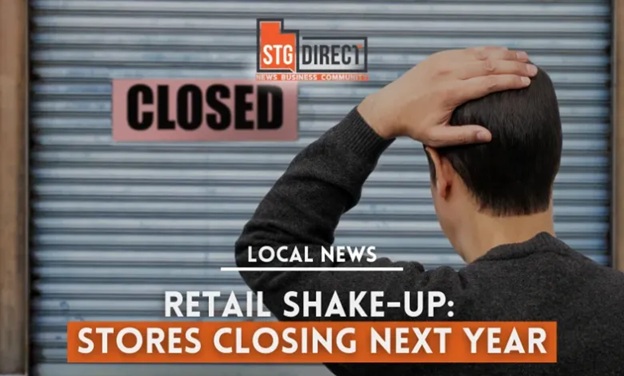
In an ongoing trend of retail retrenchment, hundreds of retail stores are expected to close their doors in 2026, following the pattern of significant store closures that occurred in 2024 and 2025.

Major chains including Macy’s and Kroger have unveiled plans for multi-year store closures extending into 2026. This trend is not limited to large chains, as many niche stores are also reallocating resources to bolster their online presence.  

Among the significant closures, Carter’s, a prominent children’s and baby apparel retailer in North America, intends to close 150 stores across the region over the next three years. Macy’s has plans to close 150 locations through 2026, allowing the company to concentrate on its top-performing locations and online experience, reports the Business Insider.

Kroger has announced plans to shutter 60 “unprofitable” stores across the US over the next 18 months, starting from June 2025. Newell Brands also announced the closure of 20 Yankee Candle stores in the US and Canada from January 2026.

Other notable closures include select Saks Off 5th stores in early 2026 and three REI stores in the first quarter of 2026.

The retail industry continues to face challenges, with the rise of e-commerce and changing consumer behaviors driving a shift away from physical stores. The pandemic after-effect has further accelerated this trend, with many retailers choosing to close unprofitable stores and focus on strengthening their online platforms.

This trend is expected to continue well into 2026, with major and niche retailers alike announcing closure plans.

The impact of these closures on the retail landscape and consumer shopping habits will be significant and is something to watch closely in the coming years.

We feel for in-person store operations.  They were a mainstay in the American economy for more than a century but the convenience of online shopping has dealt them a significant blow.

Tony