Humanoid robots to become baggage handlers in Japan’s Haneda Airport.

Photograph courtesy of ABC News.

Dear Commons Community,

Japan Airlines is introducing robots for a trial run at Tokyo Haneda Airport amid the country’s surge in inbound tourism and worsening labor shortages

The Chinese-made humanoids will move travelers’ luggage and cargo on the tarmac at Haneda, which handles more than 60 million passengers a year.

JAL and its partner in the initiative, Japan Airlines GMO Internet Group, hope the experiment – which ends in 2028 – will lessen the burden on human employees amid a surge in inbound tourism and forecasts of more severe labor shortages.

In a demonstration for the media this week, a 130cm-tall (about 4 ft. 2 in.) robot manufactured by Hangzhou-based Unitree was seen tentatively “pushing” cargo on to a conveyer belt next to a JAL passenger plane and waving to an unseen colleague.

The president of JAL Ground Service, Yoshiteru Suzuki, said using robots to perform physically demanding work would “inevitably reduce the burden on workers and provide significant benefits to employees”, according to the Kyodo news agency.

Suzuki added, however, that certain key tasks – such as safety management – would continue to be performed by humans.

Japan is struggling to cope with a simultaneous surge in tourists from overseas and an ageing, declining population.

More than 7 million people visited the country in the first two months of 2026, according to the Japan National Tourism Organization, after a record 42.7 million last year, despite a drop in the number of visitors from China triggered by a diplomatic row between Tokyo and Beijing.

According to one estimate, Japan will need more than 6.5 million foreign workers in 2040 to reach its growth targets as the indigenous workforce continues to shrink. The country’s foreign population has risen dramatically in recent years, but the government is now under political pressure to rein in immigration.

The president of GMO AI and Robotics, Tomohiro Uchida, said: “While airports appear highly automated and standardized, their back-end operations still rely heavily on human labour and face serious labor shortages.”

Robots can operate continuously for two to three hours and the firms are planning to use them to perform other tasks, such as cleaning aircraft cabins.

Tony

King Charles visit to the USA continues to be a rousing success. He even got an unexpected compliment about his hair during an outing in Harlem!

King Charles visits Harlem on April 29, 2026Credit: Press Association via AP Images
King Charles visited Harlem yesterday. Credit: Press Association via AP Images.

Dear Commons Community,

King Charles continued his visit to the USA yesterday with a stop in New York City.  After he and Queen Camilla visited and placed flowers at the 9/11 Memorial, he headed to Harlem.

The British monarch visited an urban farm and was greeted by Tony Hillery, founder and chief executive of Harlem Grown, a nonprofit that operates urban farms to provide youth development programming. There, he was shown by Harlem Grown members and schoolchildren from Thurgood Marshall Lower Academy around the raised beds, greenhouse, tool shed, composting station, chicken coops, bee hives and more in the middle of a city block.

At one point, one of the students had a compliment for the King: “I like your hair,” the child said.

“Do you? Good,” King Charles replied.

King Charles, 77, was enthusiastic about feeding chickens — after all, he tends to the animals back in the U.K., and his flock lives in a coop dubbed Cluckingham Palace. Hillery had to coax the monarch away from the chickens to continue the tour.

King Charles visits Harlem on April 29, 2026Credit: Press Association via AP Images
King Charles at a Harlem Urban Farm. Credit: Press Association via AP Images

Hillery was left with a special gift: honey from bees at Highgrove House, one of the King’s residences.

After the farm visit, the King stopped to shake a few hands of onlookers waiting behind a barricade.

“I’m sure I’m ruining your day,” the King said, referencing the street closure that was part of the security measures surrounding the monarch’s visit.

While King Charles was in Harlem, Queen Camilla had her own solo event. The Queen, 78, celebrated the U.S. and the U.K.’s shared love of literature and her charity, The Queen’s Reading Room, at the New York Public Library, and guests included Sarah Jessica Parker, Jenna Bush Hager, Anna Wintour and more.

King Charles and Queen Camilla arrived in New York City yesterday morning after spending two days in Washington, D.C.

Thanks for the visit!

Tony

NYC Public School Enrollment Declined by 160,000 in Five Years!

Dear Commons Community,

My colleague, David Bloomfield alerted me to an article in The Gothamist, which raised red flags about the steep decline in student enrollment in New York City schools.  The NYC public schools have lost 160,000 students going from 1,040,000 in 2020 to presently 880,000.  Furthermore, a major concern is that this decline will continue.  Below is an excerpt from the article in which David is quoted.

Tony

—————————————————————-

“Parents are cheering the decision to pause proposals to close several Upper West Side middle schools, but education experts said such controversies will keep cropping up as the nation’s largest school system grapples with declining enrollment.

Schools Chancellor Kamar Samuels had pushed for plans to close the Community Action School, and the middle grades at Manhattan School for Children and I.S. 191, because each had fewer than 200 kids. Officials planned to move another middle school, The Center School, to make room for P.S. 9, a popular elementary school that is overcrowded. Facing fierce opposition from parents, Samuels announced he was tabling the plans for now.

Experts said more such fights are likely as the nation’s largest school system serves fewer students due to lower birth rates and families leaving the city.

“It’s a huge challenge that [former] Mayor Adams kicked down the road and it is now Mayor Mamdani’s to deal with for the next four to eight years,” said David Bloomfield, an education and law professor at Brooklyn College and CUNY Graduate Center. “It is a political challenge, but an operational necessity.”

According to a new analysis from the nonprofit Citizens Budget Commission, public school enrollment is down by 160,000 students across the school system since 2020, and most city schools have less than 400 students. Schools with so few students are expensive to maintain, and face challenges offering robust arts and electives because funding is tied to the number of students schools serve.”


Pennsylvania Public Higher Education Reeling Financially Due to Low Enrollments!

Dear Commons Community,

Pennsylvania State University’s flagship and regional campuses are reeling financially due to low enrollments. For example, Pennsylvania Western University (PennWest) missed its fall-enrollment projections by 4,800 students and lost $63 million in expected tuition revenue as a result, according to Christopher Fiorentino, chancellor of the Pennsylvania State System of Higher Education (PASSHE). PennWest was created in 2022 through the consolidation of three struggling PASSHE institutions, California, Clarion, and Edinboro Universities. In an interview with TribLive, Fiorentino indicated that PennWest is now reviewing its academic programs, and cuts are expected. Nearly 50 academic programs could be eliminated.  Even Pennsylvania’s flagship institution, Penn State, might not be spared.

Tony


King Charles Address to a Joint Meeting of Congress – Critical Message and a Master Class in Oratory!

Dear Commons Community,

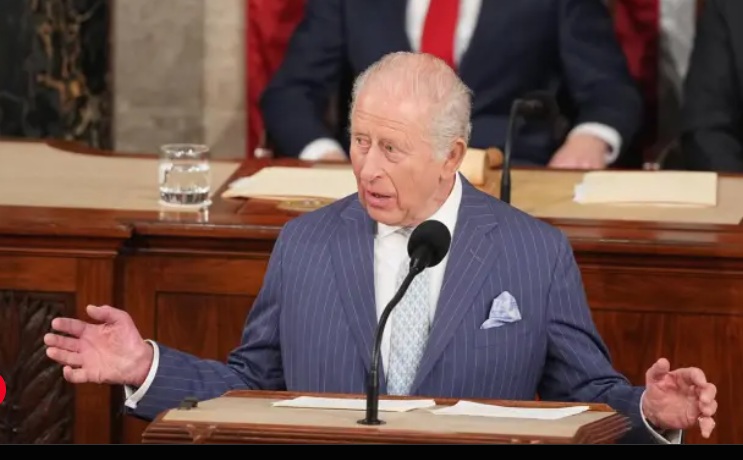
I watched King Charles address to a joint meeting of Congress yesterday.  I had never really heard him speak at length.  His 30-minute speech was excellent both in its tone and a messaging.  His comments received numerous standing ovations from Republicans and Democrats in Congress, something we rarely see these days.  He organized his address historically starting with the creation of the USA 250 years ago and its separation from the UK.  He touched on sensitive subjects such as the importance of the UK/USA relationship, checks and balances of executive authority, Ukraine, NATO, the environment, and technology.  Trump must have cringed hearing the King’s comments.  If you have 30-minutes, check out the speech at: LIVE: King Charles III addresses US Congress.

Well-worth it!

Tony

Read Here: The full manifesto by accused shooter, Cole Tomas Allen, at White House Correspondence Dinner

Dear Commons Community,

Below is Cole Tomas Allen’s manifesto in full.

Tony

—————————————————————-

Hello everybody!

So I may have given a lot of people a surprise today. Let me start off by apologizing to everyone whose trust I abused.

I apologize to my parents for saying I had an interview without specifying it was for “Most Wanted.”

I apologize to my colleagues and students for saying I had a personal emergency (by the time anyone reads this, I probably most certainly DO need to go to the ER, but can hardly call that not a self-inflicted status.)

I apologize to all of the people I traveled next to, all the workers who handled my luggage, and all the other non-targeted people at the hotel who I put in danger simply by being near.

I apologize to everyone who was abused and/or murdered before this, to all those who suffered before I was able to attempt this, to all who may still suffer after, regardless of my success or failure.

I don’t expect forgiveness, but if I could have seen any other way to get this close, I would have taken it. Again, my sincere apologies.

On to why I did any of this:

I am a citizen of the United States of America.

What my representatives do reflects on me.

And I am no longer willing to permit a pedophile, rapist, and traitor to coat my hands with his crimes.

(Well, to be completely honest, I was no longer willing a long time ago, but this is the first real opportunity I’ve had to do something about it.)

While I’m discussing this, I’ll also go over my expected rules of engagement (probably in a terrible format, but I’m not military so too bad.)

I would still go through most everyone here to get to the targets if it were absolutely necessary (on the basis that most people *chose* to attend a speech by a pedophile, rapist, and traitor, and are thus complicit) but I really hope it doesn’t come to that.

Rebuttals to objections:

Objection 1: As a Christian, you should turn the other cheek.

Rebuttal: Turning the other cheek is for when you yourself are oppressed. I’m not the person raped in a detention camp. I’m not the fisherman executed without trial. I’m not a schoolkid blown up or a child starved or a teenage girl abused by the many criminals in this administration.

Turning the other cheek when *someone else* is oppressed is not Christian behavior; it is complicity in the oppressor’s crimes.

Follow the latest on the shooting at the White House Correspondents’ Dinner:

The security loopholes that allowed Cole Allen to get near White House Correspondents’ Dinner — as Trump says this proves need for his ballroom

Objection 2: This is not a convenient time for you to do this.

Rebuttal: I need whoever thinks this way to take a couple minutes and realize that the world isn’t about them. Do you think that when I see someone raped or murdered or abused, I should walk on by because it would be “inconvenient” for people who aren’t the victim?

This was the best timing and chance of success I could come up with.

Objection 3: You didn’t get them all.

Rebuttal: Gotta start somewhere.

Objection 4: As a half-black, half-white person, you shouldn’t be the one doing this.

Rebuttal: I don’t see anyone else picking up the slack

Objection 5: Yield unto Caesar what is Caesar’s.

Rebuttal: The United States of America are ruled by the law, not by any one or several people. In so far as representatives and judges do not follow the law, no one is required to yield them anything so unlawfully ordered.

I would also like to extend my appreciation to a great many people since I will not be likely to be able to talk with them again (unless the Secret Service is *astoundingly* incompetent.)

Thank you to my family, both personal and church, for your love over these 31 years.

Thank you to my friends, for your companionship over many years.

Thank you to my colleagues over many jobs, for your positivity and professionalism.

Thank you to my students for your enthusiasm and love of learning.

Thank you to the many acquaintances I’ve met, in person and online, for short interactions and long-term relationships, for your perspectives and inspiration.

Thank you all for everything.

Sincerely,

Cole “coldForce” “Friendly Federal Assassin” Allen

PS: Ok now that all the sappy stuff is done, what the hell is the Secret Service doing? Sorry, gonna rant a bit here and drop the formal tone.

Like, I expected security cameras at every bend, bugged hotel rooms, armed agents every 10 feet, metal detectors out the wazoo.

What I got (who knows, maybe they’re pranking me!) is nothing.

No damn security. Not in transport. Not in the hotel. Not in the event.

Like, the one thing that I immediately noticed walking into the hotel is the sense of arrogance.

I walk in with multiple weapons and not a single person there considers the possibility that I could be a threat.

The security at the event is all outside, focused on protestors and current arrivals, because apparently no one thought about what happens if someone checks in the day before.

Like, this level of incompetence is insane, and I very sincerely hope it’s corrected by the time this country gets actually competent leadership again.

Like, if I was an Iranian agent, instead of an American citizen, I could have brought a damn Ma Deuce in here and no one would have noticed shit.

Actually insane.

Oh and if anyone is curious is how doing something like feels: it’s awful. I want to throw up; I want to cry for all the things I wanted to do and never will, for

all the people whose trust this betrays; I experience rage thinking about everything this administration has done.


German Chancellor Friedrich Merz says US is being ‘humiliated’ by Iran!

German Chancellor Friedrich Merz. Courtesy of Atlantic Council.

Dear Commons Community,

In an address to students yesterday, German Chancellor Friedrich Merz said the U.S. has “no strategy” with Iran.  As reported by ABC News.

“I cannot see what strategic exit the Americans are now opting for, especially as the Iranians are obviously negotiating very skillfully — or, rather, very skillfully not negotiating and letting the Americans travel to Islamabad [in Pakistan] only to leave again without any results,” Merz said. “An entire nation is being humiliated by the Iranian state leadership, particularly through these so-called Revolutionary Guards.”

“We offered, as Europeans — and said that we were willing — after the end of negotiations to help getting the Strait of Hormuz open again,” he continued. “… We can help there but first the fighting needs to end. And at the moment I do not see how this can be realized in the near future because the Iranians are clearly stronger than one thought and the Americans clearly don’t seem to have a convincing negotiating strategy.”

Merz is sadly quite right!

Tony

Maureen Dowd: Iran holds Trump hostage in ‘unwanted’ war, forces him to backtrack again!

Courtesy of Hindustan Times.

Dear Commons Community,

Maureen Dowd had a column yesterday entitled, “Trump, Iran’s Newest Hostage”.  She starts it by comparing Trump to the kidnappers in the O’Henry shortstory, “The Ransom of Red Chief.” Here is her opening.

“It looked like a good thing: but wait till I tell you.”

That’s the opening of the classic O. Henry short story “The Ransom of Red Chief.”

The tale, written in 1907, is the ultimate parable about the perils of trying to seize and control a hellion so devious, so maniacal, so awful that the captors become the captives.

The story is about two small-time crooks who think they can make some easy money by kidnapping a 10-year-old boy, the son of an affluent landowner in a sleepy Alabama town.

They underestimate badly. When they go to abduct the red-haired, freckle-faced boy, he is throwing rocks at a kitten and hurls a brick at one of his kidnappers.

“Red Chief, the terror of the plains,” as the boy calls himself, runs his captors ragged. He relishes tormenting the men and doesn’t want to go home. In the end, they have to drop their demand for a $2,000 ransom, pay the boy’s father $250 to take the demonic child off their hands and run for the hills.

President Trump went along with Bibi Netanyahu’s Panglossian case (an attitude of extreme, naive, or unrealistic optimism) for slamming Iran. It looked like a good thing: but wait till I tell you.

After nearly two months of tangling with the demonic Iranian leadership and its allies, Trump looks desperate to run for the hills. He constantly says he has defeated the mullahs and “obliterated” their military power, and yet Iran refuses to be subdued.”

Her comparison is so true and so sad!

Her entire column is below.

Tony

—————————————————–

The New York Times

Opinion

Maureen Dowd

Trump, Iran’s Newest Hostage

April 25, 2026

By Maureen Dowd

Opinion Columnist, reporting from Washington

“It looked like a good thing: but wait till I tell you.”

That’s the opening of the classic O. Henry short story “The Ransom of Red Chief.”

The tale, written in 1907, is the ultimate parable about the perils of trying to seize and control a hellion so devious, so maniacal, so awful that the captors become the captives.

The story is about two small-time crooks who think they can make some easy money by kidnapping a 10-year-old boy, the son of an affluent landowner in a sleepy Alabama town.

They underestimate badly. When they go to abduct the red-haired, freckle-faced boy, he is throwing rocks at a kitten and hurls a brick at one of his kidnappers.

“Red Chief, the terror of the plains,” as the boy calls himself, runs his captors ragged. He relishes tormenting the men and doesn’t want to go home. In the end, they have to drop their demand for a $2,000 ransom, pay the boy’s father $250 to take the demonic child off their hands and run for the hills.

President Trump went along with Bibi Netanyahu’s Panglossian case for slamming Iran. It looked like a good thing: but wait till I tell you.

After nearly two months of tangling with the demonic Iranian leadership and its allies, Trump looks desperate to run for the hills. He constantly says he has defeated the mullahs and “obliterated” their military power, and yet Iran refuses to be subdued.

Trump says there’s a new regime that’s easier to deal with, but actually it’s the same regime but worse — run by hardened, fanatical generals. Iran has not turned over its enriched uranium, and negotiations are touch-and-go. The Strait of Hormuz, which Trump keeps insisting is open, is closed. Trump is blockading the Iranian blockade.

“Iran has proven to be far more resilient and resourceful than he was prepared for,” Richard Haass, a foreign policy adviser for President George W. Bush, wrote in his newsletter, “Home & Away.” “Almost all the administration’s assumptions have been proven wrong.”

Aside from the weakening of Iran’s conventional military capability, Haass said, “virtually every other metric shows the United States, the region and the world to be worse off.”

The Iranians are tormenting Trump — even as they out-troll the master troller, viciously mocking the president as a “L.O.S.E.R.” and Bibi puppet who wants to distract from the Epstein files.

One viral Iranian rap addressing Trump calls the conflict “a trap you couldn’t see. Welcome to the graveyard of your vanity.”

Conceding that Iran is winning the meme war, the “Daily Show” correspondent Ronny Chieng keened about Trump, “What’s the point of electing a cyberbully if he sucks at cyberbullying?”

Now that Iran has flexed power in the strait, Trump has to bargain with it to get back to where things were before.

He is pinioned in a weird nook and cranny of the planet that seems almost medieval, sitting next to a backward, villainous theocracy. And yet ships carrying over 20 percent of the world’s oil must traverse the narrow passage to get to the Arabian Sea.

Trump, who grew overconfident after his adventurism in Venezuela, is being driven to distraction.

He got so rattled when the two American airmen were shot down, Josh Dawsey and Annie Linskey reported in The Wall Street Journal, that he “screamed at aides for hours.” Last month, Trump talked about the danger of becoming another Jimmy Carter, spiraling amid the hostages and a failed rescue with eight helicopters lost.

One of my first big stories as a reporter was covering those hostage families for a year and then going to West Point to see the hostages come home in 1981. So I had a front-row seat to the Iranians’ jujitsu tactics, using 52 Americans in our embassy to gain leverage over Carter’s presidency, reputation and re-election.

Trump tried to scare the Iranians with a profane post on Easter and a wild threat to destroy their civilization. But Iran is not Afghanistan or Iraq. The Iranian mullahs and generals are the terrors of the strait.

Trump has forsaken the one good Middle East policy he had: avoiding the mirage of quick wins while getting sucked once more into “blood and sand,” as he dismissively called it during his first term.

When he was running in 2016, Trump deemed the invasion of Iraq “a big, fat mistake” that destabilized the Middle East and cost too much, in money and lives.

But, seduced by the detestable Bibi, he got suckered into the blood and sand. Unlike W., who had the good grace to trump up a case for war, Trump let Bibi lead him by the nose into this one, blowing off Congress, our allies and many furious MAGA acolytes.

Maggie Haberman and Jonathan Swan reveal in their forthcoming book, “Regime Change: Inside the Imperial Presidency of Donald Trump,” that the president brushed aside Gen. Dan Caine’s warnings that a war with Iran would drastically deplete our weapons stockpiles and jeopardize the traffic in the Strait of Hormuz.

As The Times reported Thursday, the United States has burned through half — around 1,100 — of its long-range stealth cruise missiles built for a war with China.

The president with the attention span of a gnat posted on Truth Social that “I have all the Time in the World, but Iran doesn’t — The clock is ticking!” But he is the one who has lost control of the timeline, and himself.

As a developer, Trump said, he employed “truthful hyperbole.” But now, in frantic Truth Social posts, in calls with reporters and in interviews, he employs hyperbolic wishful thinking. His staff is resigned to a midterm electoral disaster brought on by higher gas prices and a lack of focus on the economy.

And he keeps returning to his gargantuan ballroom. According to a Washington Post analysis, “Trump has invoked the ballroom on about a third of the days this year.” It’s a pleasant mental escape, now that he has tied himself into a Gordian knot with Iran.


 

Paul Ford: Is there such a thing as a good A.I. Company? Not really!

Courtesy of Economy Media

Dear Commons Community,

Paul Ford, who writes about technology, had a guest essay in yesterday’s New York Times entitled, “Is There Such a Thing as a Good A.I. Company”. It is a heady piece with several messages.  The main theme, however, is that:

“Companies are companies. They will, eventually, be expected to turn a profit. Humanistic goals will become subsumed by data-driven metrics. The idea of doing good brings everyone together — but somehow, “good” ends up a conflicted border, with angry people on either side. An A.I. company may want to do good, but it cannot do so on its own. It needs to be guided through rules and regulations.”

He gives as an example:

“OpenAI set out to be inherently good — a dot-org. But it stumbled into a seam of pure digital gold in the form of large language models. To develop that technology further, it has made a painful, awkward transition to being a dot-com. (OpenAI says the for-profit arm continues to be overseen by the original nonprofit entity.) The subsequent level of drama has been difficult to behold. A few years ago, Mr. Altman publicly called for industry regulation, and he still does, but OpenAI has also lobbied against it — for example, supporting an Illinois bill that, if it becomes law, will limit the liability of A.I. companies in mass deaths.”

Important reading.  Below is the entire essay.

Tony


The New York Times

Guest Essay

This Is How We Get Moral A.I. Companies

April 26, 206

By Paul Ford

Mr. Ford is an essayist and a technologist.

Artificial intelligence can be wondrous, but the technology underneath is more than a little monstrous. It eats up all the words in the world, from blogs to books, often without permission. It burns whole forests’ worth of energy, digesting that raw material into its models, and gulps billions of gallons of water to cool down. These are the same qualities we perceive in Godzilla, but distributed. Is it any wonder that the Japanese word “kaiju,” or strange beast, has “AI” smack in the middle?

Mere greed didn’t get us here. In fact, ethics did. The big A.I. labs’ starry-eyed founders believed that the only way to stop the looming threat of a superintelligence that might kill us all was to create an aligned A.I. that would remain fond of humans. A friendly Godzilla could stop bad Godzillas before they got to Tokyo Bay. Sam Altman, Elon Musk and others came together to build the world’s defense squad, which they called OpenAI. They built safety teams on which employees spent their days poking at the Godzilla eggs (testing chatbots) to make sure they wouldn’t kill everyone when hatched. (One of the heads of those OpenAI safety teams was Dario Amodei, who left in 2020 to help found an even more aligned company, Anthropic.)

Companies are companies. They will, eventually, be expected to turn a profit. Humanistic goals will become subsumed by data-driven metrics. The idea of doing good brings everyone together — but somehow, “good” ends up a conflicted border, with angry people on either side. An A.I. company may want to do good, but it cannot do so on its own. It needs to be guided through rules and regulations.

A good portion of the earlier crop of A.I. thinking came out of the effective altruism movement, which calls for maximizing the good you can do by pursuing research-driven philanthropy. (One prominent practitioner is the incarcerated crypto entrepreneur Sam Bankman-Fried.) It’s not a simple credo, but a big part of the ideology is oriented around preventing long-term threats to humanity. For instance, if you believe that A.I. can become self-aware enough to modify itself and get smarter, then you might imagine it would modify itself into a state of total control of all the world’s digital resources.

What can you, a bright, nerdy person, do to stop this? Only one thing: Build your superintelligence first and make it good, like you. Whatever your methods, they will seem valid — spinning up crypto schemes, possibly breaking copyright laws so you can feed your model every pirated text on the internet, blowing a hole in the labor market or raising the earth’s temperature. Preventing an A.I. calamity is just that important.

Sign up for the Opinion Today newsletter  Get expert analysis of the news and a guide to the big ideas shaping the world every weekday morning. Get it sent to your inbox.

Ten years ago, this was normal Silicon Valley conversation — solipsistic and nerdy, a big, expensive thought experiment in which people like Mr. Musk and Stephen Hawking would opine about how A.I. must be built to serve humans.

Then in late 2022, people started to realize that ChatGPT could do their homework. The money exploded.

Fast-forward to the present: Nearly a billion people are using ChatGPT. What appears to be a multitrillion-dollar economic bomb has been unleashed into the world. The loudest voices believe A.I. will either demolish the labor market — creating a jobless dystopia or creating a (similarly jobless) utopia — or reveal itself soon as a huge fraud and a bubble.

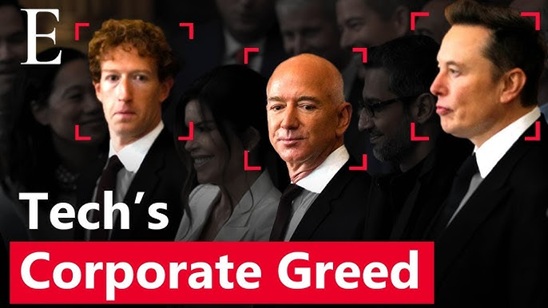
With every passing week, there are new fights over what these companies should and should not be allowed to do. Anthropic is suing much of the federal government, including the Defense Department; Mr. Musk is suing OpenAI; The New York Times is suing OpenAI and Microsoft. The nest of A.I.-related lawsuits is so vast that you need A.I. to keep track of it. Social outcry is at a fever pitch, often focused on the rise of data centers increasingly peppering the American map. Someone firebombed Mr. Altman’s family home. This is, without irony, a disturbing outcome for an ethical movement designed to protect humanity.

Over three decades of watching the tech industry and watching big companies grow from tiny teams to global powers, I’ve observed the same pattern: Ethics don’t scale up. Tech companies like to start with a mission. Google wanted to connect the world’s information; Microsoft wanted to put a computer on every desktop; Twitter wanted to give all people a platform to publish their thoughts. These are good ideas — the stuff of TED Talks. But users show up with their own beliefs and ideas, by the millions. As a tech founder, you end up putting enormous work into making users behave (and stopping them from breaking the law). Lawsuits pour in, saying you did wrong, some because you’re a convenient target.

All the while, money keeps gushing in. You start out transparent, sharing your journey, but then before an initial public offering of shares, you must honor the S.E.C.-mandated quiet period and restrict promotional communications. After that, the transparency never quite returns. The market demands a rising stock price. Your company still makes a lot of software, but a huge amount of time goes to tax strategy and compliance.

At that scale, people start to blur together, and human users can become aggregate pools of statistics and growth vectors that go up and down — a mulch into which you plant your products.

The entire culture of American technology is built around two terms: disruption and, of course, scale. But ethics are constraints on disruption and scale. Truly ethics-bound organizations — the U.S. justice system, the American Medical Association, the Catholic priesthood — have hard scaling limits. Their rules run deep, and their requirements to serve are so onerous that only a few people can do the job. Punishments for transgressors include losing their licenses, being defrocked and being disbarred. Software industry people might have good degrees and are often good people, but they are making it up as they go along. They take no oath, are inconsistently certified and can only be fired, not exiled from the trade.

OpenAI set out to be inherently good — a dot-org. But it stumbled into a seam of pure digital gold in the form of large language models. To develop that technology further, it has made a painful, awkward transition to being a dot-com. (OpenAI says the for-profit arm continues to be overseen by the original nonprofit entity.) The subsequent level of drama has been difficult to behold. A few years ago, Mr. Altman publicly called for industry regulation, and he still does, but OpenAI has also lobbied against it — for example, supporting an Illinois bill that, if it becomes law, will limit the liability of A.I. companies in mass deaths.

But regulation is absolutely in the interests of both America and the big A.I. companies themselves. Let me add two more terms people should know: “Google zero” and “model collapse.” Google zero (coined by Nilay Patel, the editor in chief of The Verge) is when Google stops sending traffic to websites and just provides an A.I. answer instead. When that happens, websites get less traffic, sell fewer ads and make less money. As a result, they may not be able to produce as much content. Model collapse is related: It’s when the A.I. models run out of knowledge to digest. What then? Do they excrete their own prose to redigest? Do they just give up?

Silicon Valley types like to say that data is the new oil. I think that’s right in two ways: Data is valuable, but it’s also a commodity, and these new A.I. tools are infrastructure. We regulate the electric grid, so why not these?

In this new world, there are so many new things to regulate: Deepfakes, A.I. liability, copyright rules, model bias concerns and ecological costs top the list. And we will also need to protect the digital commons and incentivize people to write and do things online. So there will need to be a very long A.I. bill, and Congress will probably use ChatGPT to write it. At the risk of overstepping, I’d call it the Keeping American Ingenuity, Jobs and Unity Act. Or, the KAIJU Act. I hope that eventual bill’s authors consider restoring the web a little, like a wetlands — if for no other reason than we should be feeding our Godzillas healthy discourse, to help settle their nuclear heartburn.

Every Black Republican is leaving the House, erasing diversity gains

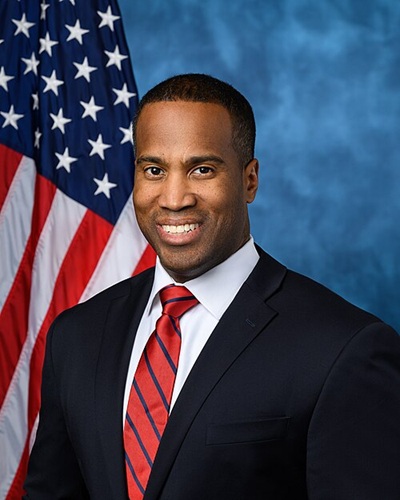
Republican Congressional Representative John James of Michigan.

Dear Commons Community,

All four Black Republicans in the House are leaving Congress next year: Three are seeking statewide office, and one is retiring because redistricting in his state effectively boxed him out of his seat. The exodus is a reflection of the striking and persistent lack of diversity in the G.O.P. ranks of Congress, something that Kevin McCarthy, a former House Republican leader, has acknowledged is still an issue even years after his efforts to address it. 

“When you look at the Democrats, they actually look like America,” he said shortly after leaving Congress in 2023. “When I look at my party, we look like the most restrictive country club in America.”  As reported by The New York Times.

Republican leaders who for a time focused heavily on recruiting and electing more Black candidates appear to have allowed those efforts to flag during the second Trump presidency, as the president has denounced and eliminated diversity programsfired Black officials while installing an overwhelmingly white senior team and presided over an administration that routinely circulates material echoing white-supremacist references, including a racist meme he posted himself. With the president’s gains with Black men dwindling, there are few Black Republicans running for Congress this year, and none regarded as likely to win.

That threatens to make the freshman class photo next year look more like the stodgy country club that Mr. McCarthy described as a major political problem for the G.O.P.

“The more diverse the party is, the more opportunity we have,” he said in an interview. “You want to expand the opportunity for more people to come in.”

Mr. McCarthy said the 2018 election cycle, when the House Republican majority was wiped out by a blue wave, was an “eye opener” that had prompted him to elevate a more diverse slate of candidates, a strategy that included recruiting more women.

But he said the efforts to broaden the party appear to have petered out.

“You had as many freshmen named Mike as women in this class,” he said. (There are three of each currently serving their first term in the House, and no new Black members.)

As some of the oldest and most powerful Black Democrats resist leaving Congress, the few Black Republicans who are serving in the House, none of whom hold leadership positions, are heading for the exit.

Representative Wesley Hunt of Texas, a West Point graduate and Apache helicopter pilot whom Mr. McCarthy recruited in 2022, decided to leave to run for U.S. Senate but was defeated in the Republican primary last month. In Michigan, Representative John James, who flipped a blue district to red in 2022, is running for governor. So is Representative Byron Donalds of Florida, who won his first election to the House in 2020, describing himself as a “Trump-supporting, gun-owning, liberty-loving, pro-life, politically incorrect Black man.”

Representative Burgess Owens of Utah, a former N.F.L. player with a Super Bowl ring who criticized players who knelt during the national anthem in the wake of the killing of George Floyd, chose not to seek re-election after a Republican-engineered redrawing of district lines in his state made it difficult for him to keep his seat.

When they were first elected, these lawmakers held themselves up as proof that Democrats were wrong to claim that President Trump and the party he led were racist.

“I ran in a primary against nine other white guys and beat my nearest competitor by more than 25 points,” Mr. Hunt told Fox News after winning his race. “The left can claim the Republican Party is racist, but my story says otherwise.”

Now, Democrats argue that the wave of departures and lack of serious Black candidates tell a far different story.

“Republicans won’t have any Black members in the next Congress because Republicans have no interest in actually representing Black voters,” said Nebeyatt Betre, a spokeswoman for the Democratic Congressional Campaign Committee. She said that the G.O.P. has put forward policies that have hurt Black Americans, such as a tax law that slashed health care programs; backing tariffs that raised grocery prices; supporting the war in Iran that has increased gas costs; and a gerrymandering push that targeted Black representation in Congress.

The National Republican Congressional Committee declined to provide interviews for this story with any of the party’s Black candidates. But G.O.P. operatives said the departures were not a sign that their party was becoming less diverse, particularly since three of the retirees are seeking higher political office.

Speaker Mike Johnson “is working hand-in-hand with President Trump and the N.R.C.C. to recruit candidates who look like their districts and win,” said Greg Steele, a spokesman for his political operation. He noted that within the nine-member “MAGA Majority Program,” which highlights top challengers running in key battleground districts, there were one woman and three people of color.

Only one of them is Black.

That candidate, Kevin Lincoln, a former mayor of Stockton, Calif., ran unsuccessfully against Representative Josh Harder, a Democrat, two years ago and is now trying again in a different district, against Representative Adam Gray.

Mr. Lincoln is a halting communicator — Democratic operatives said that they use clips of him stumbling over incomplete answers as examples of what candidates should never do — and Laura Loomer, the right-wing social media agitator who has the president’s ear on personnel issues, has singled him out online for criticism about how he has answered questions about diversity, equity and inclusion.

The other Black candidates running this year are considered less likely than Mr. Lincoln to be elected.

In Michigan, Amir Hassan, a Navy veteran and former law enforcement officer, is challenging Representative Kristen McDonald Rivet in a competitive district. For months, Mr. Hassan was the sole Republican running, but party leaders did not rally around him, instead creating space for two primary challengers who have recently entered the race. Mr. Hassan has not received any financial contributions from House leaders, according to his campaign filings. Mr. Johnson has a nominee fund ready to go in that race to support whichever candidate emerges from the primary.

Mr. McCarthy’s old political action committee, however, gave him $10,000 last year.

In Ohio, Josh Williams, a state legislator, is challenging Representative Marcy Kaptur, the Democratic stalwart and the longest-serving woman in congressional history. He is embroiled in an ugly primary fight, in which he is accusing other Republicans of “spreading lies, peddling baseless claims and recycling debunked stories” in order to “smear my name and reputation.”

And in New Jersey, Tiffany Burress, a personal injury attorney and the wife of former New York Giants star Plaxico Burress, is running for Congress in a district that has long been blue. She is also involved in a messy primary, in which she is constantly attacked by her opponent for not living in the district she is seeking to represent. Her home is facing foreclosure after she failed to pay her mortgage and she has raised less than $75,000 this quarter, with no help from Republican leaders.

Democrats said the candidate quality among Black Republicans running was a sign of how hard it was, in this environment, to recruit more serious contenders.

“It’s going to be really hard for even the most conservative Black Republican to look at this Republican Party and defend it,” said Chris Taylor, a senior adviser to the Congressional Black Caucus PAC. “This is a Republican Party that is at war with Black America.”

Tony