Last week, I posted by views on the Democratic National Committee autopsy of what went wrong during the 2024 presidential election. In the New York Times on Sunday, Michelle Goldberg had a column entitled, “The Agony Around the Democrats’ Mysterious, Ridiculous Autopsy”. It adds significantly to the outrageous positions taken by the Democrats in the autopsy document. Below is her entire column.
As I said in my posting last week, if the DNC does not get its act together, we will have a Republican elected again in 2028.
Tony
————————————————————————————————–
The New York Times
The Agony Around the Democrats’ Mysterious, Ridiculous Autopsy
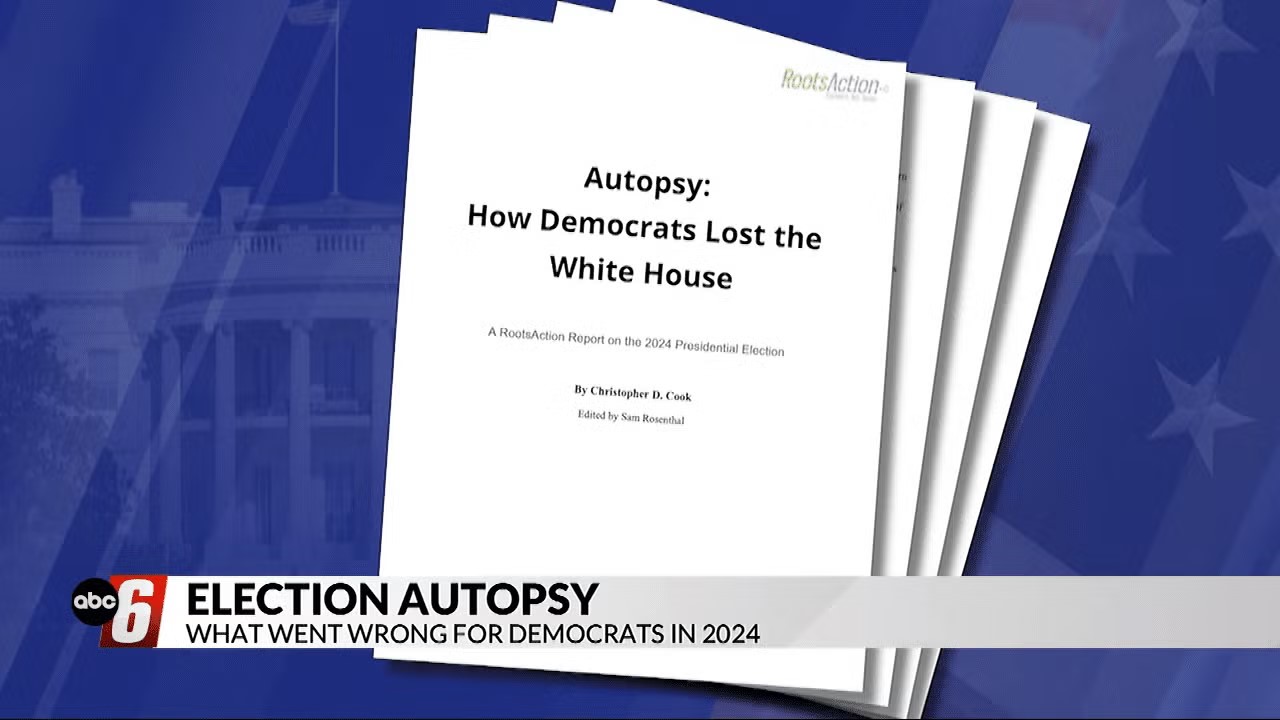
Rarely has a document been at once as mysterious and anticlimactic as the Democratic National Committee’s autopsy of what went wrong in the 2024 election, which, after much drama and angst, was finally published on Thursday.
The committee’s chair, Ken Martin, promised a full audit of party operations when he was running for his seat, and again when he won it. Last July, officials said it would be out in the fall. Fall came and went, and in December, Martin said it wouldn’t be released at all. By hiding it, Martin made the report an object of suspicion and fascination. Some thought he was protecting Kamala Harris ahead of 2028. Many progressives were convinced that the D.N.C. quashed the autopsy because it would show Harris was done in by Gaza. Rob Flaherty, who’d been deputy director of both the Harris and Joe Biden campaigns, speculated that it didn’t even exist: “The members of the ‘autopsy team’ were in over their heads and struggled to put the thing together.”
Flaherty was partly right. On Thursday, in response to reporting by CNN, Martin released an incomplete version of the report, a project he’d assigned, on a part-time, volunteer basis, to the Democratic consultant Paul Rivera. The document, it’s now clear, was kept under wraps not because it was impolitic, but because it’s a disaster.
What’s most striking is its utter lack of substance. The words “Israel” and “Gaza” don’t appear once in its 192 pages. It offers little insight into why the Democratic Party lost large numbers of Black and Latino men, or its failure to speak to disconnected, irregular voters. Much of it is a string of platitudes, like this: “It’s imperative that Democrats meet the moment — by identifying and preparing the leaders and organizers who will deliver positive change for America.” I wondered if it was written by A.I., though A.I. probably would’ve done a better job.
At one point, the autopsy notes that in North Carolina, Josh Stein, the successful Democratic candidate for governor, significantly outperformed Harris. The report acknowledges that Stein had the benefit of a ridiculous opponent, the former lieutenant governor and porn message-board habitué Mark Robinson (“a self-described Nazi most voters would never support”). Still, based on Stein’s victory, the audit asserts, with startling complacency, “The problem wasn’t Democratic policy or party brand” but “Harris as a candidate.”
Elsewhere, the autopsy claims that Harris’s campaign didn’t sufficiently incorporate polling data into its messaging, as if her operation suffered from a surfeit of authenticity and spontaneity. It’s the opposite of the conclusion reached by Flaherty, who published his own much more trenchant version of an autopsy this month in The Bulwark. “We tend to poll-test our way into running a lot of mealy-mouthed ads about prescription drugs or whatever,” he wrote of Democrats, while Republicans are better at driving viral narratives.
Rivera’s report makes a few fair points. It’s correct, for example, that the right has far outdone progressives in building permanent infrastructure like Turning Point, the organization for young conservatives, while Democrats and their allies “make massive investments in media towards the end of an election cycle and then go dark.” But even where the autopsy is right, it’s often so airy as to be almost meaningless. Democrats, it tells us, need to do more year-round organizing, invest more in digital advertising and speak about “kitchen table” concerns rather than “identity politics.” “The losses in the states are the key trend Democrats need to reverse,” it says. Rivera might have added that Democrats need to win more votes.
In a statement, Martin acknowledged that the autopsy was a failure. When he received it, he wrote, he knew “it wasn’t ready for prime time — not even close — and because no source material was provided, it would have meant starting over.” What’s most bizarre and damning, however, is not the shoddiness of the work itself, but the way Martin let his initial screw-up fester until it looked like a cover-up.
Martin might have defused the situation by telling the truth — that the draft he received was a mess — and commissioning a new one. Instead, he let it become a crisis. At a time when the D.N.C., under his leadership, appears to be nearly insolvent, multiple Democratic donors are reportedly withholding contributions because of Martin’s handling of the report. “I talk to donors constantly who refuse to give to the D.N.C.,” said Amanda Litman, head of Run for Something, which recruits young progressives to seek office. “They cannot trust Ken Martin. They cannot trust the institution is doing its job well.” A project that was supposed to restore trust to the party instead undermined it.
Now that the autopsy is out there, it does tell us one important thing about the Democratic Party’s future: Martin should be replaced. I’ve spoken to Democrats, progressives and moderates alike, who say he’s insular and thin-skinned, a man who won his seat by promising perks to voting members rather than articulating a compelling vision. “Ken Martin is in way over his head and doesn’t know how to do politics at the national level,” said Phil Gardner, a founder of the centrist Blue Dog Action. The growing displeasure with Martin’s leadership isn’t ideological. It’s operational.
Democrats know they have a problem. As The Associated Press reported this month, operatives have already approached Litman to gauge her interest in replacing Martin. She said no — she likes the job she has — but still believes he needs to go. “We can’t tolerate mediocrity,” she told me. Every step of this autopsy process shows Democrats doing exactly that.
Pope Leo XIV yesterday presented his vision for how to preserve human dignity in the era of artificial intelligence.
He offered his ideas by issuing a document known as an encyclical, a nearly 400-year-old papal tradition of teaching the Roman Catholic faithful. The document issued on Monday, is Leo’s first encyclical since he became pope last year.
Written by the pope and generally addressed to the whole church, encyclicals impart authoritative teachings about moral or social challenges. They lack the legal status of a papal bull, which is a formal declaration of an article of faith or moral law. But Catholics are still encouraged to use encyclicals to guide their lifestyles and choices.
Popes do not usually attend the presentation of their encyclicals, but Leo presented his in person at the Vatican alongside Christopher Olah, a founder of Anthropic, a major A.I. developer, and several Catholic prelates and theologians.
His encyclical, entitled, Magnificat Humanitas: On Safeguarding the Human Person in the Time of Artificial Intelligence (has 245 sections). The title says it all. His message voices concerns that the human race has to be protected from untethered AI. Here are two paragraphs:
“It is not my intention here to offer a comprehensive treatment of artificial intelligence, nor to give an overview of the extensive relevant literature, since authoritative contributions already exist, including within the ecclesial context. I limit myself to recalling a few essential elements for a moral and social discernment that safeguards the primacy of the human person, in order to ensure that it will always be human intelligence, with its conscience and freedom, that guides technical innovations and responsibly determines their use and limits.
It is appropriate to preface this discussion with two considerations. First, any statement regarding AI risks becoming quickly outdated, given the remarkable pace at which these systems are developing. Second, all of us, including those who design them, possess only a limited understanding of their actual functioning. Indeed, current AI systems are more “cultivated” than “built,” for developers do not directly design every detail, but instead create a framework within which the intelligence “grows.” As a result, fundamental scientific aspects — such as the internal representations and computational processes of these systems — remain, at present, unknown. There thus emerges an urgent need for a twofold commitment: on the one hand, a deepening of scientific research; on the other, the exercise of moral and spiritual discernment.”
We thank our military men and women past and present for their service to our country. We especially honor and remember those who made the ultimate sacrifice.
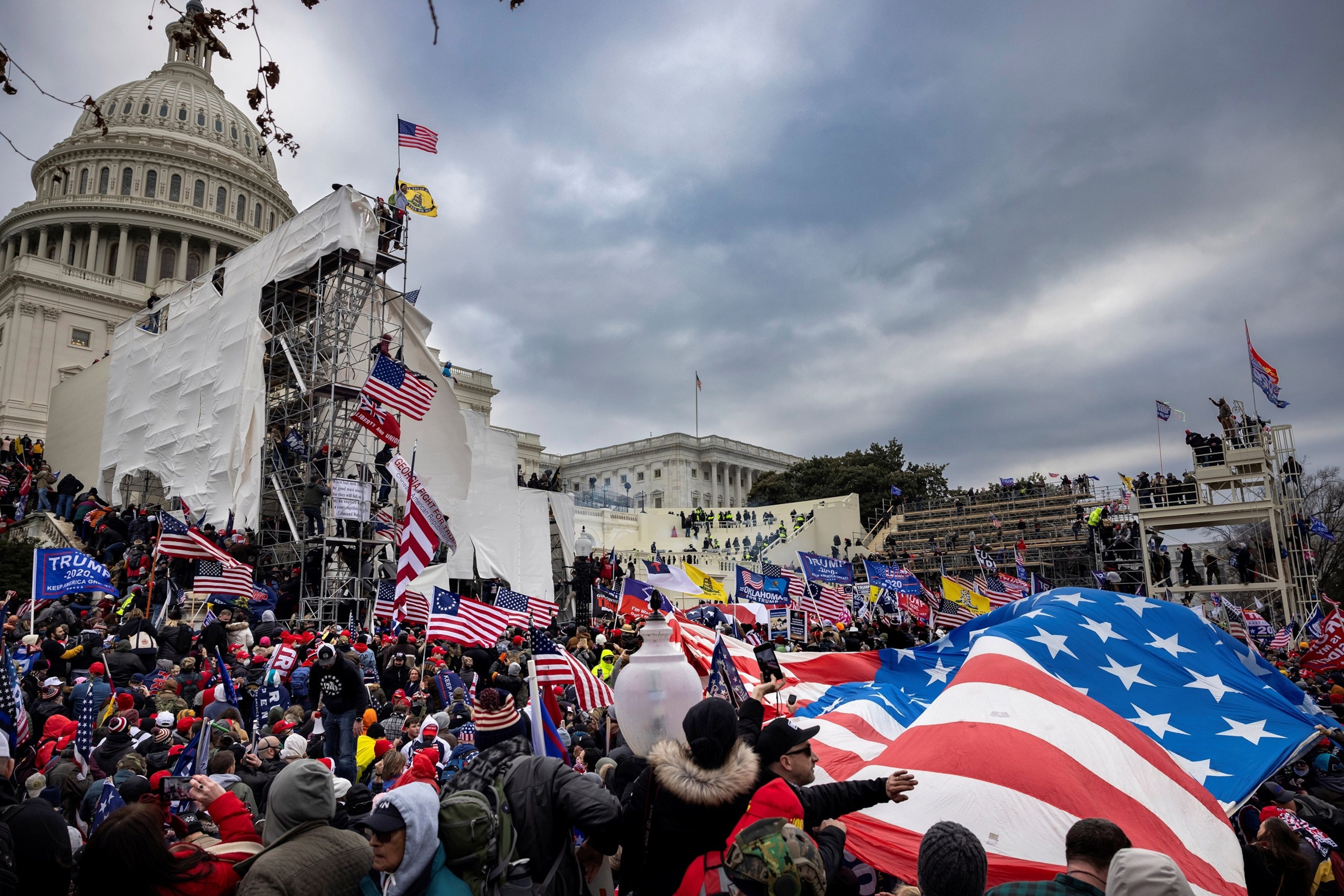
Trump supporters clash with police and security forces as people try to storm the US Capitol on January 6, 2021 in Washington, DC.
Brent Stirton/Getty Images
Dear Commons Community,
Two police officers who defended the U.S. Capitol in 2021 during the Jan. 6 attack are suing to stop the creation of Trump’s $1.7 billion “Anti-Weaponization Fund,” calling it the “most brazen act of presidential corruption this century.” As reported by ABC News.
Former Capitol Police Officer Harry Dunn and Metropolitan Police Department Officer Daniel Hodges alleged that the compensation fund, which was announced by the Justice Department on Monday, would not only encourage those who committed violence in the name of President Trump but that it would directly finance their operations.
“To prevent the public financing of paramilitary organizations in the United States, and to protect Plaintiffs from further violence, the fund must be dissolved,” the lawsuit said.
The fund, which was part of a settlement agreement in Trump’s $10 billion lawsuit against the Internal Revenue Service, was established by the Trump administration to compensate those who allege they were wrongly targeted under the Biden administration.
The lawsuit came as a former Trump administration official said he was planning to seek a $2.7 million reimbursement from the fund.
Michael Caputo — who served as a spokesperson for the Department of Health and Human Services during Trump’s first term — claimed he was targeted by the FBI probe into Russian interference in the 2016 election, and was again investigated under the Biden administration for a documentary he made with One America News about former President Joe Biden’s purported connections in Ukraine.
“As survivors of the illegal Russiagate investigations, our family was encouraged by news of the Anti-Weaponization Fund. I write with profound gratitude to you and President Donald J. Trump for creating a process to right these wrongs,” Caputo wrote in a letter he posted on X.
Officers Dunn and Hodges allege that the creation of the fund is arbitrary and capricious — and therefore a violation of the Administrative Procedures Act — and runs afoul of a prohibition in the Fourteenth Amendment barring the government from funding insurrections.
“No statute authorizes its creation, the settlement on which it is premised is a corrupt sham, and its design violates the Constitution and federal law,” their lawsuit said.
Filed in D.C. federal court, the lawsuit asked a judge to block the creation and funding of the compensation fund. The settlement agreement that initiated the fund gave the acting attorney general 30 days to create the entity and appoint five commissioners to run it.
Dunn and Hodges are some of the most high-profile members of law enforcement who defended the Capitol that day. Hodges was pinned against a door frame, attacked, and crushed by rioters. Dunn was inside the Capitol and directly engaged the rioters. He ran for Congress unsuccessfully in 2024 and is currently running for Maryland’s 5th Congressional District.
Illustration by The Chronicle of Higher Education.
Dear Commons Community,
At a time when most colleges are chasing enrollment gains to shore up finances, the University of Arizona is doing the opposite. In the fall of 2025, the first-year class shrank by nearly one-fifth — a change that leaders describe as intentional. As reported by The Chronicle of Higher Education. Dr. Suresh Garimella, the president of UA commented that too many freshmen were coming in unprepared. They wanted to increase the graduation rate, which is lower than that of any of Arizona’s mutual peers. And they wanted to decrease how much financial aid was being doled out to students who weren’t from Arizona.
A handful of other flagships have capped growth in recent years to avoid overcrowding amid a surge in popularity. But Arizona’s thinking — enrolling fewer students to boost completion and cut costs — stands out.
There are questions about how much of last fall’s drop in freshmen was strategic versus a grim surprise. And the cost-cutting wasn’t just nice to do; it was a necessity. Arizona recently crawled out of a $177-million budget hole of its own making — a result of flawed forecasting and inadequate communication. The announcement of a “financial crisis” was a shocking diagnosis for a big university in a growing state, seemingly the kind of institution that should be thriving.
Two years later, officials insist that the campus is thriving, that the shortfall has been resolved, and that ballooning class sizes are a thing of the past. The university is hoping to further reshape its first-year cohort with updates to its admissions strategy, creating an early-action deadline with priority consideration for scholarships and nixing automatic acceptance for certain grade-point averages. (Arizona has not yet shared its preliminary data for the upcoming fall’s headcount; officials said last week that yield rate and grade-point average for the first-year class both increased. The deposit deadline, traditionally May 1, was extended to May 15.)
Some in Tucson, though, see big risks in these changes. If they deliver a class that is too small, the university could be in financial trouble — again. And if they result in a student body that is wealthier and less diverse than before, leaders will have to answer questions about whom the university serves.
The Chronicle of Higher Education recently had an essay entitled, “Professors Are Too Old: The academy’s gerontocracy problem is worse than anyone admits” written by Samuel Moyn, a professor of law and history at Yale University. Moyn sees higher education’s aging faculty as a serious problem for the academy. Some of what he says is okay but he neglects to consider that the value of college faculty should be based on their merits such as teaching evaluations, research productivity, and service to their department and disciplines. I am 78 and in my 56th year of higher education and as long as I feel productive and feedback from my students is positive, I will continue to teach.
Moyn’s entire essay is below!
Tony
P.S. I own and wear the shirt depicted above
——————————————————————
The Chronicle of Higher Education
Professors Are Too Old
The academy’s gerontocracy problem is worse than anyone admits.
There have always been old people. A psalm of the Bible says that, unless they die early for some reason, human beings get 70 years, 80 if they’re lucky. Genesis mentions generations of superagers at the start of humanity — like Adam, Noah, and Methuselah, the latter of whom celebrated his 969th birthday. And elders have long been accorded preferences and priorities. Another biblical passage, this one from Proverbs, holds that “gray hair is a crown of glory.” The “preference for age and seniority,” the historian Keith Thomas has remarked, has been “shared by all those corporate institutions which set a value on hierarchy, stability, and continuity.”
Whenever seniority is used to allocate positions or resources, an impulse toward gerontocracy — the empowerment of the old — is at work. The university is no exception. Faculty members benefit over time from age-related privileges. Favored by seniority, they hold on to their higher-paying posts while blocking opportunities for younger scholars. An aging professoriate is more set on preservation than on renovation, stymying innovation and originality.
Welcome to gerontocracy in the academy. Graying professors are an extreme instance of a national syndrome, since they choose when (and if) to retire and can keep their jobs in spite of cognitive and other physical decline.
For American men, the average retirement age trended down for some decades before it began rising inexorably. In 1990, those over 55 were only 10 percent of the labor force. Now that share is pushing a quarter.
After World War II, as the great aging set in, more and more companies adopted retirement mandates, some softer than others. Congress passed the Age Discrimination in Employment Act (ADEA) in 1967, and President Lyndon Johnson defended it by expressing sympathy for the “hundreds of thousands not yet old, not yet voluntarily retired, [who] find themselves jobless because of arbitrary age discrimination.” Yet in the spirit of other antidiscrimination laws of the 1960s, Congress’s essential focus was the mistreatment of those 40 or older at the point of hiring or in early and unfair termination. Far from targeting the validity of mandatory retirement, the law initially permitted it, in tune with American norms of the time.
But the law was revised in stages. The original ADEA permitted mandatory retirement but only if it applied to those age 65 or older. By 1986, however, mandatory retirement was essentially prohibited outside exceptional professions that age undeniably affects, like aircraft pilots. Today it is not permissible to discriminate by age in employment, no matter how old the employee is. Legally, it became possible for workers to stay longer and longer. Many do, clustering in elite professions, in contrast to manual or menial work that people leave if they can or because they must. When Congress got rid of the last vestiges of age limits in the ADEA in 1986, it granted universities a seven-year reprieve from the effects.
Elimination of mandatory retirement converged with the great aging of the population and the propensity of the elderly to deny their own decline and mortality and to hoard money and power. In 1977, the share of faculty in their 30s at four-year institutions was about 20 percent. By 1996, it was about 15. Meanwhile, the number of faculty in their 60s shot up correspondingly, with those age 60-69 doubling their representation. Still, professors in their 70s were comparatively rare. That is no longer true.
Between 2000 and 2010, the number of faculty over the age of 65 doubled, and the median age of college and professional-school teachers came to exceed that of other aging professions like doctors and lawyers. In those same years, the arts-and-sciences faculty at Harvard University had more tenured faculty over 60 than under 50.
I work at Yale Law School. Its faculty was dramatically transformed by the elimination of retirement coupled with the extension of lifespans. In the 1930s, the regular faculty averaged just under 43 years old; a half-century later, in the 1980s, that number had barely risen, to just over 45. Yet by the 2010s, it had leapt by more than a decade, nearing 57. Even more strikingly, almost a third of the faculty were over 65, and 15 percent were over 70.
The aging of the professoriate is an international phenomenon. Still, some countries or universities have kept a mandatory retirement age — at Cambridge and Oxford, it was recently raised from 67.5 to 69 years. At American universities, unfortunately, those toward the end of their time are at their maximum power — not just to reap the highest salaries, but also to lighten their own teaching and service obligations, shunting them to their junior colleagues. (Trust me on this.)
Why did Congress delay the end of mandatory retirement for professors? One concern was that they already had the supercharged protection of tenure. The elimination of age limits altogether would give them effective lifetime employment if they chose to stay, no matter how incompetent or useless they became at their jobs.
Gerhard Casper, former provost at the University of Chicago and president of Stanford, warned that the results would prove devastating if the old were allowed to stay. Aside from distributional injustices of various kinds — including the continuing overrepresentation of white men — the essential scholarly purposes of the university were at stake. “Innovations in education generally come from young faculty members,” he wrote. “Faculty tend to teach what they understand. They understand best what they learned when they were young.” Casper was ignored.
After 1993, according to one study of law schools, the “uncapping” of retirement limits by itself led the number of faculty members 70 and older to go up tenfold. Almost 40 percent of the faculty who would otherwise have had to retire stayed into their 70s instead. The number of faculty over 60 skyrocketedto be a fourth or even third of the overall teaching staff at many leading institutions. The damage that the financial crisis of 2008 did to faculty retirement accounts reinforced the emerging trend, even though the consequences were far graver for younger people who saw their prospects smashed. Asked, more than half of the crusty old professors biding their time said they were staying for financial reasons.
Academe may have always been a gerontocratic proposition. The association of age and wisdom has conveniently served professors idealized as avuncular or insightful mainly for being up in years. If academic institutions occasionally reward rising talent and young stars, it starts them on the track to aristocratic entitlements and obstinately guarded fiefdoms few give up until absolutely necessary.
Decades ago, the sociologist Robert K. Merton worried that the rise of more rapidly changing forms of knowledge would exacerbate the costs of academic gerontocracy. It might have been more defensible in the past — the medieval university coming honestly by its premodern characteristics — but no longer. “Today everything is quickly acquired, even that experience in which formerly consisted the sole and genuine superiority of the old over the young,” Merton cited his forerunner in sociology, Robert Michels, as saying all the way back in 1911. Modernity meant that “age has lost much of its value and therefore has lost, in addition, the respect which it inspired and the influence which it exercised.”
The end of mandatory retirement has made universities more gerontocratic than they have ever been. Aging professors occupy their jobs indefinitely. These lifers have accumulated the bureaucratic power to angle successfully for outcomes that reflect the values of aging institutionalists, not “tenured radicals.” Back in 1990, Casper warned: “Those staying on will, in many cases, through their seniority, control curriculum, appointments and laboratory resources, and influence policy.” And it all proved true as tweed-jacketed 70-somethings refused to give up their grip on a future they were loath to leave to others.
Their choices have had especially outrageous effects on younger scholars. As older professors stayed around and enjoyed the benefits of guaranteed employment, younger academics were subjected to the casualization of faculty positions and the shrinking of major fields, especially in the humanities.
This generationally toxic combo means that younger academics today regard those elders much as serfs on the brink of the French Revolution saw the noble lords. If tenure, ostensibly for the sake of protecting fearless speech, is being eroded today, the main culprit isn’t the conformist pressure of either centrist donors or woke students. Rather, it’s the conversion of tenure into a gerontocratic class alibi among those with little new (let alone disturbing or scary) to say. No wonder administrators across the land are eliminating it by hiring young people without its protections, if they are hired at all.
Old professors clinging to their posts too long isn’t the sole reason for the casualization or elimination of academic jobs. The mandatory retirement of the most senior professors would hardly create jobs for newcomers by magic. But it would make a difference. In the meantime, contractual or voluntary departures, which remain entirely compatible with federal law, are essential. In my mid-50s myself, I hope enlightened new policies force me out at 70. If not, I pledge to not set both innovation and justice back by overstaying my welcome. I hope my peers join me.
This essay is adapted from Gerontocracy in America: How the Old Are Hoarding Power and Wealth — and What to Do About It, published by Farrar, Straus and Giroux in June.
Yesterday’s issue of Science had a policy piece based on data collected in a survey of 95,513 students attending major public research universities in the United States. Focusing on assessment, the piece concluded:
“As GenAI becomes embedded in professional settings, universities must prepare students to use these tools responsibly while preserving credible ways of certifying human capability. This will require discipline-specific assessment reform, supported by more equitable access to GenAI and stronger faculty capacity to adapt teaching and assessment. Fair evaluation now depends not only on what is assessed but also on how evidence of learning is generated, interpreted, and bounded within particular disciplinary contexts.”
The entire article is below and worth a read!
Tony
Science
Generative AI use and misuse call for assessment reform in higher education
In Section Policy Article | Higher Education
Growing misuse of, and unequal access to, AI tools requires universities to rethink how they evaluate learning
Igor Chirikov1, Ivan Smirnov2,3, René F. Kizilcec4
The debate about the impact of generative artificial intelligence (GenAI) on higher education is polarized. Some portray GenAI as normalizing cheating at scale (1), whereas others argue that misconduct patterns have changed little (2). These competing narratives underscore the need for reliable data on where GenAI use is concentrated and where misuse is most likely. Existing studies of GenAI adoption and perceptions in higher education provide useful early signals but often rely on small samples and lack measures designed to capture sensitive behaviors such as cheating across fields (3-5). We addressed this gap with survey data from 95,513 students in a representative sample of 20 major public research-intensive universities in the United States and an indirect method for estimating GenAI-assisted cheating across disciplines. We found substantial heterogeneity in GenAI use and misuse across disciplines and student groups. These patterns call for discipline-specific assessment reform, not blanket bans or universal detection regimes.
GenAI is making some common forms of higher education assessment less reliable as evidence of student capability. Although these tools can support learning through personalized assistance and feedback, they can also function as cognitive shortcuts that allow students to outsource parts of the work that assessments are meant to evaluate (6-8). By making it easier to generate natural language, code, and audiovisual media, GenAI threatens the validity of commonly used assessments, which underpin the credibility of academic credentials and trust in higher education institutions (9).
Because the risks GenAI poses to assessment validity are likely to vary across disciplines and student subpopulations, identifying where use and misuse are concentrated is important for designing effective responses. We analyzed survey data collected between March and August 2024 [for analytic details, see supplementary materials (SM)]. Although our sample represents research universities—a relatively small subset of US higher-education institutions—these institutions enroll more than 2.6 million undergraduates and award more than half of all bachelor’s degrees in science, technology, engineering, and mathematics (STEM) nationwide.
GENAI USE AND MISUSE
Our analysis reveals widespread GenAI use among students: Two-thirds reported using GenAI during the 2023–2024 academic year, and 37% reported using it regularly (i.e., monthly or more). Usage patterns differ considerably across disciplines (see the figure), with higher adoption in STEM fields, where computational skills and technology are instrumental to the curriculum. For instance, 62% of computer science students used GenAI regularly, compared with only 24% of students in the arts.
Notably, some social science disciplines also show high levels of GenAI adoption: Business students report a 51% use rate, and economics stands at 49%, even as related disciplines such as political science show lower rates (28%). This suggests that disciplines with analytically intensive coursework and data-driven assessments may be more conducive to GenAI integration, although these patterns may also reflect differences in the students who enroll in those fields.
In response to widespread GenAI use among students and emerging concerns about academic misconduct, many higher-education leaders have implemented restrictive policies, such as banning GenAI in assessments and enforcing disciplinary measures for unauthorized use. However, the effectiveness of these approaches is limited because GenAI-assisted cheating is inherently challenging to detect. Text-based detection methods are imperfect and likely to miss GenAI use when AI-assisted text is substantially edited, underscoring detection as an evolving cat- and-mouse problem rather than a settled technical solution (10). Accurate estimates of GenAI-assisted cheating are essential for designing and evaluating academic policies.
To estimate GenAI-assisted cheating, we used a list randomization experiment, an indirect-questioning technique designed to measure sensitive behaviors that respondents may be reluctant to disclose in direct questioning (11). This method allows respondents to answer sensitive questions anonymously, reducing social desirability bias. Students were randomly assigned to one of two groups in the survey. One group received three nonsensitive statements about using GenAI (e.g., “I have often explained to my classmates how to use AI tools like ChatGPT”), whereas the other received the same three statements plus a sensitive statement: “I have submitted AI-generated content as my own work in class, knowing it may not be allowed.” Respondents reported only how many statements were true for them, not which ones. Comparing responses across groups allowed us to estimate, using maximum likelihood (11), the proportion of students engaging in GenAI-assisted cheating. Because some students may not recognize that their GenAI use constitutes a violation, this estimate is likely conservative.
We estimate that 9% of students who use GenAI tools have submitted AI-generated content despite knowing it may not be allowed (see the figure). This estimate is notably higher among daily GenAI users (26%) than among those who use it monthly (7%), suggesting that as the adoption of GenAI grows, we may see an upward trend in academic integrity violations. Although our estimates indicate that GenAI-assisted cheating may not be as widespread as anecdotal reports suggest (1), they underscore the considerable challenge it poses for maintaining academic standards.
GenAI use and cheating by academic discipline
Blue dots show the share of students in each group who reported using generative artificial intelligence (GenAI) monthly or more frequently, based on the direct survey response (n = 95,513). Orange dots show maximum likelihood estimates of GenAI-assisted cheating derived from the list experiment among students who reported any GenAI use (n = 61,509).Open photo in lightboxGRAPHIC: V. PENNEY/SCIENCE
GenAI-assisted cheating varies across disciplines. Overall, estimated rates are higher in non-STEM than in STEM fields. At the discipline level, for example, economics (17%) and journalism (16%) show relatively high rates, whereas biology is among the lowest, at 5%. Given that GenAI adoption in non-STEM disciplines is presently low, there is a concern that the absolute number of cheating cases could substantially increase as usage grows.
We also found large disparities in GenAI usage by gender, race or ethnicity, socioeconomic status, and disability status (see fig. S1). Only 33% of female students report regular GenAI use compared with 45% of male students (regression-adjusted odds ratio = 0.66). Similarly, usage is lower among underrepresented racial minorities (29%; see definition in SM) than among White and Asian students (39%; odds ratio = 0.71). Although socioeconomic status and disability status also show usage disparities, these gaps are less pronounced, and there are no significant differences by first-generation college status. These findings highlight concerns about equitable access to technological resources in higher education, as students from underrepresented backgrounds may have reduced access to or familiarity with GenAI.
GenAI usage disparities also vary across disciplines, with gender disparities most pronounced in health sciences and economics and racial-ethnic disparities most pronounced in the arts, humanities, and computer science. These variations suggest that differences in GenAI use are not uniform across fields and may reflect a combination of disciplinary contexts, enrollment composition, familiarity with technology, and other factors. This underscores the need for tailored approaches to equitable GenAI access and literacy across fields.
ASSESSMENT REFORM AS A POLICY RESPONSE
Our findings offer large-scale, discipline-specific evidence of GenAI use and cheating to better understand how students engage with this technology. Unlike previous small-sample surveys that did not account for disciplinary differences and generalized findings across fields, our survey captures substantial variation across disciplines. We found high adoption rates of GenAI in STEM fields but higher rates of GenAI-assisted cheating in non-STEM fields. Our list experiment also provides a robust estimate of the scale of GenAI-assisted cheating, showing that misconduct is concentrated among frequent GenAI users, who are three times as likely to cheat (26%) as less frequent users (7%). These findings suggest that GenAI-assisted misconduct is neither universal nor negligible. Although the estimated prevalence is lower than some anecdotal accounts suggest, the concentration of misuse among high-frequency users poses a substantial challenge for academic integrity policies as GenAI use continues to expand across fields.
The observed patterns matter not only because they indicate possible policy violations but also because they expose vulnerabilities in how universities infer student learning from assessment outcomes. As GenAI use grows, our findings suggest that some commonly used assessments may be becoming less dependable indicators of student capability, especially when they evaluate polished final outputs without sufficient evidence of process, judgment, and independent performance. This presents a direct challenge to assessment validity in disciplines where the capabilities being assessed can be partially outsourced to AI systems. Sweeping attempts to curb misuse can introduce new threats to validity when they rely on poorly justified restrictions, narrow assessment formats, or measures that impose unequal burdens across students.
Assessment research therefore points not to bans and detection as the solution, but rather to assessment reform that strengthens the credibility of inferences about what students know and can do (12-14). Without such reforms, the credibility of assessments and trust in higher education credentials may erode further.
CHANGING HOW AND WHAT WE ASSESS
Central to these reforms is the revision of assessments in response to growing integrity risks associated with GenAI use. Our results suggest that reforms should be implemented at the discipline level, as each discipline combines distinct learning goals, assessment traditions, and ways in which GenAI can support or substitute for student work. This work may be best coordinated not by individual universities acting alone, but by disciplinary societies, accreditors, and other field-level organizations that can develop shared guidance and examples for local adaptation. Assessment research increasingly emphasizes that there is no single “AI-proof” solution; instead, institutions must balance multiple goals: assuring learning, preserving authentic and meaningful assessment, making expectations enforceable, and preparing students for responsible AI use in professional contexts (13, 14).
One response is to use more controlled assessment settings for selected learning outcomes, such as in-class, oral, practical, or test center–based assessments where independent performance can be observed more directly. These approaches may be especially useful when programs need stronger assurance that students can perform without external assistance. However, recent work cautions against treating a return to conventional exams as a general solution. Assessments that are ostensibly GenAI-proof can provide a partial short-term response, but they rarely capture the broader knowledge, judgment, and professional capabilities that many programs seek to develop (13). Controlled conditions should therefore be used selectively where they align with the competencies being assessed. Because controlled settings are limited in what they can measure, longer-term reform will also require clearer norms and redesigned assessments.
A second response is to clarify what constitutes acceptable and unacceptable AI use in specific assessment contexts. Institution-wide permissions or bans are insufficient because GenAI blurs the boundary between assistance and delegation across stages of work. Recent research shows that both students and instructors struggle to determine where the line should be drawn and that assessment policy must move beyond binary prohibition versus permission frameworks to consider enforceability, authentic learning, and the practical burden placed on teachers and students (14). Clearer guidance at the level of particular tasks and courses is therefore essential, especially where AI may be used for brainstorming, editing, coding, or feedback but not for replacing core disciplinary thinking.
A third response is to redesign assessments so that GenAI use is either structurally constrained by the task or purposefully incorporated into it. For example, requiring students to document their process, justify their choices, critique AI outputs, or demonstrate understanding through follow-up interaction shifts the focus away from the final artifact and toward the underlying reasoning. These design strategies also support the development of AI literacy, which is increasingly relevant to professional practice and expected from graduates. However, designing GenAI-integrated assignments is resource intensive and requires substantial faculty support, making implementation uneven across institutions. This reinforces the need for discipline-specific responses because differences in estimated misuse likely reflect variation in how disciplinary learning goals and assessment formats allow GenAI to substitute for the capabilities being assessed (14).
Given these complexities and resource constraints, universities will need to prioritize where reform efforts begin. Our prevalence estimates provide one useful input by identifying where existing exposure to GenAI use and misuse is greatest, but they should not be the sole criterion. Institutions should consider the consequences of incorrect judgments about student competence, the professional stakes attached to the competencies being assessed, and the feasibility of implementing valid alternatives in local contexts (13, 14). Thus, fields with high rates of use and misuse may be practical starting points for reform, but lower-prevalence disciplines tied to especially highstakes judgments may warrant equally urgent attention. Finally, recognizing that our data are drawn from US research universities, we expect that assessment reforms will require local adaptation across different national and institutional contexts.
ADDRESSING DISPARITIES AND FACULTY PREPAREDNESS
Closing sociodemographic gaps is crucial for the success of assessment reform because access to GenAI tools is increasingly essential in both academic and professional contexts. Our findings reveal that low-income, racially underrepresented, and female students are significantly less likely to use GenAI regularly than their peers. These disparities do not imply that some groups should use GenAI more, because higher use is not inherently better. Instead, they raise concerns about unequal opportunity to develop the literacy and critical oversight that are increasingly needed when GenAI shapes coursework, assessment, and professional practice. Universities should focus on ensuring that students are not differentially disadvantaged by providing institutionally supported tools and opportunities to learn when and how GenAI should be used responsibly, especially when reformed assessments assume that students can appropriately incorporate AI assistance. Equitable GenAI access and literacy can help prevent assessment reform from reproducing existing inequalities while also preparing students to engage meaningfully with the technologies that are shaping their future workplaces.
Faculty development is an important enabling condition for successful assessment reform and for bridging the gap between student adoption of GenAI and faculty readiness to adapt their teaching. Many instructors remain unprepared to address the challenges and opportunities presented by GenAI. Training should help educators understand the capabilities and limitations of these tools, design assessments that better capture student learning, communicate clearer expectations about acceptable use, and integrate GenAI into coursework where appropriate (13, 14). These efforts will better equip faculty to implement assessment practices that reflect the realities of GenAI’s impact on learning.
As GenAI becomes embedded in professional settings, universities must prepare students to use these tools responsibly while preserving credible ways of certifying human capability. This will require discipline-specific assessment reform, supported by more equitable access to GenAI and stronger faculty capacity to adapt teaching and assessment. Fair evaluation now depends not only on what is assessed but also on how evidence of learning is generated, interpreted, and bounded within particular disciplinary contexts.
1Center for Studies in Higher Education, Goldman School of Public Policy, University of California, Berkeley, Berkeley, CA, USA.
2School of Communication, University of Technology Sydney, Ultimo, NSW, Australia.
3Complexity Science Hub, Vienna, Austria.
4Department of Information Science, Cornell University, Ithaca, NY, USA.
1. B. McMurtrie, “Cheating has become normal,” Chronicle of Higher Education, 4 November 2024.
2. N. Singer, “Cheating fears over chatbots were overblown, new research suggests,” New York Times, 13 December 2023.
3. P. Bharadwaj et al., “Time for Class 2024” (Tyton Partners, 2024).
4. C. Baek, T. Tate, M. Warschauer, Comput. Educ. Artif. Intell.7, 100294 (2024).
5. J. M. Golding, A. Lippert, J. S. Neuschatz, I. Salomon, K. Burke, Teach. Psychol.52, 369 (2025).
6. L. Yan, S. Greiff, Z. Teuber, D. Gašević, Nat. Hum. Behav.8, 1839 (2024).
7. S. S. Lee, R. L. Moore, Online Learn.28, 1 (2024).
8. J. H. Shen, A. Tamkin, arXiv:2601.20245 (28 January 2026).
9. B. Borges et al., Proc. Natl. Acad. Sci. U.S.A.121, e2414955121 (2024).
10. K. Kusumegi et al., Science390, 1240 (2025).
11. G. Blair, K. Imai, Polit. Anal.20, 47 (2012).
12. P. Dawson, M. Bearman, M. Dollinger, D. Boud, Assess. Eval. High. Educ.49, 1005 (2024).
13. J. M. Lodge, “The evolving risk to academic integrity posed by generative artificial intelligence: Options for immediate action” (Tertiary Education Quality and Standards Agency, Australian Government, 2024).
14. T. Corbin, P. Dawson, K. Nicola-Richmond, H. Partridge, Assess. Eval. High. Educ.50, 705 (2025).
15. I. Chirikov, I. Smirnov, R. F. Kizilcec, Materials and code for “Generative AI calls for assessment reform in higher education.” OSF (2026); https://www.osf.io/6tqyx.
ACKNOWLEDGMENTS
We thank the Student Experience in the Research University (SERU) Consortium for data access and research support. The views expressed are those of the authors and do not necessarily reflect those of the SERU Consortium or its member institutions. All materials and code used in this study are available at Open Science Framework (OSF) (15).
For many people, Google’s search box is the lobby of the internet. Simple and intuitive, it has shaped how people navigate online for nearly three decades and was the driving force behind the company’s meteoric rise.
Now, it is set to undergo a radical transformation to fully incorporate artificial intelligence.
The company announced on Tuesday that the search bar will be “completely reimagined with AI,” calling it the biggest change in more than 25 years.
The change has the potential to reshape how people use the Internet and access information, and could disrupt many industries that rely on search traffic to drive customers their way.
While Google already has “AI Mode,” the company will now power the whole search bar through its new Gemini 3.5 Flash model.
Instead of the classic list of blue links, Google Search will now also generate a custom page with an AI-generated summary of what you’re searching about, which will then trigger a conversation with AI Mode on the main page, allowing users to ask follow-up questions—similar to the kind of layout you would see when opening ChatGPT.
This new model will help users formulate questions with suggestions that “go beyond autocomplete” and let users search not just using text, but by uploading images, files, videos or Chrome tabs as search inputs, the company said in a blog post announcing the change.
The Democratic National Committee (DNC) released a postelection autopsy yesterday that put much of the blame for losing the 2024 presidential election on Kamala Harris. Below is an analysis of the DNC report courtesy of The Associated Press. However, putting much of the blame on Harris is indicative of how out of touch the Democrats are regarding the presidential election. In my humble opinion, first blame for the election loss needs to be spread among the entire party leadership starting with Joe Biden, his handlers and those close to him including his wife. It was the leadership who kept the American people in the dark regarding Biden’s mental health issues only to have them aired during the first debate. Second, Biden and company pulled the plug on his candidacy much too late and forced Kamala Harris into catch up mode for the months leading up to the election. A carefully planned convention and nomination process would have helped Harris or anyone else compete against Trump. Third, the messaging of the extreme left wing of the Democratic Party led by AOC and company plays well in urban America but turned off suburban and rural voters.
If the DNC does not get its act together, we will have a Republican elected again in 2028.
Tony
————————————————————————————————
(ASSOCIATED PRESS)
DNC releases postelection autopsy that criticizes Kamala Harris.
NEW YORK (AP) — Kamala Harris “wrote off rural America” during the 2024 presidential campaign and failed to attack Donald Trump with sufficient “negative firepower,” according to a long-awaited post-election autopsy released on Thursday by the Democratic National Committee.
The committee’s chair, Ken Martin, shared the 192-page report only after facing intense internal pressure from frustrated Democratic operatives concerned with his leadership. Martin had originally promised to release the autopsy, only to keep it under wraps for months because he was concerned it would be a distraction ahead of the midterms as Democrats mobilize to take back control of Congress.
On Tuesday, Martin apologized for his handling of the situation and conceded that the report was withheld because it “was not ready for primetime.”
Although the autopsy criticizes Democrats’ focus on “identity politics,” it sidesteps some of the most controversial elements of the 2024 campaign. The report does not address former President Joe Biden’s decision to seek reelection, the rushed selection of Harris to replace him after he dropped out or the party’s acrimonious divide over the war in Gaza.
“I am not proud of this product; it does not meet my standards, and it won’t meet your standards,” Martin wrote in an essay on Substack on Thursday. “I don’t endorse what’s in this report, or what’s left out of it. I could not in good faith put the DNC’s stamp of approval on it. But transparency is paramount.”
During a conversation with staff on Thursday, Martin announced that the report’s primary author, consultant Paul Rivera, was no longer working with the DNC, according to a person on the call not authorized to speak publicly about the private discussion.
A spokesperson for Harris did not immediately respond to a request for comment.
The initial reaction from Democratic operatives was a mix of bafflement and anger over Martin’s handling of the situation. Some also raised fresh concerns about the impact on the party’s next presidential nomination process, which the DNC is actively coordinating now.
“The execution, the roll out and the coverup are indicative of how Ken Martin is fundamentally not up to the task,” said Amanda Litman, who leads the Democratic-allied organization Run For Something. “He will be incapable of rebuilding the trust necessary to facilitate a Democratic primary in 2027-2028.”
Report says Democrats don’t ‘listen to all voters’
The postelection report calls for “a renewed focus on the voters of Middle America and the South, who have come to believe they are not included in the Democratic vision of a stronger and more dynamic America for everyone.”
“Millions of Americans are suffering from poor access to healthcare, manufacturing and job losses, and a failing infrastructure, yet continue to be persuaded to vote against their best interests because they do not see themselves reflected in the America of the Democratic Party,” the report says.
The autopsy points to a reduction in support and training for Democratic state parties, voter registration shifts and “a persistent inability or unwillingness to listen to all voters.”
Thursday’s release comes as Martin confronts a crisis of confidence among party officials who are increasingly concerned about the health of their political machine barely a year into his term. Some Democratic operatives have had informal discussions about recruiting a new chair, even though most believe that Martin’s job wasn’t in serious jeopardy ahead of the midterm elections.
Were Democrats too nice?
The report found that Harris and her allies failed to focus enough on Trump’s negatives, especially his felony convictions. This was part of a broader criticism that Democrats’ messaging is too focused on reason and winning arguments, “even in cycles when the electorate is defined by rage.”
“There was a decision in the 2024 Democratic leadership not to engage in negative advertising at the scale required,” the report states. “The Trump campaign and supportive Super PACs went full throttle against Vice President Harris, but there was not sufficient or similar negative firepower directed at Trump by Democrats.”
The report continues: “It was essential to prosecute a more effective case as to why Trump should have been disqualified from ever again taking office. The grounds were there, but the messaging did not make the case.”
Trump’s attack on Harris’ transgender policies were cited as a key contrast.
Specifically, the report suggested the Democratic nominee was “boxed” in by the Trump campaign’s “very effective” ad that highlighted Harris’ previous statement of support for taxpayer-funded gender-affirming surgeries for prison inmates.
Democratic pollsters believed that “if the Vice President would not change her position – and she did not – then there was nothing which would have worked as a response,” the report said.
‘The math doesn’t work’
The report criticized Harris’ outreach to key segments of America while condemning the party’s focus on “identity politics.”
“Harris wrote off rural America, assuming urban/suburban margins would compensate. The math doesn’t work,” the report says. “You can’t lose rural areas by overwhelming margins and make it up elsewhere when rural voters are a significant share of the electorate. If Democrats are to reclaim leadership in the Heartland or the South, candidates must perform well in rural turf. Show up, listen, and then do it again.”
The report also references Democrats’ underperformance with male voters of color.
At Harvard University, earning straight A’s is about to get harder.
Harvard’s Faculty of Arts and Sciences announced yesterday that it would limit the number of A grades awarded to undergraduates, adopting one of the most ambitious efforts by a major university to curb grade inflation. The decision was made by faculty vote earlier this month.
The move comes after top grades became so common that some Harvard faculty argued they no longer reliably distinguished exceptional work. More than 60% of all grades awarded to undergraduates in recent years were in the A range, according to university data cited by faculty members who supported the measure. As reported by The Associated Press.
Harvard Psychology Professor Joshua Greene, who served on the faculty subcommittee that developed the proposal, said the reform is intended to reduce what he called “the tyranny of the perfect transcript.” If straight A’s become less common, students may feel freer to take risks and focus on learning rather than preserving a perfect record.
“The Harvard faculty voted to make their grades mean what they say they mean,” members of the faculty subcommittee that proposed the changes said in a statement.
They said the reform would ensure that “a Harvard A grade will now tell students, as well as employers and graduate schools, something real about what a student has achieved.”
‘The tyranny of the perfect transcript’
Harvard is not the first elite university to confront grade inflation. Princeton University adopted a policy in 2004 to limit A-range grades to 35% of those awarded, though it abandoned the system a decade later after criticism that it disadvantaged students in competition for jobs and graduate school admission.
Harvard government professor Alisha Holland, co-chair of the faculty subcommittee that developed the proposal and a former Princeton student, said Harvard designed a narrower policy that limits only A’s — not A-minuses — in hopes of avoiding a significant impact on students’ GPAs. Holland said faculty viewed the change as a “pro-student reform” intended to restore meaning to Harvard transcripts.
She said the decision carries significance beyond Harvard’s grading policies at a time when universities face growing scrutiny.
“This sends a powerful signal that, when people are questioning what universities do, universities are capable of governing and reforming themselves and evolving to match the challenges of our times,” Holland said.
The university plans to implement the policy in the academic year beginning in 2027.
GPAs at four-year public and nonprofit colleges rose more than 16% between 1990 and 2020, according to the U.S. Department of Education.
Amanda Claybaugh, Harvard’s dean of undergraduate education, called grade inflation a “complex and thorny issue” and a “problem that many people have recognized, but no one has solved” in a statement Wednesday.
Steven Pinker, a cognitive scientist and Harvard psychology professor who has long criticized grade inflation, said in an email to The Associated Press that he was “delighted” by the result.
For too long, Pinker said, professors “who held the line with challenging material and high standards would see their enrollments plummet.” Failure to address the issue turned “universities into national laughingstocks.”
“Grade inflation forced a race to the bottom,” he said, adding that the problem could only be solved through a university-wide policy.
In an emailed statement Wednesday, Zach Berg and Daniel Zhao, the co-presidents of the Harvard Undergraduate Association, said they recognized concerns with the current grading system but were disappointed that student voices “have not been centered throughout the decision-making process.” In a February survey of students conducted by the association, nearly 85% of roughly 800 responding undergraduates opposed the proposal to limit the share of A-range grades awarded in Harvard courses.
A cultural shift
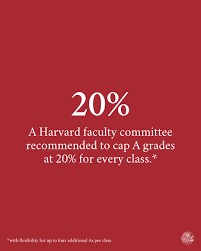
Beginning in fall 2027, instructors in letter-graded courses at Harvard College will be allowed to award A grades to no more than 20% of students in a class, plus four additional students.
Faculty also approved a proposal to use average percentile rank rather than GPA when comparing students for honors, prizes and awards.
A separate proposal which failed would have allowed courses to opt out of the A-grade cap by switching to a satisfactory/unsatisfactory system with a new SAT+ designation for exceptional performance.
The new policies will be reviewed after three years. The Faculty of Arts and Sciences is Harvard’s largest school, comprising 40 academic departments. It is the home of Harvard College, Harvard’s undergraduate program, and all of Harvard’s Ph.D. programs.
Max Abrahms, a political science professor at nearby Northeastern University who studies terrorism and international security, was among those outside Harvard who applauded the decision.
“When everyone gets an A there is no signal,” he wrote on X, calling Harvard’s vote “a huge win for higher education.”
Stuart Rojstaczer, a former Duke University professor who has spent years tracking grade inflation at colleges in the U.S., said if the system spreads to other universities, he would welcome the change.
“For many years, Harvard faculty maintained that their students deserved all those A’s. This is a real cultural shift,” Rojstaczer said. “Will this policy be adopted elsewhere? Will it stick long term? That’s hard to predict.”
I’ll give an “A” to the Harvard faculty.
Tony
Need help with the Commons?
Email us at [email protected] so we can respond to your questions and requests. Please email from your CUNY email address if possible. Or visit our help site for more information: