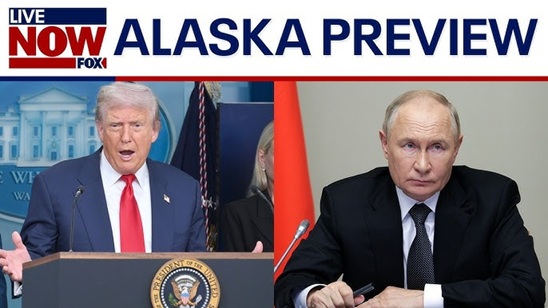
Takeaways from the Trump-Putin meeting: No agreement, no questions, just pomp and photo-ops!

Dear Commons Community,

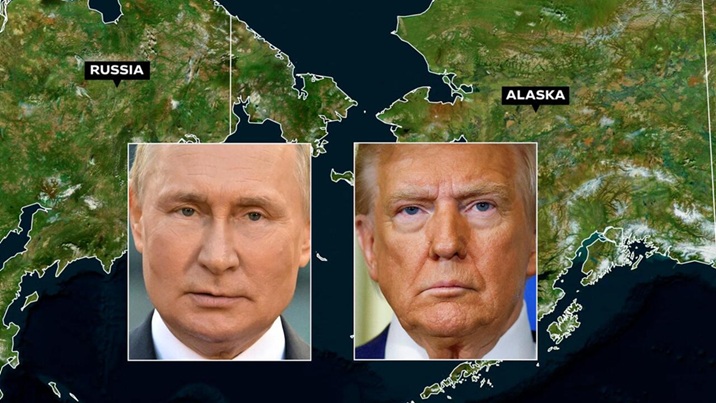
The much-anticipated meeting between Trump and Russian leader Vladimir Putin began with a warm welcome and a flyover by screaming jets at a U.S. military base in Alaska but ended with a thud Friday after they conceded that they had failed to reach any agreements on how to end the Russia-Ukraine war.

After about 2 1/2 hours of talks at Joint Base Elmendorf-Richardson in Anchorage, the two men appeared before reporters for what had been billed as a joint news conference — but they took no questions.  As reported by The Associated Press.

“We had an extremely productive meeting and many points were agreed to, there are just a very few that are left,” Trump said. “We didn’t get there, but we have a very good chance of getting there.”

Putin, welcomed into the U.S. after being shunned by Western allies since early 2022 for ordering the invasion of Ukraine, thanked Trump for hosting the meeting and suggested with a chuckle that the next time the two sit down it could be in Moscow.

Here are takeaways from the summit:

A warm welcome underscoring the friendly Trump-Putin relationship

Putin got a red carpet welcome and even rode in Trump’s presidential limousine from the tarmac to the summit venue. There, the pair were joined by two of their top aides: Secretary of State and national security adviser Marco Rubio and special envoy Steve Witkoff for Trump and Foreign Minister Sergey Lavrov and national security adviser Yuri Ushakov for Putin.

Putin, who spoke first after the meeting concluded, lauded the historical relationship between the United States, Russia and the former Soviet Union, recalling joint missions conducted by the two countries during World War II.

He said the U.S. and Russia share values, a standard talking point for Russian officials when trying to woo Trump and his aides. Putin also noted that Trump has frequently said the Ukraine war wouldn’t have happened had he won the 2020 election.

“I think that would have been the case,” the Russian leader said, a comment sure to please Trump.

However, there is no indication and no way to prove that Moscow would have acted differently toward Ukraine had Democrat Joe Biden not been elected.

Trump touts progress but concedes there was no deal

Trump had gone into the meeting hoping to get Putin to agree to a ceasefire with Ukraine — or at least a commitment from Russia to enter into negotiations to reach one.

Instead, Trump conceded that “we haven’t quite got there” and said he would be conferring with Ukrainian President Volodymyr Zelenskyy and NATO leaders about next steps.

Trump said he and Putin had made some significant progress toward the goal of ending the conflict but gave no details on what that entailed and had to acknowledge that they had been unable to bridge substantial gaps.

“I believe we had a very productive meeting,” Trump said. “We haven’t quite got there, but we’ve made some headway. So, there’s no deal until there’s a deal.”

In a subsequent conversation with Sean Hannity of Fox News Channel, Trump again offered no details on his discussions with Putin.

With diplomatic progress creeping along, time is on Putin’s side

Amid drawn-out diplomatic moves to end the war, time appears to be on Putin’s side. That gives a leg up to Russian forces, who have used their larger numbers to slowly grind down defenses in eastern Ukraine 3 1/2 years into the conflict.

Putin got a pleasant reception from the leader of the free world on U.S. soil and walked away hours later without either providing details on what they discussed, whether a ceasefire was any closer to reality or what the next steps would be.

Putin praised Trump for the “friendly” tone of the talks — Trump said nothing publicly about the killing of Ukrainian civilians in Moscow’s attacks — and for “understanding that Russia has its own national interests.”

Putin said Moscow and Washington should “turn the page,” with relations having sunk to the lowest point since the Cold War.

Putin appearing in the U.S. for the first time in 10 years was celebrated as a sign that Moscow was no longer a pariah on the global stage. In a social media post, Russian Foreign Ministry spokeswoman Maria Zakharova told followers that the Western press would be on the verge of “losing their minds.”

“For three years, they talked about Russia’s isolation, and today they saw the red carpet being rolled out to greet the Russian president in the United States,” she said.

There were no details and no questions

Both men said the talks were “productive” but the lack of any announcement of solid achievements was revealing.

The news conference ended up being less than 15 minutes of rather standard diplomatic comments — and gave no indication that any concrete results were achieved — and offered little departure from their previous comments on the war in Ukraine.

Trump has made it a feature of his second term to parry questions from reporters in front of world leaders, but in the clearest sign of his disappointment, the president abruptly cut short his plans to take questions.

Trump had gone into the summit saying here was a 25% chance that the summit would fail and that it was meant to be a “feel-out meeting,” but he had also floated the idea of bringing Zelenskyy to Alaska for a subsequent, three-way meeting if things went well. It’s unclear what comes next.

I would have rather watched Jeopardy than see these two say nothing!

Tony
What Happened When States Dropped Teacher Licensing Requirements?

Dear Commons Community,

How hard should it be to become a teacher?

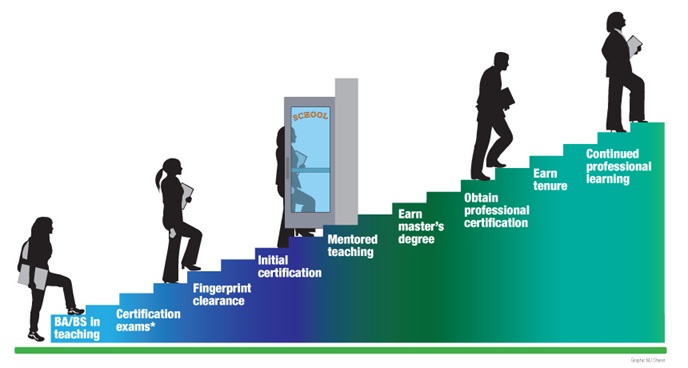
It’s an ongoing debate, with proponents of higher barriers to entry arguing they’re necessary to ensure quality candidates—and skeptics saying they unfairly shut out prospective educators who could be effective in the classroom. The research on certification requirements, licensing exams, and other professional screening mechanisms generally points to tradeoffs, rather than clear-cut answers.  Education Week in this morning’s edition reviewed the issue.

When the pandemic began five years ago, it presented a natural experiment to study the question in more depth. Many states relaxed their teacher licensure rules and created emergency certification processes, removing requirements for prospective educators to take the exams that they would have otherwise had to pass.

Studies of this time period out of several states, including Massachusetts and New Jersey, showed that, in the wake of these policies, teachers’ performance held steady, and a more racially diverse group of candidates entered the profession.

But two new papers from the Center for Analysis of Longitudinal Data in Education Research, or CALDER, at the American Institutes for Research present a more complicated picture.

Nationwide, there’s no definitive evidence that emergency waivers resulted in large numbers of new teachers entering the profession. And in one state, Massachusetts, where the emergency licensing process remained in place past 2022, teacher performance of newly hired teachers declined over time.

Taken together, the research provides more evidence of how the pandemic period affected the composition of the teaching profession, and offers clues about how permanent changes to licensure requirements could play out for student achievement.

It’s possible that the comparable performance that some states initially saw between traditionally licensed and emergency licensed teachers wouldn’t last if those changes were to become permanent, said Dan Goldhaber, the director of CALDER and an author on both papers.

“That is what we saw initially, but it isn’t what we saw downstream,” he said.

Mixed teacher effectiveness outcomes

To determine the overall change in teachers entering the profession, the researchers analyzed federal teacher workforce data from all 50 states and the District of Columbia, comparing measures of teacher supply—such as initial licenses awarded, and graduates from teacher-preparation programs—between states that offered flexibility in licensure test requirements in 2020 and states that did not. They controlled for a series of demographic and economic factors.

“We do not find definitive evidence that states that put in place waivers of licensure tests saw increases in teacher supply,” Goldhaber said.

That finding comes with a caution, though, he added. Because of statistical limitations, the research can only determine there weren’t large effects. It’s possible there were smaller increases in the teacher workforce that the analysis doesn’t capture, he said.

It’s also possible that the temporary nature of the waivers influenced the findings. “People are not that likely to make career decisions based on a short-term regulatory change,” Goldhaber said.

The other CALDER paper, a research brief, examined who received emergency teaching licenses in five states that instated pandemic-era policies: Maryland, Massachusetts, New Jersey, Ohio, and Washington state.

They found that teachers who entered the profession under these licenses were, on average, more racially diverse than their peers who went through a traditional certification process from 2017 onward. These emergency-licensed teachers were also more likely, in all but one state, to work in schools serving larger shares of Black and Hispanic students, and students from low-income families.

In the school year immediately after these policies were put in place, teachers who had emergency certification and those who had regular certification performed about the same—they scored similarly on measures of teacher effectiveness, and received similar performance ratings.

But in Massachusetts, which did not reinstate its testing requirements until 2023, teachers who went through emergency certification in later years were less effective in math and science.

The study, the researchers write, “underscores the idea that loosening licensure rules alone is an incomplete—and, in some cases, potentially counterproductive—strategy for reshaping the composition and quality of the teacher workforce.”

Some argue for widening pathways to the profession

Still, some experts say there’s still not enough evidence to suggest that testing requirements need to continue in their current form.

“It’s not a slam dunk that the licensure requirements are definitely boosting teacher quality, but they are definitely limiting supply, especially for teachers of color,” said education analyst Chad Aldeman.

Aspiring teachers of color fail these tests at higher rates than their white peers, and some researchers have argued that they don’t capture important components of success in the profession, like the ability to build healthy relationships with students.

Research on licensure tests shows that, in most cases, scoring higher on the test means teachers will be more effective in the classroom. But there’s still a “reasonable argument to be made” for widening pathways into the profession, Alderman said.

“I’m willing to tolerate some risk of lower performance, for the benefit of greater supply and greater diversity,” he said.

The reports cited above from the Center for Analysis of Longitudinal Data in Education Research contain interesting data and are available as free downloads.

Tony

European Leaders Strike Cautious Stance on Trump’s Alaska Meeting with Putin!

Dear Commons Community,

In a virtual summit with Trump on Wednesday, European leaders cautioned him not to make a unilateral Ukraine peace deal during his one-on-one meeting with Russian President Vladimir Putin in Anchorage today. French President Emmanuel Macron said Trump was “very clear” that Washington wants to obtain a ceasefire and that Ukraine’s territorial issues cannot be negotiated without Ukrainian President Volodymyr Zelensky. Trump told reporters that if his summit with Putin goes well, a follow-up meeting between the Russian leader and Zelensky could happen “almost immediately.” However, Trump also said that Russia will face “very severe consequences” if Putin doesn’t agree to end the war. The president wouldn’t say if that meant he’d order new sanctions or tariffs.

All eyes will be on Alaska today!

Tony

OpenAI CEO Stan Altman warns “the world is not ready for …the humanoid robots moment yet”

OpenAI CEO Sam Altman.  Provided by Barchart

Dear Commons Community,

Sam Altman, CEO of OpenAI, has become one of the most influential voices in artificial intelligence (AI), known for his candid assessments of both the promise and disruption brought by new technologies. In a recent Bloomberg interview, Altman addressed the looming impact of AI and robotics on employment, stating, “AI is for sure going to change a lot of jobs, totally take some jobs away, and create a bunch of new ones. This is what happens with technology, and in fact, if you look at the history of the world of technology-driven job change, it’s been happening for a long time. And the thing that is different this time is just the rate of which it looks like it will happen.” As reported by MSN News.

While Altman largely downplays the impact of AI on the job market, he did say humanity isn’t prepared for something else he believes will have a much greater impact: “The thing I think the world is not ready for is, I don’t think the world has had the humanoid robots moment yet, and I don’t think that’s very far away from a visceral ‘this is going to do a lot of things that people used to do.’ It’s coming. We have always tried to be super honest about what we think the impact may be, realizing that we may be wrong about a lot of the details.” When asked what will happen when humanoid robots arrive, Altman predicted that their presence will feel “very sci-fi,” fundamentally altering daily life and the job market.

Altman’s authority on this subject is rooted in a career defined by technological foresight and leadership. After dropping out of Stanford, he co-founded Loopt, a location-based social networking startup, and later became president of Y Combinator, where he helped launch and scale some of Silicon Valley’s most successful startups. Since 2019, Altman has led OpenAI, guiding the organization through the development of advanced AI systems such as ChatGPT and DALL-E, which have set new standards in natural language processing and generative AI. Under his leadership, OpenAI has secured major investments, including a multi-billion-dollar partnership with Microsoft, and has been at the center of global discussions about the ethical and societal implications of artificial intelligence.

Altman’s comments reflect a pragmatic understanding of technological change. He draws on historical precedent, noting that job displacement and creation have accompanied every major wave of innovation, from the Industrial Revolution to the rise of the internet. What distinguishes the current era, in Altman’s view, is the speed and breadth of change that AI and robotics are likely to bring. His prediction that the world is unprepared for the “humanoid robots moment” signals a belief that the next phase of automation will be more visible and rapid than previous shifts, with robots performing tasks previously reserved for humans.

This perspective is particularly relevant as businesses and policymakers grapple with how to adapt to AI’s accelerating capabilities. Altman’s insistence on honesty about the uncertainties involved, and his acknowledgment that even experts may be wrong about the details, offers a measured approach to navigating the future of work. His leadership at OpenAI, marked by a focus on transparency and ethical considerations, lends credibility to both his warnings and reassurances alike.

As AI continues to reshape industries, Altman’s insights serve as both a caution and a call to prepare for profound changes that will challenge existing structures but also create new opportunities, as has been the case throughout technological history.

Altman knows of what he speaks!

Tony

New York State’s free community college program for adult students is a big hit and draws upwards of 16,000 applicants!

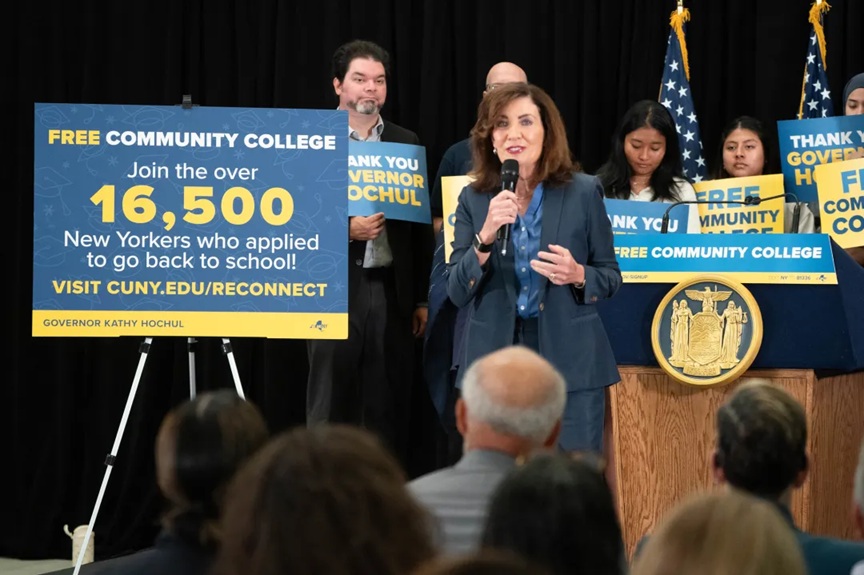
Governor Kathy Hochul rallied with students, staff and faculty at LaGuardia Community College to celebrate the free community college program for adults in high-demand fields through CUNY and SUNY Reconnect. (Office of the Governor)

Dear Commons Community,

New York’s free community college program is drawing strong interest, with more than 16,500 people applying to the new $47-million initiative. The program covers the tuition of adults interested in high-demand fields, such as artificial intelligence, nursing and green energy.

“Just since we started getting the word out, just since a few months ago when this became the law of New York State, we have over 16,000 people who’ve already signed up for this, and these are the lives that we’re going to be changing forever,” Gov. Kathy Hochul said Tuesday at LaGuardia Community College.

Hochul touted the program as a way to expand access to higher education and good-paying jobs, strengthen the state’s workforce, and invest in community colleges. CUNY’s community college enrollment increased by 6% last year but remains below pre-pandemic levels.

Adults must be ages 25 to 55 to apply. Eligible degree programs also include advanced manufacturing, cybersecurity, engineering, technology and education.

About 7,000 adults have applied for free community college at CUNY, plus 9,000 more interested in the program at SUNY, college officials said. While there’s no guarantee all those applicants will ultimately enroll, Hochul insisted the number of people already taking advantage of the opportunity is a sign it’ll be a “game-changer.”

Asked if the degree programs already exist at CUNY or if campuses are propping up new ones aligned with qualifying fields, Chancellor Félix Matos Rodríguez expected a mix of both.

“We wanted to have an infrastructure that was able to respond to the early demand, but it allows us to continue to build,” he said.

On top of tuition, Hochul and her team said the program covers fees, books and supplies after all other financial aid is applied. It also includes funding for SUNY and CUNY to help keep adult students enrolled, such as for academic advisers and “student success” coaches.

CUNY is launching a $1.2-million marketing campaign to promote the program online and on the subways and buses, a spokesman confirmed.

The governor suggested she would stand by those investments, including in the face of federal budget cuts under the Trump administration.

“Despite the disastrous policies coming out of Washington,” Hochul said, “it would be too short-sighted on our part to disinvest in a brand-new program that we think is going to be wildly successful. The more people working, guess what? More people paying taxes as well.”

Congratulations Governor Hochul for this initiative.

Tony

Gavin Newsom on Trump Hiding Barack Obama’s Portrait – “Small men hide from history’s giants”

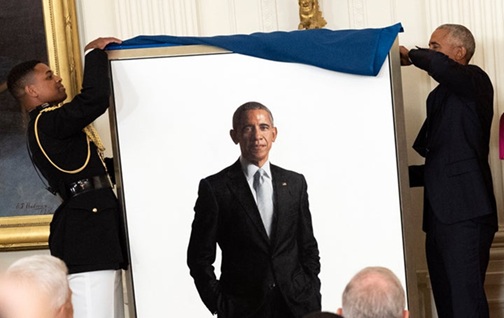
The unveiling of former president Barack Obama’s official White House portrait in 2022.  Kevin Dietsch via Getty Images

Dear Commons Community,

Trump continues to prove that deep down inside he’s a teeny tiny little baby man.

Case in point, according to CNN, Trump decided to essentially hide former president Barack Obama’s official portrait from the White House — and Gov. Gavin Newsom (D-Calif.) is calling the move like he sees it.

Typically, White House protocol calls for portraits of the most recent American presidents to be featured prominently in the entrance way, so that they’re visible during official events and visitors on tours.

But Trump directed staff to move Robert McCurdy’s photorealistic painting (above) of the 44th president to the top of the Grand Staircase into a corner where most can’t see it. CNN, who obtained a photo of the portrait’s new location, also noted that it’s now hanging on a landing leading into a private residence that is heavily restricted.

Portraits of former presidents George W. Bush and his father, George H. W. Bush, have also been moved to the same location.

A portrait of Trump’s most recent predecessor, Joe Biden, has not yet been completed — and once it is, we’re sure Trump will find a nice home for it in the White House’s basement. Or he’ll just pave over it, like the rose garden.

When news of Trump’s latest jab at Obama made its way to Newsom, he only needed six words to sum up why Trump would do this.

“Small men hide from history’s giants,” Newsom wrote in a post on X, formerly Twitter.

This is not the first time Trump has moved Obama’s portrait. In April, it was removed from the Grand Foyer and replaced by a painting of Trump — complete with a gold frame ― pumping his fist in the air after last year’s attempted assassination in Butler, Pennsylvania. Obama’s portrait then hung in the East Room, until it got demoted to its dusty corner.

Trump’s interior design move comes amid high tensions between the president and Obama. Last month, Trump accused Obama of participating in a “coup” against him in 2016 — an allegation Obama later called “outrageous.”

Trump has beef with the Bush family as well. George W. Bush, whom Trump has called a “failed president,” skipped Trump’s first inauguration. In 2017, the late George H. W. Bush called Trump a “blowhard,” and said he voted for Hillary Clinton for president in 2016.

Small man indeed!

Tony

Starting the Neopolitan Novels by Elena Ferrante

Dear Commons Community,

Looking for some fun summer reading, my wife, Elaine suggested I might try Elena Ferrante’s work entitled, The Neapolitan Novels, also known as the Neapolitan Quartet. They are a four-part series of fiction by the pseudonymous Italian author Elena Ferrante, published originally by Edizioni and translated into English by Ann Goldstein and published by Europa Editions (New York). In October 2016, investigative reporter Claudio Gatti published an article jointly in Il Sole 24 OreFrankfurter Allgemeine Zeitung and the New York Review of Books that relied on financial records related to real estate transactions and royalties payments to draw the conclusion that Anita Raja, a Rome-based translator, is the real author behind the Ferrante pseudonym.   

The English-language titles of the novels are My Brilliant Friend (2012), The Story of a New Name (2013), Those Who Leave and Those Who Stay (2014), and The Story of the Lost Child (2015). In the original Italian edition, the whole series bears the title of the first novel L’amica geniale (literally translated, “the brilliant friend”). The series has been characterized as a bildungsroman, or coming-of-age story. In an interview in Harper’s Magazine, Elena Ferrante has stated that she considers the four books to be “a single novel” published serially for reasons of length and duration. The series has sold over 10 million copies in 40 countries.

The series follows the lives of two perceptive and intelligent girls, Elena (sometimes called “Lenù”) Greco and Raffaella (“Lila”) Cerullo, from childhood to adulthood and old age, as they try to create lives for themselves amidst the violent and stultifying culture of their home – a poor neighborhood on the outskirts of Naples, Italy.

I have just finished Book One,  My Brilliant Friend (2012), which begins in the 1950s, in a poor neighborhood on the outskirts of Naples, where the narrator Elena meets Lila, her best friend, her mirror, and at times her fiercest critic. This first novel follows Lila and Elena from their meeting as six-year-olds through their school years and adolescence, until Lila’s marriage at the age of sixteen.

I found it a most enjoyable read and have begun Book Two, The Story of a New Name (2013), 

Tony


Governor Gavin Newsom Warns Trump California Can ‘Neutralize’ His Texas Redistricting Efforts

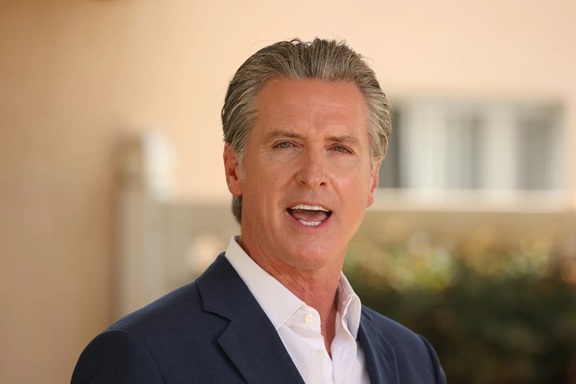
California Gov. Gavin Newsom. Getty Images.

Dear Commons Community,

California Gov. Gavin Newsom, a committed thorn in Donald Trump’s side, told the president Monday that he’s prepared to redraw California’s districts in Democrats’ favor if he doesn’t call on Texas and other red states to halt their own GOP-friendly redistricting plans.

Newsom made the threat in a letter to Trump, who’s backing a GOP-led effort to redraw five Texas districts in Republicans’ favor ― something the president has said his party is “entitled” to ahead of the 2026 midterms.

“If you will not stand down, I will be forced to lead an effort to redraw the maps in California to offset the rigging of maps in red states,” Newsom vowed. “But if the other states call off their redistricting efforts, we will happily do the same. And American democracy will be better for it.”

It’s not a step he takes lightly, continued Newsom, who said he believes legislative district maps should be drawn through “independent, citizen-led efforts,” not via political maneuvering.

“You are playing with fire, risking the destabilization of our democracy, while knowing that California can neutralize any gains you hope to make,” he continued. “This attempt to rig congressional maps to hold onto power before a single vote is cast in the 2026 election is an affront to American democracy.”

The White House did not immediately return a request for comment on Newsom’s threat.

The letter comes after Democratic members of the Texas state House left the state to deny Republicans a quorum on the redistricting vote, outraging Gov. Greg Abbott (R), who sought to arrest them and remove at least one of them from office.

Republicans are also leading redistricting efforts in multiple other states, including in Indiana, Missouri, Ohio and South Carolina.

Tony

Trump deploys troops in Washington, DC, takes over police!

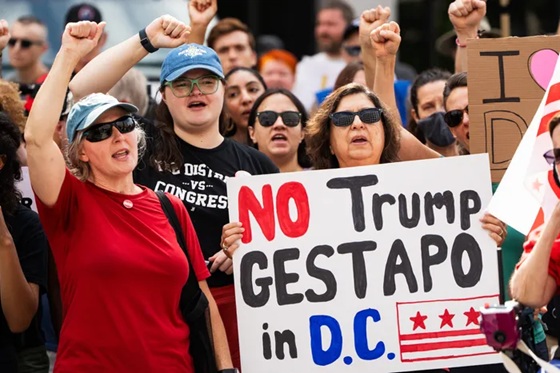
Protesters rally in downtown Washington D.C. near the White House on August 11, 2025, after President Donald Trump ordered an increased federal law enforcement presence across the streets of Washington, D.C., a federal takeover of Metro Police Department and the deployment of National Guard troop in the city. The president has increasingly criticized crime in Washington even as it’s reached a 30-year low.

Dear Commons Community,

Trump’s plan to take over to take over law enforcement in Washington, D.C. was met with strong opposition by protesters in the nati0n’s capitol.

Joined by top administration officials, including Attorney General Pam Bondi and Secretary of Defense Pete Hegseth, the president announced the National Guard will be deployed in the nation’s capital and that the local police will be placed under federal control.  As reported by USA Today.

“This is an emergency,” Trump said. “This is a tragic emergency.”

The president painted a dark portrait of the city throughout yesterday’s press conference, describing it as overrun by homeless people, drug addicts and other “bloodthirsty criminals” that his administration will no longer tolerate.

Many residents and activists have long resisted those characterizations as false and racially motivated attacks against the city, which has lobbied for statehood in recent years.

Mayor Muriel Bowser pushed back at the president’s claims of rising crime over the weekend, saying residents “are not experiencing a crime spike.” She underscored the need for D.C. statehood during a separate press conference on Aug. 11 hours after Trump’s comments.

“We are American citizens. Our families go to war, we pay taxes and we uphold the responsibilities of citizenship,” Bowser said. “And while this action today is unsettling and unprecedented, I can’t say that given some of the rhetoric of the past, that we’re totally surprised.”

But Trump and his allies have been keen on spotlighting individual violent crimes against reporters, White House aides and congressional staffers that often seize headlines and startle tourists.

Democrats and other critics pointed out that Washington’s homicide rate is down 32% year-to-date, according to the Metropolitan Police Department. They called Trump’s move another abuse of his executive authority.

Here are key takeaways from Trump’s press conference.

Trump administration taking over DC police

Trump signed two executive orders, the first invoking the 1973 Home Rule Act, which allows the president to assume control of Washington police for 48 hours if they determine “that special conditions of an emergency nature exist…”

Such a takeover can be extended with congressional approval but any request of more than 30 days must be passed into law.

In a separate order, Trump ordered Hegseth to deploy National Guard troops in Washington, which also authorized him to work with governors of other states to utilize their guard as well.

Key officials within the administration are now being tasked with overseeing DC’s law enforcement agencies, including Bondi, who will take command of the local Metropolitan Police Department. Drug Enforcement Agency Administrator Terry Cole, who was sworn in last month, will serve as interim federal commissioner of the police department.

White House spotlights DOGE staffer and other crime victims

During the press conference, Trump sprinkled in many individual cases of violent crime that he argued justified his takeover, such as the May 21 fatal shooting of two Israeli embassy staffers outside a downtown museum.

One at the top of mind was the assault of Edward Coristine, who worked as a staffer with the Department of Government Efficiency. An Aug. 3 police report, obtained by USA TODAY, said officers observed a group of about 10 juveniles surrounding Coristine’s car and assaulting him around 3 a.m.

“He was left dripping in blood,” Trump said. “He thought he was dead, with a broken nose and concussion. Can’t believe that he’s alive. He can’t believe it.”

The president also evoked Phillip Todd, a former aide to Sen. Rand Paul, R-Kentucky, who was stabbed in 2023. Trump described the attacker, identified by police as Glynn Neal, as a “demented lunatic.”

In an August profile by The Washington Post, Todd, a son of Christian missionaries, said that he had forgiven Neal and was rethinking his views on crime and punishment.

Chicago, other cities could see federal oversight, Trump warns

While ticking off individual cases, Trump noted that his Washington takeover might be brought to cities including Chicago; Baltimore; Los Angeles and Oakland, California.

Those Democratic-controlled cities and states, Trump said, have adopted left-leaning policies, such “no cash bail” rules, that he blamed for violent crime.

“This issue directly impacts the functioning of the federal government, and is a threat to America, really,” he said. “It’s a threat to our country. We have other cities also that are bad, very bad.”

Chicago was in the news earlier this summer for a historic drop in crime that Mayor Brandon Johnson, who Trump called out during the press conference, has touted.

“This reduction in hate crimes and of violence generally is a testament to what’s possible when we invest in people and community safety in a holistic way,” Johnson said in a July 18 statement that credited “strategic, constitutional policing” and “jobs for young people, access to mental health care, and housing people can afford.”

Similar trends have occurred in Baltimore, which has seen a 24% decrease in homicides and an 18% decline in nonfatal shootings, according to Mayor Brandon Scott.

In a statement to USA TODAY, the Democratic Mayor’s Association said federal intervention isn’t needed and argued the president is looking to create a “political charade” to distract voters.

“Let’s be clear: Crime is down in most major cities − including Washington, DC − in spite of Donald Trump, not because of him,” the group said. “If Trump actually cared about reducing crime, he wouldn’t have made unprecedented cuts to public safety programs that actually work.”

Congress’ takeover of Washington could come next

Trump’s crackdown in Washington could be followed by further changes, specifically to its home rule status, which is often a favorite punching bag for congressional Republicans.

Ahead of the president’s press conference, Sen. Mike Lee, R-Utah, declared that now is the time for lawmakers to take control of the city.

“We should pass the BOWSER Act in September and return full control of Washington to Congress,” Lee said in an Aug. 11 post on X.

The bill, dubbed “Bringing Oversight to Washington and Safety to Every Resident” was introduced earlier this year, and was named after Bowser as a criticism of crime and alleged corruption in the city.

Lee co-sponsored the measure with Rep. Andy Ogles, R-Tennessee, and cited an ongoing scandal involving a Washington police commander who in July was suspended for allegedly changing crime stats. He also noted how in some news reports local residents said they were afraid to speak out about crime.

Trump appeared to allude to the Ogles-Lee proposal to rescind home rule. “We’re going to change the statue, and I’m going to have to get the Republicans to vote, because the Democrats are weak on crime,” he said.

Democrats point out most violent cities are in Republican states

National Democrats took a few swings at Trump’s declaration, casting it as a political ploy more than a fight to improve public safety.

“The most violent cities are in Republican states − and there’s no takeover happening there,” Sen. Chris Murphy, D-Connecticut, a rumored 2028 presidential contender, said in a post on X. “This is just another attempt to distract from Trump’s corruption and suppress dissent.”

Tony

Jen Pawol becomes first female MLB umpire!

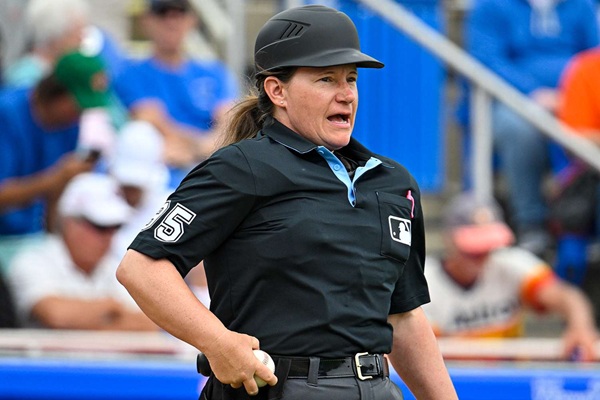
Jen Pawol

Dear Commons Community,

One day after becoming the first woman to umpire an MLB regular-season game, Jen Pawol was behind home plate for Sunday’s game between the Miami Marlins and Atlanta Braves, making her the first female umpire to call balls and strikes for an MLB game.

With strike zone graphics now a mainstay on MLB broadcasts and resources like MLB Gameday showing balls and strikes in detail, calls by home plate umpires are under more scrutiny than ever. Unfortunately, Pawol contributed to that discourse with a dubious first strike call.

The opening pitch of the game from Braves starter Joey Wentz was inside and out of the zone, but Pawol called the 93 mph fastball a strike.

As Braves play-by-play broadcaster Joe Simpson said, “Joey Wentz likes that first call from Jen Pawol!”

That pitch looked far inside on the TV broadcast and MLB Gameday confirmed that location.

Marlins second baseman Xavier Edwards didn’t dispute the call or show much reaction to it. The Braves then called timeout to get the ball to commemorate the occasion for Pawol. However, perhaps sensing where Pawol’s strike zone was situated, Edwards swung at a fastball thrown even further inside and hit it up the middle for a single.

Pawol appeared to settle in and find the strike zone better from there, calling that inside pitch to right-handed batters consistently and getting several borderline calls correct. Wentz and Marlins starter Cal Quantrill also helped out by locating most of their pitches in the zone. Through four innings, Wentz threw 44 of his 65 pitches for strikes, while Quantrill threw 29 of 46 in the zone.

Marlins manager Clayton McCullough tipped his cap to Pawol for making history.

“I think Jen did a really nice job,” McCullough said, via The Associated Press. “I think she’s very composed back there. She handled and managed the game very well. And big day for her. Big day for Major League Baseball. I congratulated her again on that because it’s quite the accomplishment.”

Pawol made her major-league debut Saturday, umpiring the first game of a doubleheader between the Marlins and Braves at first base. She worked the second game of the twin bill at third base. As part of her duties at first base, she checked Braves pitcher Hurston Waldrep for illegal substances after the first inning.

The cap she wore for Saturday’s opening game was given to the National Baseball Hall of Fame afterward.

Prior to her MLB debut, Pawol umpired over 1,200 minor-league games, beginning in 2016. Before being promoted to the majors, Pawol, 48, umpired MLB spring training games during the past two seasons, the first woman to do so since Ria Cortesio in 2007.

She became MLB’s first female umpire after the NBA broke that gender barrier with Violet Palmer in 1997. Sarah Thomas was the first female referee to officiate an NFL game in 2015. And in 2022, Stéphanie Frappart became the first woman to referee a men’s World Cup game.

Congratulations Umpire Pawol and Major League Baseball!

Tony