Obama’s gives blunt message for Democrats: ‘Toughen up’

Scott Olson/Getty Images

Dear Commons Community,

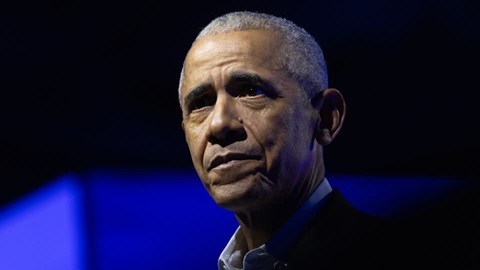
Former President Barack Obama issued a call to action for Democrats at a fundraiser in New Jersey on Friday evening, urging those frustrated by the state of the country under Trump to “stand up for the things that you think are right.”

“I think it’s going to require a little bit less navel-gazing and a little less whining and being in fetal positions. And it’s going to require Democrats to just toughen up,” Obama said at the fundraiser, according to excerpts of his remarks exclusively obtained by CNN.

“You know, don’t tell me you’re a Democrat, but you’re kind of disappointed right now, so you’re not doing anything. No, now is exactly the time that you get in there and do something,” he said. “Don’t say that you care deeply about free speech and then you’re quiet. No, you stand up for free speech when it’s hard. When somebody says something that you don’t like, but you still say, ‘You know what, that person has the right to speak.’ … What’s needed now is courage.”

Obama’s comments come as the Democratic Party searches for its path forward in the second Trump term and beyond. Many in the party’s base have called for a more forceful response from Democratic leaders at a time when the party is locked out of power.

As Democrats debate who should lead the party, Obama encouraged them to channel their energy into the governor’s races in New Jersey and Virginia, saying the off-year elections could be “a big jumpstart for where we need to go.”

“Stop looking for the quick fix. Stop looking for the messiah. You have great candidates running races right now. Support those candidates,” Obama said, calling out the New Jersey and Virginia elections, according to the excerpts of his remarks.

“Make sure that the DNC has what it needs to compete in what will be a more data-driven, more social media-driven cycle, which will cost some money and expertise and time,” he continued.

Obama spoke at a private fundraiser hosted by New Jersey Gov. Phil Murphy and his wife, Tammy Murphy, at their home in Red Bank, New Jersey. The intimate dinner drew in $2.5 million through in-person and online donations for the Democratic National Committee, a source familiar with the event said.

A portion of the haul will be allocated to Democratic efforts in the governor’s race in New Jersey. The Democratic nominee, Rep. Mikie Sherrill, and and DNC Chair Ken Martin were on hand for the event.

Obama described Sherrill and former Rep. Abigail Spanberger, the Democratic nominee for governor in Virginia, as “powerful spokespersons for a pragmatic, commonsense desire to help people and who both have remarkable track records of service.”

“The most important thing you can do right now is to help the team, our candidate to win,” he said. “And we’ve got to start building up our coffers in the DNC.”

Obama also argued that Democrats need to focus on how to “deliver for people,” acknowledging the different views within the party about how best to do that.

“There’s been, I gather, some argument between the left of the party and people who are promoting the quote-unquote abundance agenda. Listen, those things are not contradictory. You want to deliver for people and make their lives better? You got to figure out how to do it,” he said.

“I don’t care how much you love working people. They can’t afford a house because all the rules in your state make it prohibitive to build. And zoning prevents multifamily structures because of NIMBY,” he said, referring to “not in my backyard” views. “I don’t want to know your ideology, because you can’t build anything. It does not matter.”

Obama has spoken selectively since Trump’s return to power in January. He has criticized the president’s tariff policy and warned the White House was infringing on Americans’ rights. Last month, Obama warned the country was “dangerously close” to a more autocratic government.

At the fundraiser on Friday, the former president said he has not been “surprised by what Trump’s done” or that “there are no more guardrails within the Republican Party.” He repeated his calls for institutions, including law firms and universities, to push back on intimidation efforts by the Trump administration.

The Democrats desperately need someone who will evolve to be its national leader.  Right now, they might do well in local elections in 2026 but I do not see who will lead in 2028.

Tony

David Bloomfield on “Zohran Mamdani and education: He needs to fill in the blanks.”

Photo by Michael M. Santiago/Getty Image

Dear Commons Community,

My colleague, David Bloomfield, had  a featured article in yesterday’s New York Daily News entitled, “Zohran Mamdani and education: He needs to fill in the blanks.” Bloomfield raises several key issues on New York City’s public education system especially as related to where Mamdani stands on mayoral control. 

The entire article is below.  It is important reading for anyone interested in NYC public schools.

Tony

———————————————————–

The New York Daily News

Zohran Mamdani and education: He needs to fill in the blanks.”

By David Bloomfield

July 13, 2025

While the other major candidates for mayor are on record favoring the current system of mayoral control of schools, Democratic nominee Zohran Mamdani is in opposition. He needs to clarify what this means.

Mamdani has a thin record on public education. He attended private school through eighth grade, then the elite Bronx High School of Science before graduating from a private college. He doesn’t sit on the Assembly’s Education Committee, a favored post among elected officials because of its importance and high visibility. Direct involvement with schools in his Queens district appears scant. He didn’t take part in the brief teachers union initiative for Democratic primary candidates to work a day in a city public school.

Most importantly, pre-K through 12 education hardly figures in his list of campaign priorities: a rent freeze, free buses, government-owned grocery stores, and community safety.

The closest he comes to addressing education on his Zohran for NYC homepage is an on-brand promise of free child care. Only by drilling down three levels is there a generic schools position, hardly distinguishable from other candidates’, that “Zohran will ensure our public schools are fully funded with equally distributed resources, strong after-school programs, mental health counselors and nurses, compliant and effective class sizes, and integrated student bodies.”

So what are we to make of Mamdani’s stance on public education which accounts for one third of the city’s budget and its largest single expenditure, responsible for educating almost a million students?

He has been all but silent on the needs of low-income students, those with home insecurity, students with disabilities, and multilingual learners. How will he address the state’s new cell phone ban, the Supreme Court’s allowance of parent opt-outs from religiously objectionable curriculum, or the massive and myriad funding holes created by federal budget cuts to instruction, school meals, and health care?

These are not matters to be wished away by his single creative education proposal: ending mayoral control of the schools.

It’s this dramatic idea that distinguishes Mamdani from his primary and general election opponents so it’s worth gaining a better understanding of what he means when he promises “an end to mayoral control and envisions a system instead in which parents, students, educators and administrators work together to create the school environments in which students and families will best thrive — strengthening co-governance through the PEP, SLTs, DLTs, and CECs in particular.”

His premise ignores an important fact. Like many of his other more ballyhooed proposals, Mamdani is not the master of his fate on school governance. Mayoral control is a state law so it’s unlikely that major changes will be enacted unless the Legislature and governor so fear a Mamdani mayoralty that they change the law. Like it or not, on Inauguration Day the mayor will probably be responsible for New York’s public schools.

But Mamdani may not need statutory change to enact his vision. I don’t take his proposal as seeking to end the mayor’s role in education, just an end to the current model of strong mayoral control. Key powers over the schools such as city budget allocations and collective bargaining exist under the City Charter, not the mayoral control law.

What he seems to be suggesting is stepping away from educational policymaking, a role previously embraced by mayoral control era leaders who became closely identified with their school initiatives: Mike Bloomberg (closing large schools and opening smaller ones), Bill de Blasio (pre-K), and Eric Adams (reading instruction). Perhaps, somewhat ironically, ending strong mayoral control may become Mamdani’s chief educational accomplishment.

Mamdanian co-governance might take different forms. It could mean nothing — the bodies his website mentions as co-governing partners already exist and one can imagine him appropriating current practices of consultation with those largely toothless bodies under a banner of co-governance.

But the exciting news is that it could mean something. School-based management, devolving decision-making to principals, teachers, and parents, is an old saw in the leadership toolbox. Even Bloomberg tried it but his penchant for micro-managing through quantitative measures and punitive accountability created top-down priorities tying the hands of all but the most forceful principals.

Key to the Mamdanian vision would be a system based on quasi-independent principals (the school system has 1,700!), committed and able to lead collaboratively with unionized school staff and often contentious, always changing parent bodies. A cohort of like-minded community school district superintendents and other senior supervisors would support principals while largely stepping aside from directing their actions even when they disagree with specific school decisions.

An Achilles heel of co-governance is that even those favoring the practice in theory can become its opponents if they don’t get their way. There will be pressure on Mamdani or his chosen chancellor to be the chief decider.

But the system is sabotaged if leadership is prone to overruling subordinates, pressured by appeals supported by advocacy groups, elected officials or the press. When these protests occur, how would a Mayor Mamdani respond if a school or district opposed curriculum or practices that excluded members and allies of the LBGTQ community? Would legitimate policy concerns ignore principles of co-governance and, if so, what becomes of his collaborative model? Put another way, wouldn’t that be mayoral control?

Another series of questions to address if the mayor steps aside from active governance is who would then be in charge? Would Mamdani still exercise unilateral appointment of the chancellor? This would hardly be an act of co-governance but what process would be installed in its place?

Similarly, the Panel for Education Policy (PEP), the city’s Board of Education, currently has a built-in majority of mayoral appointees. Would Mamdani open up these positions to some he disagrees with? Or replace the appointment process entirely? With what? And who would appoint community school district (CSD) superintendents or run community school board elections?

And while we’re at it, who would elect those boards since, with greater powers, the current structure of PEP appointments and low-turnout, parent-only CSD elections may not survive one-person-one vote challenges. These are public schools: taxation without representation by all regularly eligible voters is anathema to our founding principles.

Ultimately, we have a school system with operational demands of huge proportions and complexity affecting the multiplicity of Mamdani’s co-governors.

There are school meals to be planned, prepared, and delivered; school buses to run safely and on time; specially licensed and unlicensed personnel to be hired, fired, and paid; research for new curricula and teaching improvement; myriad laws to be followed and monitored; controversies to be addressed in and out of court; student enrollments matched to school capacities and attendance zones.

There are also aging buildings requiring cleaning and maintenance, along with new buildings to be planned and built; safety personnel trained and ready to keep order; implementation of absenteeism and student discipline protocols; allocating school funds from a tangle of designated federal, state, and local sources; school calendars and snow days to be declared; new technologies evaluated and adopted.

And all of this and more tied to the city’s interwoven threads of diversity of geography, languages, specialized student needs, and political interests.

Co-governance is a great concept to campaign on. Keeping the schools running and making them more effective in an era of dwindling finances under any governance model will be the challenge. The open question is what will Mamdani do?

Bloomfield is professor of education leadership, law, and policy at Brooklyn College and The CUNY Graduate Center.


Maureen Dowd on Trump’s Cabinet of Incompetents!

Dear Commons Community,

Maureen Dowd had a column yesterday entitled, “A Cabinet of Incompetents.” She comments on the performances of Peter Hegseth, Kristi Noem, Pam Biondi, RFK, Jr. and Brooke Rollins. A basic premise of her comments is that Trump has hired incompetent pretty faces.  She refers to Peter Hegseth as the Pentagon’s “puer aeternus” – Latin for “eternal boy.”  Here conclusion:

“It turns out, even good-looking dodos are still dodos.”

Below is her entire column.

Tony


The New York Times

“A Cabinet of Incompetents”

Maureen Dowd

Sun Jul 13 2025 – 10:00

It was a Jack Nicholson-Tom Cruise moment. US president Donald Trump couldn’t handle the truth. He didn’t even know the truth. And he has no respect for truth, so even if he knew, why would he tell the truth about the truth?

At a White House lunch with African leaders on Wednesday, Trump engaged in a bizarre exchange with the New York Times White House reporter Shawn McCreesh.

The day before, when CNN’s Kaitlan Collins asked the president who authorised the pause on weapons shipments to Ukraine – at a time when Russia is engaged in a barbarous onslaught, indiscriminately killing civilians – Trump replied, defensively: “I don’t know. Why don’t you tell me?”

The Pentagon’s puer aeternus, Pete Hegseth, was sitting right beside Trump. And reporters soon ferreted out the information that perennial screw-up Hegseth had ordered the pause without telling Trump, Marco Rubio and other top officials.

Trump reversed the Pentagon chief, reflecting a belated awareness of the fact that Vladimir Putin is playing him for a fool. Like a spurned lover, he keened that his Russian boyfriend’s promises are “meaningless”.

In a follow-up the next day, McCreesh asked Trump if he had figured out who had ordered the munitions to Ukraine halted.

When Trump said no, McCreesh pressed him: “What does it say that such a big decision could be made inside your government without your knowing?”

Trump bristled. A jester like Hegseth had kept the king in the dark on a consequential move.

“If a decision was made, I will know,” Trump blustered. “I’ll be the first to know. In fact, most likely I’d give the order, but I haven’t done that yet.”

It is not reassuring, at a time of man-made and natural disasters, that the president is spouting gobbledegook and his maladroit cabinet members are spinning out.

It’s a paradox: if you choose your cabinet based on looks, you are likely to end up with a cabinet that makes you look bad. Running government is harder than bloviating on Fox News and assorted podcasts.

And if you demand uber-fealty from your advisers, you will end up surrounded by toadies who don’t level with you.

In the dishy new book 2024: How Trump Retook the White House and the Democrats Lost United States, Josh Dawsey, Tyler Pager and Isaac Arnsdorf describe how Sergio Gor, a Trump aide who rose by publishing Trump’s coffee table books, created draconian loyalty tests during the transition.

“Trump believed the biggest mistake of his first term was picking disloyal officials, and Gor was determined to disqualify candidates who had ever criticized Trump or anyone associated with him,” the authors write.

Kristi Noem is loyal to Trump. But perhaps it was too much to ask that someone who executed her own puppy was going to understand the humanitarian necessity of the Federal Emergency Management Agency (Fema).

Noem has been parroting Trump and talking about abolishing Fema since she got the job heading the department of homeland security. She recently enacted a debilitating rule designed to cut the Fema budget, dictating that every grant and contract over $100,000 (€85,500) needs explicit permission from her.

As CNN pointed out, that’s “pennies” in an agency where disaster costs soar into the billions. At the same time, the Times reports, the agency didn’t answer nearly two-thirds of calls to its disaster line because it had fired hundreds of call centre contractors. (Now, confronted with the Texas disaster, the administration is backing off the eradication plan.)

As Trump was preparing to travel to Kerr County, Texas, to inspect flood damage on Friday, the White House posted a meme of him as Superman, playing off the new movie about the Man of Steel. But the initial federal response was less than super. Noem didn’t authorise Fema’s deployment of rescue teams until Monday, more than 72 hours after the flooding began, CNN reported, and there have been questions about crucial staffing shortages at the National Weather Service as floodwaters rose.

Pam Bondi enraged the Trump faithful when, after she inflamed conspiracy theorists about Jeffrey Epstein documents, her justice department said on Monday there was nothing more to see. No client list. Move along, please. “Are people still talking about this guy, this creep?” an irritated Trump asked reporters about his erstwhile paedophile playmate.

Laura Loomer demanded that Bondi resign, writing on X: “I cannot sugar coat how much good will Pam Bondi has cost the Trump admin with the base this week. She is a massive liability to President Trump.”

On Wednesday, Bondi angrily accused Dan Bongino, conspiracist podcaster turned FBI deputy director, of leaking stories that whipped up expectations for Epstein secrets. He denied it, and told people he was considering quitting.

Now furious right-wing conspiracists think there’s a cover-up of the cover-up.

Vapidly, agriculture secretary Brooke Rollins suggested people on Medicaid could replace deported immigrants. They can pick our crops! It’s unreal, but Sean Duffy, once a Real World cast member, is in charge of transportation and Nasa. And don’t forget the scary spike in measles cases fueled by the anti-vaccine crowd; thank you, RFK,Jr.!

It turns out, even good-looking dodos are still dodos.


Miami Archbishop Thomas Wenski Condemns ‘Unbecoming’ Officials’ Who Cheer On ‘Alligator Alcatraz’

Archbishop Thomas Wenski.  Alie Skowronski/Miami Herald/Tribune News Service via Getty Images

Dear Commons Community,

Thomas Wenski, the Archbishop of Miami denounced Florida’s newest Immigration and Customs Enforcement detention facility, which officials are calling “Alligator Alcatraz”.

“It is alarming to see enforcement tactics that treat all irregular immigrants as dangerous criminals,” Archbishop  Wenski wrote in a statement published on the Archdiocese of Miami website last week.

Wenski went on to criticize “masked, heavily armed agents who do not identify themselves” as well as the “apparent lack of due process in deportation proceedings in recent months.”

The Archbishop’s statement was made as the detention center, located in the heart of the Everglades, was becoming operational. Environmental groups have called it a threat to the ecologically sensitive wetlands and experts have warned that it’s a “human rights disaster waiting to happen.”

Many have also compared the detention center, set to house at least 3,000 immigrants, to a concentration camp reminiscent of Nazi Germany.

Migrants detained at the facility, as well as their lawyers, loved ones and advocates, have described maggots in the food, toilets that don’t flush, lights constantly on, no bath water, and a lack of air conditioning amid Florida’s summer heat.

Wenski criticized the conditions, stating the Archdiocese has “concerns about the isolation of the detention facility, which is far from medical care centers, and the precariousness of the temporary ‘tent’ structures in the Florida heat and summer thunderstorms, not to mention the challenge of safely protecting detainees in the event of a hurricane.”

Republicans are praising the ethically questionable facility, noting that alligators and pythons are a deterrent to keep undocumented immigrants from escaping. The Florida Republican Party is also selling tacky merchandise referencing the center with no remorse. Some on the right have joked about alligators eating detainees and about the ethical concerns.

The White House has also made light of the facility, sharing an AI-generated image that shows President Donald Trump standing next to alligators wearing ICE hats.

The Archbishop said, “It is unbecoming of public officials and corrosive of the common good to speak of the deterrence value of ‘alligators and pythons’” at the Everglades facility.

“Common decency requires that we remember the individuals being detained are fathers and mothers, brothers and sisters of distressed relatives,” Wenski said. “We wish to ensure that chaplains and pastoral ministers can serve those in custody, to their benefit and that of the staff.”

Common decency is not a hallmark of the Trump administration!

Tony

Senator Schumer demands RFK Jr. declare measles emergency, after cases “skyrocket”

Credit: Centers for Disease Control

Dear Commons Community,

Senate Minority Leader Chuck Schumer demanded Health and Human Services Secretary Robert F. Kennedy Jr. declare a nationwide emergency over spiking measles cases, accusing him of fueling the outbreak by dismantling public health and undermining trust in vaccines.

“Under your tutelage as Secretary, you have undermined vaccines, gutted public health funding, and dismantled core federal protections meant to keep Americans safe,” Schumer wrote in a July 11 letter.

“You have walked our country into the nation’s largest measles outbreak in 33 years,” he added.

A quarter century after measles were eradicated in the U.S., cases have skyrocketed this year, reaching 1,288 confirmed cases across 39 states, according to the Centers for Disease Control and Prevention. Three people have died this year. Officials say almost nine in ten of the cases are spread across New Mexico and Texas, the site of a Mennonite community that became the initial hub of the outbreak earlier this year.

Most cases – 65% – are in people 19 years old and younger, and the vast majority – 92% – are unvaccinated people.

The outbreak has turned attention and heavy criticism from health experts towards Kennedy’s vaccine skepticism and baseless claims that vaccines are dangerous and ineffective. Kennedy has said the measles vaccine weakens over time – a claim disputed by scientists – and that “we can’t rely simply on the vaccine” to address the outbreak.

He has also downplayed the measles outbreak, saying more focus should be turned on chronic diseases like diabetes and autism instead.

In May, Kennedy directed the CDC to find new “scientific process” for treating measles and other diseases with drugs and vitamins. Although vaccines would still be recommended as the best way to prevent the disease, some “may choose not to vaccinate.”

Kennedy fired all 17 members of a vaccine advisory last month, refilling it with some vaccine skeptics who have announced their first priority would be retooling vaccine recommendations for children.

Kennedy’s drastic cuts to department programs and slashing of thousands of workers at the department have sparked alarm from public health experts and outrage from Democratic lawmakersKennedy said in April he would sack 10,000 Health and Human Services employees as part of the Trump administration’s efforts to downsize the federal workforce.

Since then, the department has faced a myriad of legal challenges, most recently from top medical organizations over Kennedy dropping the COVID vaccine from the list of recommended shots for children and pregnant women.

Schumer is the latest Democrat on Capitol Hill to upbraid Kennedy in recent days over the measles outbreak.

“We have a record-breaking number of measles cases in America,” Sen. Patty Murray, D-WA, wrote on X, accusing Kennedy of filling the vaccine panel with “unvetted vaccine skeptics.”

“Where is our public hearing on this crisis?”

The measles vaccine is 97% effective at preventing the disease when administered in the recommended two doses, according to the CDC.

Since the start of the COVID pandemic, when skepticism of vaccines surged, buoyed by online conspiracies and distrust of public health institutions, measles vaccinations have dropped across the nation.

Kennedy is another one of Trump’s disgraceful appointees.

Tony

Gavin Newsom Tells Off Sarah Huckabee Sanders!

Gavin Newsom and Sarah Huckabee Sanders

Dear Commons Community,

California Governor Gavin Newsom must have thought it would be a crime to ignore Arkansas Gov. Sarah Huckabee Sanders after she condemned the protests in Los Angeles.

On Thursday he issued a blistering correction to the former White House press secretary for  Trump.

Sanders was one of several Republicans piling on to Newsom’s resistance to Trump’s deployment of the National Guard in LA despite mostly peaceful demonstrations against the immigration raids. Newsom is also trying to block the maneuver in court, saying it’s illegal and exacerbating tensions.

Sharing video of her interview with Fox News, Sanders wrote: “What’s happening in California would never happen here in Arkansas because we value order over chaos. President @RealDonaldTrump does too, which is why he is doing what Governor Newsom won’t.”

Newsom waited a day before reminding Sanders that governors who live in glass houses shouldn’t throw stones.

“Your homicide rate is literally DOUBLE California’s,” he wrote.

BuzzFeed found that Newsom was accutrate. According to the Centers for Disease Control and Prevention statistics, Arkansas has a homicide rate of 11.8 per 100,000 people while California’s is 5.9 per 100,000.

Newsom delivered a similar clapback to Sen. Tommy Tuberville (R-Ala.), a former Auburn coach who said Newsom should be locked up and that the “rule of law is nonexistent” in Los Angeles.

“Alabama has 3X the homicide rate of California,” Newsom wrote back on X. (Alabama’s rate is indeed almost three times that of California.)

In terms of comebacks, that would be a touchdown.

Go get them, Gavin!

Tony

David Gergen, former White House advisor to several presidents, dies at 83

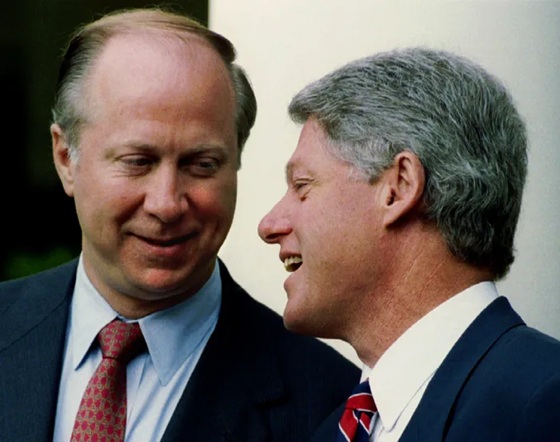
David Gergen and Bil Clinton

Dear Commons Community,

David Gergen, a journalist who served as a White House advisor to Republican and Democratic presidents, died on Thursday at age 83, according to the Harvard Kennedy School, where Gergen taught for many years.

Gergen’s son, Christopher, told The New York Times that his father’s death was caused by Lewy body dementia, a brain disorder that affects thinking, memory and movement, according to the Mayo Clinic. 

He died at a retirement community in Massachusetts, his son said.

Gergen, who was born in Durham, North Carolina, served as the professor of public service and founding director of the Center for Public Leadership at the Harvard Kennedy School, according to the university’s webpage. He frequently appeared as a political commentator on CNN and PBS, and he was the chief editor of the U.S. World and News Report in the late 1980s.

“We at the Kennedy School count David among our greatest leaders: a man of courage and commitment who inspired generations of students to go out and change the world for the better,” said Jeremy Weinstein, dean of the Kennedy School and Don K. Price Professor of Public Policy in an obituary.

Gergen, who studied at Yale University and Harvard Law School, held many communication roles, including briefing reporters and writing speeches, across four administrations, the Times reported.

He started his political career serving under Republican President Richard Nixon as his speechwriter. In his memoir, Gergen wrote, “Before he self-destructed, Nixon was among the best of modern presidents,” according to an excerpt quoted by CNN. Nixon resigned as president in 1974, after revelations linking him to potential involvement in the Watergate scandal.

Gergen later served in the administrations of Gerald Ford and Ronald Reagan – both Republicans – and later returned to the White House to advise Bill Clinton, a Democrat.

“It was a controversial appointment – both for him and for me, as I had worked previously for three Republican presidents,” Gergen wrote in his memoir, according to CNN. “But he was a friend, and he was our president, so I said yes. And indeed, I was honored.”

Gergen often touted centrism, telling The Boston Globe in 2020 that, “Centrism doesn’t mean splitting the difference. It’s about seeking solutions, and you bring people along. I’m happily in that role.”

His daughter, Katherine, wrote in a December 2024 op-ed that her father told her, “We are going through a period of fear.”

“People are terrified. We have been tested, we are being tested now, but we must recognize that politics in our country is like a pendulum,” he said, according to her. “The pendulum has swung back in a way that may be very dangerous. But books such as Arthur Schlesinger Jr.’s ‘The Cycles of American History’ show us that as a country we have been here before. We must hold onto the inspirational moments of our history and use them to light our path forward.”

I enjoyed watching him on CNN over the years.  He always provided balanced commentary on political issues.

May he rest in peace!

Tony

Quantum computers fashioned out of individual atoms are poised to lead the field!

In a prototype quantum computer, a magneto-optical trap (cube) cools rubidium atoms to nearly absolute zero. PHOTO: QUERA COMPUTING

Dear Commons Community,

Science has a featured article this morning entitled, “Atomic Explosion”  that describes using atoms to develop a quantum computer.  Below is an excerpt.  Be forewarned, the article gets into the weeds a bit.

“Inside a cramped, windowless laboratory, mirrors, lenses, and beam splitters crowd together on a massive table, forming a dense and seemingly random thicket. In fact, each gizmo is precisely placed to control laser beams that ricochet through the setup before entering a port in a gleaming vacuum chamber jutting up through the table. Within the chamber, the beams suspend individual atoms of rubidium against gravity’s pull, arrange them in patterns, and manipulate their internal quantum states.

Dolev Bluvstein, a physicist at Harvard University, points to a digital camera mounted to peer down into the chamber. Several bright green dots shine on its screen. They are the atoms—hovering, fluorescing, making the atomic scale visible. They are also the quantum bits, or qubits, at the heart of a quantum computer, one that is pushing boundaries and rivaling more established concepts. Speaking over the thrum of pumps, Bluvstein says, “No matter what the advantages of different computational approaches, I think neutral atoms are the most fun because we take pictures of atoms.”

The effort at Harvard represents the leading edge in so-called neutral atom-based quantum computing. For decades, the approach languished as physicists struggled to coax even two atoms to interact, as they must to perform computations. Meanwhile, researchers pursuing other approaches raced ahead, assembling functional, albeit noisy, quantum computers with dozens of qubits consisting of tiny superconducting circuits or individual ions trapped on microchips.

But, thanks to a few key advances, atom-based quantum computing has come roaring back. Physicists can now assemble arrays of thousands of atoms—thousands of potential qubits. Because all the atoms of a particular element and isotope are identical, they should be more reliable and easier to control than manufactured superconducting qubits. “Our qubits don’t need improving,” says Dana Anderson, a physicist at the University of Colorado Boulder and chief technology officer for the startup Infleqtion. “Nature makes them, and we just plug them in.”

“What we have done [could] put this entire field on a completely different slope.”

Even proponents of rival technologies acknowledge that the atomic approach is enjoying a moment. “They will definitely suck the air out of the room for the next few years,” says William Oliver, a physicist at the Massachusetts Institute of Technology who works with superconducting qubits. However, Oliver warns, atom-based quantum computing faces challenges of its own, including the slow pace of herding atoms with lasers. “It’s not clear that it will be fast enough to be practical,” he says.

Nevertheless, many startups are already selling rudimentary atom-based quantum computers, and dozens of academic groups are exploring the approach. The leader of the Harvard effort, Mikhail Lukin, a Russian-born physicist with a boyish mop of hair and piercing blue eyes, says the progress is driving all of quantum computing forward. “I am very hopeful that what we have done will put this entire field on a completely different slope.”

WHETHER IT’S PREPARING your taxes or portraying mayhem in a video game, your computer functions by manipulating binary numbers, long strings of 0s and 1s. It encodes those numbers in tiny electrical switches called bits, flipped on or off to signify a 0 or a 1. In contrast, a quantum computer manipulates qubits that can be set to 0, 1, or 0 and 1 simultaneously—until they are measured, at which point the qubit’s state collapses randomly to 0 or 1.

In principle, those simultaneous states enable a quantum computer to tackle certain problems—perhaps cracking cryptographic codes or modeling molecules—that would overwhelm any conventional computer. Possible solutions to a problem correspond to abstract quantum waves sloshing through the qubits. The waves interfere with one another, like ripples on a pond, so that those signifying incorrect solutions cancel one another and the correct solution pops out.

Such algorithms require special states in which the qubits share a quantum link called entanglement. When two qubits are entangled, their states can be uncertain, but correlated. For example, both can be 0 and, simultaneously, both can be 1. When measured, they will collapse into the same state. In contrast, if the qubits were in 0-and-1 states but not entangled, one might collapse to 0 and the other to 1.

A qubit can be anything with two addressable quantum states that’s not too susceptible to interference from its surroundings and can interact with others of its kind. One popular choice has been an ion—an atom stripped of an electron. The two states, 0 and 1, correspond to the ion spinning up or down. When trapped in a row by electric fields on the surface of a microchip, ions can be manipulated with laser light or microwaves and can interact through vibrations zipping along the row. So far, ions are the most precisely controllable qubits, and companies such as Quantinuum and IonQ have assembled computers with dozens of them.

Another leading type of qubit consists of a tiny circuit made of superconducting metal that resonates with unquenchable current. Controlled by microwaves and much larger than ions and atoms, superconducting qubits are more susceptible to noise and, like any manufactured object, suffer tiny irregularities. Nevertheless, both Google and IBM have developed quantum computers with more than 100 superconducting qubits, and those machines have performed the most complex quantum computations so far.

In the 1990s, when the quest to build a quantum computer began in earnest, atoms seemed like an obvious choice for qubits. Nothing is more pristinely quantum mechanical than an atom, whose behavior quantum theory was developed to explain. An atom possesses a ladder of precisely predictable quantum states whose energy depends on how its electrons whizz around the nucleus and spin.

Physicists had already developed powerful techniques to control atoms. Precisely tuned lasers could ease an atom from one quantum state to another and could cool atoms to nearly absolute zero, a step necessary to protect their delicate quantum states from the scrambling effects of heat. Researchers could also trap single atoms in a spot of laser light, in so-called optical tweezers, and even assemble 2D grids of atoms, the starting point of a quantum computer, without any of the hassles of etching circuits onto chips.

But atom-based quantum computing stumbled out of the gate. Because they’re uncharged, atoms only interact feebly with their environment. That’s good for quantum computing, as it makes atom qubits less susceptible to noise. But atoms also barely interact with one another. That’s bad for quantum computing, as qubits must interact to perform logical operations. Without interactions, qubits don’t compute.

IT WASN’T UNTIL 2000 that physicists solved the problem. Lukin, Peter Zoller, a theorist at the University of Innsbruck, and their colleagues found a way to momentarily strengthen the interaction between two neighboring atoms 1 billion–fold.

An atom with a single electron in its outer shell, such as the rubidium Lukin’s group uses, has a ladder of states determined by the kinetic energy of that electron and the directions in which the electron and nucleus are spinning. In quantum computing, a particular pair of the lowest energy states represents 0 and 1.

If the electron is in its 0 state, laser light of a specific frequency can boost it to a very high energy Rydberg state, tugging the electron away from the nucleus and swelling the atom to 1000 times its normal size. That enables it to exert an electrical effect on a second, nearby atom, shifting the energies of its ladder of states. Now, the same laser no longer has the correct frequency to boost that atom’s electron to its Rydberg state. Exciting the first atom blocks excitation of the second.

Making atoms compute
Individual atoms trapped in beams of laser light can act as a quantum computer’s qubits, which can be set to either 0, 1, or 0 and 1 at the same time. Two of the atom’s lowest energy states, which can differ in how much angular momentum the atom has, serve as 0 and 1. Atoms could make better qubits than alternatives such as ions and superconducting circuits, some scientists say, but an atom-based quantum computer has to overcome several hurdles.

This “Rydberg blockade” makes it possible to entangle two atoms that start in their 0 states. A laser can put the first atom into both 0 and 1 at the same time. Another pulse then boosts it from 0 to its Rydberg state while it also remains in 1. That atom then simultaneously blocks (in its Rydberg state) and doesn’t block (in its 1 state) the effect of other pulses designed to drive the second atom from 0, up to its Ryberg state, and down to 1. So, the second atom ends up in 0 and 1. When a final pulse returns the first atom from its Rydberg state, both atoms are 0 and, at the same time, both are 1. That is, they’re entangled.

It’s as if you’re a teenager hoping your older brother will give you a ride to a party, which he’ll do only if he’s in a good mood. If your brother is quantum mechanical and can be in both good and bad moods at once, you’ll end up both at the party and stuck at home, and in a good mood and a bad mood simultaneously. What’s more, your mood, good or bad, will be the same as your brother’s. Your moods will be entangled.

Called a Rydberg gate, this entangling operation enables all of atom-based quantum computing, Zoller says. “The Rydberg gate is the transistor of this sort of computer.” Making the scheme work took years. In 2010, Mark Saffman, a physicist at the University of Wisconsin–Madison, and colleagues used it to entangle two atoms. But the operation successfully entangled the qubits just 58% of the time. That “fidelity” was low because of laser noise, Saffman says.

Eight years later, Antoine Browaeys, a physicist at the Institute of Optics of France’s national research agency, and colleagues conquered the noise problems. By 2019, Lukin and colleagues had streamlined the scheme so that it required just two laser pulses. “The improvement was spectacular,” says Browaeys, a co-founder of the startup Pasqal. “The fidelity went from 80% to 95% or 98% almost immediately.” Now, several groups have demonstrated two-qubit gates with fidelities exceeding 99.5%, rivaling those of superconducting qubits.

The Ryberg gate only works if two atoms are within a few micrometers of each other. So to exploit it, researchers had to overcome another major challenge, Zoller says: They had to learn how to move atoms. Those skills are now on full display in Lukin’s lab, where lasers shuttle atoms in the vacuum chamber among separate zones for storing the qubits, making them interact, and reading out their final states, 0 or 1, with a laser. Curiously, to perform such legerdemain, physicists rely on off-the-shelf technology.

Standing before the optical table in Lukin’s lab, physicist Alexandra Geim explains the two key pieces of tech. The grid of laser beams that traps the atoms comes from a so-called spatial light modulator (SLM), she says, pointing toward a machined aluminum box lurking amid the chaos. An SLM is essentially a programmable mirror made of liquid crystal, and the devices are ordinarily used in digital projectors. Here an SLM splits one laser beam into an array of many.

To steer the beams and move the atoms trapped in them, physicists rely on a device called an acousto-optical deflector, another aluminum box. It consists of a crystal that vibrates with sound when exposed to radio waves. The sound waves can then redirect a laser beam through a process called diffraction, enabling researchers to move atoms in microseconds. “You put in one laser beam and deflect it into a bunch of different qubits,” Geim says. “It’s very enabling for our parallel control.”

THAT ABILITY TO MOVE atoms could help solve a central problem in quantum computing: error correction. Compared with conventional bits, qubits are easily perturbed and much harder to monitor. To protect the information in an ordinary bit, it can be copied on to others. Comparing the copies reveals which, if any, have flipped. That won’t work with qubits, because it’s impossible to copy the unknown state of one qubit on to another, and measurement crushes two-way states anyway.

Instead, researchers expand the state of one qubit to many through entanglement. They keep watch over these “data” qubits by interleaving them with extra, “ancillary” qubits so that the state of an ancilla reveals whether the neighboring data qubits are in the same or different states. There’s no need to measure the data qubits themselves, and repeatedly measuring the ancillas helps the diffuse “logical” qubit—the data and ancillary qubits combined—hold its state longer any of the individual physical qubits can.

The scheme works, as Google researchers reported in December 2024. They used a chip with 107 superconducting qubits and encoded a single logical qubit onto a subset of them, using an error-correction scheme called the surface code. As the logical qubit grew from nine to 25 to 49 data qubits, its error rate—the rate at which the state of the logical qubit became unclear—fell by half at each step. The largest logical qubit held its state for 291 microseconds, 2.4 times as long as any of the physical qubits.

But the achievement also highlights a looming challenge for the superconducting technology. A full-fledged computer would manipulate logical qubits encoded in as many as 1000 physical qubits. If those physical qubits are fixed in place on a chip, then making two neighboring logical qubits interact requires shuffling information between the adjacent grids. Known as lattice surgery, that maneuver would require thousands of operations among pairs of physical qubits.

Atom qubits can avoid that messy surgery. Suspended in light beams, atoms can be moved around and rearranged at will, unlike ions in a trap or superconducting circuits. So physicists can encode one logical qubit on a grid of atoms, stack it on top of a second grid representing another logical qubit, and apply the necessary laser pulses to make the two logical qubits interact. Afterward, they can move the logical qubits apart again.

Lukin’s group has done just that. In early 2024, the researchers showed they could, for example, encode two logical qubits in surface codes, bring them together to entangle them, and separate them again. In movies the Harvard team makes of their computations, the orderly movements of atoms resemble an antique loom weaving its magic.

Like the Google team, Lukin’s group showed that the error rate fell as the number of physical data qubits in a logical qubit rose. Still, the team hasn’t quite yet matched Google’s feat, Saffman says. They measured their ancillas only once per trial, which isn’t enough to constantly correct for errors, he says. “They’re doing more error detection than error correction.”

Lukin says his team is working on repeated readout. He maintains his team’s work marks a paradigm shift, from just demonstrating a logical qubit to making such things interact. “We are going away from thinking of individual physical qubits to thinking of logical qubits.”

INTEREST IN atom-based quantum computing has exploded. Globally, close to 200 academic groups are working in it, Browaeys estimates. At least a half-dozen companies are trying to market atom-based systems. Most prominent among them is QuEra, the startup Lukin and colleagues founded in 2018, which in February received a $230 million investment from Google and others. It occupies a quiet, secured, mint green building overlooking the Charles River, 3 kilometers southwest of Harvard. “In 2020 this was like an empty room,” says Alex Lukin, a physicist at the company and Mikhail Lukin’s nephew, standing beside one of QuEra’s machines.

QuEra’s machines are much sleeker than the homey setup at Harvard, their custom electronics arranged in neat racks, their optical tables more sparse. In May, the company installed a 256-qubit rig at Japan’s National Institute of Advanced Industrial Science and Technology. The $41 million machine will reside next to a conventional supercomputer at the University of Tokyo, as part of a budding high-performance computing ecosystem. Japan’s interest “goes beyond just use of the machine,” says Takuya Kitagawa, president of QuEra. “They want to grow the user base in the country and get involved with the broader supply chain.”

Similarly, Planqc, a startup spun out of the Max Planck Institute of Quantum Optics (MPQ), is building an atom-based quantum computer for the German Aerospace Center (DLR), a government agency. Sebastian Blatt, a physicist at MPQ and a co-founder of Planqc, says DLR is planning to use the machine for a variety of problems including developing new materials, simulating chemical reactions, and optimization—picking the best solution among many viable ones.

Other companies are trying to take advantage of the variety in nature’s atomic toolbox. Whereas most groups use rubidium or some other alkali metal, whose atoms have a lone outer-shell electron, scientists at the startup Atom Computing are using ytterbium, which has two. The result is a richer palette of quantum states that in principle provides greater control over the atoms, says Ben Bloom, Atom’s co-founder and chief technology officer. “This allows you to do things that you just can’t do with alkali systems.”

Scientists at Infleqtion are working to incorporate two different types of atoms into a single quantum computer. In a logical qubit, one kind of atoms might serve as the data qubits and the other might serve as ancillas, says Saffman, Infleqtion’s chief scientist for quantum information. The two types of atoms would react to different frequencies of light, so the ancillas could be read out without having to first move them away from the data qubits, he explains.

Kenji Ohmori, a physicist with Japan’s National Institutes of Natural Science and founder of the startup Yaqumo, hopes to replace the Rydberg gate with something faster. With laser pulses less than 1 nanosecond long, he and his colleagues force two rubidium atoms into the Rydberg state simultaneously, before the blockade can kick in. The atoms then interact so strongly they become entangled in just 6.5 nanoseconds. “We are almost comparable to the superconductor qubits or even faster,” Ohmori says. But so far the gate’s fidelity is just 71%.

Some experts say atom-based quantum computing has shown more promise than progress. “It still looks a little like a physics experiment,” says Christopher Monroe, an expert on ion quantum computing at Duke University and co-founder of IonQ. “I’m hoping these neutral atom companies will show us an honest to God system that executes an algorithm.” That’s exactly what developers of atom-based systems are striving to do, Blatt says. “The next big 5-year projects worldwide, they’re going to center around putting all these pieces together.”

We will have to wait and see whether this becomes the “big” breakthrough in the development of quantum computing.

Tony

OpenAI to release web browser in challenge to Google Chrome

Dear Commons Community.  

It was revealed on Wednesday that OpenAI  is close to releasing an AI-powered web browser that will challenge Google, three people familiar with the matter told Reuters.

The browser is slated to launch in the coming weeks and aims to use artificial intelligence to change how consumers browse the web. It will give OpenAI more direct access to a cornerstone of Google’s success: user data.

If adopted by the 500 million weekly active users of ChatGPT, OpenAI’s browser could put pressure on Google’s Chrome, which is an important pillar of parent-company Alphabet’s ad business and makes up nearly three-quarters of its revenue.

OpenAI’s browser is designed to keep some user interactions within a ChatGPT-like native chat interface instead of clicking through to websites, two of the sources said.

The browser is part of a broader strategy by OpenAI to weave its services across the personal and work lives of consumers, one of the sources said.

OpenAI declined to comment. The sources declined to be identified because they are not authorized to speak publicly on the matter. Led by entrepreneur Sam Altman, OpenAI upended the tech industry with the launch of its AI chatbot ChatGPT in late 2022. After its initial success, OpenAI has faced stiff competition from rivals including Google and startup Anthropic, and is looking for new areas of growth.

In May, OpenAI said it would enter the hardware domain, paying $6.5 billion to buy io, an AI devices startup from Apple’s former design chief, Jony Ive. A web browser would allow OpenAI to directly integrate its AI agent products such as Operator into the browsing experience, enabling the browser to carry out tasks on behalf of the user, the people said.

The browser’s access to a user’s web activity would make it the ideal platform for AI “agents” that can take actions on their behalf, like booking reservations or filling out forms, directly within the websites they use.

OpenAI has its work cut out — Google Chrome, which is used by more than 3 billion people, currently holds more than two-thirds of the worldwide browser market, according to web analytics firm StatCounter. Apple’s second-place Safari lags far behind with a 16% share. Last month, OpenAI said it had 3 million paying business users for ChatGPT.

Perplexity, which has a popular AI search engine, launched an AI browser, Comet, on Wednesday, capable of performing actions on a user’s behalf. Two other AI startups, The Browser Company and Brave, have released AI-powered browsers capable of browsing and summarizing the internet.

Chrome’s role in providing user information to help Alphabet target ads more effectively and profitably has proven so successful that the Department of Justice has demanded its divestiture after a U.S. judge last year ruled that the Google parent holds an unlawful monopoly in online search.

OpenAI’s browser is built atop Chromium, Google’s own open-source browser code, two of the sources said. Chromium is the source code for Google Chrome, as well as many competing browsers including Microsoft’s Edge and Opera. Last year, OpenAI hired two longtime Google vice presidents who were part of the original team that developed Google Chrome. The Information was first to report their hires and that OpenAI previously considered building a browser.

An OpenAI executive testified in April that the company would be interested in buying Chrome if antitrust enforcers succeeded in forcing the sale. Google has not offered Chrome for sale. The company has said it plans to appeal the ruling that it holds a monopoly.

OpenAI decided to build its own browser, rather than simply a “plug-in” on top of another company’s browser, in order to have more control over the data it can collect, one source said.

It is my sense that all browsers will become AI-powered soon. 

Tony

A “4/4” Teaching Load to Become Law at Most of Wisconsin’s Public Universities

Dear Commons Community,

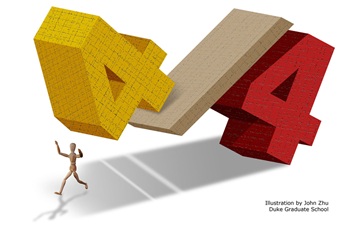
A “4/4” workload requirement was folded into Wisconsin’s state budget, a bipartisan plan signed last week by Gov. Tony Evers, a Democrat. Per the legislation, full-time UW system instructors must teach at least 24 credits across the fall and spring terms, starting September 1, 2026. That requirement is halved for the state’s two R1 universities, UW-Madison and UW-Milwaukee.

The idea of a “4/4 load” — four courses a semester — is dreaded by many professors, who say juggling so many students and assignments makes it difficult to teach effectively and keep up with other duties, such as research and service. One group representing UW-system faculty members is worried about the implications of the demanding schedule being mandated by the state.

Wisconsin’s budget includes a more than $256-million increase in funding for the UW system to support faculty raises, staff recruitment and retention, facilities projects, and other initiatives.  As reported by The Chronicle of Higher Education.

The strings attached to that investment — which also include caps on administrative staff — is a compromise with state Republicans, who initially considered cutting the system’s funding by $87 million. The teaching minimums will “better focus university resources in the classroom,” Sen. Howard Marklein, a Republican, wrote in a newsletter.

In addition to the 24 minimum credits during the fall and spring, instructors who are on a 12-month contract must teach six credits in the summer. Workloads for part-time instructors will be set in proportion to full-time requirements.

The required workloads can be reduced for department chairs and faculty with other “administrative duties,” according to the budget. Faculty members can also voluntarily take cuts to their compensation or make up the difference with funding from other sources, like grants, to teach less.

Officials at the Madison flagship announced last week that the university will create an advisory committee that includes faculty representatives to help inform how exceptions are determined; the group will then share its ideas with the UW system and state lawmakers. A Madison spokesperson declined to comment further.

A 4/4 load is already common for many faculty members at teaching-focused institutions, such as regional public colleges. So is a 2/2 load at research institutions.

But Michael DeCesare, a senior program officer at the national American Association of University Professors, said state-mandated minimum course loads are at odds with AAUP standards, which recommend that faculty “participate fully in the determination of workload policy.”

Teaching requirements are best decided by individual colleges and departments, as they are in the UW system currently, since expectations vary widely among different types of staff, said Christa Olson, an English professor and chair of the English department at UW-Madison.

The budget’s “one-size-fits-all approach” applies equally to professors who focus on teaching as it does to employees in its extension program, who primarily do community outreach, Olson said.

“That’s just not a realistic depiction of how universities work,” she said.

It will be harder for overburdened faculty members to deliver a quality education to students, Olson added.

Olson is a member of the steering committee of the Public Representation Organization of the Faculty Senate, or PROFS, a nonprofit Madison faculty-advocacy group that is not part of the university system. The group opposes the workload mandate, calling it “overreach” by the state, and plans to advocate for its removal.

Public colleges have faced increasing pressure to measure and enforce faculty productivity, primarily from Republican lawmakers and other conservative critics who’ve called for institutions to become more efficient.

That pressure has emerged in Wisconsin before — from a previous Republican governor, Scott Walker. At one point, Walker suggested that each professor across the UW system should teach one more class per semester amid state budget cuts. Later, he pushed for public colleges to be required to track how much time each faculty member spent in the classroom.

While those mandates were not adopted, university officials tried to push back by improving transparency about how much faculty members work. Now the UW system publishes a database of thousands of instructors that details how many credit hours they teach, broken up by group and individual instruction.

Other state legislatures have previously discussed increasing faculty workloads, but the proposals haven’t come to fruition.

In 2013, a proposed version of Ohio’s state budget would have allowed colleges to unilaterally add an additional class to faculty’s schedules, but the provision didn’t pass.

Around the same time, a North Carolina lawmaker, aiming to save money and recenter teaching, unsuccessfully proposed a 4/4 load for all professors in the University of North Carolina system.

The UW system has until December 1 to propose to the Legislature’s Joint Committee on Employment Relations any exceptions and additional details to add to the budget plan. The committee has until January 31, 2026, to approve the university’s proposals.

Tony