Did money or politics cause the cancellation of Stephen Colbert’s late night show?

Stephen Colbert (Photo by Scott Kowalchyk/CBS via Getty Images)

Dear Commons Community,

CBS says its decision to end Stephen Colbert’s late-night comedy show is financial, not political. Yet even with the ample skepticism about that explanation, there’s no denying the economics were not working in Colbert’s favor.

The network’s bombshell announcement late Thursday that the “Late Show” will end next May takes away President Donald Trump’s most prominent TV critic and the most popular entertainment program in its genre. The following is an analysis courtesy of The Associated Press.

The television industry’s declining economic health means similar hard calls are already being made with personalities and programming, with others to be faced in the future. For the late-night genre, there are unique factors to consider.

As recently as 2018, broadcast networks took in an estimated $439 million in advertising revenue for its late-night programs, according to the advertising firm Guidelines. Last year, that number dwindled to $220 million.

Once a draw for young men, now they’ve turned away

Late-night TV was a particular draw for young men, considered the hardest-to-get and most valuable demographic for advertisers. Increasingly, these viewers are turning to streaming services, either to watch something else entirely or catch highlights of the late-night shows, which are more difficult for the networks to monetize.

More broadly, the much-predicted takeover of viewers by streaming services is coming to pass. The Nielsen company reported that during the last two months, for the first time ever, more people consumed programming on services like YouTube and Netflix than on ABC, CBS and NBC or any cable network.

Networks and streamers spent roughly $70 billion on entertainment shows and $30 billion for sports rights last year, said Brian Wieser, CEO of Madison & Wall, an advertising consultant and data services firm. Live sports is the most dependable magnet for viewers and costs for its rights are expected to increase 8% a year over the next decade. With television viewership declining in general, it’s clear where savings will have to come from.

Wieser said he does not know whether Colbert’s show is profitable or not for CBS and parent company Paramount Global, but he knows the direction in which it is headed. “The economics of television are weak,” he said.

In a statement announcing the cancellation, George Cheeks, Paramount Global’s president and chief executive officer, said that “This is purely a financial decision against a challenging backdrop in late night. It is not related in any way to the show’s performance, content or other matters happening at Paramount.”

Cheeks’ problem is that not everyone believes him.

Colbert is a relentless critic of Trump, and earlier this week pointedly criticized Paramount’s decision to settle Trump’s lawsuit against CBS over a “60 Minutes” interview with Kamala Harris. He called Paramount’s $16 million payment to Trump a “big fat bribe,” since the company is seeking the administration’s approval of its merger with Skydance Media.

On Friday, the Writers Guild of America called for an investigation by New York’s attorney general into whether Colbert’s cancellation is itself a bribe, “sacrificing free speech to curry favor with the Trump administration as the company looks for merger approval.”

CBS’ decision made this a pivotal week for the future of television and radio programming. Congress stripped federal funding for PBS and NPR, threatening the future of shows on those outlets.

Journey Gunderson, executive director of the National Comedy Center, called the decision to end Colbert’s show the end of an era.

“Late-night television has historically been one of comedy’s most audience-accessible platforms — a place where commentary meets community, night after night,” Gunderson said. “This isn’t just the end of a show. It’s the quiet removal of one of the few remaining platforms for daily comedic commentary.

Trump celebrates Colbert’s demise

Trump, who has called in the past for CBS to terminate Colbert’s contract, celebrated the show’s upcoming demise. “I absolutely love that Colbert got fired,” the president wrote on Truth Social. “His talent was even less than his ratings.”

Some experts questioned whether CBS could have explored other ways to save money on Colbert. NBC, for example, has cut costs by eliminating the band on Seth Meyers’ late-night show and curtailing Jimmy Fallon’s “Tonight” show to four nights a week.

Could CBS have saved more money by cutting off the show immediately, instead of letting it run until next May, which sets up an awkward “lame duck” period? Then again, Colbert will keep working until his contract runs out; CBS would have had to keep paying him anyway.

CBS recently cancelled the “After Midnight” show that ran after Colbert. But the network had signaled earlier this year that it was prepared to continue that show until host Taylor Tomlinson decided that she wanted to leave, noted Bill Carter, author of “The Late Shift.”

“It is a very sad day for CBS that they are getting out of the late-night race,” Andy Cohen, host of Bravo’s “Watch What Happens Live,” told The Associated Press. “I mean, they are turning off the lights after the news.”

Colbert, if he wanted to continue past next May, would likely be able to find a streaming service willing to pay him, Wieser said. But the future of late-night comedy on the entertainment networks is genuinely at risk. Trump, in fact, may outlast his fiercest comic critics. Jon Stewart, once a weeknight fixture, works one night a week at “The Daily Show” for Paramount’s Comedy Central, a network that seldom produces much original programming any more.

ABC’s Jimmy Kimmel, who was chided on social media by Trump on Friday — “I hear Jimmy Kimmel is next” — has a contract that also runs out next year. Kimmel, 57, openly wondered in a Variety interview before signing his latest three-year contract extension how long he wanted to do it. He’s hosted his show since 2003.

“I have moments where I go, I cannot do this anymore,” Kimmel told Variety in 2022. “And I have moments where I go, what am I gonna do with my life if I’m not doing this anymore?’ It’s a very complicated thing … I’m not going to do this forever.”

Colbert will be missed!

Tony

Wall Street Journal: Birthday letter to Epstein bore Trump’s signature, drawing of naked woman

Credit: The Nightly

Dear Commons Community,

A collection of letters gifted to Jeffrey Epstein for his 50th birthday in 2003 included a note bearing Donald Trump’s name and an outline of a naked woman, according to a Wall Street Journal report published yesterday.

The drawing, depicting a woman’s breasts and a “Donald” signature in the place of pubic hair, surrounded several lines of typewritten text, according to the newspaper, which reviewed the letter. It concluded with the line: “Happy Birthday — and may every day be another wonderful secret.”

Trump in an interview with the Journal on Tuesday denied that he wrote the letter or drew the picture and threatened to sue the newspaper if it published the story.

“I never wrote a picture in my life. I don’t draw pictures of women,” he said, according to the Journal. “It’s not my language. It’s not my words.”

In response to the story, Trump posted on Truth Social last night that he’d ordered Attorney General Pam Bondi “to produce any and all pertinent Grand Jury testimony, subject to Court approval.” She quickly responded on X that she was ready to do so on Friday, though the process of getting judges to sign off on such a move would likely take considerably longer.

Earlier in the evening, Trump vowed to sue The Wall Street Journal and Rupert Murdoch, saying that he and White House press secretary Karoline Leavitt had warned them about publishing the story and that the letter was “fake.”

“President Trump will be suing The Wall Street Journal, NewsCorp, and Mr. Murdoch, shortly,” the Truth Social post reads.

The Wall Street Journal declined to comment when reached by CNN.

Vice President JD Vance also weighed in on social media, calling the story “complete and utter bullshit” in an X post.

The Wall Street Journal report is likely to further fuel scrutiny of Trump’s handling of a Justice Department review of the Epstein case that has roiled his MAGA base and consumed the White House for several days.

On Thursday evening, however, some of the most vocal voices on the right who’d been pushing for more transparency from the administration came to Trump’s defense and cast doubt on the Journal story.

Far-right activist Laura Loomer, who’s called for the administration to appoint a special counsel to look into the handling of the Epstein files, called the letter “totally fake.” She wrote on X: “Everyone who actually KNOWS President Trump knows he doesn’t type letters. He writes notes in big black Sharpie.”

Another influential MAGA voice, Charlie Kirk, posted on X, “This is not how Trump talks at all. I don’t believe it.” His post referred to the type-written note in the letter that envisions a conversation between Trump and Epstein about there being “more to life than having everything.”

Epstein, a financier who socialized with a range of politicians and other powerful figures, was charged in 2019 with sex trafficking minors in Florida and New York. He was later found dead in his jail cell while awaiting trial. Medical examiners ruled the death a suicide, but the circumstances have since spawned an array of conspiracy theories.

In a memo last week, the Justice Department said Epstein did indeed die by suicide and that there was no Epstein “client list” and announced it wouldn’t release any more documents related to the case, infuriating an influential contingent of Trump supporters who believed the administration would make all of the Epstein files public.

Trump has since angrily dismissed the backlash, accusing his supporters of falling for a “hoax” by fixating on the case. He urged Republicans to drop the issue altogether.

“Their new SCAM is what we will forever call the Jeffrey Epstein Hoax, and my PAST supporters have bought into this ‘bullshit,’ hook, line, and sinker,” Trump posted on Truth Social on Wednesday.

Facing growing calls from his supporters and members of Congress, Trump later said Bondi could release any additional “credible” files on the case, even as he lamented the “stupid and foolish Republicans” continuing to push the matter.

Leavitt said yesterday that Trump “would not recommend” that a special prosecutor investigate the Epstein case, despite calls from some of the president’s closest allies to do so.

According to the Wall Street Journal, the letter bearing Trump’s name was included in a birthday album assembled by Ghislaine Maxwell, a close Epstein associate who was convicted of child sex trafficking in connection with Epstein. She collected the letters from Trump and dozens of others for Epstein’s 50th birthday, the Journal reported.

The album was later part of the documents examined by Justice Department officials who investigated Epstein several years ago, according to the newspaper.

Trump was photographed with Epstein — a financier who socialized with a range of politicians and other powerful figures — on multiple occasions throughout the 1990s and early 2000s and was among those who appeared in flight logs for Epstein’s private jet.

But the president has said that their friendship ended before Epstein pleaded guilty in 2008 for procuring a minor for prostitution. He later said they hadn’t talked in roughly 15 years when Epstein was arrested again in 2019.

Hmmm!

Tony

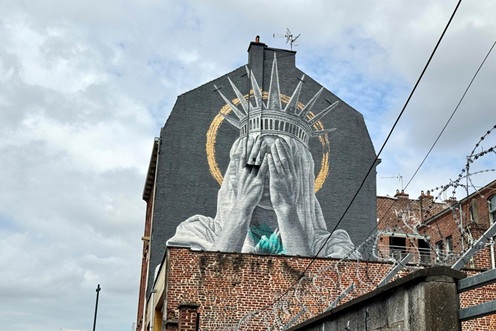
A new mural in France shows the Statue of Liberty covering her eyes in a swipe at Trump.

A mural by Judith de Leeuw shows the Statue of Liberty covering her eyes.  (AP Photo/Sylvain Plazy)

Dear Commons Community,

As statements go, it’s a big one.

A towering mural in France of the Statue of Liberty covering her eyes is racking up millions of views online with its swipe at  Trump ‘s immigration and deportation policies.  As reported by the Associated Press.

Amsterdam-based street artist Judith de Leeuw described her giant work in the northern French town of Roubaix, which has a large immigrant community, as “a quiet reminder of what freedom should be.”

She said “freedom feels out of reach” for migrants and “those pushed to the margins, silenced, or unseen.”

“I painted her covering her eyes because the weight of the world has become too heavy to witness. What was once a shining symbol of liberty now carries the sorrow of lost meaning,” de Leeuw wrote in a July 4 post on Facebook, when Americans were celebrating Independence Day.

Her depiction of the Statue of Liberty, a gift from the French people in the late 1800s, has inspired some sharp criticism.

Rep. Tim Burchett, a Republican lawmaker from Tennessee, wrote in an angry post on X that the work “disgusts me.” He said he had an uncle who fought and died in France, where U.S. forces saw combat in both World War I and World War II.

In an interview with The Associated Press, de Leeuw was unapologetic.

“I’m not offended to be hated by the Trump movement. I am not sorry. This is the right thing to do,” she said.

The town stood by the work, with its deputy mayor in charge of cultural affairs, Frédéric Lefebvre, telling broadcaster France 3 that “it’s a very strong and powerful political message.”

Since returning to the White House amid anti-immigration sentiment, Trump has launched an unprecedented campaign that has pushed the limits of executive power and clashed with federal judges trying to restrain him. People from various countries have been deported to remote and unrelated places like South Sudan and the small African nation of Eswatini.

Polling by Gallup released last week showed an increasing number of Americans who said immigration is a “good thing” and decreasing support for the type of mass deportations Trump has championed since before he was elected.

The mural in Roubaix is part of an urban street culture festival backed by the town. Roubaix is one of the poorest towns in France. It was economically devastated by the collapse since the 1970s of its once-flourishing textile industry that used to attract migrant workers from elsewhere in Europe, north Africa and beyond.

The United States was a shining light to the world.  It took six months for Trump to make it a mockery!

Tony

For my German Colleagues: “Bildung und Digitaler Kapitalismus” (“Education and Digital Capitalism”) Available as Free Download!

Dear Colleagues,

In December 2024, I posted that I have a chapter in a book published in Germany entitled, Bildung und Digitaler Kapitalismus. 

The full citaton is:  Picciano, A. (2024). Der bildungsindustrielle Komplex auf dem Weg zur Globalisierung. In V. Dander, N. Grünberger, H. Niesyto, & H. Pohlmann (Hrsg.), Bildung und Digitaler Kapitalismus (S. 77–90). kopaed.  English translation of the chapter:  “The education-industrial complex going global.” English translation of the book:  Education and Digital Capitalism.  

I just received word that the book is now available as an open access e-book.  This was made made possible by the Open Access Monographs Fund of the Darmstadt University and State Library. The PDF can be accessed via the publisher’s website: https://www.kopaed.de/kopaedshop/?pid=1515 or  direct link: https://www.kopaed.de/dateien/Dander%20et%20al_OA_neu.pdf

Tony


The Reading and Learning Habits of Highly Successful People!

Berkshire Hathaway chairman Warren Buffett and  business partner Charlie Munger. Courtesy of The Associated Press.

Dear Commons Community,

Here is a piece on the reading and learning habits of some of the world’s billionaires courtesy of Blinkist Magazine.

“Two teenage boys found employment at a grocery store in Omaha, Nebraska. The older boy, from a poor family devastated by the Great Depression, bred and sold hamsters for spare change. The younger boy, grandson of the store owner, had been delaying college and working odd jobs, like selling chewing gum and collecting coke bottles door to door.

Back then, each boy made about $2 a day. Just a few decades later, they’d be raking in $20 billion in profit per year with their conglomerate, Berkshire Hathaway. Who were these boys? None other than Charlie Munger and Warren Buffett.

Fast track to 2007, the 84 year-old Charlie Munger, revealed to a crowd of aspiring law students the secrets to their success:

“I constantly see people rise in life who are not the smartest, sometimes not even the most diligent, but they are learning machines. They go to bed every night a little wiser than they were when they got up and boy does that help, particularly when you have a long run ahead of you.”

Supposedly, in the early days of Buffett’s investment career, he would read 600-1000 pages in a single day. Nowadays, he still dedicates 80% of his day to reading.

“Read 500 pages…every day. That’s how knowledge works. It builds up, like compound interest. All of you can do it, but I guarantee not many of you will do it.”

His takeaway for everyone: no matter where you are in life, keep on learning and you will succeed.

Buffett and Munger are not the only ones who credit their success to reading.

Bill Gates reads about 50 books a year, but strictly nonfiction ones. Although he gets to visit a lot of places and meet interesting people, he would still rather read books to acquire new knowledge.

Similarly, Mark Zuckerberg once invited the whole world to join him on his quest to read a book every two weeks. 

In sum, read and learn!

Tony

CUNY Chancellor Félix V. Matos Rodríguez, Richard K. Lyons of UC Berkeley, and Robert M. Groves of Georgetown Testified before Congress Yesterday!

Dear Commons Community,

Three more university leaders testified yesterday before the U.S. House Education and Workforce Committee about their campus responses to antisemitism — the ninth such event in the past 18 months. This review is provided by The Chronicle of Higher Education. A video of the hearing is above.

This time, the hearing featured the chancellors of the City University of New York and the University of California at Berkeley and the interim president of Georgetown University, alongside Matt Nosanchuk, former deputy assistant secretary for the Education Department’s Office for Civil Rights.

Discussion centered on lawmakers’ concerns about foreign money flowing in and encouraging antisemitism, employees’ social-media posts and alleged affiliations with pro-Palestinian groups, and some campus unions’ endorsement of the Boycott, Divestment, and Sanctions (BDS) movement, which calls for cutting ties with Israel.

The congressional hearings don’t appear to pack as much punch as they once did, when it felt like college presidents’ jobs were on the line.

House Republicans have tried to mix things up with each hearing — the last one, in May, was titled “Beyond the Ivy League” and featured institutions with less name recognition — yet they all have seen college presidents attempt to defend themselves and their institutions against claims that they abide antisemitic professors, administrators, and students.

On Tuesday, all three campus leaders chose a similar tack and emphasized their track records of fighting antisemitism while mostly not taking the bait on questions that would require them to reveal potentially damaging information.

Richard K. Lyons of UC Berkeley and Robert M. Groves of Georgetown leaned on the fact that they haven’t been in their roles for very long as they rebuffed questions about events from years past. Félix V. Matos Rodríguez, who has led CUNY since 2019, didn’t have such protection. Rep. Elise Stefanik, the Republican lawmaker who has gained a reputation for aggressively questioning college leaders, paid special attention to Matos Rodríguez, seizing on connections between CUNY employees and pro-Palestinian activists and groups to argue that the system tolerated antisemitism.

Like its antecedents, Tuesday’s hearing had its fair share of flare-ups, fiery language, and slips of tongue fueling the criticism from the left that this is all political theater. Here are five key moments.

“The current approach reminds me of ‘The Wizard of Oz.’”

Nosanchuk, the former civil-rights official, used an unusual metaphor when describing the Trump administration’s response to campus antisemitism.

He said the government’s approach has been “contradictory and counterproductive” to making campuses safer for Jewish students, calling out the downsizing of the Office for Civil Rights and hasty process for investigating Title VI complaints.

The Trump administration’s campaign is like The Wizard of Oz, he said, because it’s “projecting an intimidating, demanding, and illusory image of action, but here the man behind the curtain cancels funds for civil-rights enforcement and cancer research.”

Nosanchuk read from a statement by a Hillel director at a campus that was subject to a resolution agreement on antisemitism: “‘Jewish life has improved remarkably.’” Jewish students at the campus now receive responses to bias incidents within a day, and daily usage of the Hillel center ticked up by 40 percentage points.

“These agreements work — that’s why OCR used them in antisemitism investigations during the first Trump administration,” Nosanchuk said. “Proper enforcement creates meaningful, positive change. None of that is happening now.”

“The PSC does not speak for the City University of New York.”

Asked whether the Professional Staff Congress, the union representing 30,000 staff and faculty members in the CUNY system, has an antisemitism problem, Matos Rodríguez said the group does not represent CUNY, and that CUNY’s administration has been clear on its position against antisemitism and boycott, divestment, and sanctions.

Rep. Virginia Foxx, a Republican of North Carolina, mentioned the fact that the influential union has passed multiple BDS resolutions, and that it has been found responsible for discrimination against a Jewish faculty member by the Equal Employment Opportunity Commission. When Matos Rodríguez tried to cut in to say that the CUNY union recently reversed a divestment vote, Foxx cut him off.

In a statement Tuesday, the president of the PSC, James C. Davis, slammed Republicans’ “attempt to smear CUNY and our union as antisemitic.”

“We do not accept the false premise that underlies today’s hearing that any campus activism in support of the Palestinian people is antisemitic, if not criminal,” Davis wrote. “As a union, we do not have a position on BDS and do not have Israel divestment policies.”

“For crying out loud, you’ve gotta get rid of these people that are perpetrating this hate.”

Rep. Rick W. Allen, a Republican of Georgia, made the comment while grilling Georgetown’s Groves about Francesca P. Albanese, an affiliate scholar at the Institute for the Study of International Migration and the United Nations’ special rapporteur on the occupied Palestinian territories.

Groves emphasized that Albanese is not on campus and not on Georgetown’s payroll. That wasn’t enough for Allen, who referenced a social-media post Albanese made a decade ago about the “Jewish lobby” subjugating the United States.

During an antisemitism hearing last year, Allen asked Nemat (Minouche) Shafik, then the president of Columbia University, if she wanted the institution to be cursed by God.

“Shut up and get out of here. Get out of here, you loser.”

As Rep. Randy Fine, a Republican of Florida, began questioning Matos Rodríguez about a political-science professor who signed a statement supporting Palestinian resistance to Israel by any means necessary, pro-Palestinian protesters interrupted the hearing. Fine directed this barb to one of the protesters who interrupted him.

Fine also said he held the college presidents responsible for the disruption. “It is the attitude that you have allowed on your college campuses that make people think that this is OK. That is why this happens.”

“We say no to a lot of foreign money, I promise you that.”

Much of the focus of the hearing’s foreign-spending component was on Georgetown and its campus in Qatar. But Berkeley’s Lyons, quoted above, ended up in a testy exchange about the issue.

Rep. Michael Baumgartner, a Republican of Washington, asked Lyons if he believes Americans have the right to know if foreign dollars are being spent on Berkeley. Lyons said the university is very “careful to vet countries of concern as America’s interests would require us to.”

Pressed by Baumgartner on committing to complete transparency regarding foreign spending, Lyons said he wasn’t ready to agree to that, noting that donors routinely request anonymity. But he said he would be happy to explain the vetting process and that they’ve declined offers of financial support.

“Give me an example of foreign money you’ve said no to,” Baumgartner responded.

Lyons said he wasn’t in a position to say.

Tony

Meta building new AI data center, the size of Manhattan!

The Hyperion data center compared to Manhattan

Dear Commons Community,,

Meta is currently building a data center, called Hyperion, which the company expects to supply its new AI lab with five gigawatts (GW) of computational power, CEO Mark Zuckerberg said in a Monday post on Threads.  As reported by several news media.

The announcement marks Meta’s latest move to get ahead of OpenAI and Google in the AI race. After previously poaching top talent to run Meta Superintelligence Lab, including former Scale AI CEO Alexandr Wang and former Safe Superintelligence CEO Daniel Gross, Meta now seems to be turning its attention to the massive computational power needed to train frontier AI models.

Zuckerberg said Hyperion’s footprint will be large enough to cover most of Manhattan. Meta spokesperson Ashley Gabriel told TechCrunch via email that Hyperion will be located in Louisiana, likely in Richland Parish where Meta previously announced a $10 billion data center development. Gabriel says Meta plans to bring two gigawatts of data center capacity online by 2030 with Hyperion, but that it would scale to five gigawatts in several years.

Zuckerberg also noted that Meta plans to bring a 1 GW super cluster, called Prometheus, online in 2026, making it one of the first tech companies to control an AI data center of this size. Gabriel says Prometheus is located in New Albany, Ohio.

Meta’s AI data center build-out seems likely to make the company more competitive with OpenAI, Google DeepMind, and Anthropic in its ability to train and serve leading AI models. It’s possible the effort could also help Meta attract additional talent, who may be drawn to work at a company with the computational needs to compete in the AI race.

Together, Prometheus and Hyperion will soak up enough energy to power millions of homes, which could pull significant amounts of electricity and water from neighboring communities. One of Meta’s data center projects in Newton County, Georgia, has already caused the water taps to run dry in some residents’ homes, The New York Times reported Monday.

Other AI data center projects may cause similar problems for people living near them. AI hyperscaler CoreWeave is planning a data center expansion that is projected to double the electricity needs of a city near Dallas, Texas, according to Bloomberg.

Nevertheless, tech companies are determined to build out massive data center projects to power their AI ambitions. Other notable efforts include OpenAI’s Stargate project with Oracle and SoftBank, as well as xAI’s Colossus supercomputer.

The Trump administration has largely championed the tech industry’s AI data center buildout. President Donald Trump helped OpenAI announce its Stargate project, and has since spoken about efforts to expand America’s AI infrastructure.

In a column featured in The Economist on Monday, U.S. Secretary of Energy Chris Wright called for the U.S. to “lead the next major energy-intensive frontier: artificial intelligence.” He noted that AI transforms electricity into the “most valuable output imaginable: intelligence,” and that the federal government would accelerate the production of energy derived from coal, nuclear, geothermal, and natural gas.

With the support of federal officials, the AI industry seems poised to soak up much of America’s energy in the years to come. Experts estimate that data centers could account for 20% of America’s energy consumption by 2030, up from just 2.5% in 2022. Without rapidly increased energy production, that could cause even more problems for communities.

The energy demands of these colossal data centers is something to keep an eye on.  As mentioned above, concerns raised about the amount of electricity and water needed are real.  I am currently reading Empire of AI by Karen Hao,  that has an excellent Chapter 12 on this very issue.

Tony

How Trump plans to dismantle the Education Department after yesterday’s Supreme Court ruling?

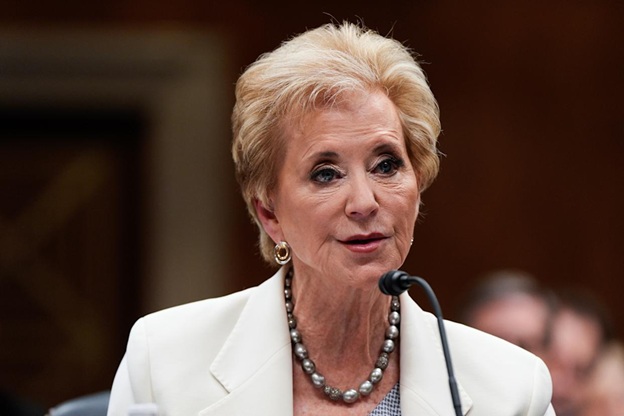
 Education Secretary Linda McMahon  (AP Photo/Julia Demaree Nikhinson, File)

Dear Commons Community,

Education Secretary Linda McMahon is expected to move quickly now that the Supreme Court has cleared the way for the Trump administration to continue unwinding her department.

The justices yesterday paused a lower court order that had halted nearly 1,400 layoffs and had called into question the legality of Trump’s plan to outsource the department’s operations to other agencies.

Now, Trump and McMahon are free to execute the layoffs and break up the department’s work among other federal agencies. Trump had campaigned on closing the department, and McMahon has said the department has one “final mission” to turn over its power to the states.  As reported by The Associated Press.

“The Federal Government has been running our Education System into the ground, but we are going to turn it all around by giving the Power back to the PEOPLE,” Trump said late Monday in a post on Truth Social. “Thank you to the United States Supreme Court!”

What happens with student loans, civil rights cases

Trump and McMahon have acknowledged only Congress has authority to close the Education Department fully, but both have suggested its core functions could be parceled out to different federal agencies.

Among the most important decisions is where to put management of federal student loans, a $1.6 trillion portfolio affecting nearly 43 million borrowers.

Trump in March suggested the Small Business Administration would take on federal student loans, but a June court filing indicated the Treasury Department is expected to take over the work. The Education Department said it had been negotiating a contract with Treasury but paused discussions when the court intervened. That work is now expected to proceed in coming days.

Under a separate arrangement, nine Education Department workers already have been detailed to Treasury, according to a court filing.

The department had also recently struck a deal to outsource the management of several grant programs for workforce training and adult education to the Department of Labor. The Education Department agreed to send $2.6 billion to Labor to oversee grants, which are distributed to states to be passed down to schools and colleges.

Combining workforce training programs at Education and Labor would “provide a coordinated federal education and workforce system,” according to the agreement.

Additional agreements are expected to follow with other agencies. At her Senate confirmation hearing, McMahon suggested that enforcement of the Individuals with Disabilities Education Act could be handled by the Department of Health and Human Services. Civil rights work could be managed by the Justice Department, she said.

Democracy Forward, which represents plaintiffs in the lawsuit, said it will pursue “every legal option” to fight for children. The group’s federal court case is proceeding, but the Supreme Court’s emergency decision means the Education Department is allowed to downsize in the meantime.

“No court in the nation — not even the Supreme Court — has found that what the administration is doing is lawful,” said Skye Perryman, president and CEO of the group, in a statement.

Laying off staff

Trump campaigned on a promise to close the agency, and in March ordered it to be wound down “to the maximum extent appropriate and permitted by law.” McMahon had already started a dramatic downsizing, laying off about 1,400 workers.

Education Department employees targeted by the layoffs have been on paid leave since March, according to a union that represents some of the agency’s staff. The lower court order had prevented the department from fully terminating them, though none had been allowed to return to work, according to the American Federation of Government Employees Local 252. Without the lower court order, the workers would have been terminated in early June.

The absence of those staffers already had caused problems in the office that handles student loans, said Melanie Storey, president and CEO of the National Association of Student Financial Aid Administrators. College financial aid staffers reported delays and breakdowns in federal systems — such as an hours-long outage on StudentAid.gov the day after departmental layoffs. Communication with the Education Department eroded, Storey said.

“It is concerning that the Court is allowing the Trump administration to continue with its planned reduction in force, given what we know about the early impact of those cuts on delivering much-needed financial assistance to students seeking a postsecondary education,” Storey said.

Gutting the Education Department will hinder the government’s ability to enforce civil rights laws, especially for girls, students with disabilities, LGBTQ+ students and students of color, said Gaylynn Burroughs, vice president at the National Women’s Law Center. Laid-off staff in the Office of Civil Rights were handling thousands of cases.

“Without enough staff and resources, students will face more barriers to educational opportunity and have fewer places to turn to when their rights are violated,” Burroughs said in a statement. “This is part of a coordinated plan by the Trump administration to dismantle the federal government and roll back hard-won civil rights protections.”

Tony

Obama’s gives blunt message for Democrats: ‘Toughen up’

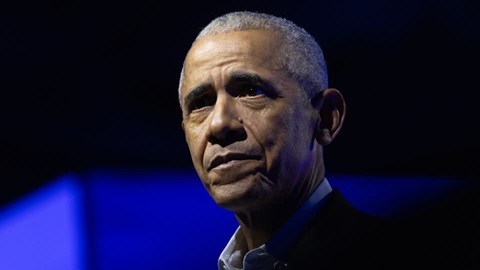
Scott Olson/Getty Images

Dear Commons Community,

Former President Barack Obama issued a call to action for Democrats at a fundraiser in New Jersey on Friday evening, urging those frustrated by the state of the country under Trump to “stand up for the things that you think are right.”

“I think it’s going to require a little bit less navel-gazing and a little less whining and being in fetal positions. And it’s going to require Democrats to just toughen up,” Obama said at the fundraiser, according to excerpts of his remarks exclusively obtained by CNN.

“You know, don’t tell me you’re a Democrat, but you’re kind of disappointed right now, so you’re not doing anything. No, now is exactly the time that you get in there and do something,” he said. “Don’t say that you care deeply about free speech and then you’re quiet. No, you stand up for free speech when it’s hard. When somebody says something that you don’t like, but you still say, ‘You know what, that person has the right to speak.’ … What’s needed now is courage.”

Obama’s comments come as the Democratic Party searches for its path forward in the second Trump term and beyond. Many in the party’s base have called for a more forceful response from Democratic leaders at a time when the party is locked out of power.

As Democrats debate who should lead the party, Obama encouraged them to channel their energy into the governor’s races in New Jersey and Virginia, saying the off-year elections could be “a big jumpstart for where we need to go.”

“Stop looking for the quick fix. Stop looking for the messiah. You have great candidates running races right now. Support those candidates,” Obama said, calling out the New Jersey and Virginia elections, according to the excerpts of his remarks.

“Make sure that the DNC has what it needs to compete in what will be a more data-driven, more social media-driven cycle, which will cost some money and expertise and time,” he continued.

Obama spoke at a private fundraiser hosted by New Jersey Gov. Phil Murphy and his wife, Tammy Murphy, at their home in Red Bank, New Jersey. The intimate dinner drew in $2.5 million through in-person and online donations for the Democratic National Committee, a source familiar with the event said.

A portion of the haul will be allocated to Democratic efforts in the governor’s race in New Jersey. The Democratic nominee, Rep. Mikie Sherrill, and and DNC Chair Ken Martin were on hand for the event.

Obama described Sherrill and former Rep. Abigail Spanberger, the Democratic nominee for governor in Virginia, as “powerful spokespersons for a pragmatic, commonsense desire to help people and who both have remarkable track records of service.”

“The most important thing you can do right now is to help the team, our candidate to win,” he said. “And we’ve got to start building up our coffers in the DNC.”

Obama also argued that Democrats need to focus on how to “deliver for people,” acknowledging the different views within the party about how best to do that.

“There’s been, I gather, some argument between the left of the party and people who are promoting the quote-unquote abundance agenda. Listen, those things are not contradictory. You want to deliver for people and make their lives better? You got to figure out how to do it,” he said.

“I don’t care how much you love working people. They can’t afford a house because all the rules in your state make it prohibitive to build. And zoning prevents multifamily structures because of NIMBY,” he said, referring to “not in my backyard” views. “I don’t want to know your ideology, because you can’t build anything. It does not matter.”

Obama has spoken selectively since Trump’s return to power in January. He has criticized the president’s tariff policy and warned the White House was infringing on Americans’ rights. Last month, Obama warned the country was “dangerously close” to a more autocratic government.

At the fundraiser on Friday, the former president said he has not been “surprised by what Trump’s done” or that “there are no more guardrails within the Republican Party.” He repeated his calls for institutions, including law firms and universities, to push back on intimidation efforts by the Trump administration.

The Democrats desperately need someone who will evolve to be its national leader.  Right now, they might do well in local elections in 2026 but I do not see who will lead in 2028.

Tony

David Bloomfield on “Zohran Mamdani and education: He needs to fill in the blanks.”

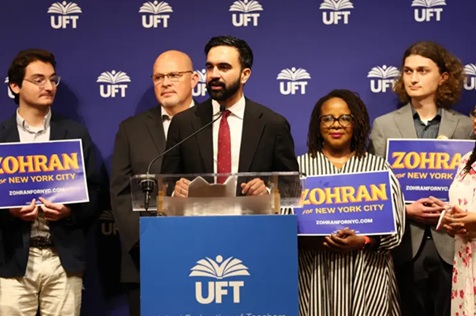
Photo by Michael M. Santiago/Getty Image

Dear Commons Community,

My colleague, David Bloomfield, had  a featured article in yesterday’s New York Daily News entitled, “Zohran Mamdani and education: He needs to fill in the blanks.” Bloomfield raises several key issues on New York City’s public education system especially as related to where Mamdani stands on mayoral control. 

The entire article is below.  It is important reading for anyone interested in NYC public schools.

Tony

———————————————————–

The New York Daily News

Zohran Mamdani and education: He needs to fill in the blanks.”

By David Bloomfield

July 13, 2025

While the other major candidates for mayor are on record favoring the current system of mayoral control of schools, Democratic nominee Zohran Mamdani is in opposition. He needs to clarify what this means.

Mamdani has a thin record on public education. He attended private school through eighth grade, then the elite Bronx High School of Science before graduating from a private college. He doesn’t sit on the Assembly’s Education Committee, a favored post among elected officials because of its importance and high visibility. Direct involvement with schools in his Queens district appears scant. He didn’t take part in the brief teachers union initiative for Democratic primary candidates to work a day in a city public school.

Most importantly, pre-K through 12 education hardly figures in his list of campaign priorities: a rent freeze, free buses, government-owned grocery stores, and community safety.

The closest he comes to addressing education on his Zohran for NYC homepage is an on-brand promise of free child care. Only by drilling down three levels is there a generic schools position, hardly distinguishable from other candidates’, that “Zohran will ensure our public schools are fully funded with equally distributed resources, strong after-school programs, mental health counselors and nurses, compliant and effective class sizes, and integrated student bodies.”

So what are we to make of Mamdani’s stance on public education which accounts for one third of the city’s budget and its largest single expenditure, responsible for educating almost a million students?

He has been all but silent on the needs of low-income students, those with home insecurity, students with disabilities, and multilingual learners. How will he address the state’s new cell phone ban, the Supreme Court’s allowance of parent opt-outs from religiously objectionable curriculum, or the massive and myriad funding holes created by federal budget cuts to instruction, school meals, and health care?

These are not matters to be wished away by his single creative education proposal: ending mayoral control of the schools.

It’s this dramatic idea that distinguishes Mamdani from his primary and general election opponents so it’s worth gaining a better understanding of what he means when he promises “an end to mayoral control and envisions a system instead in which parents, students, educators and administrators work together to create the school environments in which students and families will best thrive — strengthening co-governance through the PEP, SLTs, DLTs, and CECs in particular.”

His premise ignores an important fact. Like many of his other more ballyhooed proposals, Mamdani is not the master of his fate on school governance. Mayoral control is a state law so it’s unlikely that major changes will be enacted unless the Legislature and governor so fear a Mamdani mayoralty that they change the law. Like it or not, on Inauguration Day the mayor will probably be responsible for New York’s public schools.

But Mamdani may not need statutory change to enact his vision. I don’t take his proposal as seeking to end the mayor’s role in education, just an end to the current model of strong mayoral control. Key powers over the schools such as city budget allocations and collective bargaining exist under the City Charter, not the mayoral control law.

What he seems to be suggesting is stepping away from educational policymaking, a role previously embraced by mayoral control era leaders who became closely identified with their school initiatives: Mike Bloomberg (closing large schools and opening smaller ones), Bill de Blasio (pre-K), and Eric Adams (reading instruction). Perhaps, somewhat ironically, ending strong mayoral control may become Mamdani’s chief educational accomplishment.

Mamdanian co-governance might take different forms. It could mean nothing — the bodies his website mentions as co-governing partners already exist and one can imagine him appropriating current practices of consultation with those largely toothless bodies under a banner of co-governance.

But the exciting news is that it could mean something. School-based management, devolving decision-making to principals, teachers, and parents, is an old saw in the leadership toolbox. Even Bloomberg tried it but his penchant for micro-managing through quantitative measures and punitive accountability created top-down priorities tying the hands of all but the most forceful principals.

Key to the Mamdanian vision would be a system based on quasi-independent principals (the school system has 1,700!), committed and able to lead collaboratively with unionized school staff and often contentious, always changing parent bodies. A cohort of like-minded community school district superintendents and other senior supervisors would support principals while largely stepping aside from directing their actions even when they disagree with specific school decisions.

An Achilles heel of co-governance is that even those favoring the practice in theory can become its opponents if they don’t get their way. There will be pressure on Mamdani or his chosen chancellor to be the chief decider.

But the system is sabotaged if leadership is prone to overruling subordinates, pressured by appeals supported by advocacy groups, elected officials or the press. When these protests occur, how would a Mayor Mamdani respond if a school or district opposed curriculum or practices that excluded members and allies of the LBGTQ community? Would legitimate policy concerns ignore principles of co-governance and, if so, what becomes of his collaborative model? Put another way, wouldn’t that be mayoral control?

Another series of questions to address if the mayor steps aside from active governance is who would then be in charge? Would Mamdani still exercise unilateral appointment of the chancellor? This would hardly be an act of co-governance but what process would be installed in its place?

Similarly, the Panel for Education Policy (PEP), the city’s Board of Education, currently has a built-in majority of mayoral appointees. Would Mamdani open up these positions to some he disagrees with? Or replace the appointment process entirely? With what? And who would appoint community school district (CSD) superintendents or run community school board elections?

And while we’re at it, who would elect those boards since, with greater powers, the current structure of PEP appointments and low-turnout, parent-only CSD elections may not survive one-person-one vote challenges. These are public schools: taxation without representation by all regularly eligible voters is anathema to our founding principles.

Ultimately, we have a school system with operational demands of huge proportions and complexity affecting the multiplicity of Mamdani’s co-governors.

There are school meals to be planned, prepared, and delivered; school buses to run safely and on time; specially licensed and unlicensed personnel to be hired, fired, and paid; research for new curricula and teaching improvement; myriad laws to be followed and monitored; controversies to be addressed in and out of court; student enrollments matched to school capacities and attendance zones.

There are also aging buildings requiring cleaning and maintenance, along with new buildings to be planned and built; safety personnel trained and ready to keep order; implementation of absenteeism and student discipline protocols; allocating school funds from a tangle of designated federal, state, and local sources; school calendars and snow days to be declared; new technologies evaluated and adopted.

And all of this and more tied to the city’s interwoven threads of diversity of geography, languages, specialized student needs, and political interests.

Co-governance is a great concept to campaign on. Keeping the schools running and making them more effective in an era of dwindling finances under any governance model will be the challenge. The open question is what will Mamdani do?

Bloomfield is professor of education leadership, law, and policy at Brooklyn College and The CUNY Graduate Center.