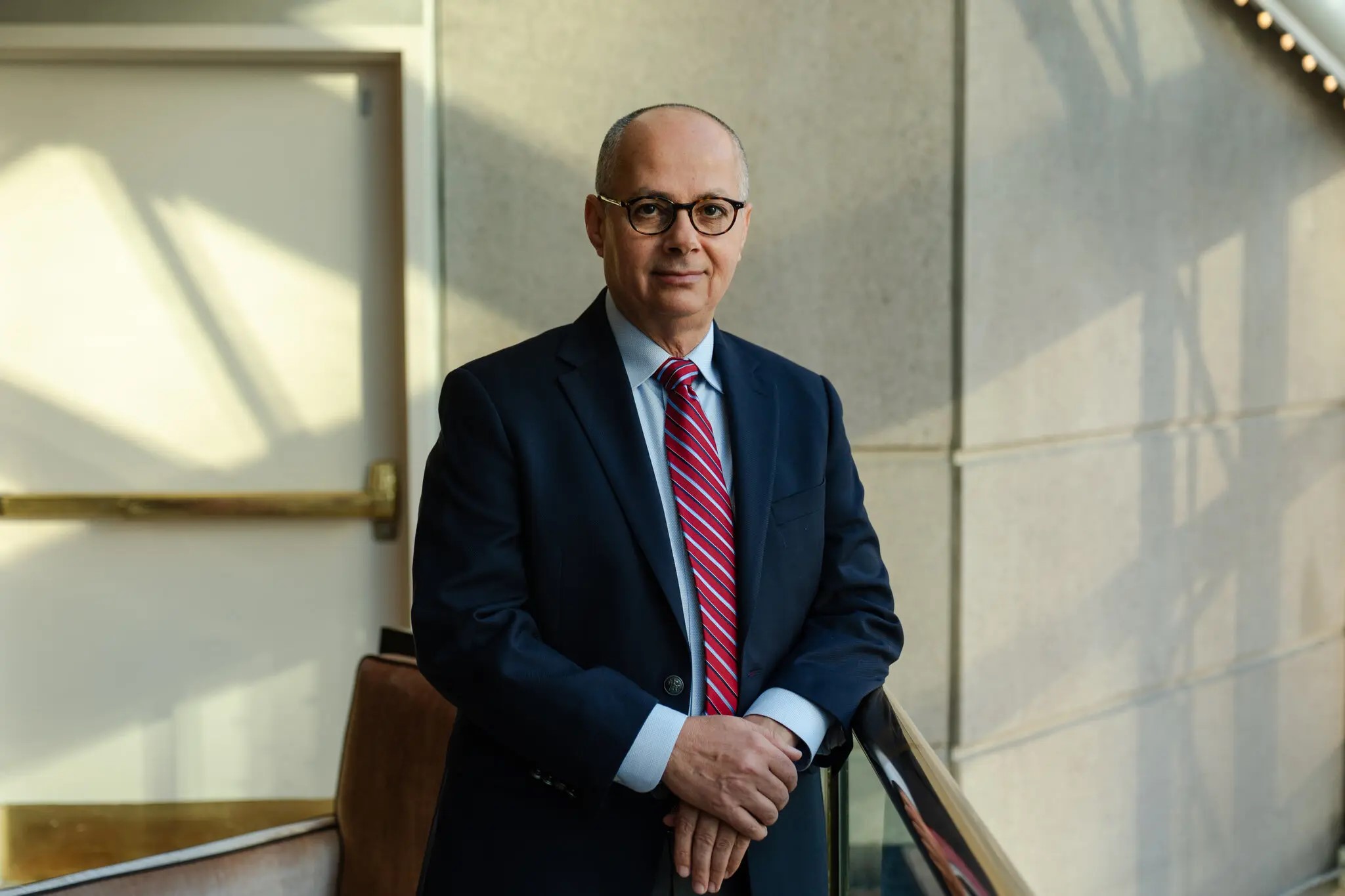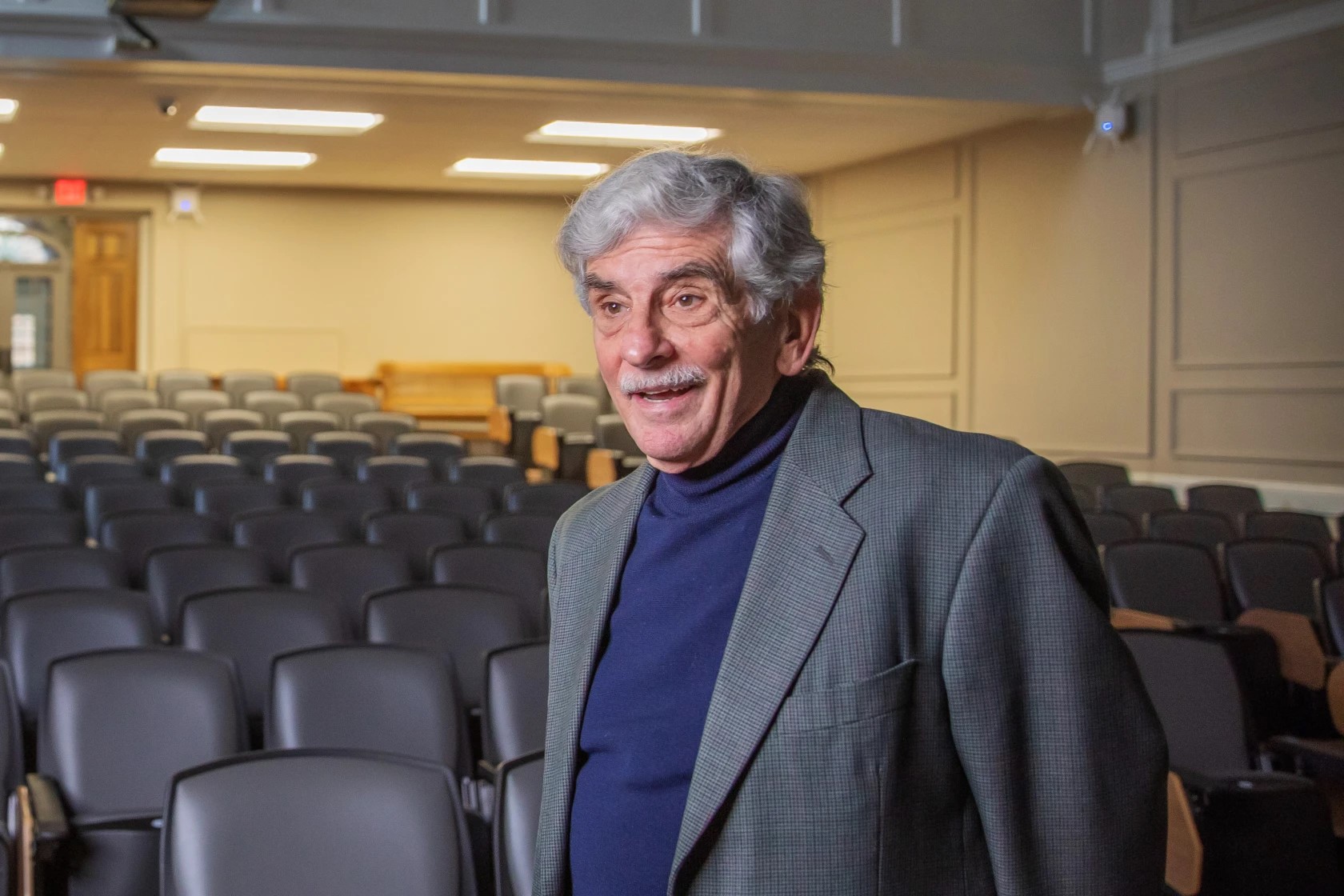
John R. Thelin, a professor emeritus at the U. of Kentucky. Eric Sanders, University of Kentucky
Dear Commons Community,
John R. Thelin’s A History of American Higher Education has for two decades served as essential reading for those who want to understand the sector’s evolution, twists, and turns. A fourth edition that extends into the 2020s is due out next month from the Johns Hopkins University Press.
The Chronicle of Higher Education conducted an interview with Thelin to discuss the state of American colleges and universities. Below is the entire interview.
Tony
Why a new edition, and why now?
If you go back to February or March of 2020, with the start of Covid, a number of things coagulated that suggested the recent past and the present are a very important and interesting time. There’s always a tendency to overestimate the present. But the events of the last five, and maybe 10, years really are significant. They warrant some thoughtful attention.
What’s particularly notable to you about higher ed’s recent history?
What surprises me is the erosion. Not only the financial decline, but more importantly a lack of emotional and spiritual support for what Clark Kerr had introduced around the early ’60s: the prestigious American research university, truly the envy of the world, accommodating undergraduate and advanced graduate education, the combination of federal research and private foundations.
If there’s one image, it was the letting go of the federal civil-service scientists — marching them out of their offices, carrying shoeboxes full of things, this kind of public humiliation. Top-level civil-service personnel being let go ties directly to the role of the research universities in this complex university-federal-state research partnership. I think we’re going to see repercussions for a long, long time.
Let’s go back to higher ed’s early days in this country. It’s striking how many struggles and reinventions your book documents for America’s colleges since the colonial period.
In the early decades and centuries, even for the prestigious institutions, there really has been something of a year-by-year existence. It’s really not until after World War II, and really not until the ’60s and ’70s, that federal money is substantial in the annual operating budgets.
Look at what they called the “new depression” in higher education — that was the term in the early ’70s. It was just fascinating how many powerful, prestigious institutions were financially at risk.
We inherit, in recent years, the interlocking fabric of the sectors — federal, state, institutions both private and public — intertwined in what has been a mutually beneficial way. That is why I think the unraveling is all the more painful and surprising.
Might today’s college leaders take any lessons from those of past eras?
The other day, President Trump made an aside that the one president to whom he did not wish to be compared was Herbert Hoover. The irony is, Hoover is one of the most underappreciated figures in American history. If you look at higher education, the greatness of Stanford University largely rests with his business background, his philanthropy, his very classic conservative values, and his entrepreneurial values.
He, more than anyone, galvanized Stanford into transforming itself from a really pretty-sleepy Northern California resort. This strategy was for Stanford to seek out alliances in either the private or commercial sector. Silicon Valley, if you go back 50 or 60 years, their major product was fruit. There was very little industry. And so there was an example of a private university using something of an intelligent commercial model.
Now let me make one more comment. A president of several universities, and he was also a professor of higher education, Robert Birnbaum, wrote this book called Management Fads in Higher Education. What he would see is that higher-education advocates, the board of trustees, or sometimes the president, would borrow, superficially, some practice or concept from business and belatedly transfer it to the university. By and large, what he said is that transplant was too late, and they didn’t really understand it, and they also didn’t understand the organizational culture of the university, of why it would and would not work.
Colleges arguably borrow business fads after business is done with them.
What’s the failure rate of new businesses?
Colleges and universities — regard them as stodgy, tradition-bound, and everything, but it’s big news when one fails or closes. There’s an endurance and resilience that I think is sometimes underappreciated. Universities need to learn and adjust, but I wouldn’t necessarily embrace the slogans from the business sector.
We often hear from faculty members and college leaders who feel besieged today.
I finished my Ph.D. in 1973, but in 1972 the bottom dropped out of the academic job market. It was so bad that if a university advertised a tenure-track position in something like the social sciences or history, they would probably get 300 applicants, of which 280 were well-qualified.
We used to have contests among unemployed graduate students: Who could get the best rejection letters? I quit applying for faculty positions. I applied for president and provost, and lo and behold, instead of postcards with nasty notes, I’d get letterhead with embossed seals on it.
On a serious note, the most important change in the academic profession is the move toward reliance on adjuncts. In many ways, arguments over academic freedom or tenure are increasingly moot, because instructional faculty and researchers, they’re not on the tenure track. They’re expendable.
If someone starting undergraduate studies asked, “Should I consider becoming a professor?” I, in good conscience, would not encourage them. And that rips out my heart to say. I just don’t see, in most fields, the prospect of a realistic professional and personal life — teaching, with some writing and research. It just seems increasingly unobtainable. I hope I’m wrong.
Your story from the ’70s adds levity to a serious topic, but maybe it can also be a reminder that the good old days weren’t always so good.
The difference was in some earlier decades, things were in the formative stage. It’s different to be at a college or university when things are starting to build and they’re uncertain. Being in an era of downslide is just a very sad situation.
We’re focusing on professors, but my take is that all learned professions, not just faculty, in recent years have been reduced in terms of their rights and autonomy. Try being an M.D. today. That’s got to be one of the most reductionist, bureaucratically controlled positions. I’m sure that the level of frustration and unfulfillment is increasing. I think there’s something in the fabric of professional life in the United States that is cutting across many professions.
What do you think about higher ed and the semiquincentennial?
This coincides with the founding of Phi Beta Kappa. And yes indeed, colleges and universities in what was America and then the United States really have been a distinctive and a very American institution, with their own formal and informal culture and organization. So yes, they should be part of it.
What I don’t know is, What is the legacy from the celebration? Where do we go from here?
The institutions that got hauled before the congressional hearings, like Harvard, Columbia, Penn, MIT, or whoever — those institutions are historic; they had strong legal protections, they had a lot of autonomy, and boy, they took it on the chin. I’m still amazed at that. I thought our charters and structures and culture were going to give a little bit better protection.