The Unraveling of ‘a Very American Institution’ – Interview with John Thelin

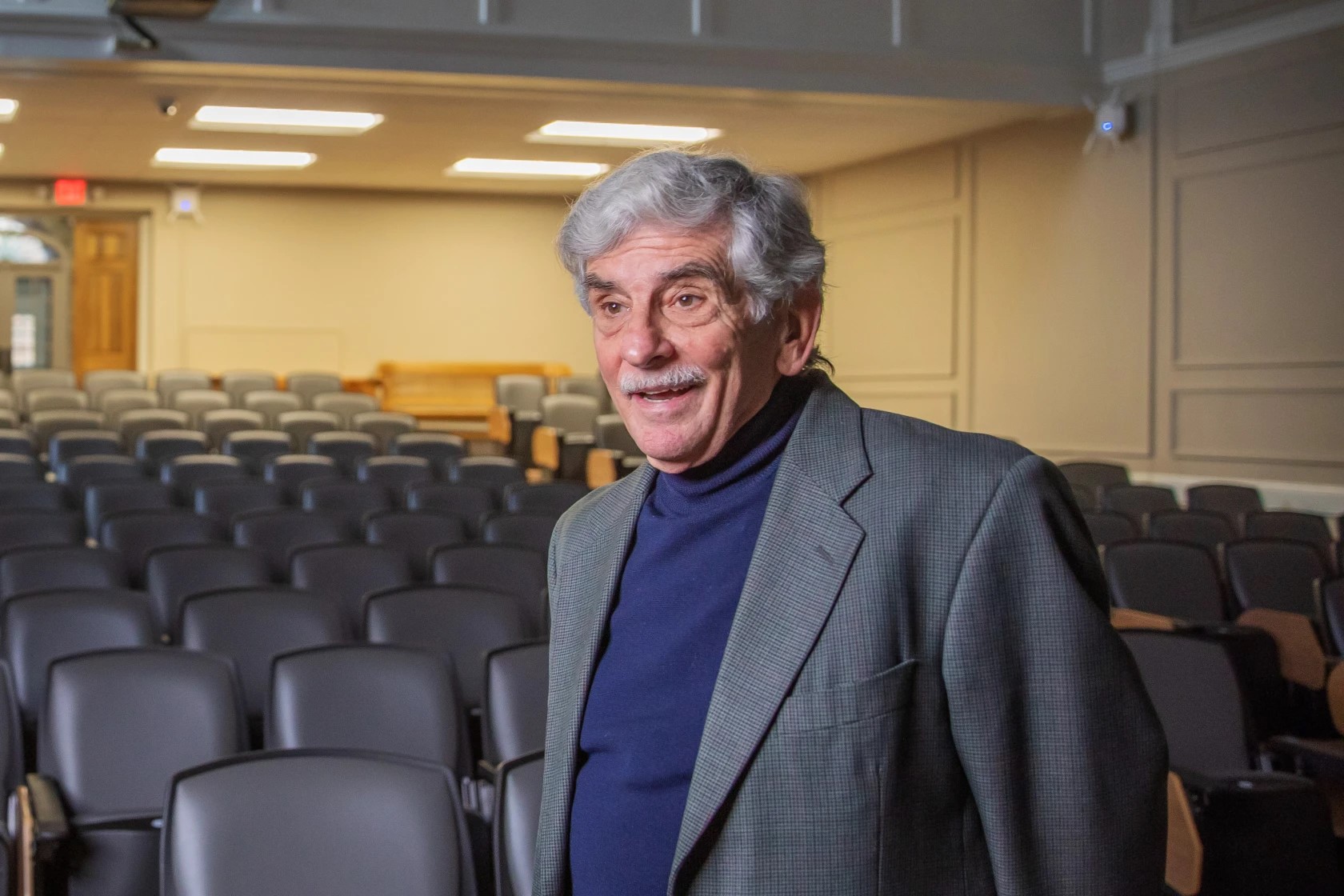
John R. Thelin, a professor emeritus at the U. of Kentucky.  Eric Sanders, University of Kentucky

Dear Commons Community,

John R. Thelin’s A History of American Higher Education has for two decades served as essential reading for those who want to understand the sector’s evolution, twists, and turns. A fourth edition that extends into the 2020s is due out next month from the Johns Hopkins University Press.

The Chronicle of Higher Education conducted an interview with Thelin to discuss the state of American colleges and universities.   Below is the entire interview. 

Tony

Why a new edition, and why now?

If you go back to February or March of 2020, with the start of Covid, a number of things coagulated that suggested the recent past and the present are a very important and interesting time. There’s always a tendency to overestimate the present. But the events of the last five, and maybe 10, years really are significant. They warrant some thoughtful attention.

What’s particularly notable to you about higher ed’s recent history?

What surprises me is the erosion. Not only the financial decline, but more importantly a lack of emotional and spiritual support for what Clark Kerr had introduced around the early ’60s: the prestigious American research university, truly the envy of the world, accommodating undergraduate and advanced graduate education, the combination of federal research and private foundations.

If there’s one image, it was the letting go of the federal civil-service scientists — marching them out of their offices, carrying shoeboxes full of things, this kind of public humiliation. Top-level civil-service personnel being let go ties directly to the role of the research universities in this complex university-federal-state research partnership. I think we’re going to see repercussions for a long, long time.

Let’s go back to higher ed’s early days in this country. It’s striking how many struggles and reinventions your book documents for America’s colleges since the colonial period.

In the early decades and centuries, even for the prestigious institutions, there really has been something of a year-by-year existence. It’s really not until after World War II, and really not until the ’60s and ’70s, that federal money is substantial in the annual operating budgets.

Look at what they called the “new depression” in higher education — that was the term in the early ’70s. It was just fascinating how many powerful, prestigious institutions were financially at risk.

We inherit, in recent years, the interlocking fabric of the sectors — federal, state, institutions both private and public — intertwined in what has been a mutually beneficial way. That is why I think the unraveling is all the more painful and surprising.

Might today’s college leaders take any lessons from those of past eras?

The other day, President Trump made an aside that the one president to whom he did not wish to be compared was Herbert Hoover. The irony is, Hoover is one of the most underappreciated figures in American history. If you look at higher education, the greatness of Stanford University largely rests with his business background, his philanthropy, his very classic conservative values, and his entrepreneurial values.

He, more than anyone, galvanized Stanford into transforming itself from a really pretty-sleepy Northern California resort. This strategy was for Stanford to seek out alliances in either the private or commercial sector. Silicon Valley, if you go back 50 or 60 years, their major product was fruit. There was very little industry. And so there was an example of a private university using something of an intelligent commercial model.

Now let me make one more comment. A president of several universities, and he was also a professor of higher education, Robert Birnbaum, wrote this book called Management Fads in Higher Education. What he would see is that higher-education advocates, the board of trustees, or sometimes the president, would borrow, superficially, some practice or concept from business and belatedly transfer it to the university. By and large, what he said is that transplant was too late, and they didn’t really understand it, and they also didn’t understand the organizational culture of the university, of why it would and would not work.

Colleges arguably borrow business fads after business is done with them.

What’s the failure rate of new businesses?

Colleges and universities — regard them as stodgy, tradition-bound, and everything, but it’s big news when one fails or closes. There’s an endurance and resilience that I think is sometimes underappreciated. Universities need to learn and adjust, but I wouldn’t necessarily embrace the slogans from the business sector.

We often hear from faculty members and college leaders who feel besieged today.

I finished my Ph.D. in 1973, but in 1972 the bottom dropped out of the academic job market. It was so bad that if a university advertised a tenure-track position in something like the social sciences or history, they would probably get 300 applicants, of which 280 were well-qualified.

We used to have contests among unemployed graduate students: Who could get the best rejection letters? I quit applying for faculty positions. I applied for president and provost, and lo and behold, instead of postcards with nasty notes, I’d get letterhead with embossed seals on it.

On a serious note, the most important change in the academic profession is the move toward reliance on adjuncts. In many ways, arguments over academic freedom or tenure are increasingly moot, because instructional faculty and researchers, they’re not on the tenure track. They’re expendable.

If someone starting undergraduate studies asked, “Should I consider becoming a professor?” I, in good conscience, would not encourage them. And that rips out my heart to say. I just don’t see, in most fields, the prospect of a realistic professional and personal life — teaching, with some writing and research. It just seems increasingly unobtainable. I hope I’m wrong.

Your story from the 70s adds levity to a serious topic, but maybe it can also be a reminder that the good old days weren’t always so good.

The difference was in some earlier decades, things were in the formative stage. It’s different to be at a college or university when things are starting to build and they’re uncertain. Being in an era of downslide is just a very sad situation.

We’re focusing on professors, but my take is that all learned professions, not just faculty, in recent years have been reduced in terms of their rights and autonomy. Try being an M.D. today. That’s got to be one of the most reductionist, bureaucratically controlled positions. I’m sure that the level of frustration and unfulfillment is increasing. I think there’s something in the fabric of professional life in the United States that is cutting across many professions.

What do you think about higher ed and the semiquincentennial?

This coincides with the founding of Phi Beta Kappa. And yes indeed, colleges and universities in what was America and then the United States really have been a distinctive and a very American institution, with their own formal and informal culture and organization. So yes, they should be part of it.

What I don’t know is, What is the legacy from the celebration? Where do we go from here?

The institutions that got hauled before the congressional hearings, like Harvard, Columbia, Penn, MIT, or whoever — those institutions are historic; they had strong legal protections, they had a lot of autonomy, and boy, they took it on the chin. I’m still amazed at that. I thought our charters and structures and culture were going to give a little bit better protection.
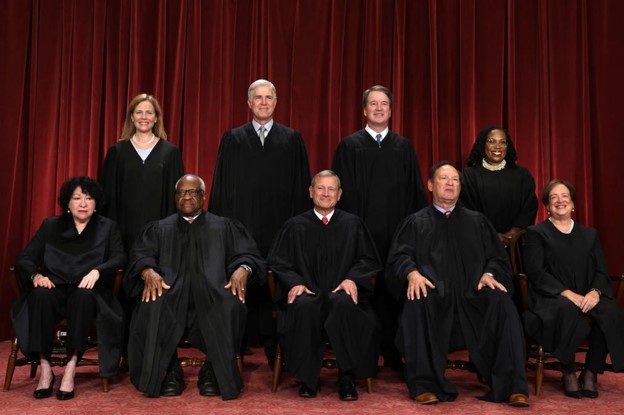
 

New Poll: How Americans feel about the Justices on the US Supreme Court

(Photo by Alex Wong/Getty Images)

Dear Commons Community,

The US Supreme Court has been especially busy this past year and has drawn the ire of conservatives and liberals over its rulings.  A new poll by the The Economist provides insights into how the American people feel about the Court and individual justices.  As reported by Newsweek.

The American public’s perception of several conservative Supreme Court justices has turned more negative over the past year, a new national poll shows, as the High Court’s overall approval rating is underwater.

The survey by YouGov/The Economist found that the net favorability ratings of Justices Clarence Thomas, Amy Coney Barrett and Brett Kavanaugh all soured compared to a similar poll conducted a year earlier, reflecting a shift in Americans’ opinions of the court.

Among the three, Barrett saw the biggest drop, with an uptick in “very unfavorable” ratings year over year. Thomas and Kavanaugh also posted deficits, though Kavanaugh’s is a swing of -2 year over year, alongside Chief Justice John Roberts. The changes come amid a decline in the share of Americans expressing approval for the Supreme Court overall, according to the survey.

Amid the deterioration in favorability for nearly all the conservative justices, the court continues facing significant skepticism. Public opinion remains sharply divided along partisan lines, with Democrats viewing the court’s conservative justices far more negatively than Republicans, who continue to rate them favorably.

What the Poll Shows

According to the poll released on Tuesday, the Supreme Court’s approval rating is 36 percent compared to a 50 percent disapproval rating. The poll also shows that 9 percent say it is “too liberal” versus 44 percent find it “too conservative.”

The poll comes on the heels of several high-profile decisions surrounding birthright citizenship and presidential power. When asked if the High Court’s rulings have given the president too much, too little or about the right amount of power, 45 percent said too much, 29 percent said about the right amount and 9 percent said too little. The survey notes that 17 percent were not sure.

The poll surveyed 1,603 U.S. adults from July 3 to July 6 and has a 3.3 percent margin of error.

 Justices’ Favorability

Roberts, appointed by former President George W. Bush, saw favorability in the new poll at 25 percent compared to a 36 percent unfavorable rating. In a poll taken in July 2025, the chief justice’s favorability was 27 percent compared to an unfavorable mark of 36 percent. His net approval this year is -11 percent compared to a net approval last year of -9 percent.

Kavanaugh’s favorability this year is 27 percent compared to an unfavorable rating of 37 percent. Last year, the appointee of President Donald Trump had a favorability mark of 31 percent compared to a 39 percent unfavorable score. His net approval this year is -10 percent compared to -8 last year.

Justice Neil Gorsuch, also a Trump appointee, landed a 23 percent favorability rating this year versus a 30 percent unfavorable rating. Last year, his favorability was 25 percent compared to 33 percent unfavorable. His net favorability this year is -7 percent versus -8 last year, marking the only conservative justice with an improving net favorability, according to the polls.

Justice Elena Kagan, appointed by former President Barack Obama, has a 30 percent favorable rating this year compared to a 24 percent unfavorable rating, making her net favorability 6 percent. Last year, she had a favorable rating of 26 percent versus an unfavorable mark of 30 percent, and, according to the poll, her net favorability was -3 percent.

Justice Sonia Sotomayor, also appointed by Obama, has a 37 percent favorability rating compared to a 26 percent unfavorable rating this year, with a net favorability of 11 percent. Last year, Sotomayor’s favorability rating was 36 percent versus an unfavorable mark of 31 percent. According to the poll, her net favorability last year was 4 percent.

Justice Samuel Alito’s favorability rating this year is 25 percent compared to a 32 percent unfavorable rating, making his net favorability rating -7 percent. Last year, Alito, also appointed by George W. Bush, saw his favorability rating hit 28 percent versus a 33 percent unfavorable rating. According to the poll, his net approval last year was -6 percent.

Barrett’s favorability rating, according to the July 2026 poll, is 23 percent versus a 38 percent unfavorable rating. Last year, the Trump appointee’s favorability was 28 percent compared to an unfavorable rating of 37 percent. Her net favorability this year is -15 percent versus last year’s -9 percent.

Thomas’ favorability this year is 29 percent versus a 41 percent disapproval rating. Last year, his favorability was 31 percent versus a 39 percent unfavorable rating. The approval this year for the George H.W. Bush appointee is -12 percent compared to last year’s -9 percent, the poll shows.

Justice Ketanji Brown Jackson, appointed by former President Joe Biden, saw her favorability this year at 34 percent compared to a 26 percent unfavorable rating. Last year, her favorability was 33 percent versus a 31 percent unfavorable rating. Her net favorability this year is 8 percent compared to 2 percent last year.

Last year’s poll was conducted from June 30 to July 2, 2025, among 1,043 U.S. adults, with a 4.3 percent margin of error.

Analyst Says Barrett Has Upset Both Sides

Former Palm Beach County State Attorney Dave Aronberg told Newsweek that “The large drop in favorability isn’t tied to just one ruling or one President. It’s the cumulative weight of an activist Court that many Americans increasingly see as political. Overturning Roe v. Wade, dismantling the Voting Rights Act, and granting unprecedented presidential immunity have fundamentally disrupted public trust. Justice Barrett, meanwhile, has upset both sides of the aisle with her rulings, which is why her numbers are worse than the others.”

Tony


Graham Platner’s Democratic Support in Maine Evaporates After Sexual Assault Allegation

Graham Platner. Credit…Sophie Park for The New York Times

Dear Commons Community,

Graham Platner, the Democratic nominee for Senate from Maine, said he was taking time to “reflect” on his candidacy as his support eroded after a woman accused him of rape.

In a video posted on social media, Mr. Platner called the account “false” even as he acknowledged the threat it posed to his candidacy in a tight race that could determine control of the Senate in November.  As reported by The New York Times.

“Regardless of the inaccuracy of the reporting but mindful of the political reality it will inflict, we are taking the time to reflect on the best path forward,” he said.

It was not immediately clear whether Mr. Platner intended to continue his campaign against Senator Susan Collins, a Maine Republican. He has until July 13 to withdraw from the race, and if he does the state Democratic Party has until July 27 to replace him on the ticket, according to Maine state law. The leadership of the state party urged him to withdraw.

Both parties see Maine as key to the battle for control of the Senate, and prominent Democrats withdrew their endorsements of him after the allegations surfaced.

The Senate Democratic campaign arm, which had opposed Mr. Platner in the primary, called for him to quit the race. “Graham Platner needs to immediately withdraw as the Democratic nominee for Senate and allow Maine Democrats the opportunity to choose a new candidate who can defeat Susan Collins,” a statement from Senators Chuck Schumer and Kirsten Gillibrand of New York said. “The D.S.C.C. will not invest in the Maine Senate race if Platner remains on the ballot.”

Some of his key supporters called for him to drop out as well, including Senator Elizabeth Warren, who had championed his bid. “There can be no tolerance for sexual assault,” she said in a statement. “With so much at stake, the best path forward is for Graham Platner to step aside as the Democratic nominee and address these serious allegations outside this Senate race.”

Representative Ro Khanna, a California Democrat who had been another key backer, also withdrew his support. “These allegations are very serious and credible,” he said. “Graham Platner should drop out from the race. I am withdrawing my endorsement.”

There were some indications that Mr. Platner may be contemplating an exit.

He has not made a decision on whether to drop out, according to a person familiar with the campaign’s internal discussions, who added there was no guarantee he would drop out even as Democrats abandoned his campaign. “If he was to step down it would only be with a guarantee of being replaced by a candidate who he believes is true to the values and vision and policy agenda of the campaign that Maine voted for,” said the person, who was granted anonymity because they were not authorized to speak about the discussions publicly.

The accusation was made by Jenny Racicot, who said she dated Mr. Platner casually off and on between 2019 and 2021. She told The New York Times this spring about a 2021 incident in which she said he arrived at her house drunk after she had asked him not to come over. At the time, she declined to share further details of that encounter on the record, but she said she found his behavior “reckless” and “unsettling,” and cut off contact soon after that episode.

But in a new interview published in Politico on Monday, Ms. Racicot elaborated on her recollection of that night, saying Mr. Platner let himself into her home, climbed on top of her and kept grabbing her — even after she repeatedly told him to stop. He ignored her protests and followed her into the bedroom, where, she said, he had sex with her against her will.

“I had been telling him these words, like: ‘No, don’t,’” she told Politico.

“And, the look on his face and realizing what was happening, I just realized that, like, I am in a situation where there’s no consent here,” she said.

Later, on CNN, Jake Tapper asked Ms. Racicot: “Did Graham Platner rape you?”

She responded: “By definition, yes, absolutely.”

Ms. Racicot did not immediately respond to a request for comment.

Mr. Platner called the allegations “troubling, serious, and false,” in the direct-to-camera video.

“Any accusation of non-consensual behavior is categorically false,” he said.

His statement came shortly after he had postponed several campaign events.

Senator Collins, who is seen as one of the most vulnerable incumbent Republicans in the Senate, said in a statement that the “allegations are appalling.” But she added that “it is not up to me to choose the Democratic nominee for Senate.”

Several local and national elected officials withdrew their support of Mr. Platner on Monday.

State Senator Mattie Daughtry, a Democrat and the president of the Maine Senate, said in a statement that Mr. Platner should exit the race, describing the allegations against him over the last month as “serious” and saying that “sexual violence has absolutely no place in our society, and it cannot be tolerated from those seeking our highest positions of power.”

Senator Ruben Gallego, a Democrat of Arizona, said in a social media post that he was rescinding his endorsement of Mr. Platner, calling the allegations against him “troubling and deeply serious.”

And Donna Brazile, a former chair of the Democratic National Committee, suggested in a social media post that it was time for Mr. Platner to end his campaign. “Sure, take the rest of the day and night,” she wrote on X. “Tomorrow, we need a plan and Mr. Platner can step aside and focus on his family and well-being.”

One official who remained silent about the race on Monday was Senator Bernie Sanders of Vermont, a critical early supporter who appeared at campaign rallies with him. Mr. Sanders said nothing about Mr. Platner on social media, and aides did not immediately respond to messages seeking comment.

Platner needs to step aside!

Tony

The United States World Cup dream was crushed by Belgium last night!

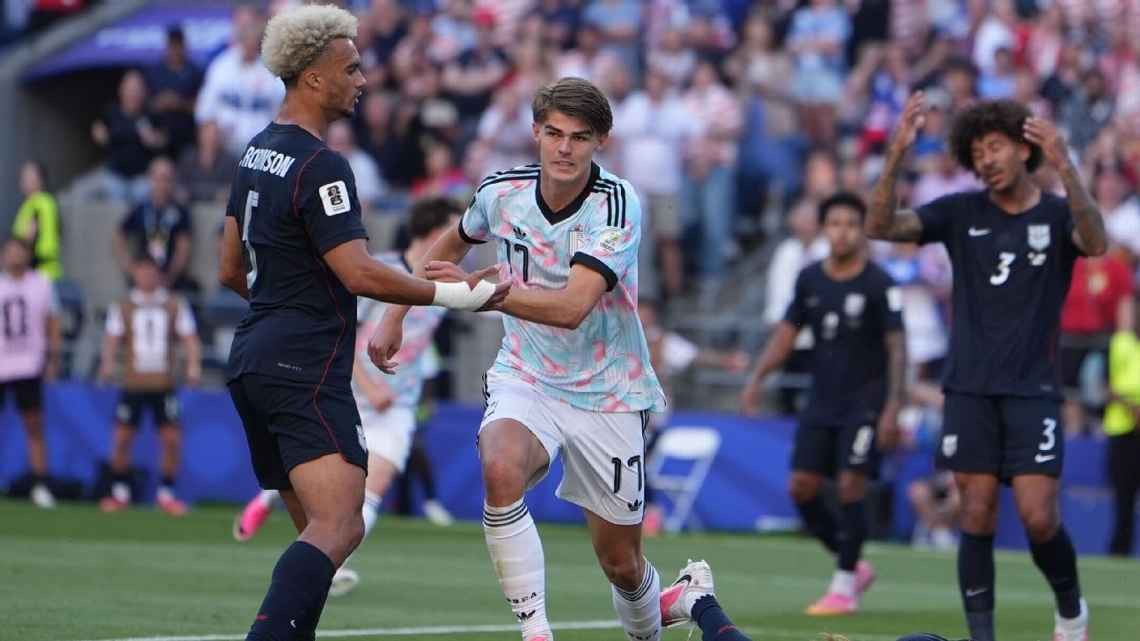
Charles De Ketelaere scored two goals in Belgium’s win over the United States. Ercin Erturk/Anadolu via Getty Images

Dear Commons Community,

The United States dream of advancing to the next round of the World Cup was crushed last night as Team Belgium destroyed the Americans 4-1. The United States was put in an impossible situation after Donald Trump interfered on Sunday with a referee’s call that reversed a suspension of Folario Balogun, the Americans’ top offensive player. It was clear to me that that the Belgians were motivated to win this game to spite Trump.  The United States Team would have been much better off to enter this game as valiant underdogs than as a team given preferential treatment by the FIFA leadership.

Regardless, I congratulate the Americans for giving us several weeks of fine soccer. I also congratulate the Belgians who played an outstanding game.

Below is further analysis of the game courtesy of ESPN.

Tony

 ——————————————————————————————————-

 Even with Folarin Balogun back up front, the United States men’s national team crashed out of the World Cup in the round of 16 again.

It was a meek ending to a monthlong surge for the U.S., as Belgium dominated the Americans — and silenced a once-raucous crowd at Lumen Field — in Monday’s 4-1 defeat.

Charles De Ketelaere scored twice for the Belgians, and Hans Vanaken took advantage of an ugly mistake by goalkeeper Matt Freese to finish off the U.S. Romelu Lukaku’s blasted shot from close range off another giveaway in stoppage time was vicious but academic.

It was the fourth time in the past five World Cups that the Americans exited at this stage; the only exception was in 2018, when they did not qualify.

Belgium also sent the U.S. home from the 2014 World Cup, but that contest, which went to extra time, felt much closer than this one.

“We were not the same team that during the tournament showed the quality,” U.S. coach Mauricio Pochettino told reporters. “Very bad day. Wasn’t our day in a collective and individual way. And we need to accept that sometimes this type of thing happens.

“But in a tournament like the World Cup, when that happens, you don’t have another chance.”

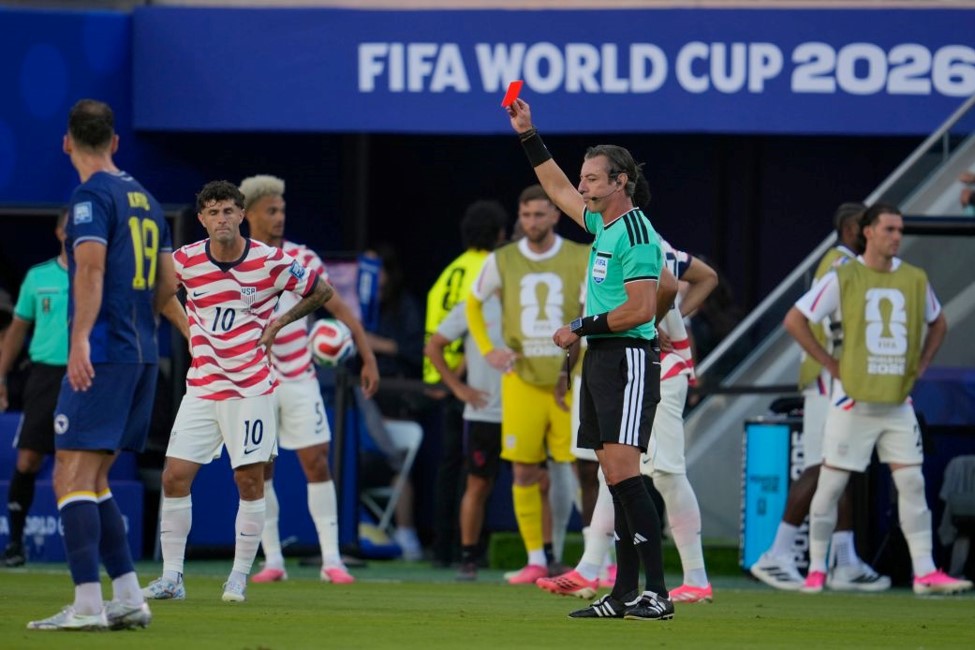
The U.S. was dazzling in the group stage and grinded out an impressive victory over Bosnia-Herzegovina in the round of 32, playing with 10 men for more than half an hour after the Americans’ top scorer, Balogun, was sent off. So, the U.S. players and their fans had high hopes of reaching just the second quarterfinal in program history.

Instead, the Americans unraveled Monday. Christian Pulisic was wholly ineffective, as he turned the ball over 11 times in the first half, more than anyone on the field. Sergiño Dest was such a liability on the right that Pochettino pulled him at halftime. Balogun, who scored three goals and forced a fourth via an own goal in the first four U.S. games, ran aimlessly for most of the match, never threatening in a meaningful way.

“Tonight was not a good performance probably overall,” midfielder Tyler Adams said. “It’s not what we look to achieve. There was a lot of things that we could have done better. I think when you concede goals that easily against the team of that quality and that caliber, it’s going to be difficult.

“We gave them good chances or even half chances and they finished them. It was just a little bit too easy today. So again, this was a moment to have the opportunity to advance and really try and do something special, but we fell short.”

Expectations, of course, were much higher, as the buildup to the match had been dominated by Balogun’s unusual situation.

President Donald Trump and other White House officials took credit for helping U.S. Soccer successfully make its case that FIFA should adjust the one-game suspension customarily served by anyone receiving a red card, and the discourse around that reality ran the gamut. Some felt it was justice appropriately served, while others worried about the precedent and the procedure.

The machinations of it all were complicated. Not surprisingly, the U.S. players were uninterested in the details and refused to cite the issue as a distraction following the final whistle Monday.

“I don’t think that noise or anything affected us by any means,” Adams said. “If anything, it probably uplifted us in a sense.”

Balogun received a massive cheer when he came onto the field for warmups, and after a full-throated singing of the national anthem that rang out throughout the stadium, it felt as if the U.S. should have been buzzing.

Yet for the first time in five matches, the Americans started slowly. Belgium dictated from the kickoff, and it fizzed its first dangerous cross almost immediately. Timothy Castagne forced Freese to full stretch with a blistering shot from distance inside a minute. The U.S. midfield looked stuck.

Belgium kept coming. Attacking from the left about nine minutes in, Leandro Trossard cut through to start a move, and the ball popped up in the air near the top of the area. Nicolas Raskin reacted quickest, jumping in front of Dest, and turned it perfectly back across goal for De Ketelaere, who stepped right between Tim Ream and Antonee Robinson to poke the pass home.

The stadium, so loud moments earlier, went silent, save for the sliver of Belgium fans. The U.S. had conceded the opening goal for the first time this tournament.

There also wasn’t much of an immediate response.

But after the hydration break, the U.S. put together a slight surge and was rewarded when Malik Tillman’s free kick from the top of the area took a wicked deflection off the Belgian wall. Tillman celebrated as only the second player in the past 60 years to score two free-kick goals in a World Cup. And however unlikely, the U.S. was level.

It didn’t last. Like, not even a minute. Just 52 seconds after the score was knotted, Belgium came forward again. The script was familiar:

Trossard broke down the left. Dest was stranded. The cross was perfect. And Ketelaere slipped in front of Robinson and over Ream to head it home as the U.S. was deflated again.

The second half did not offer much more. Gio Reyna came on for Dest, but there was little breakthrough. Any momentum the U.S. might have gathered was blunted by Freese’s woeful miscue.

After coming out of his area to trap a pass over the top, Freese hesitated in kicking it forward before his attempted pass deflected straight to Vanaken. The Belgian midfielder cooly shot it back toward goal from about 30 yards out, and Ream — despite trying desperately to bail out his goalkeeper — got his legs twisted up as the ball sailed past him.

Ream bent at the waist. Freese put his hands to his head. The Belgians celebrated as the crowd groaned. The U.S. — at its familiar exit — was on its way out again.


NEA Elects Princess Moss as its New President

Dear Commons Community,

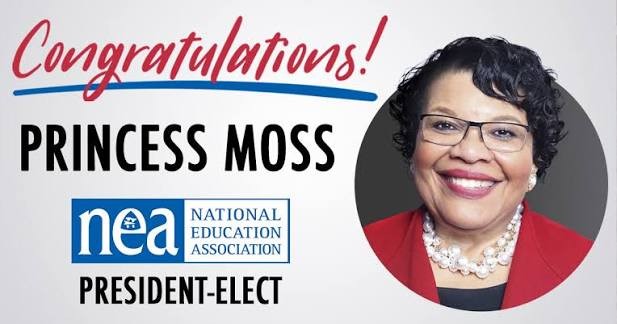
Princess Moss is the new president-elect of the National Education Association, and will take the reins of one of the most influential K-12 organizations in a time of rapid change in the education landscape.

Moss, 65, taught elementary music for 21 years in Louisa County, Virginia before joining the national union. She said her rural upbringing—both her parents drove school buses in Memphis, Va.—spurs her drive to improve equity and support for rural students.  As reported by Education Week.

“We are not only educators, not only organizers. We are advocates. We are the ones to know what our students need and we are willing to fight for all of them,” Moss said.

The nation’s largest teachers’ union, she said, “can be and must be the most powerful force in America.”

Moss will need to steer the union as it confronts big challenges. It faces a hostile administration in the White House; the rollout of a federal school choice program that the union contends could cut into school funding, as well as membership (since many private schools that could benefit are not unionized); and a teacher workforce whose demographics are rapidly changing.

A close election, by NEA standards

Moss, currently the union’s vice president, won the election at this year’s Representative Assembly with 50.3% of the vote of some 5,800 delegates, barely avoiding a run-off with Kate Dias, the president of the 40,000-member Connecticut Education Association. The relatively close contest is unusual in an organization where incumbents typically move up a slot in each electoral cycle.

This year’s race also included Sean Spiller of the 200,000-member New Jersey union and Tania Kappner, a English and history virtual education teacher in the Oakland, Calif. district.

“We have been on defense for too long. We have been defending funding, defending rights, defending the very existence of public education,” Moss said in a speech to delegates on July 4. “We must go on the offense. It’s time to move from resistance to renaissance.”

Moss has served as vice president throughout current NEA President Becky Pringle’s tenure. The union has worked to regain ground after sharp declines in membership following a perfect storm of the 2018 Janus Supreme Court ruling, the pandemic, and union restrictions in several states.

So far in 2026, NEA membership is up by 32,000 members from last year, amounting to more than 2.8 million active, retired, and student teachers, education support and higher education professionals.

In an earlier interview with Education Week Pringle said she was “very encouraged” that all presidential candidates stressed the need for national support for ongoing organizing, particularly by local unions. Moss, in her campaign speech before the vote, explicitly called for the NEA2.8 million members to actively support ongoing organizing for education and workforce issues.

“I feel very good that we will continue to grow and get better and change as it needs to adapt,” Pringle said.

We wish President-Elect Moss the best of luck!

Tony

Trump destroys the FIFA World Cup spirit by asking for a reversal of the Red Card call on Folarin Balogun

Referee Raphael Claus of Brazil shows the red card to United States’ Folarin Balogun (not in photo).

Dear Commons Community,

I have been watching the World Cup matches with great interest and enthusiasm for the past several weeks.  The games have been exciting and the international comradery among the players has been outstanding even while fiercely competing with one another.  The Red Card call on American soccer player, Folarin Balogun and his resulting suspension in future games, was unfortunate but I and millions of fans around the world were ready to move on and cheer again tonight in the match between the United States and Belgium.  And in stepped Donald Trump, who inserted himself into the Red Card controversy by asking the FIFA administration to reverse its suspension decision of Balogun, which it did yesterday.  Now most soccer fans will be rooting for Belgium because of Trump’s dumb interference.  Even if the United States wins tonight with Balogun playing, it will be seen as a tainted victory.

Thank you Trump for destroying the spirit of the games for the players and their fans.

Below is further analysis, courtesy of CNN.

Tony

——————————————-

For 24 days, the World Cup seemed to achieve a rare feat in America in 2026: It had almost nothing to do with Donald Trump.

But in an extraordinary twist following an appeal from the president, star US goal-scorer Folarin Balogun will play in the knockout clash with Belgium on Monday, despite being sent off in the previous match and earning a one-game ban.

“Thank you to FIFA for doing what was right, and reversing a great injustice! President DONALD J. TRUMP,” the president posted Sunday, taking a victory lap on Truth Social.

Balogun’s reprieve rocked global soccer, triggering fresh speculation about the cozy relationship between Trump and FIFA President Gianni Infantino.

Trump’s discussion about the suspension in a call to Infantino and FIFA’s ultimate decision lifted a controversy about soccer refereeing into an international incident surrounding the world’s most popular sporting showcase.

The subsequent drama raises concerns about political interference and the integrity of the tournament. It doesn’t necessarily matter whether Trump’s muscling into the issue was decisive. Just the impression that it was risks souring global perceptions of an event that had generated remarkably positive headlines.

Controversy is guaranteed at World Cup finals. Who could forget Diego Maradona’s “hand of God” goal for Argentina in 1986 or French star Zinedine Zidane’s 2006 World Cup final headbutt?

But there is no known precedent for a political leader pressuring FIFA about who can play in a game, let alone one that is so important to a host nation’s chances of advancing.

The hyperpartisan nature of soccer fandom means US supporters probably won’t care just how Balogun got to line up in Seattle on Monday.

But the Royal Belgian Football Federation said pregame machinations contravened FIFA’s regulations and prejudiced fair play. The national team’s coach told reporters the federation would act not to defend national honor but to defend “football in general. It defends its integrity. It defends its ethics.” The federation added on Monday that it was challenging Balogun’s availability, although it also accused FIFA of a lack of transparency over the decision.

On Monday, international reverberations over the Balogun case escalated.

UEFA, the governing body of European soccer, said in a statement that the suspension of Balogun’s ban threatened the reputation of the tournament. “When the certainty of rules is no longer guaranteed by its guardians, the integrity of the game is at stake and the credibility of a competition is undermined,” UEFA said.

The controversy will make the USA vs. Belgium clash Monday night even more of a must-watch — and if the national team wins, many US fans won’t care about an off-field rules controversy.

But it would be unfortunate if the incident detracts from an otherwise ebullient World Cup, with supporters outside the US potentially regarding an American victory with an asterisk.

Pope Leo does not fool around – excommunicates breakaway group including 750 priests in biggest Catholic schism in 156 years

(Alessandra Tarantino | AP)

Dear Commons Community,

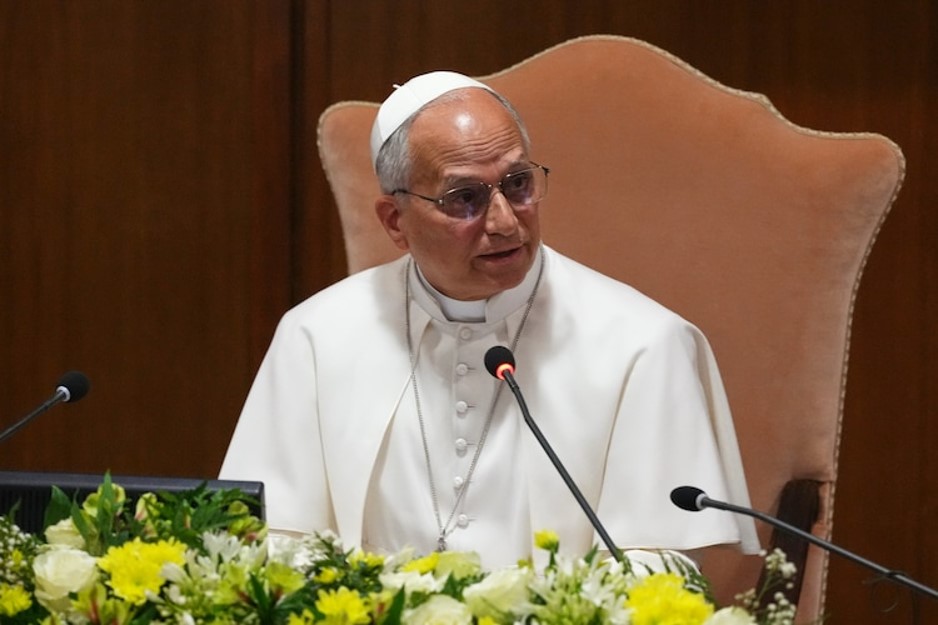
Pope Leo IV on Thursday excommunicated the clergy of a breakaway conservative faction of the Catholic Church, as well as any worshippers who do not leave the group. The expulsion came a day after the faction’s leaders defied a personal plea from Pope Leo XIV and consecrated four new bishops without his permission.

The decree against the Society of St. Pius X excommunicated at least 750 priests. It could also affect thousands of worshippers who have not been immediately expelled but, according to the Vatican, might still be punished if they do not leave the group and confirm their loyalty to Pope Leo, and adhere to the church and its teachings.  As reported by The New York Times.

Historians said it was the biggest schism in the Catholic Church since at least 1870, when a much smaller group of Catholics in Germany broke with the Vatican. The Society of St. Pius X does not keep full records of its followers, but officials estimated that they number between 300,000 and 600,000 people.

In an explanatory note about the decree, the Vatican said the society was barred from officiating marriages and hearing confessions, and it warned the society’s followers to stop attending its Masses and participating in its events.

The Vatican’s note added that all formal followers of the society “are to be considered schismatics and excommunicated” after its leaders consecrated the bishops in a ceremony in Switzerland on Wednesday “against the will of the Holy Father and in open violation of canon law.”

The society did not immediately comment on the excommunication.

The schism is the biggest internal crisis within the Catholic Church since Leo became pope in May 2025. It is also a blow to his stated efforts to bridge divisions between Catholics who want to modernize the church, including by ordaining female priests, and conservatives, like followers of the Society of St. Pius X, who hold fast to tradition.

Experts said Leo’s decision to expel so many priests — a threshold that his predecessors had never crossed throughout decades of tensions with the group — revealed that he would not maintain a superficial unity at all costs.

“He has learned from 20-plus years of make-believe reconciliation and rapprochement that never went anywhere,” said Massimo Faggioli, a professor of theology at Villanova University in Pennsylvania, where Leo studied. “He’s drawing some conclusions” that “there’s a schismatic reality and we have to say what it is.”

The Vatican’s decision heightened a decadeslong standoff between the church’s leadership and the society, which is known by the acronym SSPX.

The society was founded in 1970 by Archbishop Marcel Lefebvre in protest against the church’s efforts to modernize after the Second Vatican Council, held between 1962 and 1965, including by allowing priests to hold services in vernacular languages instead of only in Latin. The society also objects to the council’s efforts to soothe tensions between Catholicism and other Christian faiths, and to take part in interreligious dialogue. And it insists on the primacy of the Roman Catholic Church even as it accuses the modern leaders of heresy.

Those tensions came to a head in 1988, when the society first consecrated four bishops without the permission of Pope John Paul II, who swiftly excommunicated them and Lefebvre.

Relations thawed somewhat in 2009, under Pope Benedict XVI, who lifted the excommunications of the surviving bishops in a gesture of outreach to all Catholics still attached to celebrating the traditional Latin Mass. But one bishop had provoked outrage by denying the Holocaust.

That rapprochement ended Wednesday after the society defied Leo by proceeding with a consecration ceremony that the group said had brought some 17,000 worshippers to Écône, a small village in Switzerland where the society installed its first seminary in 1970.

The Vatican’s reaction Thursday was harsher than in 1988, when it excommunicated only the society’s five senior prelates.

This time, the excommunication applies to all of the society’s priests and formal followers. The Vatican added that the sacraments administered by the society’s priests, including confession and matrimony, were invalid, reversing concessions that Pope Francis had made to the society in recent years.

“There was a lot of debate in the church about the real effect of that unilateral lifting by Pope Benedict in 2009,” Faggioli said, “so now there’s full clarity.”

The Vatican’s decree left open the possibility of reconciliation for those who agree not to take part in the society, saying that “the church, as a caring mother, will welcome with sincere affection and lively solicitude all those who wish to return to full communion.”

On Thursday afternoon, the Vatican’s doctrine office issued a document with instructions for priests and faithful who wanted to return to communion with the church. For priests this included writing a letter asking for “the remission of the censures incurred as a result of having been ordained by an excommunicated or irregular bishop,” and would involve a trial period in a diocese.

In the case of lay worshippers, they are not automatically excommunicated, but would be evaluated “case by case,” the Vatican wrote. As with priests, removing the sanction would require signing a profession of faith — written in Latin.

The Rev. Ian Andrew Palko, an SSPX priest in Texas, said he did not expect the excommunication to lead to many defections. “There may be some who are uncomfortable with” excommunication, he said. But, he added, if the faithful “were worried, it would have already pushed them away.”

And the Rev. Paul Robinson, the society’s prior in Denver, said “I think there will still be contact with Rome,” as there was after the 1988 excommunications.

The Rev. Roberto Regoli, a church historian, said the society was well placed to survive because it had so many outposts across the world, including universities and schools.

Tony

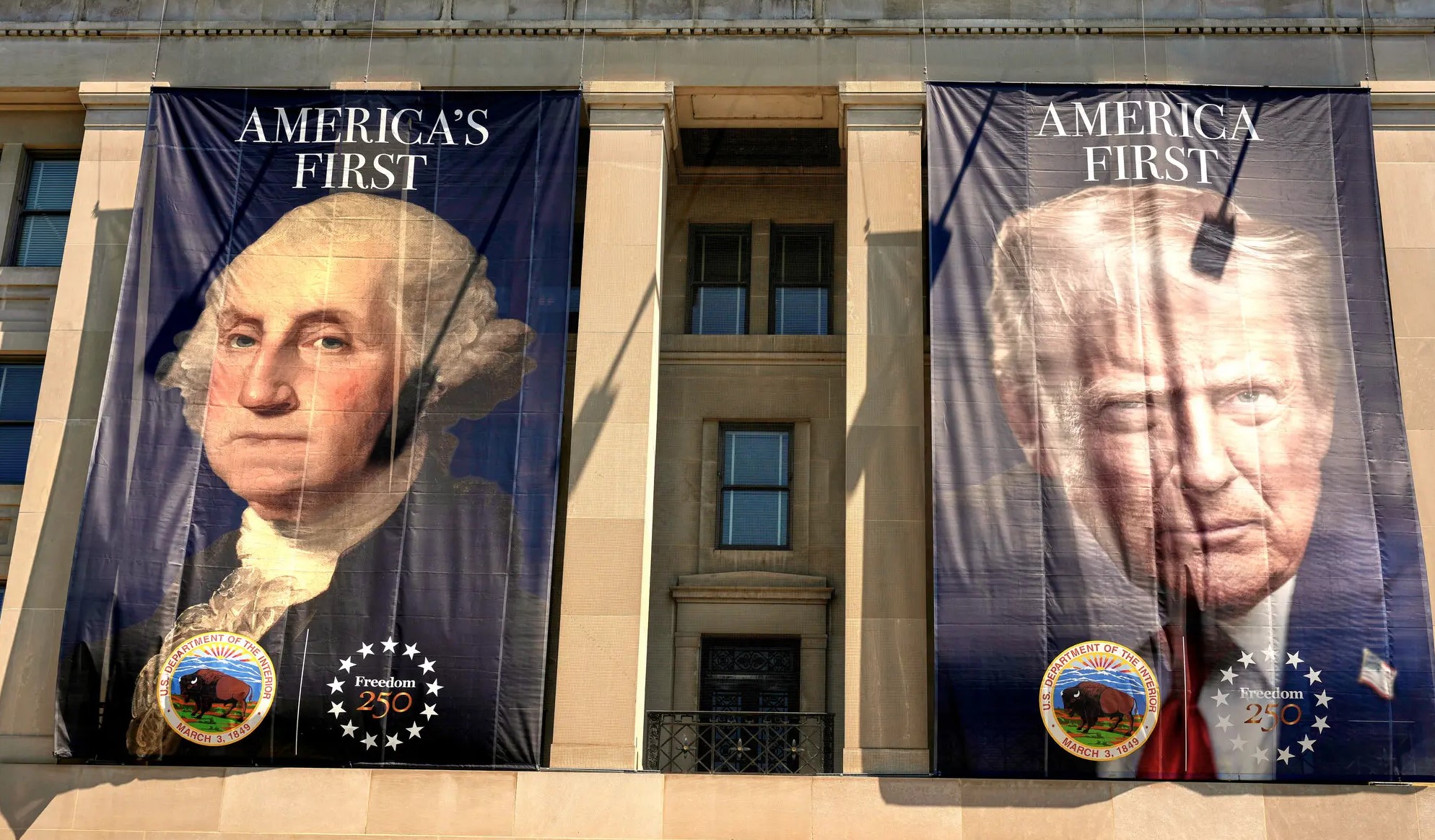
Maureen Dowd compares George Washington and Trump – “One famously wouldn’t tell a lie. The other famously can’t stop telling lies.”

Credit…Carolyn Kaster/Associated Press

Dear Commons Community,

Maureen Dowd in her column yesterday entitled, “Founding Father vs. Foundering Toddler” compares Trump to George Washington. Here is an excerpt where she quotes Ron Chernow:

“I just can’t imagine two human beings who are more dissimilar than George Washington and Donald Trump,” Ron Chernow, the Pulitzer Prize-winning biographer of our first president, told me, on the occasion of the 250th birthday party for America that Trump has hijacked.

“Washington was discreet, reserved, courteous — he avoided any kind of show or ostentation or self-promotion,” Chernow said. “With Donald Trump, it’s nonstop bragging and boasting and self-promotion that would have been, I think, completely alien to George Washington, and very much counter to his idea of the way that a public servant should behave.”

It’s illuminating to look back at the life of the man who refused to be king now that we have a man who fancies himself a king.”

Dowd’s entire column is below.

Tony

——————————————–

The New York Times

Founding Father vs. Foundering Toddler

July 4, 2026

By Maureen Dowd

Opinion Columnist

I found myself gazing at George Washington’s teeth the other day.

They weren’t wooden, as lore has it. On a trip to Mount Vernon, which I had somehow never visited as an adult, even though my hometown is named after him, I learned that his spring-loaded dentures were fashioned from human, horse and cow teeth. Washington was always nervous that his teeth would fly out of his mouth. Those chompers kept him in constant pain. But the Father of the Country was uncomplaining, unlike the Crybaby of the Country we have now.

“I just can’t imagine two human beings who are more dissimilar than George Washington and Donald Trump,” Ron Chernow, the Pulitzer Prize-winning biographer of our first president, told me, on the occasion of the 250th birthday party for America that Trump has hijacked.

“Washington was discreet, reserved, courteous — he avoided any kind of show or ostentation or self-promotion,” Chernow said. “With Donald Trump, it’s nonstop bragging and boasting and self-promotion that would have been, I think, completely alien to George Washington, and very much counter to his idea of the way that a public servant should behave.”

It’s illuminating to look back at the life of the man who refused to be king now that we have a man who fancies himself a king.

On Monday, signing a presidential memorandum, Trump said, “We rule by common sense, to a large extent.”

The word is “govern,” Mr. President, not “rule.”

Talking about the cauldron of heat this weekend, Trump boasted about his Independence Day speech on the Mall: “I’m going to make a really long speech, just to show that I can do anything.”

The hero who commanded the Continental Army was protective of the nascent democracy, realizing its fragility. Cadet Bone Spurs maliciously erodes it, seeing it as a hindrance to his lust for untrammeled power and cash grabs.

Washington was beloved by many for giving away power he could have kept. Trump is reviled by many for snatching power he isn’t entitled to. One was methodical and judicious, hoping to consult with the Senate more than the Senate even wanted him to. The other is driven by whims, co-opting legislative powers on tariffs and war. Washington actively avoided, as president, interfering in congressional races. Trump meddles in primaries to exact revenge and test fealty.

John Adams praised Washington for his self-command — a trait foreign to Trump.

One was modest — reflected in the refined but decidedly unflashy furnishings at Mount Vernon. The other is megalomaniacal — reflected in the blinding gold accouterments festooned around the West Wing and his immoderate ballroom, which would eclipse a White House that was meant to provide a contrast with the extravagant palaces of Europe.

One famously wouldn’t tell a lie. The other famously can’t stop telling lies.

Just about the only thing they have in common is that Washington’s myth involved him chopping down a cherry tree. And Trump may want to do the same with some of our historic cherry trees, as he usurps East Potomac Park to install a ritzy golf course.

Chernow reflected on Trump’s astonishing grifting in office. In the first year of his second term, Trump collected $1.4 billion from his crypto ventures. (He made a fortune, even though the meme coin he hawked to his supporters is worth astronomically less now than it was when he took office.) Overall, his first year in office netted him at least $2.2 billion. “George Washington was a man of such unimpeachable integrity — there was not the faintest hint of scandal during his presidency — and he was always very reluctant to accept any kind of gift because he was afraid people might interpret it as a bribe,” he said. Washington agonized before accepting shoe buckles from David Humphreys, his aide-de-camp during the Revolutionary War and speechwriter during his presidency.

Trump is a connoisseur of quid pro quo. He took his first flight Wednesday on Qatari Force One with its faux library and massage chairs. (He plans on keeping the plane when he goes, if he ever goes.)

When Trump was asked last year how he could scoff at the Constitution and accept such a lavish emolument from a foreign government, he breezily replied, “I could be a stupid person and say, ‘Oh no, we don’t want a free plane.’”

“Trump can make all this money off cryptocurrencies and meme tokens, and there’s nothing in the Constitution specifically preventing that other than the president’s own sense of shame and integrity — and those don’t seem to apply with very great force to our president,” Chernow said. “Trump is very good at finding these holes in the system. He seems to have a sixth sense.

“Our founders did worry a lot about the future emergence of a demagogue,” Chernow said. “Their fear was what used to be called, in the 18th century, the man on horseback — the idea that after a bloody revolution, the victorious general would parlay the victory into power and become a dictator.”

Washington loved his horses, but he wanted to be a farmer, not a monarch.

“The American people were willing to entrust him with great power because he didn’t seem to be grasping for power,” Chernow said. “He was doing things out of a sense of duty and service and, if anything, felt burdened by the powers he assumed. During the eight years of the Revolutionary War, he only got to return to Mount Vernon three times.”

Chernow confessed that he is worried. “My biggest fear at the moment is that we forget who we are as a people, because a democracy is not just a matter of creating institutions and principles — it’s also a matter of following certain customs and traditions that have grown up over time. Those started with George Washington, who established a benchmark of presidential behavior: that the president should be gracious and dignified, courteous and humble, sincere and responsible. He had this natural gravitas and dignity that I think is really essential to the office. And now we have a president who, I suspect, has probably never read a history book.” The historian — whose biography of Alexander Hamilton was the basis of the musical phenomenon — also blames Americans for neglecting to learn about the miracle that Washington and the other founders conjured, a miracle that is now in jeopardy.

“You can’t begin to explain to them that the system the founders created is being trampled on if they don’t have the rudimentary sense of what the whole design was supposed to be,” he said. “That’s why memory is so important.”

Mount Vernon’s guardian of memory is the cool young historian Lindsay Chervinsky, who is the executive director of the George Washington Presidential Library.

She gave me a tour where I got to see Washington’s notes on his Senate visit; one of his tender love letters to Martha; and Martha’s recipe for “cherry bounce,” her husband’s cocktail of choice — a potent mix of cherries, French brandy, white sugar, cinnamon, cloves and nutmeg.

Chervinsky has been trying to stay positive on the occasion of the nation’s semiquincentennial.

“When people ask me what Washington would think today, my first reaction is that there’s a lot he would be disappointed by, and there’s a lot that he would find very recognizable, even if not ideal,” she said. “But I think the dominant feeling would be one of joy that the nation is still here, because most republics just don’t last that long, and he knew that.”

The Passing of Marcia Knoll

Marcia Knoll with Janet Patti

Dear Commons Community,

It is with great sadness that I learned of the passing of my Hunter College colleague, Marcia Knoll.  Marcia and I worked together in the School of Education’s Administration and Supervision program in the late 1990s and early 2000s.  Along with Professor Janet Patti, Marcia was instrumental in developing one of the finest school leadership programs in New York City. Her experience as a school administrator working in NYC Community School District Four and on Long Island added much depth to our program.  She knew as much about education curriculum and personnel as anyone I ever met.

I will miss her.

May she rest in peace!

Tony

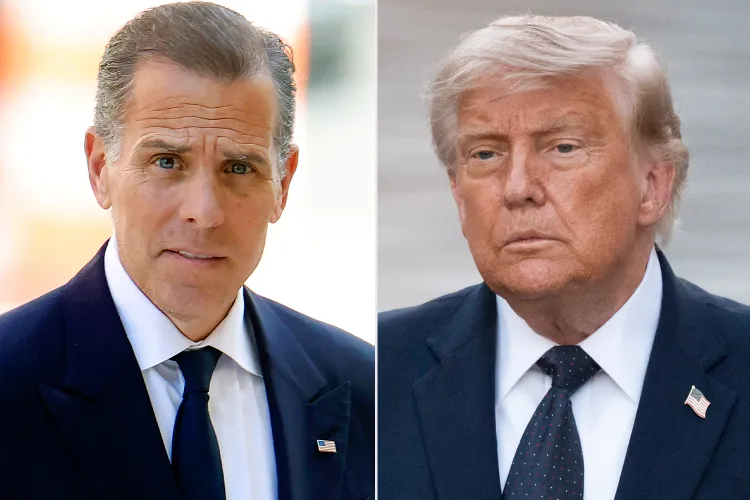
Hunter Biden Mockingly Nominates Donald Trump for Nobel Peace Prize for Ending ‘the Same War’ 38 Times!

Credit:  Kevin Dietsch/Getty; Magali Cohen / Hans Lucas / AFP via Getty

Dear Commons Community,

Hunter Biden nominated Trump for the Nobel Peace Prize for ending “the war with Iran at least 38 times,” poking fun at both the president’s stated desire to win the award and his frequently contradicting statements on the war. As reported by People

“No President in History has ended the same war so many times,” Biden, 56, wrote on X on Thursday, July 2. “Our Dear Leader has ended the war with Iran at least 38 times by CNN’s count. No President has ever done this before. And he is nowhere near finished ending it.”

“It’s a record worthy of the Nobel committee’s recognition. Thank you for your attention to this matter!” President Joe Biden’s son added, borrowing Trump’s commonly used sign-off in his Truth Social missives.

The younger Biden has been posting with fervor in recent weeks, lashing out at the Trump administration and his father’s critics as he both jokes and speaks with sincerity about his public battles with addiction.

The pace and tone of Hunter’s posts since he began engaging on X again in late May have sparked speculation that he’s considering getting more involved in politics and that he may be using artificial intelligence to write some of the posts.

Hunter did not respond to PEOPLE’s inquiries about his thought process and decision to post hundreds of times when contacted in June.

Tony