
Dear Commons Community,
This was the view last evening from the deck of the house where Elaine and I are staying in Pocomo on Nantucket.
Tony

Dear Commons Community,
This was the view last evening from the deck of the house where Elaine and I are staying in Pocomo on Nantucket.
Tony
Dear Commons Community,
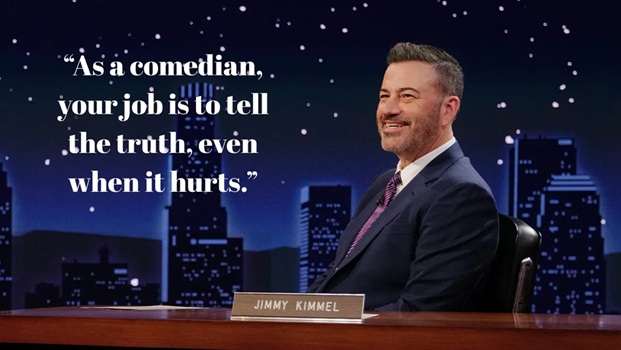
ABC announced yesterday that “Jimmy Kimmel Live!” will return tonight, ending a nearly weeklong standoff over the late-night talk show. As reported by CNN and other media outlets.
The Kimmel controversy erupted last week after conservatives criticized a Kimmel monologue comment on Monday about the MAGA responses to the assassination of Charlie Kirk.
Kimmel said the MAGA movement was trying to score political points by trying to prove that the 22-year-old suspect accused of killing Kirk is not one of its own.
“The MAGA Gang (is) desperately trying to characterize this kid who murdered Charlie Kirk as anything other than one of them and doing everything they can to score political points from it,” Kimmel said. “In between the finger-pointing, there was grieving.”
On Wednesday, two days after the monologue aired, President Trump’s close ally atop the FCC, Brendan Carr, publicly suggested Kimmel should be suspended and invoked the FCC’s oversight of local TV stations.
Two big station groups, Sinclair and Nexstar, signaled that they would preempt Kimmel’s show locally, and then ABC suspended the show altogether, a stunning move that started a national debate about government interference and freedom of speech.
Not all of ABC’s affiliated stations will be carrying Kimmel’s comeback show. Sinclair said its ABC affiliates will preempt the show “beginning Tuesday night.” Sinclair said it will air news programming in the time slot instead.
“Discussions with ABC are ongoing as we evaluate the show’s potential return,” a Sinclair spokesperson told CNN.
Sinclair’s conservative owners condemned Kimmel last week and contributed to ABC parent Disney’s decision to pull the show from the airwaves temporarily.
Nexstar, the other big station owner that played a pivotal role in Kimmel’s benching last week, has not commented to CNN on whether it will resume airing the show, which airs weeknights at 11:35 p.m. ET.
Disney explained its decision-making in a statement announcing Kimmel’s return.
“Last Wednesday, we made the decision to suspend production on the show to avoid further inflaming a tense situation at an emotional moment for our country,” the Disney statement said. “It is a decision we made because we felt some of the comments were ill-timed and thus insensitive. We have spent the last days having thoughtful conversations with Jimmy, and after those conversations, we reached the decision to return the show on Tuesday.”
Kimmel is planning to address the controversy in his monologue on Tuesday night, a source familiar with Kimmel’s plans told CNN.
Media analysts have watched as Disney CEO Bob Iger and Disney Entertainment co-chairman Dana Walden have navigated competing pressures. Disney needs government approval for pending deals like ESPN’s pact with the NFL, while many of ABC’s station partners are in the same boat. Additionally, Kimmel’s contract is expiring in May and late-night TV audiences and revenue have been in decline.
Kimmel’s sudden suspension sent shock waves through the entertainment industry, where the comedian and long-time host is well-regarded, both inside and outside ABC.
His show employs between 200 and 250 people.
There were organized protests against Disney outside of the company’s offices in New York and Burbank, California over the past week, as well as outside the theater where Kimmel’s show is recorded in Hollywood.
Before news of Kimmel’s pending return on Monday, more than 400 artists, including Tom Hanks, Meryl Streep and Jennifer Aniston, signed an open letter, organized by the ACLU, in support of Kimmel.
Later, ACLU Executive Director Anthony D. Romero said ABC “made the right call” in returning Kimmel to air.
“It should never have suspended him to begin with and resisted the government’s desire to control what people say,” Romero said in a statement.
“Hopefully, other media outlets will also find their spines and resist the Trump administration’s efforts to cudgel them into obeisance,” he added.
Democratic lawmakers also celebrated news of Kimmel’s return.
“Thank you to everyone but @BrendanCarrFCC,” California Gov. Gavin Newsom wrote on X. “This is a win for free speech everywhere.”
“This is big: Jimmy Kimmel is coming back!” Senate Minority Leader Chuck Schumer said on X. “This is about fighting for free speech and against these abuses by Donald Trump and Brendan Carr.”
Carr did not immediately respond to CNN’s request for comment.
Carr’s FCC colleague Anna M. Gomez, the lone Democrat on the commission, said in a statement, “I am glad to see Disney find its courage in the face of clear government intimidation. More importantly, I want to thank those Americans from across the ideological spectrum who spoke loudly and courageously against this blatant attempt to silence free speech.”
“It will continue to be up to us as citizens to push back against this Administration’s growing campaign of censorship and control,” Gomez said.
PEN America, one of the many free expression groups that criticized Disney for seemingly caving to the Trump administration, called Kimmel’s return “a vindication for free speech.”
The ABC announcement is both “remedying his unjustifiable suspension, and reminding us that when people speak out to hold the powerful to account – it matters,” PEN America interim co-CEO Summer Lopez said. “We must all channel the same energy to fight the many assaults on free speech underway, including against those with less reach and resources.”
Bravo to ABC!
Tony

Dear Commons Community,
The fall or autumn equinox in the Northern Hemisphere — which can land between Sept. 21 and 24 depending on the year — will occur today, Sept. 22 at 2:19 p.m. EDT / 11:19 a.m. PDT. We can say goodbye to the sunny, warm days of summer and welcome to the brisk days of autumn. I have always liked the autumn freshness in the air and the colors coming from the trees.
Enjoy, enjoy, enjoy!
Tony

Photo courtesy of The New York Times.
Dear Commons Community,
The New York Times editorial yesterday entitled The Trump Administration’s Chilling Efforts to Punish Free Speech, is a broadside at Trump’s recent declarations of limiting what we can say in our country. It references founding principles and the Constitution about the importance of freedom of speech as an American ideal that cannot be sabotaged by anyone including Trump. Below is the entire editorial. It provides critical commentary on the state of our country!
Tony
————————————————————————————————-
The New York Times
The Editorial Board
The Trump Administration’s Chilling Efforts to Punish Free Speech
September 21, 2025
A founding principle of the United States, enshrined in the Constitution’s opening amendment, is that our republic depends on citizens’ freedom to disagree with one another. They need to be able to do so intensely, on matters of life and death, including war and divisive modern issues like abortion, gun safety and health insurance. There are limits to free speech, yes, but they involve edge cases, like falsely shouting “Fire!” in a theater or inciting an imminent act of violence. If the American ideal of freedom means anything, it is that Americans can engage in an extremely wide range of political speech, including the tasteless and the offensive.
President Trump is himself a purveyor of tasteless and even threatening language, speaking in ways that no previous president did. Yet his own exercise of his First Amendment rights has not stopped him from encroaching on those of others. He has punished universities, immigrants, law firms, federal prosecutors, military leaders, national security officials and others for voicing opinions with which he disagrees.
Now he is taking his campaign against free speech to a new level by using the assassination of Charlie Kirk as a justification to promise the repression of groups that he describes as liberal. Mr. Trump’s aides are drafting an executive order that could come as soon as this week, The Times reported, and it will most likely target left-leaning organizations. On Monday, Vice President JD Vance mentioned both the Ford Foundation and George Soros’s Open Society Foundations, saying that they benefited from “generous tax treatment,” the same tax treatment that benefits nonprofit groups like religious charities and the National Rifle Association Foundation.
The intimidation campaign is already having an effect. Federal officials have urged companies to fire workers who have criticized Mr. Kirk, and some have done so. In a direct exercise of government influence, Brendan Carr, the chairman of the F.C.C., threatened Disney for remarks that Jimmy Kimmel made on his late-night ABC show. “We can do this the easy way or the hard way,” Mr. Carr said. He also urged television stations to stop broadcasting the show. Two major station owners quickly did so, and ABC has suspended the show indefinitely.
As we wrote last week, we are horrified by the killing of Mr. Kirk, and we mourn his death. The evidence suggests that he was murdered for his views, which is the most fundamental violation of free-speech principles. We vehemently disagree with people who suggested that Mr. Kirk bore any responsibility for his own shooting. As Spencer Cox, Utah’s Republican governor, said afterward: “We need more moral clarity right now. I hear all the time that words are violence. Words are not violence. Violence is violence.” Yet it is the Trump administration, not the left, now violating Mr. Cox’s standard.
Mr. Trump’s promised crackdown depends on the false premise that liberal and nonpartisan groups are part of a far-left conspiracy that promotes violence against conservatives. In truth, the country has experienced a surge of political violence and plots that have targeted both Democrats and Republicans, including Mr. Kirk, Mr. Trump, Justice Brett Kavanaugh, Representative Nancy Pelosi, Gov. Gretchen Whitmer of Michigan, Gov. Josh Shapiro of Pennsylvania and two state legislators in Minnesota. As this list suggests, the highest-profile targets show no clear partisan pattern.
Mr. Trump and his aides tell a very different story — and a false one. They claim that political violence comes mostly from the left. “The radicals on the left are the problem,” the president said last week. In fact, multiple data sources show that neither side has a monopoly on political violence, but it is more likely to come from the right. Between 2015 and 2024, 54 percent of ideologically connected killings were committed by people on the far right, according to the Anti-Defamation League. By comparison, 8 percent came from the political left.
Conservatives and progressives alike should reflect on whether the nasty and often personal rhetoric of today’s politics may have contributed to an atmosphere in which unstable or angry people become more likely to commit violence. Still, even that scenario is very different from one in which political groups are organizing and helping commit the violence. There is zero evidence that left-wing groups played a role in Mr. Kirk’s killing or in other recent violence against Republicans. “Absent additional facts, there was one person responsible for Charlie Kirk’s assassination,” Mike Pence, Mr. Trump’s former vice president, pointed out on Thursday.
If anything, many elected Democrats and prominent progressives have clearly and consistently condemned Mr. Kirk’s killing in ways that prominent Republicans failed to do after attacks on Democrats. After the attack at Ms. Pelosi’s home, which included a brutal assault of her husband, Paul, Mr. Trump himself and other prominent Republicans mocked the victim and spread absurd conspiracies that the episode was staged. After the shooting of two Democratic legislators and their spouses in Minnesota, Senator Mike Lee, a Utah Republican, bizarrely blamed “Marxists,” while Laura Loomer, an influential Trump confidante, falsely blamed “goons” working for Gov. Tim Walz, the Minnesota Democrat.
These are terrible things to say. They are not crimes, however, and they are certainly not grounds for a government crackdown on conservative groups. The Trump administration is now targeting other groups for lesser sins and maybe no sins at all. Mr. Vance’s specific (and tenuous) claim about the Ford Foundation and the Open Society Foundations was that they helped to fund The Nation, which published an article lambasting Mr. Kirk after his death. If that article — whatever you think of it — is grounds for government punishment, the First Amendment has no meaning.
We urge Mr. Trump and his aides to remember the free-speech criticisms that they and other conservatives have often made of progressives over the past decade. Republicans have excoriated the left for its attempts to conflate personal safety with contestable ideas and to quash political expression on Covid-19, race, trans issues and other subjects. Conservatives have been correct about some of these excesses, too. In his Inaugural Address in January, Mr. Trump promised to “bring back free speech to America.” Mr. Vance, speaking in Munich in February, excoriated European countries for restricting speech and promised, “Under Donald Trump’s leadership, we may disagree with your views, but we will fight to defend your right to offer it in the public square, agree or disagree.”
Instead of living up to these principles, the Trump administration and its allies are attempting to restrict speech in ways that are more extreme than anything that Democrats have done. Stephen Miller, a top White House aide, has claimed the existence of a “vast domestic terror movement” on the left and denigrated the Democratic Party as a “domestic extremist organization.” Attorney General Pam Bondi has suggested that a business that refused to print signs promoting vigils for Mr. Kirk deserved to be prosecuted. Representative Clay Higgins of Louisiana called for permanent social media bans on “every post or commenter that belittled the assassination of Charlie Kirk.” Mr. Higgins, it is worth noting, is one of the congressmen who previously criticized social media companies for suppressing conservative speech — and who belittled the attack on Mr. Pelosi.
If Mr. Trump refuses to stand up for the basic American right to disagree without fear of oppression, others still can. An executive order that follows through on the threats that he and his aides have made would be clearly unconstitutional. And it would deserve an immediate injunction from the federal courts and a swift rejection from the Supreme Court. The ability to disagree with other people on raw, difficult issues, without fear of repression, is the essence of American freedom.
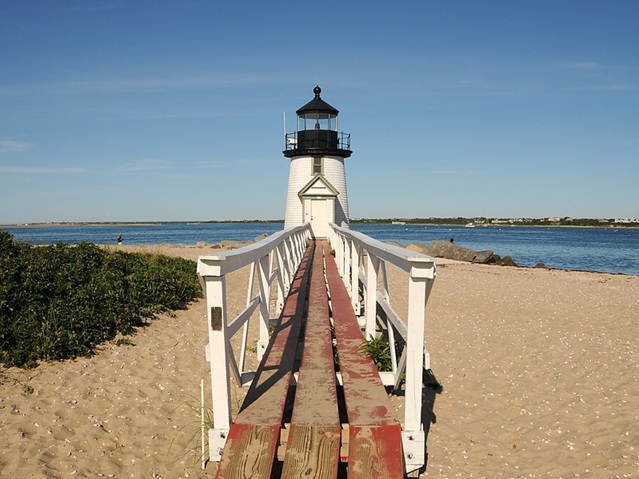
Brant Point Lighthouse – one of our favorite spots on Nantucket!
Dear Commons Community,
My wife Elaine and I will begin traveling through New England today on our way to Nantucket where we plan to stay for about twelve days.
Tony
 Dear Commons Community,
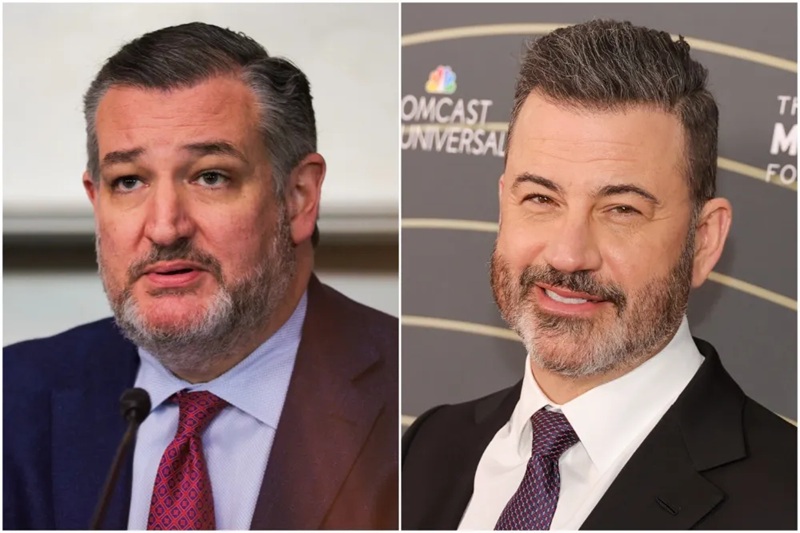
U.S. Sen. Ted Cruz slammed Federal Communications Commission Chairman Brendan Carr for pressuring ABC to pull comedian Jimmy Kimmel off the airwaves, warning fellow Republicans the threats create an “unbelievably dangerous” precedent that could haunt conservatives.
The Texas Republican, in a new episode of his podcast released Sept. 19, compared Carr’s tactics to those of a mob boss as he denounced the FCC chairman’s threats to revoke ABC’s television license before the network indefinitely suspended “Jimmy Kimmel Live!”
As reported by USA TODAY.
“He says, ‘We can do this the easy way or we can do this the hard way,'” Cruz said, referring to Carr. “That’s right out of ‘Goodfellas.’ That’s right out of a mafioso coming into a bar going, ‘Nice bar you have here. It’d be a shame if something happened to it.'”
Cruz is among the highest-profile Republicans to speak out against Carr’s threats to ABC over comments Kimmel made regarding the recent assassination of conservative activist Charlie Kirk.
Shortly before ABC suspended Kimmel’s show, Carr threatened to revoke licenses for ABC and its local affiliates if it continued to air the show. “We can do this the easy way or the hard way,” Carr said in an appearance on conservative commentator Benny Johnson’s podcast.
“What he said there is dangerous as hell,” Cruz said after playing audio of Carr’s remarks.
Historically, the FCC has operated as an independent agency of the executive branch, but Carr has aligned himself closely to President Donald Trump, who appointed him to the role.
Cruz made clear he is not a fan of Kimmel and disapproves of Kimmel’s remarks regarding the Kirk assassination. But he said the government should not be able to dictate what is appropriate for public airwaves.
“I think it is unbelievably dangerous for government to put itself in the position of saying we’re going to decide what speech we like and what we don’t, and we’re going to threaten to take you off the air if we don’t like what you’re saying,” Cruz said.
Cruz said a Democrat down the road will be in the White House once again, warning, “They will silence us. They will use this power, and they will use it ruthlessly.
“It might feel good right now to threaten Jimmy Kimmel, but when it is used to silence every conservative in America, we will regret it.”
Trump has cheered ABC for suspending Kimmel’s show and rejected concerns about the infringement of free speech raised by Democrats and other Trump critics. Trump has also defended Carr. “I think Brendan Carr is outstanding. He’s a patriot. He loves our country, and he’s a tough guy,” Trump told reporters on Sept. 18.
The comments from Kimmel that apparently attracted scrutiny from Carr came during an opening monologue during the comedian’s show on Monday, Sept. 15.
“We hit some new lows over the weekend with the MAGA gang desperately trying to characterize this kid who murdered Charlie Kirk as anything other than one of them,” Kimmel said, which some have interpreted as Kimmel falsely alleging that the suspect, 22-year-old Tyler Robinson, was a MAGA supporter.
I don’t agree with Cruz very often but his comments here are worth noting!
Tony

Dear Commons Community,
On August 13, 2025, I posted on this blog my review (see below) of the first book, My Brilliant Friend, of The Neapolitan Novels by Elena Ferrante. As I indicated in my review, My Brilliant Friend (2012), begins in the 1950s, in a poor neighborhood in Naples, where the narrator Lenu meets Lila, her best friend, her mirror, and at times her fiercest critic. This first novel follows Lila and Lenu from their meeting as six-year-olds through their school years and adolescence, until Lila’s marriage at the age of sixteen. I had to try the next book, and the next book, and the next book. The Story of the Lost Child, The Story of a New Name, and Those Who Leave and Those Who Stay did not disappoint. Chapter after chapter of each book kept me engrossed as the two heroines live their lives with ups and downs, happiness and tragedy. Lila spends her entire life in the same neighborhood she grew up in Naples and becomes a successful businesswoman. She never rode on a train or a plane but in her “brilliant” way had a remarkable life. Lenu becomes a world-class author who has traveled throughout Europe and the United States, who constantly is thinking about Lila and tries hard to maintain their life-long friendship. Sadly, in their sixties, they drift apart but I will not say anymore and possibly spoil the ending.
There are hundreds of reviews of the individual books and the series. I would recommend one at reddit.
The New York Times deservedly listed My Brilliant Friend as the Number One Book of the 21st century.
Tony
—————————————————————————-
The Neopolitan Novels by Elena Ferrante
Anthony G. Picciano
August 13, 2025
Dear Commons Community,
Looking for some fun summer reading, my wife, Elaine suggested I might try Elena Ferrante’s work entitled, The Neapolitan Novels, also known as the Neapolitan Quartet. They are a four-part series of fiction by the pseudonymous Italian author Elena Ferrante, published originally by Edizioni and translated into English by Ann Goldstein and published by Europa Editions (New York). In October 2016, investigative reporter Claudio Gatti published an article jointly in Il Sole 24 Ore, Frankfurter Allgemeine Zeitung and the New York Review of Books that relied on financial records related to real estate transactions and royalties payments to draw the conclusion that Anita Raja, a Rome-based translator, is the real author behind the Ferrante pseudonym.
The English-language titles of the novels are My Brilliant Friend (2012), The Story of a New Name (2013), Those Who Leave and Those Who Stay (2014), and The Story of the Lost Child (2015). In the original Italian edition, the whole series bears the title of the first novel L’amica geniale (literally translated, “the brilliant friend”). The series has been characterized as a bildungsroman, or coming-of-age story. In an interview in Harper’s Magazine, Elena Ferrante has stated that she considers the four books to be “a single novel” published serially for reasons of length and duration. The series has sold over 10 million copies in 40 countries.
The series follows the lives of two perceptive and intelligent girls, Elena (sometimes called “Lenù”) Greco and Raffaella (“Lila”) Cerullo, from childhood to adulthood and old age, as they try to create lives for themselves amidst the violent and stultifying culture of their home – a poor neighborhood on the outskirts of Naples, Italy.
I have just finished Book One, My Brilliant Friend (2012), which begins in the 1950s, in a poor neighborhood on the outskirts of Naples, where the narrator Elena meets Lila, her best friend, her mirror, and at times her fiercest critic. This first novel follows Lila and Elena from their meeting as six-year-olds through their school years and adolescence, until Lila’s marriage at the age of sixteen.
I found it a most enjoyable read and have begun Book Two, The Story of a New Name (2013),
Tony
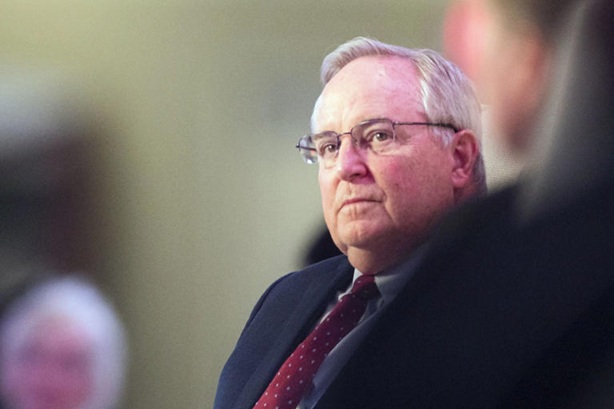
Mark Welsh© Getty Images
Dear Commons Community,
Texas A&M University President Mark Welsh is stepping down, ending the tenure of the retired Air Force general two years after taking the role.
Welsh’s departure will take effect at 5 p.m. Thursday, according to a statement from Chancellor Glenn Hegar and the Texas A&M University System Board of Regents. As reported by Bloomberg.
The board plans to name an interim leader in the coming days and begin a national search for his permanent successor.
Welsh has been taking heat in recent days by Republican lawmakers after a video went viral showing a student accusing a professor of teaching “gender ideology.” during a class. The video, posted on X by Republican state lawmaker Brian Harrison, drew national attention and prompted involvement by the US Justice Department.
Welsh initially removed a dean and department head saying the course content strayed from its approved catalog description. The professor was fired after Governor Greg Abbott urged for the school to do so.
“President Welsh is a man of honor who has led Texas A&M with selfless dedication,” said Hegar. “We are grateful for his service and contributions. At the same time, we agree that now is the right moment to make a change and to position Texas A&M for continued excellence in the years ahead.”
Welsh is just the latest university president to quit abruptly in the past few years as Republican lawmakers target schools over how they teach, enforce discipline and recruit students and staff.
Sad state of affairs! We wish President Welsh good luck!
Tony
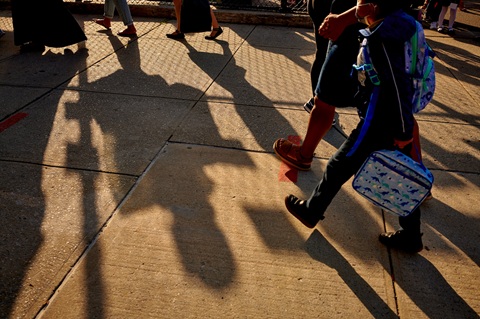
Chronic absenteeism in NYC public schools spiked during the pandemic. It hasn’t returned to normal. (Gabby Jones for Chalkbeat)
Dear Commons Community,
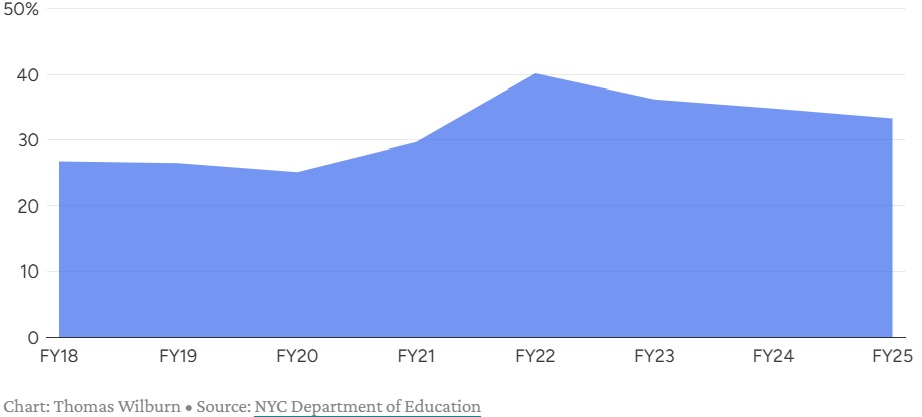
One in three New York City public school students was chronically absent last school year, which is defined as missing at least 10% of school days, according to statistics released Wednesday.
That represents a slight dip from the 2023-24 school year, when 34.8% of students were chronically absent. But it is still considerably higher than pre-pandemic levels, when chronic absenteeism rates hovered closer to 1 in 4 children.
Attendance is considered a key metric for school performance for a commonsense reason: Missed school typically means missed learning. As reported by CHALKBEAT/NEW YORK.
Chronic absenteeism exploded to 40%, the highest level in decades, during the COVID pandemic when students returned full-time to their classrooms during the 2021-22 school year, following the city’s pivot to remote learning.
Though COVID-related illnesses drove up those numbers, with hundreds of thousands of students and staff testing positive that year, chronic absenteeism rates have remained stubbornly high even as the virus receded.
In New York City, schools that enroll a high number of students from low-income families are even more likely to have high rates of absenteeism. Some schools have leaned on peer-to-peer support to help coax students to school. But the problem continues to bedevil the nation’s largest school district as well as others across the country.
“The understanding of ‘kids go to school every day’ just shifted nationwide,” said Arlen Benjamin-Gomez, the executive director of EdTrust-New York, an advocacy group that focuses on equity issues in public education.
Much of the effort to improve attendance falls on individual schools and their relationship with families, she said. Instead, she wished for a more comprehensive approach.
“What I haven’t seen is a citywide campaign on the importance of being in school … and the impact of missing even just a couple days a year,”
As Trump ramps up immigration enforcement, some families have been more wary of bringing their children to school out of fear of being detained, which could affect rates of chronic absenteeism. Education Department officials have sought to reassure families by telling them that schools are safe, and federal law enforcement officers are not allowed in buildings without a judicial warrant.
“It’s impossible to know the extent to which that was a systemic factor,” said Sarah Part, a senior policy analyst at Advocates for Children, an organization that helps low-income families navigate the school system. “But the fear and anxiety sparked by the current political climate extend to immigrant communities broadly, not just to those who are themselves undocumented or have pending immigration cases.”
The latest statistics were released Wednesday in the Mayor’s Management Report, a compendium of performance data from city agencies.
After this story initially published, an Education Department spokesperson said schools are expected to call home when students are absent, regularly monitor attendance data, and deploy mentors to identify and address any barriers to attending school. Officials said they are in the process of launching a campaign to promote attendance.
“Throughout the latest school year, schools continued to conduct extensive outreach, collaborated with community partners, and followed up daily with students and families to increase attendance,” officials wrote in the report.
Teacher absences also spiked during the pandemic and remain slightly elevated. Roughly 16% of teachers missed 11 or more school days last year, about a percentage point lower than the previous year. Before the pandemic, closer to 13% of teachers missed that many days of school.
The total number of school days has also fallen in recent years as city officials have added holidays to the school calendar. The state typically requires 180 of instruction, though New York City students will only have 176 days this year. City officials are counting four staff development days, a move allowed by state rules.
You can’t learn if you are not there!
Tony
Dear Commons Community,
The Federal Reserve cut its key interest rate by a quarter-point yesterday and projected it would do so twice more this year as concern grows at the central bank about the health of the nation’s labor market. As reported by the Associated Press.
The move is the Fed’s first cut since December and lowered its short-term rate to about 4.1%, down from 4.3%. Fed officials, led by Chair Jerome Powell, had kept their rate unchanged this year as they evaluated the impact of tariffs, tighter immigration enforcement, and other Trump administration policies on inflation and the economy.
Yet the central bank’s focus has shifted quickly from inflation, which remains modestly above its 2% target, to jobs, as hiring has grounded nearly to a halt in recent months and the unemployment rate has ticked higher. Lower interest rates could reduce borrowing costs for mortgages, car loans, and business loans, and boost growth and hiring.
“Downside risks to employment have risen,” the Fed said in a statement after its two-day meeting.
Fed officials also signaled that they expect to reduce their key rate twice more this year, but just once in 2026, which may disappoint Wall Street. Before the meeting, investors had projected five cuts for the rest of this year and next.
Just one Fed policymaker dissented from the decision: Stephen Miran, who Trump appointed and was confirmed by the Senate in a rushed vote late Monday just hours before the meeting began. Many economists forecast additional dissents, and the outcome suggests that Powell was able to patch together a show of unity from a committee that includes Miran and two other Trump appointees from his first term.
With the Federal Reserve widely expected Wednesday to reduce its key interest rate by a quarter-point to about 4.1%, economists and Wall Street investors will be looking for signals about next steps: How deeply might the Fed cut in the next few months?
There are typically two different approaches the central bank takes to lowering borrowing costs: Either a measured pace that reflects a modest adjustment to its key rate, or a much more rapid set of cuts as the economy deteriorates in an often-doomed effort to stave off recession.
For now, most economists expect it will take the first approach: What many analysts call a “recalibration” of rates to keep the economy growing and businesses hiring. Under this view, the Fed would reduce rates as many as five times by the middle of next year, bringing its rate closer to a level that neither stimulates or slows the economy.
Wall Street traders expect three reductions this year and then two more by next June, according to futures pricing tracked by CME Fedwatch.
A rate cut Wednesday would be the first in nine months. The Fed, led by Chair Jerome Powell, reduced borrowing costs three times last year. But it then put any further cuts on hold to evaluate the impact of President Donald Trump’s sweeping tariffs on the economy.
As recently as their last meeting in late July, Powell described the job market as “solid” and kept rates unchanged as officials sought to take more time to see how the economy evolved.
Since then, however, the government has reported a sharp slowdown in hiring, and previous government data has been revised much lower. Employers actually cut back slightly on their payrolls in June, shedding 13,000 jobs, and added just 22,000 in August.
The government also said last week that its estimate of job gains for the year ended in March 2025 would likely be revised down by 911,000, a sharp reduction in total employment. Powell and other Fed officials had previously pointed to a robust job market as a key reason that they could afford to keep rates unchanged. But with businesses pulling back on hiring, the economic case for a rate cut — which can spur more borrowing and spending — is stronger.
The downward revision of nearly a million jobs is a “huge downgrade,” said Talley Leger, chief market strategist at the Wealth Consulting Group. “If that doesn’t light a fire under the Fed just from an economic perspective I don’t know what will.”
Still, inflation remains stubbornly elevated, partly because tariffs have lifted the cost of some goods, such as furniture, appliances and food. Prices rose 2.9% in August from a year earlier, the government said last week, up from 2.7% a month earlier.
Persistent inflation could keep the Fed from cutting too rapidly. The central bank will release its quarterly economic projections after the meeting Wednesday, and many economists forecast they will show that officials expect three total reductions this year and at least two more next year.
Five reductions would bring the Fed’s key rate down to just above 3%. Many economists think that is roughly the rate that would neither stimulate nor slow the economy.
If Fed officials began to worry the economy would slip into recession, they would likely cut rates more quickly. But for now, most economists don’t see rapid cuts as necessary.
“We’re not at a break-glass moment,” said Vincent Reinhart, chief economist at BNY Investments. “This is a recalibration.”
God news!
Tony

