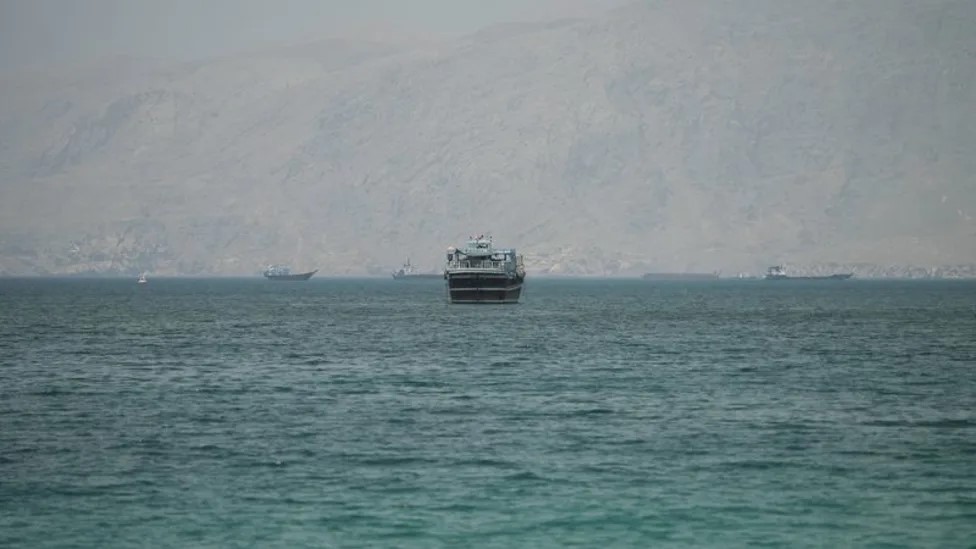
Iran strikes ship in Strait of Hormuz in challenge to U.S.-Iran peace deal

Vessels at the Strait of Hormuz, as seen from Musandam, Oman, June 22, 2026. REUTERS/Stringer
Dear Commons Community,

Iran’s Revolutionary Guards attacked a Singapore-flagged commercial vessel in the Strait of Hormuz with a drone yesterday, a U.S. official confirmed to CBS News, posing a challenge to Trump’s efforts to reopen the critical shipping corridor.

The ship’s bridge was damaged after it was struck on its starboard side off the coast of Dahit, Oman, according to an advisory from the U.K. Maritime Trade Operations Centre. The advisory said no casualties or environmental impact were reported, and did not specify the source of the attack.

After the strike, the United Nations’ International Maritime Organization temporarily paused a days-old plan to evacuate many of the vessels stranded in the Persian Gulf, pointing to Thursday’s strike. IMO Secretary-General Arsenio Dominguez said the halt is needed “in order to reconfirm that the necessary safety guarantees continue to be in place.”

The international organization said the vessel had passed through the Strait of Hormuz before it was struck, and it “did not transit under IMO’s evacuation framework.”

“I have always reiterated that the safety of the seafarers remains paramount,” Dominguez said in a statement. “Therefore, to ensure a coordinated approach and navigational safety, the evacuation plan will be paused until further clarity is obtained.”

The U.S. and Iran signed a memorandum of understanding last week that boosted hopes of shipping returning to the Strait of Hormuz, a chokepoint that normally carries one-fifth of the world’s oil but was largely closed to ships during months of war. Under the agreement, Iran is expected to arrange for toll-free safe passage “using its best efforts” for 60 days.

Since then, ship traffic has picked up significantly, with 70 vessels sailing through the strait on Tuesday, compared to just six a week earlier, according to data from analytics firm Kpler, which noted some of the uptick could be due to a “post-deal release of delayed traffic.” With shipping picking back up, global oil prices have plummeted.

The IMO also announced Tuesday it was launching a “large-scale” evacuation effort to help thousands of mariners scattered across hundreds of vessels exit the region. It said two routes are available: One through Iranian waters in the northern portion of the Strait of Hormuz, and another through Omani waters in the south.

But disagreements over the Strait of Hormuz have persisted. The U.S.-favored route involves sailing close to the Omani coastline, while Iran has insisted that ships seek its permission before transiting the strait and use a route closer to its coast.

Iran’s Persian Strait Gulf Authority said Thursday: “Any passage through routes outside the framework designated by PGSA will not be covered by safe passage guarantees and will not be entitled to insurance coverage or related liabilities.”

Iran also hasn’t ruled out seeking tolls for ships that pass through the strait after the memorandum of understanding’s 60-day time limit ends. The Trump administration and U.S. allies in the region have called that idea unacceptable and a violation of international law. Oman has said it plans to jointly manage the strait with Iran but isn’t looking to charge tolls.

Secretary of State Marco Rubio told reporters early Thursday the Trump administration expects the strait to stay open, and is planning to judge Iran based on its actions rather than its “maximalist rhetoric.”

“If ships are moving as they should be moving, then that’s what we’re going to judge, and that’s what we’re going to react to,” he said while visiting Bahrain. “If, on the other hand, this rhetoric is backed up by actual ships being threatened and ships are not moving, that’s a violation of the agreement, and we’re going to have a problem with it.”

Peace deal?

Tony
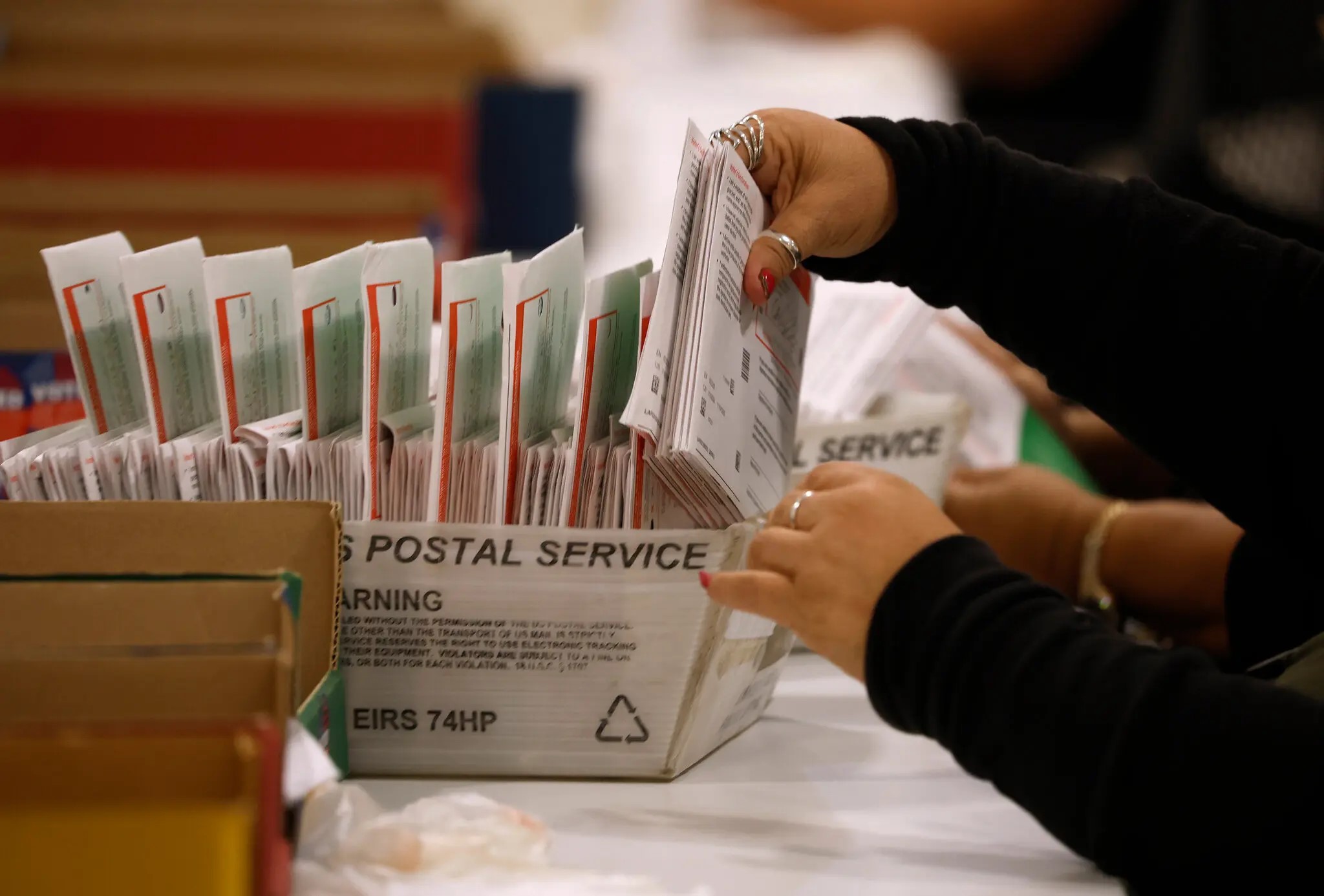
Federal Judge Strikes Key Parts of Trump Order Restricting Mail Voting

“The Constitution does not grant the President any specific powers over elections,” a federal judge ruled on Thursday, tossing crucial parts of President Trump’s executive order that sought to restrict mail voting. Credit…Justin Sullivan/Getty Images

Dear Commons Community,

The federal judiciary especially the US Supreme Court has been busy this week handing down rulings on a variety of cases especially those initiated by Trump.  In my opinion, one of the most consequential decisions was in a federal court in Massachusetts which struck down crucial components of an executive order from President Trump that sought to place significant restrictions on mail voting as “unlawful, null, and void.” The order had, in part, tried to use federal oversight of the U.S. Postal Service to regulate mail voting.  As reported by The New York Times.

The ruling from Judge Indira Talwani amounted to a broad rejection of the Trump administration’s attempts to change federal election procedures through an executive order, repeatedly emphasizing that the Constitution grants authority over elections not to the executive branch but to individual states and Congress.

“The Constitution does not grant the President any specific powers over elections,” Judge Talwani wrote, adding emphasis by underlining the words “does not.”

More than 20 Democratic attorneys general representing states across the country brought the legal challenge in federal court in Massachusetts.

Mr. Trump’s executive order, signed in March, called on the Department of Homeland Security to compile state-by-state citizen lists to help determine voter eligibility. It called on the Postal Service to verify voters based on lists provided by states. Earlier this month, the Postal Service complied with the order, releasing a proposed rule consistent with many of Mr. Trump’s demands.

The decision comes as Mr. Trump has renewed his push to pass federal legislation that would impose fresh voting restrictions, canceling the signing of a celebrated bipartisan housing measure on Wednesday and instead demanding that Republicans first pass the president’s priority voting legislation, known as the SAVE America Act.

A spokesperson for the Postal Service did not immediately respond to requests for comment.

Abigail Jackson, a spokeswoman for the White House, defended the executive order’s legality and said that the administration was “confident that we will ultimately prevail” in putting in effect the executive order. She reiterated the administration’s intent to pass the SAVE America Act in Congress.

“President Trump is committed to ensuring that Americans have full confidence in the administration of our elections,” Ms. Jackson said.

Multiple lawsuits have challenged the executive order, including a separate case in Washington, D.C., where a judge initially decided not to block the order after concluding that, because it had not yet been carried out, no state or party had suffered legal harm.

Judge Talwani, however, found that the executive order had already forced many states that were part of the Massachusetts lawsuit to change election policies and procedures. Connecticut had already shifted election workers away from other duties to begin planning for the executive order, and nearly half the states were grappling with the fact that they had already purchased mail ballot envelopes that were not in compliance with the directive.

“Not only are Plaintiff States experiencing injury now with respect to planning, but it is undisputed that, should the E.O.’s directives go into effect, Plaintiff States will incur compliance costs,” Judge Talwani, who was appointed by former President Barack Obama, wrote.

The ruling focused on two sections of the executive order that sought to create state-by-state citizenship lists within the Department of Homeland Security and direct the Postal Service to use an approved list of voters to guide election mail.

Judge Talwani found that the authority to create voter lists and to determine voter eligibility rests with the states, writing that “the Constitution reserves the power to determine voter eligibility to the States alone.”

But she also questioned whether records that the government would be relying on would be able to “track name changes (such as when a woman changes her name at marriage) or residence changes when citizens move from State to State.”

“It is clear that the federal agencies charged with compiling Confirmed Citizen Lists lack the ability to create complete and accurate lists of the U.S. citizens residing in every State,” Judge Talwani wrote.

And the judge returned to the question of executive authority, finding that “the President lacks any authority to compile voter lists for each State.”

Similarly, regarding the provision directing the Postal Service to take a more direct role in overseeing mail voting, Judge Talwani found the agency lacked authority over elections.

“No law enacted by Congress delegates authority to control mail-in voting to U.S.P.S.,” Judge Talwani wrote, adding that the service “lacks statutory authorization to promulgate any binding regulations on mail-in voting.”

The judge’s ruling comes a day after Postmaster General David Steiner confirmed in a hearing before the Senate that a proposed rule would block mail ballots in states that do not hand over sensitive voter data to the federal government.

Mr. Steiner has repeatedly said that the Postal Service would follow court orders.

In an interview with The New York Times earlier this year, he said that he would defer to the courts on the legality of Mr. Trump’s executive order and reaffirmed that the service would “absolutely” continue to deliver mail-in ballots.

We will see!

Tony

Barack Obama says Jalen Brunson is the King of New York

Photo by DAVID DEE DELGADO / AFP via Getty Images© HITC

Dear Commons Community,

Jalen Brunson played a pivotal role in finally making the New York Knicks an NBA champion for the first time since 1973.

Brunson’s impact was clear in the 2026 NBA Finals as he took home the NBA Finals MVP award after averaging 32.6 points, 4.2 rebounds, and 4.6 assists per game vs. the San Antonio Spurs.

Since then, the 3x NBA All-Star has been praised by a plethora of people, and former US President Barack Obama has joined that list.

Barack Obama applauded Jalen Brunson’s ‘mental fortitude’ as a second-round draft pick

As a 6’2″ guard being drafted in the second round, no one expected Brunson to become the star that he is today. It’s evident from the Dallas Mavericks allowing Brunson to leave as a free agent in 2022.

Obama praised the 29-year-old’s career during a recent appearance on All the Smoke podcast.

“It’s the toughness and endurance and mental fortitude of that guy,” Obama said. “Like, like you just felt like I’m just gonna keep coming, and I’m not doubting myself, and I’m not gonna let my team doubt myself.

He added, “And for a second-round draft pick, who was a champion, who was a winner, but I think nobody projected that, you know, you didn’t see it coming.”

Obama then couldn’t help but compare Brunson to Golden State Warriors superstar Stephen Curry due to their similarities in physiques.

Obama didn’t stop there and the former US President dropped the ultimate praise on Brunson by hailing him as the ‘king of New York.’

“So it’s a cliche, but that dude has the heart of a champion. You can see just watching him with his dad at the end of the game and kind of what that meant, all the work they must have put in,” he continued.

“Real proud of him. And let me tell you, I know, he never has to pay for a meal again in, in New York. … He’s the king of New York, right?” Obama concluded.

Being the captain of the Knicks team that ended their championship drought, it’s indeed safe to crown Brunson as the king of New York.

So true!

Tony

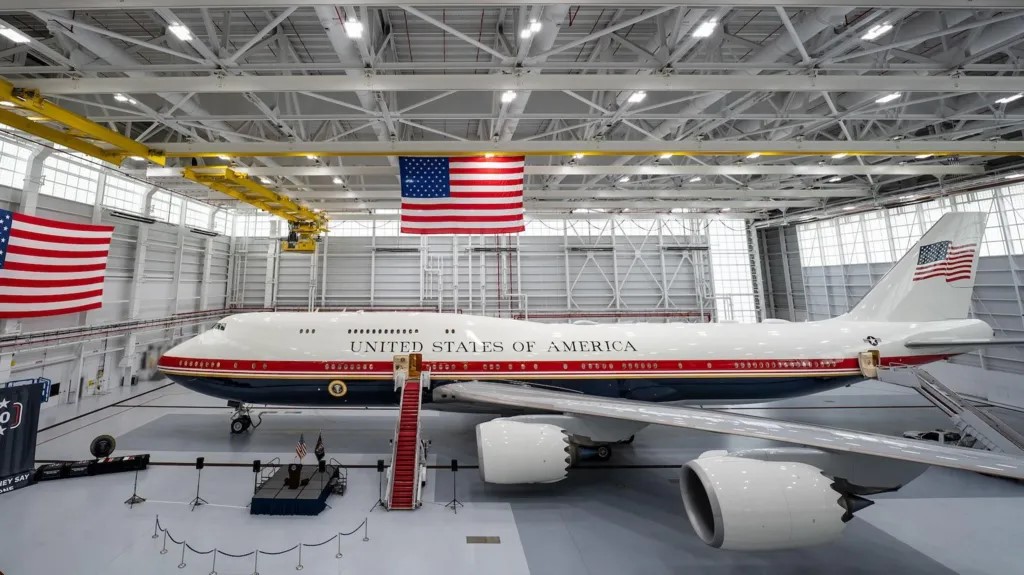
Jamie Raskin grounds Trump’s Qatar-gifted Air Force One – It is unconstitutional for a US president to accept the gift!

Qatar’s Airforce One

Dear Commons Community,

Trump unveiled the new presidential aircraft last week, a plane gifted by the Qatari government that has since undergone modifications. Trump has said he will not use the aircraft after leaving office and that it will eventually be donated to his future presidential library.

The Meidas Touch Network asked Raskin, the top Democrat on the House Judiciary Committee, if Trump gets to keep the jet after his presidency ends.

“No, he does not,” Raskin bluntly replied.

Raskin then explained:

“You know why? Because the Constitution says he can’t do it. Because the Constitution says that the president may not receive a present, an emolument, which means a payment, an office or title of any kind, whatever, from a king, a prince, or a foreign state without the consent of Congress. And Congress has not consented to him keeping a $400 million jet. So it’s got to be turned over immediately to Congress for our disposition. And we can either send it back to the people in Qatar, or we can keep it and do something different with it. But it doesn’t belong to the president.”

The Constitution’s foreign emoluments clause states: “No Title of Nobility shall be granted by the United States: And no Person holding any Office of Profit or Trust under them, shall, without the Consent of the Congress, accept of any present, Emolument, Office, or Title, of any kind whatever, from any King, Prince, or foreign State.”

Raskin pointed to President Abraham Lincoln’s decision to turn over “some elephant tusks he’d gotten from the King of Siam” to the State Department as a perfect example of how foreign gifts should be handled.

“Like, that’s the right way to do it,” he said. “Every other president has come to Congress to ask whether they can keep one of these foreign gifts from a government or a king or a prince. President Trump should be no different. He’s got to come to us too. And if not, we’ll just have to requisition it and confiscate it.”

Ethics concerns were raised when the gift — which Trump has argued is being given to the Department of Defense, not to him personally — was first reported last year.

At the time, Columbia Law School professor Richard Briffault told NPR that if the aircraft ultimately ends up in Trump’s presidential library, “then it’s not really a gift to the United States at all” and that accepting the plane would be a “pretty textbook case of a violation of the Emoluments Clause.”

This gift oozes of slime!

Tony


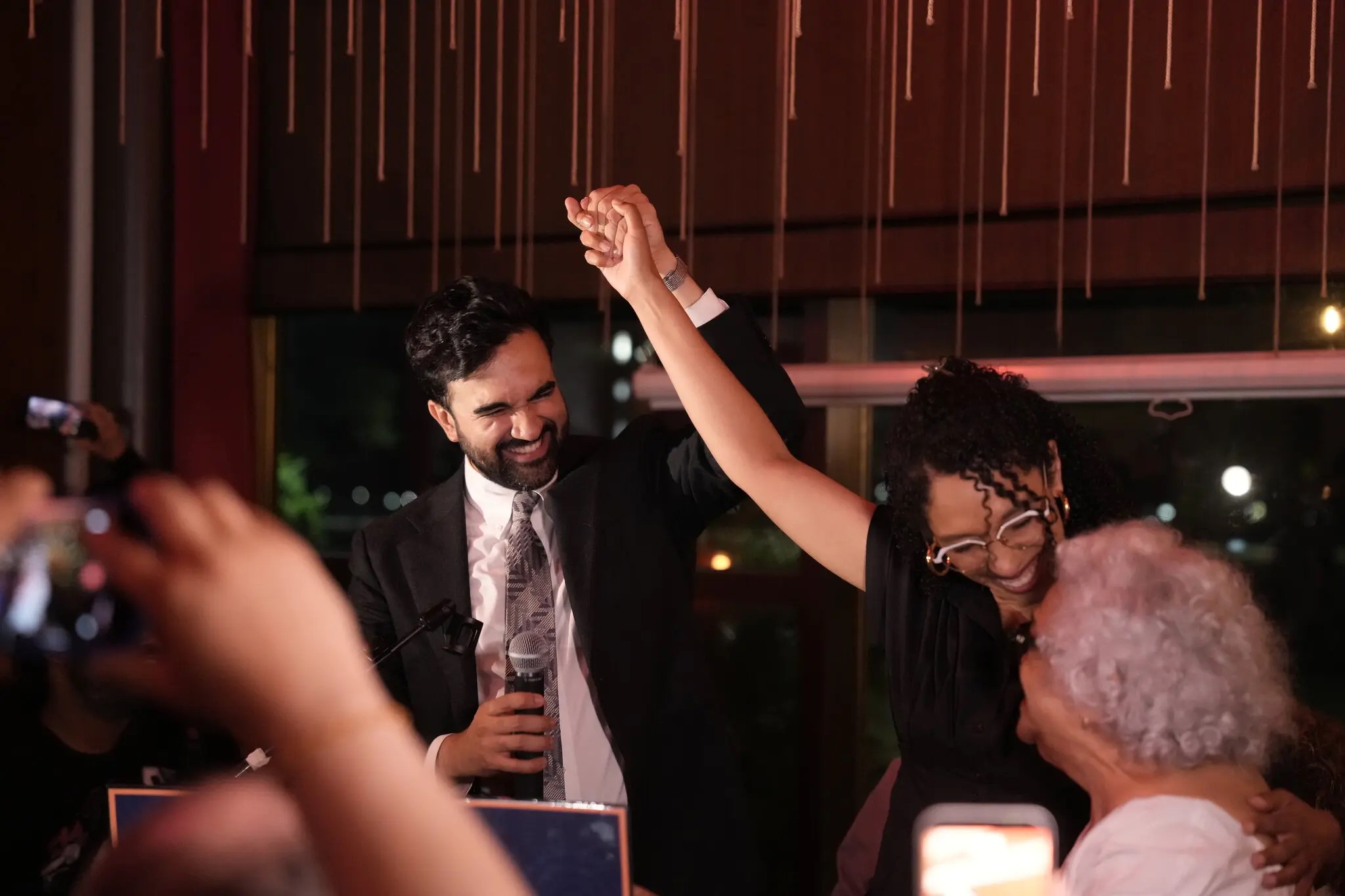
New York Mayor Zohran Mamdani Allies Sweep House Primaries in Big Night for Left-Wing Democrats

Mayor Zohran Mamdani made appearances at three victory parties on Tuesday, the last with Darializa Avila Chevalier.

Credit…Lexi Parra/The New York Times

Dear Commons Community,

Mayor Zohran Mamdani showed the strength of his progressive coalition in New York on Tuesday night, using his political muscle to elevate three like-minded candidates to victories in Democratic House primary races — including two that ousted incumbents.

The wins will help shape the party’s direction heading into the midterms in November, when Democrats hope to flip control of the House amid voter unease over issues including inflation and the war in Iran.  As reported by The New YorkTimes.

Mr. Mamdani had made a major gamble to parlay his popularity in the city to expand his progressive left-wing movement, and three of his allies won closely watched races: Brad Lander, the former city comptroller, and two democratic socialists, Darializa Avila Chevalier and Claire Valdez.

At Ms. Valdez’s watch party, Mr. Mamdani told the gathered crowd that the night’s results showed that his victory in the mayor’s race “was not the end of a political movement, it was the beginning.”

As Mr. Mamdani spoke, the crowd broke into chants of “D.S.A.! D.S.A.!” — a reference to the Democratic Socialists of America organization. “The old politics that got us into this crisis is not the politics that’s going to get us out of this crisis,” he said.

Ms. Avila Chevalier beat Adriano Espaillat, a powerful incumbent, in a stunning upset. Mr. Lander ousted Representative Dan Goldman. And Ms. Valdez, a state lawmaker, is now poised to succeed Representative Nydia Velázquez, who is retiring.

In another closely watched Democratic contest in Manhattan, Micah Lasher, a state assemblyman, emerged from a field including Jack Schlossberg, the grandson of John F. Kennedy, and is poised to succeed Representative Jerrold Nadler in a safely Democratic district. Mr. Mamdani did not make an endorsement in the race.

In the suburbs north of the city, Democrats picked Cait Conley, a national security expert and combat veteran, to challenge Representative Mike Lawler, one of Republicans’ most vulnerable incumbents, in November.

New York wasn’t the only state with action on Tuesday: In South Carolina, a candidate endorsed by President Trump beat another candidate endorsed by Mr. Trump in a runoff in the Republican primary for governor. In Maryland, Democrats picked a candidate to seek the seat of the retiring Representative Steny Hoyer.

Other primary outcomes:

  • Elsewhere in New York: In the North Country, Anthony Constantino, the sticker magnate who erected a 12-foot-high “VOTE FOR TRUMP” sign atop his company’s headquarters, won the Republican nomination to replace Representative Elise Stefanik. New York Democrats decided to again nominate their state comptroller of two decades, Thomas P. DiNapoli.
  • Maryland House primaries: Pro-Israel and pro-crypto super PACs spent millions to back Adrian Boafo, a moderate state delegate, who emerged from a crowded primary field for the Democratic nomination to succeed Mr. Hoyer. In another district, Representative April McClain Delaney fended off a challenge from former Representative David Trone, the former occupant of the seat, in one of the country’s most expensive House primaries.
  • Utah House primary: Court-ordered redistricting in Utah led to the creation of a deep-blue congressional district in Salt Lake City, meaning that Utah is likely to elect a Democrat to Congress this fall for the first time since 2018. Ben McAdams, a moderate former congressman who won that 2018 race, won the Democratic primary on Tuesday, defeating three progressive challengers, including Nate Blouin, a state senator backed by Senator Bernie Sanders of Vermont.
  • South Carolina runoff: Alan Wilson, South Carolina’s longtime attorney general, won a runoff in the Republican primary for governor, defeating Lt. Gov. Pamela Evette. Mr. Trump had given his coveted endorsement to both candidates. Mr. Wilson will face State Representative Jermaine Johnson in November. South Carolina has not elected a Democratic governor since 1998.

Tony

US Senate passes war powers resolution defying Trump’s Iran war authority

Dear Commons Community,

The US Senate approved a war powers resolution preventing Trump from continuing hostilities against Iran, delivering the president a significant but symbolic rebuke over a conflict that has proven unpopular with the American public.  

The resolution passed by a 50-48 vote, with four Republicans – Susan Collins of Maine, Lisa Murkowski of Alaska, Bill Cassidy of Louisiana and Rand Paul of Kentucky – breaking with their party to support its adoption. John Fetterman, of Pennsylvania, was the sole Democrat to vote against the resolution.  As reported by The Guardian.

The measure, which passed the House of Representatives earlier this month, would require the president to seek Congress’s authorization to use military force against Iran. It comes after Trump dispatched JD Vance to Switzerland to negotiate a settlement that would resolve the conflict the US began alongside Israel in February.

The resolution does not require the president’s signature, and Trump and his Republican allies have questioned the constitutionality of the 1973 War Powers Act under which it was passed. Nonetheless, its success underscores the discontent among Republicans over a conflict that has grown deeply unpopular with voters ahead of the November midterm elections, in which Republicans will be defending their control of Congress.

A Reuters/Ipsos poll released on Tuesday found that a mere 23% of Americans believed the United States was stronger because of the war with Iran; nearly two-thirds thought any truce with Tehran was unlikely to last.

The resolution’s passage in the Senate was enabled by the absences of two Republicans: Dave McCormick of Pennsylvania and Mitch McConnell of Kentucky, who was admitted to the hospital last week. Neither has supported previous war powers resolutions, which Democrats have been forcing votes on regularly since the war with Iran began.

“Trump’s historic blunder in Iran will go down in the history books as one of the worst foreign policy forays America has ever made, or any country has ever made,” the Democratic minority leader, Chuck Schumer, said ahead of the vote on Tuesday. “The American people have seen skyrocketing gas prices, soaring costs, and, tragically, the loss of 13 service members, and the wounding of hundreds more, and meanwhile, Iran took Trump to the cleaners.”

Greg Meeks, the top Democrat on the House foreign affairs committee who sponsored the resolution, said in a statement he would “explore all legal avenues to ensure the executive complies with the will of Congress”.

“Congress never authorized this failed war, and the president certainly has no authority to continue it indefinitely without our consent as the constitution demands,” Meeks said.

We are thankful for the four Republican senators who voted for this resolution, but more should have shown some gumption and voted for it also.

Tony

AI could breach government and business defenses in a matter of months not years!

Photo courtesy of DeepStrike.

Dear Commons Community,

AI models capable of launching major cyberattacks that could overwhelm the defenses of governments and businesses are months – not years – away, an international alliance of intelligence agencies warned in a joint statement.  As reported by CNN.

The Five Eyes grouping, comprising the United States, United Kingdom, Canada, Australia and New Zealand, urged governments and corporate leaders to “act now” to improve their defenses against sophisticated cyber threats.

The rare call to action comes after the Trump administration ordered AI giant Anthropic to suspend use of its most advanced models by foreign nationals, and highlights the growing unease among western nations about the emerging capabilities of the technology.

“Frontier Al models are anticipated to exceed current industry expectations, fundamentally transforming both offensive and defensive cyber capabilities. The timeline is not years, it is months,” the group of spy agencies said in the statement on Monday.

“The evolving landscape of artificial intelligence (AI) is rapidly transforming cyber risk, and we must act swiftly to remain ahead.”

AI researchers and executives have expressed various safety concerns over the advancing technology, which the Five Eyes leaders described as being able to lower “barriers for malicious actors and increases the speed and complexity of attacks.”

AI experts said the message is “really stark” and could have worrying implications, not just for governments and corporations, but for small and medium businesses around the world.

“What it was saying is that in an age of AI, breaches will occur. It’s not a matter of if, but when, so it’s important to get prepared now,” Olivia Shen, director of the Strategic Technologies Program with the United States Studies Centre at the University of Sydney, told CNN.

The US administration’s broad directive against Anthropic’s Mythos 5 and Fable 5 models was one of the furthest-reaching actions a government has taken in response to the advanced capabilities of an AI model.

Mythos had raised widespread cybersecurity concerns because the company said it was extremely adept at finding security flaws. But Anthropic said it believed the US government had “become aware” of a method of “jailbreaking” its public Fable model, or getting around its internal safety guardrails. Anthropic and the administration have been meeting to try and resolve the issue.

“The really key lesson for this is that AI capabilities are evolving incredibly rapidly,” Shen said, adding that even though the world’s attention is currently on Anthropic, someone else could produce the next highly capable one.

Everyday businesses most at risk

To counter the threat, businesses and leaders should invest in cyber defenses, upgrade old systems or patch faulty software, and limit who has access to critical systems, the Five Eyes leaders said.

And though AI is being used by adversaries to “move faster and more effectively,” it is also part of the solution, they added.

“Organizations that integrate AI tools into their security operations can detect vulnerabilities earlier, improve software quality, monitor unusual behaviour, and respond faster to incidents,” the security alliance said.

Shen, the AI and national security expert, said there was a “massive gap” in the defenses of many governments and businesses.

“Sophisticated businesses, usually your large corporations, they already invest in cybersecurity, and they’ll be better prepared,” she said. “The ones who are more exposed will be those small and medium-sized businesses who maybe have under invested so far, and they’ll basically be like sitting ducks.”

AI models are advancing at warp speed, and independent assessments have shown some models are now reaching expert levels of cyber capability. That pace has seemingly left lawmakers attempting to put in guardrails fighting a losing battle.

Currently there is no transparent, consistent framework for regulating AI in the United States. While some experts say the government should be involved in conversations about AI safety, others argue the result could stifle the industry.

Dozens of cybersecurity researchers, AI entrepreneurs, and corporate executives this month signed an open letter urging the Trump administration to commit to “an open, scientific and transparent process of handling AI risk assessments” and said it was “essential” for security teams to “find and fix flaws in their own newly-written as well as decades of legacy code faster than our adversaries.”

Shen acknowledged there is a “tightrope” to walk but said there needs to be some “ground rules.”

“We know these technologies can be used for both defensive and offensive purposes, and we need a few more guardrails about how we can maximize the benefits for defensive cyber security, while gate keeping it away from potential cyber adversaries and scammers and cyber criminals,” she said.

AI is here and we have done little to prepare for it.

Tony


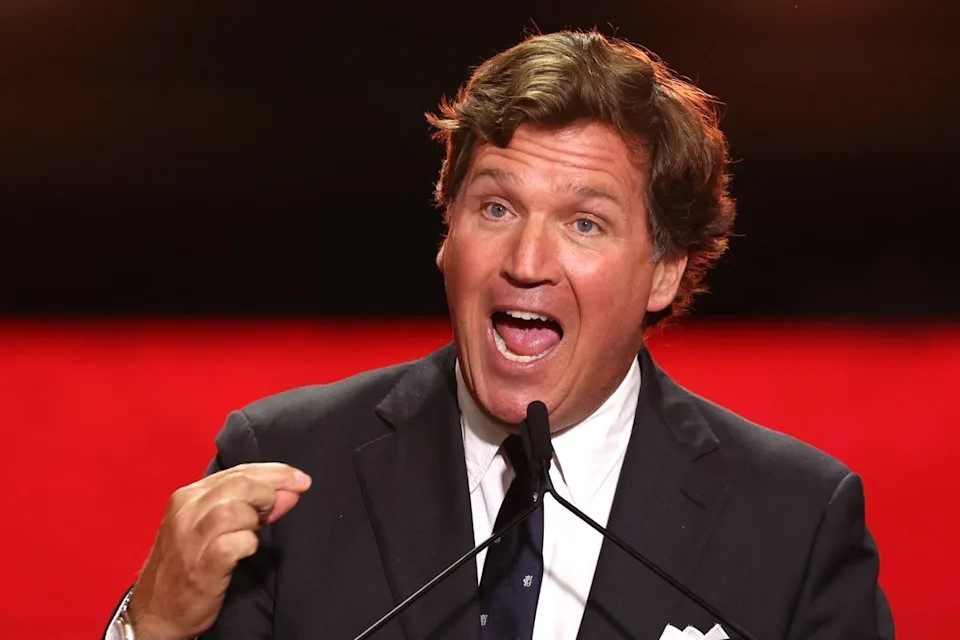
Tucker Carlson officially dumping the Republican Party!

Tucker Carlson   (AFP/Getty)

Dear Commons Community,

Conservative commentator Tucker Carlson is officially breaking with the Republican Party after spending decades as one of its most influential backers in the media.

On a recent episode of the Can’t Be Censored podcast, Carlson accused the party of “treasonous” actions and putting the interests of corporate donors and Israel above those of American citizens, especially regarding the Iran war.  As reported by The Independent.

“I would not support the Republican Party,” Carlson said. “There’s no chance I would support the Republican Party. I’m not going to support the Democratic Party — I don’t know what I’m going to do.”

“I voted Republican my entire life,” the podcaster continued. “I worked at Fox News, CNN, MSNBC. I’ve been a consistent defender for 35 years of the Republican Party, — I mean, a very consistent defender. There’s no defending this because it’s amoral and it’s exactly the opposite of what a political party in a democracy is charged with doing, which is representing its own voters, its own citizens, its own nation. And they’re not doing that.”

Carlson added that his defection, as well as polling showing the Iran war is unpopular, should serve as a wake-up call for the Republican Party.

“If I’m out, then I think a lot of other people are out,” he said.

The Independent has contacted the Republican National Committee and White House for comment.

Carlson’s comments come after months of public feuding between him and party leaders.

In April, he accused the Trump administration of failing to run the country well and pursuing unnecessary foreign wars, publicly apologizing for having campaigned on Trump’s behalf.

Carlson said he was “tormented by it” and that he was “sorry for misleading people.”

That month, Carlson also criticized the president after he told Iran to “open the F***in’ Strait” of Hormuz or they would be “living in Hell.”

“Who do you think you are?” Carlson said on his show. “You’re tweeting out the f-word on Easter morning?

This spring, amid Carlson’s frequent scathing criticism of the Iran war and influence of Israel on U.S. foreign policy, President Trump fired back that Carlson had “lost his way” and was no longer a part of the MAGA movement.

“I knew that a long time ago, and he’s not MAGA. MAGA is saving our country,” the president said in an interview in March.

Another Trump ally jumping ship!

Tony

New York Times Editorial Board: President Trump Lost This War

Credit:  Damon Winter/The New York Times

Dear Commons Community,

Over the weekend, The New York Times had a scathing editorial entitled, “President Trump Lost This War”, that outlined how his folly with Iran, has ended in a disastrous humiliation for our country.  The introduction that follows says it all.

“The preliminary deal ending President Trump’s four-month war with Iran is welcome but brings with it hard truths. Mr. Trump made a terrible mistake starting this war. He prosecuted it recklessly and in open defiance of the law. The United States is emerging weaker — militarily, diplomatically and economically — and will pay strategic costs for years to come.

The details of the deal are unclear, but the announced framework suggests that Mr. Trump has won few of the terms he insisted that he would. It is a humiliating comedown for him and the nation he leads”.

Below is the entire editorial.

Tony

——————————————————

The New York Times

Opinion

President Trump Lost This War

June 21, 2026

By The Editorial Board

The editorial board is a group of opinion journalists whose views are informed by expertise, research, debate and certain longstanding values. It is separate from the newsroom.

The preliminary deal ending President Trump’s four-month war with Iran is welcome but brings with it hard truths. Mr. Trump made a terrible mistake starting this war. He prosecuted it recklessly and in open defiance of the law. The United States is emerging weaker — militarily, diplomatically and economically — and will pay strategic costs for years to come.

The details of the deal are unclear, but the announced framework suggests that Mr. Trump has won few of the terms he insisted that he would. It is a humiliating comedown for him and the nation he leads.

Since the war began, he has said the United States would achieve “total and complete victory” and that Iran must agree to “unconditional surrender.” He suggested that regime change would occur. He said that Iran would be permitted “no enrichment” of uranium and that “the United States will, working with Iran, dig up and remove all of the deeply buried” near-bomb-grade nuclear material that it already holds.

None of this appears to be true. Iran’s hard-line government remains in place. The specifics of the nuclear agreement will apparently be negotiated over the next two months, but the terms seem likely to resemble those of a 2015 deal that President Barack Obama negotiated and that Mr. Trump canceled in 2018. He described the Obama agreement as the “worst deal ever” and said it put Iran on “a route to a nuclear weapon.” He criticized it for failing to force Iran to stop supporting terrorist groups like Hamas and Hezbollah and for loosening economic sanctions. Yet his destructive war seems likely to leave him with a similar deal.

His biggest achievement in the cease-fire framework is the expected reopening of the Strait of Hormuz to global shipping traffic, which will eventually reduce the prices of energy and other goods. That, of course, is merely a reversion to the prewar status quo. Iran closed the strait in retaliation, to damage the global economy and increase political pressure on the United States. The move worked, and Iran’s leaders now understand that they hold a powerful economic weapon.

On balance, Iran emerges the strategic winner of the four-month war. It did suffer substantial losses, including much of its navy, air force, military-industrial capacity and political leadership, including Ayatollah Ali Khamenei, the supreme leader, who was killed on the war’s first day. With the war ending, however, Iran’s leadership can begin rebuilding.

The United States, for its part, looks weaker in the eyes of the world. The American military has shown itself unable to quash a much smaller opponent even as it burned through many of its long-range precision missiles and interceptors. The outcome damages this country’s ability to deter other potential adversaries. To begin to repair the damage, the United States would be wise to mend alliances in Europe, the Middle East and Asia that have been frayed by the war’s military and economic effects. The Pentagon will also need to modernize and prepare for the wars of the future. Neither is likely to happen under President Trump.

Before the American and Israeli attack began on Feb. 28, Iran’s leadership had endured a miserable two and a half years. The government was far weaker than it had been before the Oct. 7, 2023, attack on Israel by Hamas, which Iran has long funded and advised. In response to that attack, Israel significantly diminished Hamas and Hezbollah, another Iranian proxy group. In Syria, a murderous, Iran-backed dictator fell while Iran’s leaders did little to save him. Israel and the United States exposed Iran’s air defenses and missile program as paper tigers when they bombed Iranian nuclear sites last summer, setting back its program. All the while, Iran’s currency continued to plummet, and its economy was in ruins. Starting late last year, Iranians took to the streets to protest, and the regime responded by killing thousands of them, if not tens of thousands.

All these problems remain, and Iran is still weaker than it was three years ago. But the war has given it leverage it did not have when 2026 began. Its regime has demonstrated that it can survive waves of attacks from its two biggest enemies. Its leaders have not had to abandon their nuclear ambitions. And they have learned that the rest of the world seems unwilling to use military force to reopen the Strait of Hormuz. If Iran chooses to close the strait at some point in the coming months or years, what will Mr. Trump do in response?

We lay out these facts with no pleasure. Iran has been and remains a force for ill. It represses its own people, especially political dissidents, women, L.G.B.T.Q. people and religious minorities. It is a world leader in torture and executions, and it has financed terrorism in its region and far beyond. Iran’s leaders have impoverished a country where per capita income was above the global average as recently as the 1970s.

The regime’s distinct brutality should have been reason for the United States to think carefully and plan cautiously for any war. The history of modern American wars, particularly in Iran’s region, is full of hubris that incubated defeat. Yet Mr. Trump eschewed thoughtful planning at every step.

He accepted the rose-colored assessment of Prime Minister Benjamin Netanyahu of Israel, who predicted that the Iranian regime would quickly fall. Mr. Trump dismissed the views of his aides who told him that Mr. Netanyahu’s forecast was farcical. Mr. Trump ignored the Constitution and refused to seek congressional approval for the war. He did not listen to European and Asian allies who opposed his war. He failed to plan for Iran’s obvious ability to close the Strait of Hormuz. He made threats about destroying Iranian civilization that succeeded only in diminishing America’s moral standing.

For his sins, he has now agreed to a peace framework that the entire world understands is a defeat for him. It is a setback for America, too.


Maureen Dowd:  Trump – The Creature from the Green Lagoon!

May be an image of pool and text that says 'The Reflecting Pool is a perfect metaphor for the Trump administration: -Ignore experts and science -Overspend -Declare early, historic victory -"THE LEFT HATE THIS" -Ends in total failure -Unfounded conspiracies about sabotage -MAGA pretends it doesn't actually matter @GindnaGh'

Dear Commons Community,

Maureen Dowd in her column yesterday, used the Reflecting Pool at the Lincoln Memorial as a metaphor for Trump.  Here is her introduction:

“A historian once told me that the presidency would distill Donald Trump to his essence.

That essence, it turns out, is trillions of microscopic organisms that suck up all the oxygen and endanger life around them.

That essence is slimy, stinky and unrelenting, as reflected in the mass of algae that infests the Reflecting Pool in front of the Lincoln Memorial. The president had pledged an “American flag blue” sheen, but the algae created green streaks that mar the $14 million makeover of the water mirror.

The algae is a perfect metaphor to reflect on our unreflective president and his impulsive and solipsistic style of governing.”

Her conclusion:

“A lot of Americans miss the days when we built grand things. So it’s appealing on its face that this crazy president can squash the bureaucracy and get it done. But as usual with Trump, you eventually have to accept that he’s incompetent and corrupt and tacky, and just an all-around mess.”

Ouch or should I say “Yecch”.

Her entire column is below.

Tony


The New York Times

Opinion

Maureen Dowd

Creature From the Green Lagoon

June 20, 2026

By Maureen Dowd

Opinion Columnist, reporting from Washington

A historian once told me that the presidency would distill Donald Trump to his essence.

That essence, it turns out, is trillions of microscopic organisms that suck up all the oxygen and endanger life around them.

That essence is slimy, stinky and unrelenting, as reflected in the mass of algae that infests the Reflecting Pool in front of the Lincoln Memorial. The president had pledged an “American flag blue” sheen, but the algae created green streaks that mar the $14 million makeover of the water mirror.

The algae is a perfect metaphor to reflect on our unreflective president and his impulsive and solipsistic style of governing.

“It looks like a Rothko,” said Amanda Aldous, a 36-year-old teacher who was gazing at the Reflecting Pool Wednesday, leading suburban Seattle middle schoolers on a tour. “I think any biologist could have said this was going to happen.”

This is the hallowed site where Marian Anderson serenaded a throng after getting banished from Constitution Hall for her race, and where Martin Luther King Jr. gave his “I Have a Dream” speech to an even bigger crowd around the 2,028-foot pool.

National Park Service workers in waders were sucking up the dead algae strewed along the bottom on Wednesday. A cooler of Popsicles helped them withstand the hot, humid weather in which the algae thrives.

Sign up for the Opinion Today newsletter  Get expert analysis of the news and a guide to the big ideas shaping the world every weekday morning. Get it sent to your inbox.

On Thursday, the Interior Department was claiming to have beat back the toxic blooms — while doing a drive-by trashing of Barack Obama to please the boss.

“The advanced nanobubbler technology very effectively killed the algae that has plagued every Lincoln Reflecting Pool reopening — most infamously Obama’s reopening — since 1922,” Interior posted on X. “The Reflecting Pool water is crystal clear, and our National Park Service team is now vacuuming up the dead algae resting on the bottom of some parts of the Reflecting Pool — just like the destroyed Iranian Navy resting on the bottom of the Persian Gulf.”

Reports of Trump victories, with the knotty issues of Iran and the Reflecting Pool, are premature. Iran is gloating about Trump’s bad deal. Senate Republicans who normally don’t have the temerity to challenge Trump are deriding it. And the hydrogen peroxide that park workers used to kill the algae is peeling off the “American flag blue” paint that Trump just had directed be applied to the bottom of the pool.

To give Trump his due, the capital needed freshening up in many spots and he’s the first president in a while to restore beautiful statues and fountains that had fallen into disrepair.

When she was a young woman working for a bond company in the ’30s, my mother would stop at Meridian Hill Park in Columbia Heights on her way home from work. But the gorgeous Italian Renaissance park she loved later grew parched and shabby. Over the past seven years, there was no water in the cascading fountain — the longest such fountain in North America — or in the placid pool beneath it.

Channeling his triumphant rebuilding of Wollman skating rink in Central Park, Trump cleaned up Meridian Hill Park and turned on the faucets, as he did with Union Station’s statue and majestic fountain.

But for each laudable effort, there’s a litany of loathsome ones, like his plans for the hulking ballroom, the egotistical Arc de Trump, the cheesy Mar-a-Lago patio where Jackie’s Rose Garden used to be and the desecration — now halted by a federal judge — of The John F. Kennedy Center for the Performing Arts. (This past week, a striped wrap was still covering the center’s facade, where workers had removed Trump’s name. All you could see was “The John” on one side and “forming” on the other.)

Trump wants to tear up Hains Point, where generations of D.C. kids biked and played miniature golf, for an exclusive golf course.

Even when Trump starts with a glimmer of truth — that many iconic spots in D.C. had been allowed to shamefully deteriorate — he goes overboard in such a Trumpian way that he often ends up making things worse.

He orders up bulldozers in the middle of the night, arrogantly refusing to get input from planning experts or Congress in this most meticulously and symbolically arranged federal city.

His habit of rushing in unilaterally, refusing to consult anyone except sycophants, insisting the results are amazing even when we can see that they’re not, also led to the debacle of Elon Musk and DOGE and the humiliation in Iran.

He imposes his rococo, Brobdingnagian taste on our fabled buildings, crashing around ruining the classical style and perfect proportions of a city design inspired by Paris. Trump engages in cronyism on contracts and profligacy and, for all his gushing about THE BEST, he allows inefficacy to flourish.

The president as a maniacal urban planner is a white-knuckle ride, with Washington — and Washingtonians — just holding on for dear life.

When those he hasn’t consulted complain about the misguided schemes, he lambastes and gaslights them on Truth Social, insisting that everything will be AMAZING. As the rival developer Leona Helmsley once said of Trump, “I wouldn’t believe him if his tongue was notarized.”

The Babylon Bee posted a satirical video suggesting that if a female president was mercurial — launching foreign wars, trade wars and petty feuds — and focusing on gewgaws and shoes, she’d be endlessly belittled.

A lot of Americans miss the days when we built grand things. So it’s appealing on its face that this crazy president can squash the bureaucracy and get it done. But as usual with Trump, you eventually have to accept that he’s incompetent and corrupt and tacky, and just an all-around mess.