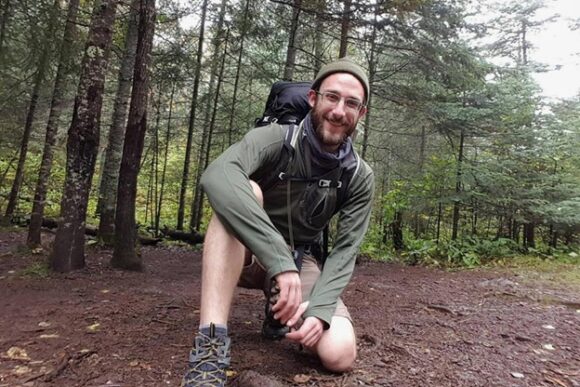
Minnesota Republican Chris Madel drops out of governor’s race, citing Trump/GOP handling of immigration enforcement!

US-NEWS-MINN-ICE-SHOOTING-AGENT-LEGAL-MS (Aaron Lavinsky / TNS/ABACA via Reuters Connect)

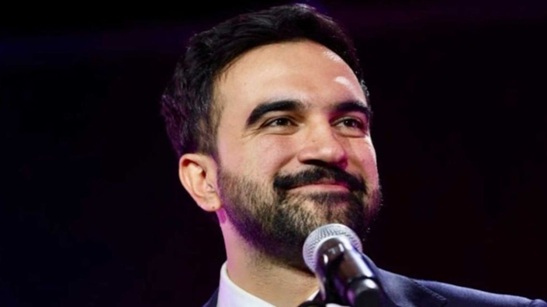
Chris Madel. (Aaron Lavinsky / TNS/ABACA via Reuters Connect) (Aaron Lavinsky)

Dear Commons Community,

Republican Chris Madel announced yesterday that he was ending his run for Minnesota governor, pointing to his party’s handling of immigration enforcement in his state as his rationale.

“I cannot support the national Republicans’ stated retribution on the citizens of our state, nor can I count myself a member of a party that would do so,” Madel said in a video posted to X.

In the nearly 11-minute video, Madel emphasized that he supports Immigration and Customs Enforcement’s “originally stated goals” in their Operation Metro Surge in his state. He argued, though, that the operation “has expanded far beyond its stated focus on true public safety threats.”

He pointed to U.S. citizens carrying papers to prove their citizenship and Hispanic and Asian law enforcement officers who he says “have been pulled over by ICE on pretextual stops.”

Madel, an attorney, also argued that “the national Republicans have made it nearly impossible for a Republican to win a statewide election in Minnesota.”

His decision to drop out of the race marks some of the most pointed GOP backlash yet to Republicans’ handling of the killing of Alex Pretti by a Border Patrol agent.

Earlier this month, Madel said he helped ICE agent Jonathan Ross with paperwork to get Justice Department legal representation if he is sued or charged with a crime. Ross shot and killed Renee Nicole Good earlier this month, sparking a surge of protests.

Madel’s decision comes as several Republicans in Congress have called for a full investigation into the killing of Pretti on Saturday.

Sen. Pete Ricketts, R-Neb., said in a post to X that he expected a “a prioritized, transparent investigation into this incident.” Sen. Dave McCormick, R-Pa., said in a post that there must be “a full investigation into the tragedy,” and Rep. Max Miller, R-Ohio, said in a post that “there are serious unanswered questions about federal use of force in Minnesota.”

Several other Republicans are still vying to be the party’s nominee in the governor’s race. Sen. Amy Klobuchar, D-Minn., has filed relevant paperwork for a potential run but has not yet said whether she will enter the race.

You can’t blame Madel for dropping out!

Tony

Minnesota CEOs issue joint letter urging de-escalation in Minneapolis after shooting

Protesters advance toward federal agents with their hands up near the site of the fatal shooting of 37-year-old Alex Pretti by federal agents in Minneapolis on Saturday, Jan. 24, 2026. (Ellen Schmidt/MinnPost via AP)

Protesters advance toward federal agents with their hands up near the site of the fatal shooting of 37-year-old Alex Pretti by federal agents in Minneapolis on Saturday, Jan. 24, 2026. (Ellen Schmidt/MinnPost via AP)

Dear Commons Community,

If Trump won’t listen to government officials in Minnesota, maybe he will listen to the CEOs of its major businesses. The Associated Press is reporting that more than 60 CEOs of Minnesota-based companies including Target, Best Buy and UnitedHealth signed an open letter posted on the Minnesota Chamber of Commerce website yesterday calling for state, local and federal officials to work together, as businesses grapple with how to address tensions in the state and across the country following two fatal shootings by federal agents amid a massive immigration enforcement operation that has spurred protests.

“With yesterday’s tragic news, we are calling for an immediate deescalation of tensions and for state, local and federal officials to work together to find real solutions,” the open letter reads. As reported by The Associated Press.

CEOs that signed the letter included 3M CEO William Brown, Best Buy CEO Corie Barry, General Mills CEO Jeff Harmening, Target incoming CEO Michael Fiddelke, UnitedHealth Group CEO Stephen Helmsley, and others.

Before the letter, most of the biggest Minnesota-based companies had not issued any public statements about the enforcement surge and unrest.

But the issue has become more difficult to avoid. Over the past two weeks protesters have targeted some businesses they see not taking a strong enough stand against federal law enforcement activity, including Minneapolis-based Target. Earlier in January a Minnesota hotel that wouldn’t allow federal immigration agents to stay there apologized and said the refusal violated its own policies after a furor online.

Trump, unbowed by backlash to Minneapolis shooting, blames Democrats for ‘chaos’

Meanwhile, the state of Minnesota and the Twin Cities cited devastating economic impacts in a lawsuit filed this month imploring a federal judge to halt the immigration operations. The lawsuit asserted that some businesses have reported sales drops up to 80%.

“In this difficult moment for our community, we call for peace and focused cooperation among local, state and federal leaders to achieve a swift and durable solution that enables families, businesses, our employees, and communities across Minnesota to resume our work to build a bright and prosperous future,” the letter reads.

Listen, listen, listen!

Tony

Maureen Dowd: The Un-American President

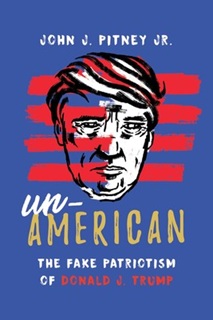
This image is from the cover of John J. Pitney’s book entitled un-American.


Dear Commons Community,

New York Times columnist, Maureen Dowd had a piece yesterday entitled, “The Un-American President.”  She is clear in her disdain for what Trump is doing to our country’s core values. Here is an excerpt.

“It is heartbreaking that on the cusp of our 250th anniversary, we have a president who is perverting all the values our country was founded on — looking out for one another, respecting one another’s rights.

America is not supposed to be a place where an angel-faced 5-year-old named Liam, with a floppy-eared hat and a Spider-Man backpack, gets seized and taken to a detention center by men in masks.

The American leader is meant to be a unifier, a strong and soothing presence in the world. Trump is an anarchic toddler, constantly causing upheaval across the globe, transgressing and remaking everything in his helter-skelter image. He has no interest in fireside chats; he wants to set fires.

Her conclusion:

“My parents inculcated us with patriotism and gratitude for this country. I grew up surrounded by men in uniform. My mother carried around a pocket-size Constitution in her purse…She did not want to see us on July 4 if we were not in red, white and blue. I know what America is meant to stand for.

Trump has made America un-American.”

Below is Dowd’s entire column.

Tony

—–————————————————

The New York Times

The Un-American President

By Maureen Dowd

Opinion Columnist, reporting from Washington.

Jan. 24, 2026

I saw the charismatic Italian conductor Gianandrea Noseda lead the National Symphony Orchestra on Thursday, in a program called “Songs of Destiny & Fate.”

The Brahms, Bach and Vivaldi were a soothing tonic to President Trump’s soundtrack, which is akin to the stabbing, shrieking Bernard Herrmann score for Hitchcock’s “Psycho” shower scene.

The concert began with “The Star-Spangled Banner.” Even before Trump blasphemously interloped onto the Kennedy Center’s name, Horrible Trump Culture War Enforcer Ric Grenell had dictated that all National Symphony Orchestra concerts begin with the national anthem.

I’m always happy to put my hand on my heart and listen to the ode to our flag and this “heav’n rescued land.” My father always had an American flag flying and took it down at sundown as a sign of respect, which was the custom then. When I won a Pulitzer, New York’s very cool senator, Daniel Patrick Moynihan, sent me a flag that had flown over the Capitol, which I cherish.

But it felt tinny to be force-fed “The Star-Spangled Banner” by our solipsistic president and his creepy sycophants, who show nothing but disdain for the Constitution and American values. It was our country’s destiny to reflect ideals that made us an incandescent beacon for democracy. But Trump has pulverized those ideals. We are now seen as sinister, selfish, unruly and at everybody’s throat.

Jack Smith’s testimony before Congress on Thursday was a stinging reminder that Trump tried to overthrow the government and wickedly put lawmakers and his own vice president in harm’s way.

“Our investigation revealed that Donald Trump is the person who caused Jan. 6, that it was foreseeable to him and that he sought to exploit the violence,” Smith said.

It is heartbreaking that on the cusp of our 250th anniversary, we have a president who is perverting all the values our country was founded on — looking out for one another, respecting one another’s rights.

America is not supposed to be a place where an angel-faced 5-year-old named Liam, with a floppy-eared hat and a Spider-Man backpack, gets seized and taken to a detention center by men in masks.

The American leader is meant to be a unifier, a strong and soothing presence in the world. Trump is an anarchic toddler, constantly causing upheaval across the globe, transgressing and remaking everything in his helter-skelter image. He has no interest in fireside chats; he wants to set fires.

He’s more about droit du seigneur than noblesse oblige. He feels entitled to whatever he wants, from Greenland to Canada to the Kennedy Center to a Nobel Prize he didn’t win. Unlike previous presidents, he isn’t countering Russia; he’s catering to it. He disparaged the NATO troops who died for us in Afghanistan and belittled our nicest neighbor, claiming that “Canada lives because of the United States.”

Demanding Greenland, which he kept calling Iceland, he whinged to global leaders at Davos: “All I want is a piece of ice.”

The depth of his shallowness is infinite.

One Canadian columnist asked: “How would Trump behave differently if he was legitimately losing his mind?”

I understand the importance of legal immigration. My Irish father fought in the infantry in World War I to earn his citizenship. Nobody wants illegal criminals here. President Joe Biden let the border run amok.

But in the new New York Times/Siena University poll, a sizable majority said ICE had gone too far. Trump responded by saying he would expand his lawsuit against The Times to include the poll, because his rampaging vanity cannot accept falling numbers; the poll indicated that 42 percent of voters said he was ramping up to be one of the worst presidents in American history.

We have watched in horror as Minneapolis has morphed into an eerie war zone: ICE claiming that its officers are allowed to barge into people’s homes without judicial warrants; an ICE agent shooting an unarmed mom with stuffed animals in her glove compartment three times until she was dead; ICE dragging a Minnesota man — a Hmong immigrant and naturalized U.S. citizen with no criminal record — out of his house into the snow, wearing only underwear and Crocs; ICE detaining four children, including little Liam, from one school district. (An F.B.I. agent who wanted to investigate the ICE agent who shot the mom resigned after bureau officials told her to stop her inquiry.)

“Why detain a 5-year-old?” a flustered Zena Stenvik, the town’s superintendent, keened at a press conference.

It is clear the Trump crowd sees no difference between a criminal who crossed into the country illegally and a family that has applied for asylum and is doing everything the right way to stay here.

My parents inculcated us with patriotism and gratitude for this country. I grew up surrounded by men in uniform. My mother carried around a pocket-size Constitution in her purse, along with miniature bottles of Tabasco. She did not want to see us on July 4 if we were not in red, white and blue. I know what America is meant to stand for.

Trump has made America un-American.

NYC Mayor Zohran Mamdani calls for ICE to be abolished!


New York City Mayor Zohran Mamdani

Dear Commons Community,

Earlier this week, New York City Mayor, Zohran Mamdani, called for ICE to be abolished. The piece below was posted on a Facebook account maintained by Liz Cheney and Adam Kinzinger.   This was sent to me by my colleague Gary Miller.  · 

“Mayor Zohran Mamdani rises to the moment by calling for ICE to be totally abolished because it’s “terrorizing people” regardless of their immigration status and the law as written.

You can’t reform a fascist paramilitary organization..

“I am in support of abolishing ICE and I’ll tell you why,” the New York City mayor said during an appearance on The View. “What we see is an entity that has no interest in fulfilling its stated reason to exist. We’re seeing a government agency that is supposed to be enforcing some kind of immigration law but instead what it’s doing it’s terrorizing people no matter their immigration status, no matter the facts of the law, no matter the facts of the case.”

“And I’m tired of waking up every day and seeing a new image of someone being dragged out of a car, dragged out of their home, dragged out of their life,” he continued. “What we need to see is humanity. And there is a way to care about immigration in this city and in this country with a sense of humanity. What we’re seeing from ICE is not it and we have not seen that from them in a long, long time.”

During the same segment, Mamdani tore into the fact that Trump’s enforcers are wearing masks to conceal their identities.

“Masked agents. You know, I am trying to inspire amongst New Yorkers a sense of faith and belief in what government can do and it’s very hard to do that when they look at masked agents and see them as another face of a similar government,” said the mayor. “Because then they ask themselves: ‘Am I supposed to trust or am I supposed to fear?'”

“And what we want is for New Yorkers to be able to look to government as a place to solve their problems not as a place that creates their problems,” he added.

Life in America might be growing grimmer by the day thanks to Trump’s disastrous domestic policies and fascist imperialism overseas, but Zohran Mamdani remains a genuine ray of hope in the darkness.

This is what it looks and sounds like when Americans elect a leader who actually prioritizes their needs over personal profit or the demands of special interests and corporations. Already, he has teamed up with New York Governor Kathy Hochul to announce universal childcare for two-year-olds in New York City. He also unveiled a $4 million proposal to build new high-quality bathrooms throughout the city. Progress is possible, it just requires vision and commitment.

In addition to materially improving the lives of his constituents, Mamdani is presenting a moral paradigm for leadership that stands in stark contrast to Trump’s rank, immoral gangsterism. His call to abolish ICE is part of that moral framework. He’s not saying that we can’t have immigration law, he’s saying that this organization, riddled as it is with undertrained, overweight MAGA fanatics with a thirst for blood can’t be “fixed.” It has to be torn down completely.

Amen!

Tony

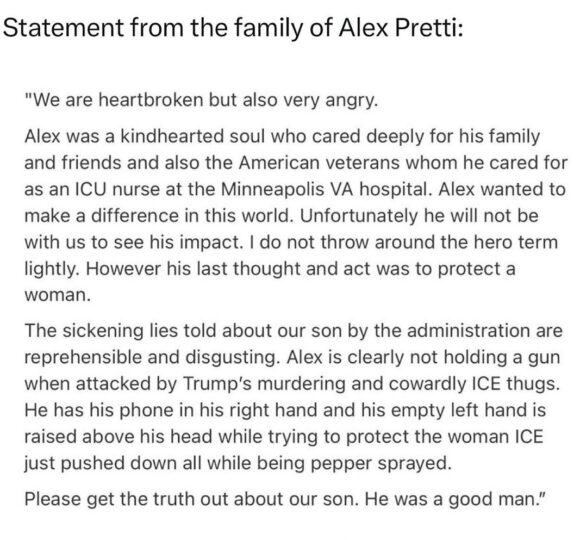
Alex J. Pretti, man killed by a US Border Patrol officer in Minneapolis was an ICU nurse.

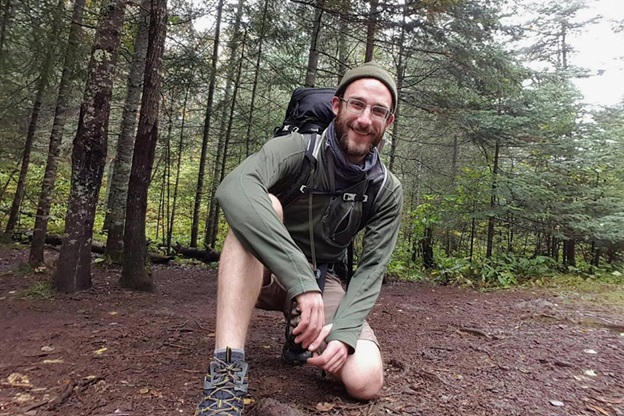
Alex J.  Pretti. Courtesy of the AP.

Dear Commons Community,

Alex J.  Pretti, the man killed by a U.S. Border Patrol officer in Minneapolis yesterday was an intensive care nurse at a VA hospital who cared deeply about people and was upset by  Trump’s immigration crackdown in his city.  As reported by The Associated Press.

Pretti, 37, was an avid outdoorsman who enjoyed getting in adventures with Joule, his beloved Catahoula Leopard dog who also recently died. He worked for the U.S. Department of Veterans Affairs and had participated in protests following the Jan. 7 killing of Renee Good by an Immigration and Customs officer.

“He cared about people deeply and he was very upset with what was happening in Minneapolis and throughout the United States with ICE, as millions of other people are upset,” said Michael Pretti, Alex’s father. “He thought it was terrible, you know, kidnapping children, just grabbing people off the street. He cared about those people, and he knew it was wrong, so he did participate in protests.”

Pretti was a U.S. citizen, born in Illinois. Like Good, court records showed he had no criminal record and his family said he had never had any interactions with law enforcement beyond a handful of traffic tickets.

In a recent conversation with their son, his parents, who live in Colorado, told him to be careful when protesting.

“We had this discussion with him two weeks ago or so, you know, that go ahead and protest, but do not engage, do not do anything stupid, basically,” Michael Pretti said. “And he said he knows that. He knew that.”

The Department of Homeland Security said the man was shot after he “approached” Border Patrol officers with a 9 mm semiautomatic handgun. Officials did not specify if Pretti brandished the gun. In bystander videos of the shooting that emerged soon after, Pretti is seen with a phone in his hand but none appears to show him with a visible weapon.

Family members said Pretti owned a handgun and had a permit to carry a concealed handgun in Minnesota. They said they had never known him to carry it.

Alex Pretti’s family struggles for information about what happened

The family first learned of the shooting when they were called by an Associated Press reporter. They watched the video and said the man killed appeared to be their son. They then tried reaching out to officials in Minnesota.

“I can’t get any information from anybody,” Michael Pretti said Saturday. “The police, they said call Border Patrol, Border Patrol’s closed, the hospitals won’t answer any questions.”

Eventually, the parents called the Hennepin County Medical Examiner, who they said confirmed had a body matching the name and description of their son.

As of Saturday evening, the family said they had still not heard from anyone at a federal law enforcement agency about their son’s death.

After seeing videos of top Trump administration officials suggesting their son was a “domestic terrorist” who attacked the officers who shot him, they issued a written statement describing themselves as both heartbroken and angry.

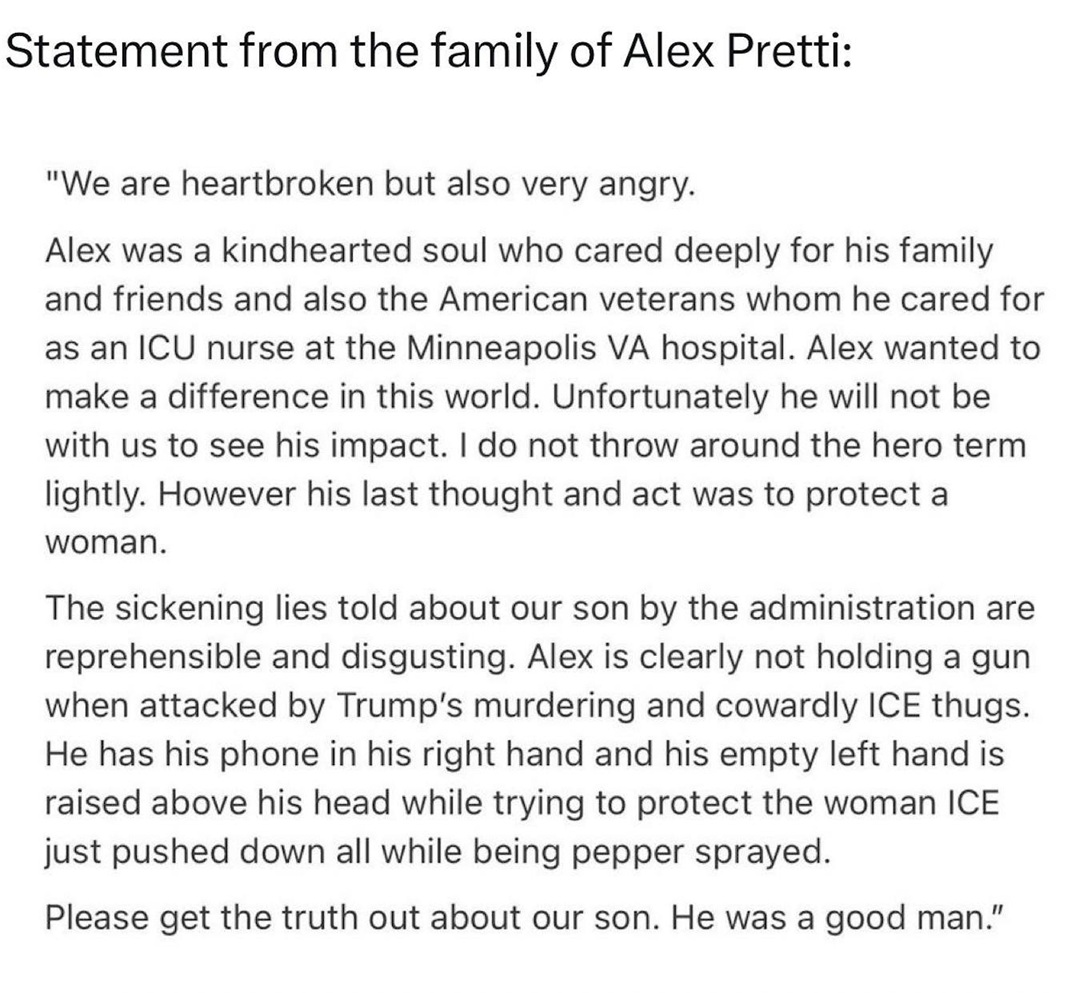
“The sickening lies told about our son by the administration are reprehensible and disgusting,” the family’s statement said. They added that videos showed Alex Pretti was not holding a gun when he was tackled by federal agents, but holding his phone with one hand and using the other to shield a woman who was being pepper-sprayed.

“Please get the truth out about our son. He was a good man,” they said.

Alex Pretti grew up in Green Bay, Wisconsin, where he played football, baseball and ran track for Preble High School. He was a Boy Scout and sang in the Green Bay Boy Choir.

After graduation, he went to the University of Minnesota, graduating in 2011 with a bachelor’s degree in biology, society and the environment, according to the family. He worked as a research scientist before returning to school to become a registered nurse.

Alex Pretti had protested before

Pretti’s ex-wife, who spoke to the AP but later said she didn’t want her name used, said she was not surprised he would have been involved in protesting Trump’s immigration crackdown. She said she had not spoken to him since they divorced more than two years ago and she moved to another state.

She said he was a Democratic voter and that he had participated in the wave of street protests following the killing of George Floyd by a Minneapolis police officer in 2020, not far from the couple’s neighborhood. She described him a someone who might shout at law enforcement officers at a protest, but she had never known him to be physically confrontational.

She said Pretti got a permit to carry a concealed firearm about three years ago and that he owned at least one semiautomatic handgun when they separated.

Pretti had ‘a great heart’

Pretti lived in a four-unit condominium building about 2 miles (3.2 kilometers) from where he was shot. Neighbors described him as quiet and warmhearted.

“He’s a wonderful person,” said Sue Gitar, who lived downstairs from Pretti and said he moved into the building about three years ago. “He has a great heart.”

If there was something suspicious going on in the neighborhood, or when they worried the building might have a gas leak, he would jump in to help.

Pretti lived alone and worked long hours as a nurse, but he was not a loner, his neighbors said, and would sometimes have friends over.

His neighbors knew he had guns — he’d occasionally take a rifle to shoot at a gun range — but were surprised at the idea that he might carry a pistol on the streets.

“I never thought of him as a person who carried a gun,” said Gitar.

Pretti was also passionate about the outdoors

A competitive bicycle racer who lavished care on his new Audi, Pretti had also been deeply attached to his dog, who died about a year ago.

His parents said their last conversation with their son was a couple days before his death. They talked about repairs he had done to the garage door of his home. The worker was a Latino man, and they said with all that was happening in Minneapolis he gave the man a $100 tip.

Pretti’s mother said her son cared immensely about the direction the county was headed, especially the Trump administration’s rollback of environmental regulations.

“He hated that, you know, people were just trashing the land,” Susan Pretti said. “He was an outdoorsman. He took his dog everywhere he went. You know, he loved this country, but he hated what people were doing to it.”

A senseless killing!

Below is a statement from Alex Pretti’s family.

Tony

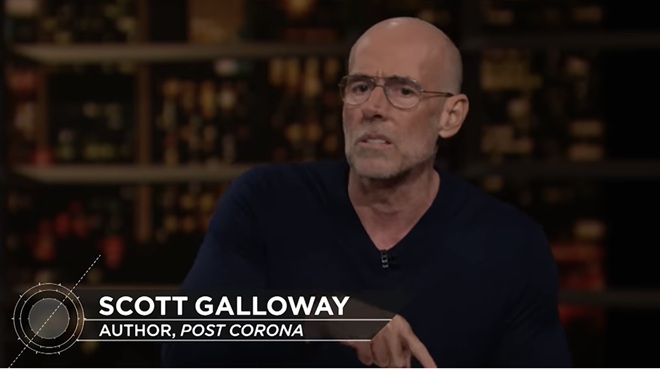
Economist Scott Gallaway:  “America has been the operating system of the world…now the American brand is chaos, corruption, and coercion”

Dear Commons Community,

The following comments appeared in Fortune.

Tony

——————————————————————–

When BlackRock CEO Larry Fink became co-chair of the World Economic Forum last year, he called up U.S. President Donald Trump and asked him to come speak. Fink also called Scott Galloway, an author, podcaster and NYU Stern marketing professor who has a very different view of what will make America great. As Galloway told me last night at our annual Fortune Global Leadership Dinner: “Larry Fink called me and said, ‘I want you to come.’ That was more than enough.”

With all the focus at WEF on heads of state—I even joined a media scrum after Trump’s meeting with Ukraine leader Volodymyr Zelensky—I thought I’d bring you some insights from my conversation with Galloway. (I first met Galloway in 2009 as a fellow mentor at the Kairos Summit organized by then Wharton student Ankur Jain, who went on to found Bilt Group.)

Galloway last attended WEF in 1999. “The call sign of America back then was consumerism; it was more cooperation, alliances. Now, I feel the American brand is chaos, corruption, and coercion,” he said. “America has been the operating system of the world … There’s just a sense of unease … In 1999, we said ‘we want more,’ now we want to make sure things don’t get worse.” He praised Canadian Prime Minister Mark Carney’s speech as the best of the week. “All 27 member EU states should have been sitting behind him,” Galloway said. “Right now, it’s like Germany and the 26 dwarves.”

In soliciting both Galloway and Trump to come to Davos, Fink understands the power of WEF in bringing opposing world views under one roof. I heard Saudi Tourism Minister HE Ahmed Al-Khateeb compare notes with Switzerland Tourism CEO Martin Nydegger, saw Commerce Secretary Howard Lutnick chat with random people in the hall, including me, and witnessed dozens of global leaders find areas of commonality at our dinners and lunches. (That’s why I also appreciated having Deloitte, Aon, PMI, Toptal, and Workday sponsor editorial gatherings that let us create our own village greens.)

On Monday, I moderated a CEO salon to discuss the results of the 2026 Edelman Trust Barometer, in which 70% of this year’s respondents expressed an “insular” mindset; they don’t want to talk to, work for, or even be in the same space with anyone who doesn’t share their world view. Richard Edelman told me CEOs need to urgently address the sense of grievance that’s consuming the business world. 

What leaders achieved at Davos is never immediately obvious—the details of the Greenland deal, for one, are still sketchy—but by showing up, Davos participants were at least coming together with an instinct to connect. That’s a good place to start.


Preparing for a Winter Storm: 5 Essential Things to Survive!

Dear Commons Community,

As most of the country gets prepared for a major winter storm, here are five things that that will help you survive its worst effects.

  1. Backup Heat Source (That’s Safe Indoors)

When the power goes out, your home’s central heating system likely goes with it. That’s why having a safe, non-electric heat source is critical. Extra blankets, sleeping bags, and even a tent set up indoors can help trap body heat. You want to do everything you can to prevent hypothermia, especially for seniors and young children.

  1. Get More Water Than You Think You’ll Need

Water is often overlooked during winter storm prep, but it’s one of the most important supplies. Pipes can freeze or burst, and if your water supply is interrupted, you’ll need a backup. FEMA recommends at least one gallon of water per person per day for at least three days. Store water in clean containers, and consider filling bathtubs or sinks before the storm hits. Don’t forget water for pets, too.

  1. Battery-Powered Light and Power Banks

When the lights go out, you’ll need a reliable way to see and stay connected. Flashlights, headlamps, and LED lanterns are safer than candles, which pose a fire risk. Stock up on extra batteries and keep them in a waterproof container. Power banks or portable chargers can keep your phone alive for emergency calls or weather updates. Some solar-powered or hand-crank options are great for extended outages.

  1. Non-Perishable, High-Energy Food

Instead of perishable items like milk and bread, focus on shelf-stable, high-calorie foods. Think peanut butter, granola bars, jerky, and trail mix. These foods don’t require cooking and can provide the energy you need to stay warm and alert. A manual can opener is a must if you’re relying on canned goods. Bonus: they take up less space and last longer than a loaf of bread.

  1. Emergency Communication and Weather Alerts

Staying informed during a storm is just as important as staying warm. Cell service may be spotty, so don’t rely solely on your phone. Write down important phone numbers in case your contacts aren’t accessible. Knowing what’s happening outside your door can help you make smart, timely decisions.

It’s Not About Panic

Winter storms don’t care if you’re ready. The goal isn’t to panic-buy, but to prepare smartly and calmly. Focus on the essentials that truly matter when the grid goes down. With the right supplies, you can ride out any storm safely and confidently.

God speed!

Tony

How a provost dealt with a psychiatric illness!

Stellalevi/DigitalVision Vectors/Getty Images

Dear Commons Community,’

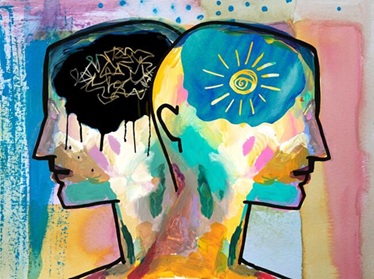
My colleague, Chet Jordan, just had an article published yesterday in Inside Higher Education entitled, “Something We Don’t Talk About: Navigating Senior Leadership With a Psychiatric Illness.”  It is an insightful look at how a provost dealt with type-one bipolar disorder.

An important read for all of us.  Below is the entire piece.

Tony

—————————————————————————-

Inside Education

Something We Don’t Talk About: Navigating Senior Leadership With a Psychiatric Illness

I had to step away from my provost’s role for my health.

By  Chet Jordan

About two years ago, I was diagnosed with a severe course of type-one bipolar disorder, which means I suffer from strong and unpredictable mood shifts. The diagnosis initially shocked me and, at once, gave me relief. For decades I struggled with intense anxiety, emotional swings, delusions of grandeur, excessive spending and tumultuous relationships. And, for many of those years, I assumed all of these were flaws of character that I had to fix. I never imagined I had an illness.

For most of my adult life, I have been a professor, researcher and college administrator. I was only 26 when I taught my first class at Brooklyn College. Teaching and university life was like putting on a jacket that fit perfectly. I loved long Socratic conversations with students, laughing in the office with other faculty and the freedom of time that one enjoys as a professor. My early career was electric. In just 10 years I helped open a new community college in New York City, finished my Ph.D., wrote three books, spoke at countless conferences and became a dean and provost.

Underneath the accomplishments was a growing, darkening disturbance in my mind. As an administrator, I drove three hours every day to Greenfield Community College in western Massachusetts to help my institution reopen after COVID, increase enrollment, build new programs and address problems in business and academic operations. All my successes looked great on paper, and my curriculum vitae grew. I was able to lead a strong executive team, rebuild enrollment levels and restructure academic affairs.

However, as time progressed, frustration on campus grew as my team led a series of rapid institutional changes that shocked and angered many faculty and staff. By this point, the severity of my disease became too strong to manage and exploded into a period of drinking, spending and impulsive behaviors. Mania had taken hold.

After nine months or so, the consequences of this manic episode crashed around me and my mood quickly spiraled into a deep depression. On Valentine’s Day a couple of years ago, I told my husband that I felt like something was desperately trying to kill me. My therapist and psychiatrist agreed that I had a severe course of bipolar disorder, a disease I knew little about at the time. I told them I felt like I was going to kill myself every day and had no ability to stop it.

My doctors quickly prescribed strong antidepressants, mood stabilizers, antipsychotics and sleeping pills. Adjusting to the new medications took many months and depression held firm for a long time. By spring I was no longer able to work and took an extended medical leave. I felt horrible for abandoning my staff; my president, whom I cared so much for; and all the great work we had done over the past few years. Although I tried to return to work in a reduced capacity, I was unable to do so.

Talking about the intensity of suicidal ideation is scary. These thoughts are not just about checking out from the pain of the symptoms, but rather from the burden my illness places on those closest to me. In a matter of a year, my staff’s once-thriving dean and provost became unable to function and on the precipice of death. While I sat in meetings and talked about budgets and strategic plans, no one around me knew how much I wanted to die. My work and my relationships suffered and I became entirely withdrawn.

There is very little discussion about how senior administrators navigate severe psychiatric illness. As I discovered in my own job, those who were once close to me distanced themselves once they found out I had bipolar disorder. Talking openly about mental illness with peers and subordinates leads to misinterpretation, misunderstanding and isolation. It was incredibly difficult for me to request a medical leave without telling my staff what was wrong with me, and I eventually did tell my closest colleagues. Ultimately, I became a pariah in my institution; those staff who had once been friendly and caring became distant and afraid.

My illness has progressed in severity with age, and without medication, intensive medical care and my husband and dog, I would likely not be alive today. As time passed and my mood stabilized and my poor health improved, I realized that my life needed a significant rebalancing. Hours on the road every day and the stress of being an administrator had taken their toll on my body on top of that exacted by the disease. There is no balance in administrative work. The demands of the job have become absurd; provosts and presidents are glued to their phones day and night and families are pushed to the background.

Many of us who rise through the administrative ranks are goal-seekers with a strong vision for our colleges and universities. Higher education has legions of talented senior administrators, and I am very proud of my own accomplishments. But among us are those who suffer from grave mental illness, people like me who are trying to maintain our mental health and our families while attending to ever-growing and dynamic conflicts on campuses.

Leaders have competing priorities, tight budgets and unpleasant decisions to make. These challenges can aggravate already-serious symptoms of mental illness. As the course of my disease worsened, my ability to handle the endless conflicts on campus diminished. I only sought to protect myself as much as possible.

I have been reminded over the past year that my ability to speak candidly about my illness is limited. Colleagues have warned me away from openly discussing my experience as a bipolar academic. Although well intended, these remarks illustrate perfectly the stigma mental illness carries with each sufferer. Like many of my colleagues across the country, I have carried this disease with me through an otherwise successful career. But I have recently taken steps to protect my health: 1) building a home with my husband and dog, 2) waiting tables at a place that loves me, and 3) writing a new nonfiction book.

It was incredibly hard for me to rebalance my life after years of hard work, mental toughness and a lot of self-sacrifice. This reworking of priorities, though, is why I am alive today.


Trump’s Speech at Davos was a win for China and ceded leadership of the global economy to the Asian giant!

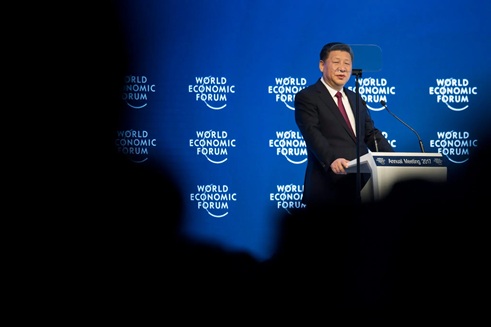
When President Xi Jinping of China spoke at the forum in 2017, he likened protectionism to “locking oneself in a dark room.” Credit…Gian Ehrenzeller/European Pressphoto Agency.

Dear Commons Community,

“In a long, rambling address that was by turns bombastic, aggrieved and self-congratulatory, President Trump pronounced last rites on American leadership of the liberal democratic order forged by the United States and its allies after World War II.

Mr. Trump used a keynote speech at the World Economic Forum in Davos on Wednesday — a pilgrimage site for adherents of globalization — to assert that the United States was done offering its markets and its military protection to European allies he derided as freeloaders. And he vowed to advance his trade war. He characterized tariffs as the price of admission to a land of 300 million consumers.

“The United States is keeping the whole world afloat,” Mr. Trump said. “Everybody took advantage of the United States.”

By evening, Mr. Trump had flip-flopped on Greenland. He said in a social media post that he would no longer use tariffs to try to wrest control of the Danish territory, at least while discussions between his top aides and Europeans carried forth. The announcement spared the sovereignty of the island, but there was no taking back the significance of Mr. Trump’s attack on the global economic order just hours earlier.

The American president appeared in the same auditorium where, nine years earlier, the Chinese president, Xi Jinping, gave a speech claiming credentials as a champion of international cooperation. Mr. Xi captivated the village of Davos with his endorsement of what he described as “economic globalization.” His 2017 address, delivered days before Mr. Trump was inaugurated for his first term, resonated as a clear yet futile effort to stave off the trade war that soon unfolded.

“Pursuing protectionism is just like locking oneself in a dark room,” Mr. Xi said that day. “While wind and rain may be kept outside, that dark room will also block light and air. No one will emerge as a winner in a trade war.”

Then as now, deep skepticism greeted China’s bid for recognition as a responsible superpower in contrast to Mr. Trump’s vision of “America First.” China’s government has long subsidized the making of factory goods that have threatened jobs from Indiana to Indonesia. China’s surveillance state has jailed dissidents, labor organizers and journalists. Its military has menaced the self-governing island of Taiwan and neighbors in Southeast Asia. Not even its greatest allies would describe China as a paragon of fair dealing.

Yet in the near decade since, the sense has only been enhanced that China is — at least rhetorically — invested in economic values that Mr. Trump has renounced: engagement in multilateral institutions to advance its causes, faith in the wealth-enhancing powers of global trade and recognition that no country is large enough or powerful enough to go it alone.

Mr. Trump used his 90-minute turn before the global elite to underscore that contrast, even as fundamental doubts remain about the desirability of a world increasingly influenced by Beijing.

“China definitely wants to assume the mantle of being the adult in the room, while the United States continues capriciously showing hostility,” said Eswar Prasad, an international trade expert at Cornell University. “The question is whether the rest of the world is willing to accede. I don’t think the world is ready to carry full on into the embrace of China.”

Europe and China are, in some ways, natural allies in an era when the United States has opted for nationalist brio. Both remain officially committed to the concept of rules-based international trade, even as China is frequently accused of breaching the details. Both affirm the scientific reality of climate change, while mobilizing investment and know-how to combat it.

China is the global leader in clean energy technology, designing and manufacturing solar cells, wind turbines, electric vehicles and batteries. Europe, despite recent step backs, has set ambitious targets to diminish carbon emissions — a fact that Mr. Trump singled out for derision during his speech, while thumping his chest for the American return to fossil fuels.

“The United States avoided the catastrophic energy collapse which befell every European nation that pursued the green new scam, perhaps the greatest hoax in history,” Mr. Trump said.

He suggested that Chinese manufacturers were laughing while selling their wind turbines to European buyers. “They sell them to stupid people,” Mr. Trump said. “Mostly, China goes with the coal.”

In truth, the Chinese government has invested aggressively in a world-leading expansion of renewable energy while diminishing its still substantial reliance on coal.

Given that Europe’s largest economies — especially Germany — contain large-scale auto industries, and given that China has become the dominant source of electric vehicles and batteries, the two economic powers are likely to remain major industrial rivals.

The biggest wedge between them is Ukraine, said Adam Tooze, an economic historian at Columbia University and author of Chartbook, a popular newsletter. China’s steadfast refusal to condemn Russian aggression is a nonstarter in Europe, where Vladimir V. Putin, Russia’s president, is feared and reviled.

“The Europeans would stand alongside China but for Ukraine,” Dr. Tooze said. He called Russia’s war a barrier to what might otherwise be a natural form of “Eurasian multilateralism.”

Mr. Trump’s arrival was highly anticipated in Davos, and across Europe, given his threats to seize Greenland from Denmark, a fellow member of the North Atlantic Treaty Organization.

The mere possibility of a conflict between the United States and Denmark has threatened the credibility of NATO. In his speech, he repeated his laments that the North Atlantic alliance has functioned as a kind of American-furnished security charity.

“What I’m asking for is a piece of ice, cold and poorly located, that can play a vital role in world peace and world protection,” Mr. Trump said. “It’s a very small ask compared to what we have given them for many, many decades.”

A day before Mr. Trump’s address, his commerce secretary, Howard Lutnick, declared during a panel discussion in Davos that the world trading system — constructed largely on American designs — was part of history.

“Globalization has failed the West and the United States of America,” Mr. Lutnick said.

Also on Tuesday, Mark Carney, the prime minister of Canada, provided a counterweight to the worldview espoused by the Trump administration. He lamented the “rupture” of the world order and marked “the beginning of a brutal reality where the geopolitics of the great powers is not subject to any constraints.”

Trump was a total embarrassment in Davos and opened the door for China to assume greater leadership. I would also add that Canada’s Prime Minister, Mark Carney, in what perhaps was one of the best speeches at the Davos conference, commented that his “country had just concluded several trade agreements with China.”

Tony